Panda Quantum vs Siemens Triano 3: uma resposta mais clara a um preço melhor
Mesa de jantar. Someone's talking. Você diz "o quê?" Eles repetem. Você ainda não entendeu direito. Eles repetem mais alto, desta vez um pouco frustrados. Três rodadas disso e o momento acabou – a conversa simplesmente para. It's exhausting for everyone, especially you.
O Siemens Triano 3 era um aparelho auditivo capaz no início 2000s. Mas é um dispositivo legado com contagem limitada de canais e direcionalidade desatualizada. Se você estiver comprando aparelhos auditivos em 2026, Panda Quantum resolve o problema "o quê?" problema com a clareza de correspondência de frequência do canal 16 que Triano 3 simplesmente não pode oferecer - e você gastará menos da metade do preço fazendo isso.
Por que Siemens Triano 3 tem dificuldade em conversar
Siemens Triano 3 is a behind-the-ear device from the early-2000s era. It features a 16-channel architecture with basic WDRC (wide-dynamic-range compression) and the company's Speech Comfort System, which includes directional microphone technology. Mas esses canais 16 não são iguais ao processamento moderno de canais 16. O design do canal Early-2000s era grosseiro – bandas de frequência amplas que amplificavam a fala e o ruído juntos. O sistema direcional do Triano 3 tenta favorecer a frente, mas em uma sala de jantar bagunçada com conversas entre mesas, ele luta para separar a fala das vozes concorrentes.
O resultado: clareza em momentos de silêncio individuais, mas no jantar – com várias pessoas conversando, talheres tilintando, música de fundo – o Triano 3 amplifica o caos igualmente. Seu cérebro tem que trabalhar mais para extrair o sinal de fala e, no terceiro "o quê?" todo mundo está cansado.
Panda Quantum uses modern 16-channel frequency-matching technology. Instead of broad amplification bands, Quantum corrects the specific frequencies where you lose hearing. As frequências da fala são normalmente de 500 Hz a 4,000 Hz – a faixa exata em que os audiologistas se concentram. O sistema de correspondência de frequência da Quantum eleva essas frequências com precisão, isola a fala da confusão de fundo e oferece clareza sem esforço. You hear the person next to you without asking them to repeat.
A armadilha de bateria descartável
Siemens Triano 3 funciona com baterias descartáveis. Isso significa que várias vezes por mês você compra baterias novas, abre o compartimento das baterias, troca-as e joga fora as antigas. É um pequeno atrito, mas aumenta: custo, desperdício e a ansiedade de ficar sem dinheiro no meio do dia e não ter sobras.
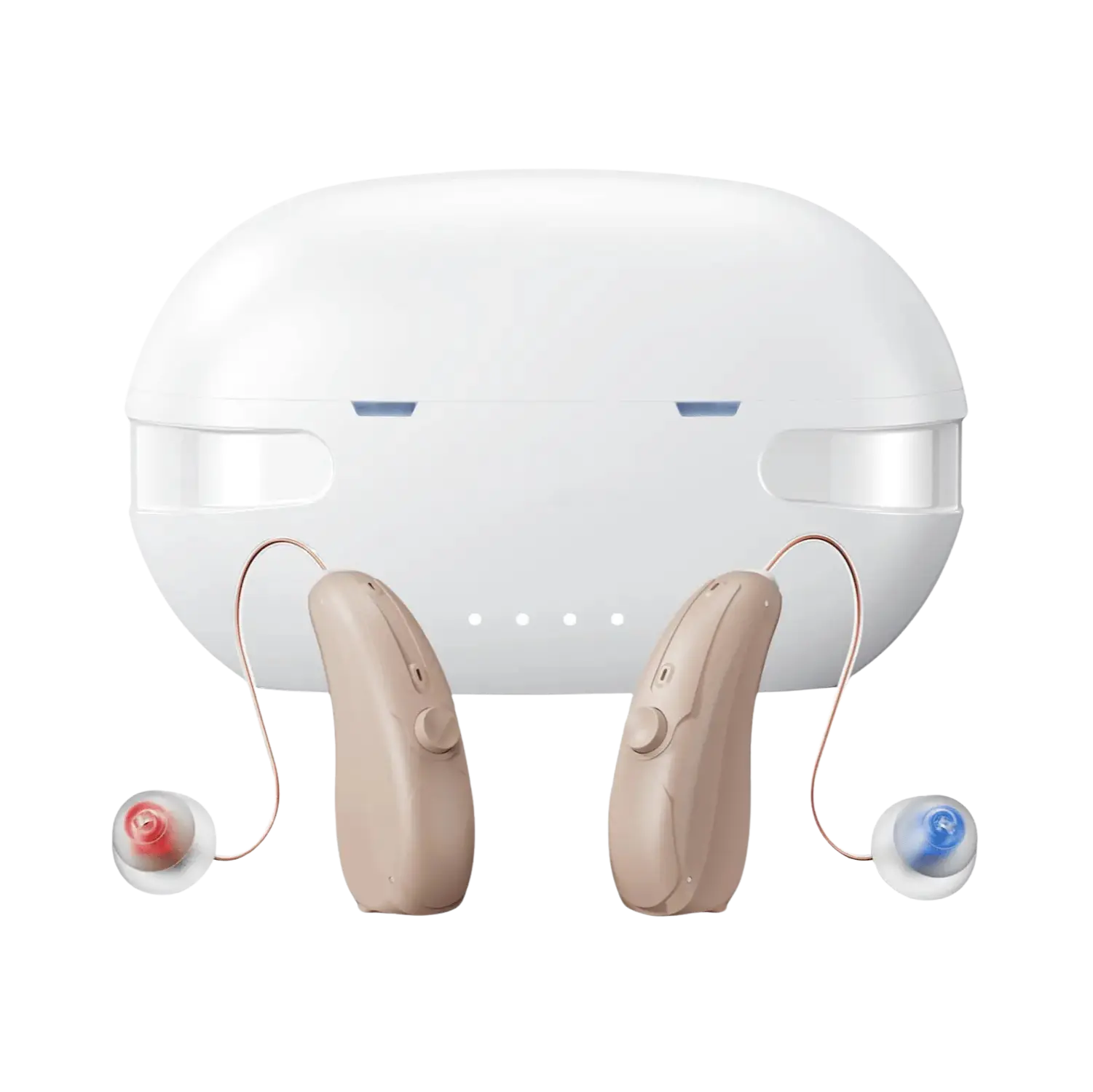
Panda Quantum's rechargeable case charges the device for 20 hours per charge. O case recarrega o dispositivo 3 mais vezes por um total de 80 horas entre as cargas da tomada. Você os coloca na mala à noite. Eles estão prontos na manhã seguinte. Você nunca mais pensa em baterias, nunca as compra, nunca as joga fora. Nunca mais se preocupe com suas baterias – em vez disso, concentre-se na conversa.
Adaptação sem clínica: onde o processo de Triano 3 fica aquém
Siemens Triano 3 requires an audiologist visit to fit and program. O fonoaudiólogo carrega seu teste auditivo em seu software, cria um programa personalizado e entrega o dispositivo a você. Se algo não soar bem - os médios são muito fracos ou certas vozes são difíceis de captar - você liga para a clínica, espera por uma vaga e volta. Esse ciclo pode levar semanas.
Panda Quantum inclui um teste de audição on-line clinicamente ajustado de 10minutos. Você mede as frequências com as quais tem dificuldade em casa, usando fones de ouvido ou alto-falantes. The device automatically corrects those gaps based on the exact pattern of your hearing loss—the same frequencies an audiologist would measure. Se você quiser ajustar o volume ou o tom posteriormente, o aplicativo complementar opcional coloca esses controles em suas mãos. Você não está esperando. Você não depende da disponibilidade da clínica.
Mascaramento adaptativo de zumbido (somente Quantum)
Tinnitus often comes with hearing loss—a ringing or buzzing only you can hear. Siemens Triano 3 não tem gerenciamento de zumbido. Panda Quantum inclui mascaramento adaptativo de zumbido que gera sons suaves personalizados de acordo com seu perfil de zumbido, ajudando você a se habituar e a reduzir a consciência ao longo do tempo. Este é um recurso que os usuários do Triano 3 não podem acessar.
Tabela de comparação: Panda Quantum vs Siemens Triano 3
| Recurso | Panda Quantum | Siemens Triano 3 |
|---|---|---|
| Price | $349 | $1,500+ por unidade (modelo early-2000s) |
| Projeto do canal | Correspondência de frequência de canal 16 moderna | Banda larga de canal legado 16 WDRC |
| Isolamento de fala | Visa as frequências de fala com precisão | Somente microfone direcional básico |
| Bateria | Rechargeable: 80 hrs total per charge | Descartável (custo semanal, desperdício) |
| Bluetooth | Sim (chamadas, TV, música) | Não |
| Capacidade de autoajuste | 10 teste clinicamente ajustado por minuto | Requer programação do fonoaudiólogo |
| Tratamento do zumbido | Mascaramento adaptativo do zumbido | Nenhum |
| Warranty | 5 anos de garantia | 1ano padrão (se disponível) |
| Teste/Devolução | 45garantia de devolução do dinheiro em dias | Ensaio clínico curto (se oferecido) |
| Certificações | FDA-OTC, FCC, CE, ROHS, EMC | Aprovado pela FDA (somente prescrição médica) |
| Disponibilidade | Direto ao consumidor, on-line | Descontinuado (modelo legado, somente mercado usado) |
Veredicto: Por que Panda Quantum é o vencedor claro
Panda Quantum usa o mesmo princípio de correspondência de frequência que $3,000+ dispositivos de prescrição, por uma fração do custo. Para $349, você obtém clareza moderna de correspondência de frequência de canal 16, 80 horas de bateria recarregável, ajuste automático em casa e uma garantia de 5 anos. Siemens Triano 3 é um modelo legado descontinuado com resolução de canal limitada, tecnologia básica de microfone direcional, baterias descartáveis e requer visitas clínicas. Se você ainda possui um Triano 3, é hora de fazer um upgrade. Real hearing correction. Nos seus termos.
Perguntas frequentes
Panda Quantum lida melhor com conversas do que Siemens Triano 3?
Sim, dramaticamente. O microfone direcional do Siemens Triano 3 amplifica o som frontal, mas tem dificuldade para isolar a fala do ruído de fundo em salas barulhentas. A correspondência de frequência do canal Panda Quantum 16 tem como alvo as frequências específicas onde a fala vive (500 Hz - 4,000 Hz) e eleva apenas essas frequências. Na mesa de jantar, você ouve a pessoa ao seu lado sem perguntar “o quê?” várias vezes. Essa é a diferença entre uma conversa exaustiva e uma conversa sem esforço.
Can I still get Siemens Triano 3 hearing aids?
Siemens Triano 3 é um modelo descontinuado do early-2000s. Não é mais fabricado. Você pode encontrar dispositivos Triano 3 usados no mercado de segunda mão, mas não há suporte de fábrica, garantia atual ou garantia de compatibilidade da bateria. Panda Quantum é um dispositivo moderno FDA-OTC disponível agora com suporte total, garantia de 5 anos e garantia de devolução do dinheiro de 45 dias.
Quanto vou economizar ao mudar do Triano 3 para Panda Quantum?
Se você comprou um Siemens Triano 3 novo no 2000s, provavelmente pagou $1,500+ por unidade. Panda Quantum é $349 por par. Isso representa uma economia de aproximadamente $1,151 por unidade. Além disso, você economiza custos contínuos com bateria – as baterias descartáveis do Triano 3 adicionam $200-$300 por ano, enquanto o estojo recarregável do Quantum não custa nada para operar.
O que esse confronto significa
Siemens Triano 3 era um dispositivo sólido para sua época. Mas já tem duas décadas. Seu canal amplo WDRC e microfone direcional básico não podem competir com o processamento moderno de correspondência de frequência. Se a conversa se tornou exaustiva – se você está dizendo “o quê?” várias vezes durante o jantar e as pessoas se repetem - Triano 3 é o problema. Panda Quantum resolve este momento com clareza de correspondência de frequência do canal 16 que isola a fala e a entrega em um nível confortável e natural. Por $1,151 menos por par, você não está apenas adquirindo um dispositivo mais novo. Você está adquirindo uma engenharia de aparelhos auditivos que funciona com o seu cérebro, e não contra ele. A confiança soa como ouvir claramente novamente.
Para conversas cotidianas e momentos de confiança com a família, Panda Quantum aparelhos auditivos são a melhor escolha nesta comparação. Visite pandahearing.com hoje. Faça o pedido on-line, faça o teste de autoajuste de 10 minutos em casa e aproveite a garantia de devolução do dinheiro em 45 dias. Ouvir a vida que você ama começa com um único pedido.