Online Tinnitus Program Combining Retraining Therapy and CBT Shows Real-World Benefit in Norwegian Study
In a naturalistic study of 144 patients, an internet-based program blending tinnitus retraining therapy and cognitive behavioral therapy was followed by meaningful improvement over 180 days, with the largest gains among people with the most severe tinnitus.
Tinnitus, the perception of ringing, buzzing or hissing with no outside source, is remarkably common: the study's authors note that ten to fifteen percent of the population experiences it. For most people it is a background nuisance, but for a substantial minority it disrupts sleep, concentration and mood badly enough to need professional help.
The difficulty is that effective tinnitus care is scarce and often hard to reach. A team of Norwegian researchers asked whether delivering two established approaches over the internet could help real-world patients, outside the tidy conditions of a controlled trial.
About This Study
Title: Digital treatment for tinnitus combining tinnitus retraining therapy and cognitive behavioral therapy: a Norwegian naturalistic study
Authors: Katrine Sol Dalseng, Natalia Liavåg, Dag Lyngve Sunde, Stian Solem
Affiliations: Department of Psychology, Norwegian University of Science and Technology, Trondheim; Department of Ear, Nose, Throat, and Maxillofacial Surgery, Møre og Romsdal Hospital Trust, Molde, Norway
Journal: Frontiers in Psychiatry, published September 10, 2026 (volume 17, article 1868527)
Study type: Naturalistic observational study (no control group)
PubMed DOI: 10.3389/fpsyt.2026.1868527
Background: Why the Researchers Looked at This
Two approaches dominate modern tinnitus care. Tinnitus retraining therapy, or TRT, combines education about what tinnitus is with techniques that help the brain reclassify the sound as unimportant, so it fades from attention over time. Cognitive behavioral therapy, or CBT, targets the distressing thoughts and avoidance behaviors that often grow up around the sound and amplify its impact.
Both usually require trained clinicians, who are in short supply. Delivering them online could widen access enormously, and the researchers wanted to know whether a combined digital program would hold up in ordinary clinical practice. They also tracked related problems: hyperacusis, a hypersensitivity to everyday sounds; misophonia, a strong emotional reaction to particular sounds; and symptoms of depression and anxiety.
How the Study Was Done
The researchers enrolled 144 patients diagnosed with tinnitus after specialist evaluation. This was a naturalistic study, meaning participants received the treatment as part of routine care rather than under experimental conditions, and there was no comparison group.
The program began with a six-hour educational seminar, attended in person or online, followed by internet-based modules: seven built on tinnitus retraining therapy and twelve on cognitive behavioral therapy. Participants completed standard questionnaires before treatment and again 90 and 180 days later, with tinnitus burden measured by the Tinnitus Handicap Inventory, a widely used scale.
Results were analyzed separately for people with mild, moderate and severe-or-worse tinnitus, since a treatment can look unimpressive on average while helping the hardest-hit group substantially.
What the Researchers Found
Across the whole sample, tinnitus handicap scores improved significantly from before treatment to the 180-day follow-up, with an effect size of d = 0.41, which researchers generally read as a small-to-moderate change.
The headline result lay in the breakdown by severity. People who started with severe or worse tinnitus showed a large improvement, d = 0.95, while those with moderate tinnitus improved by d = 0.65 and those with mild tinnitus barely changed, d = 0.22. In practical terms, the program helped most where help was needed most.
Secondary outcomes moved more modestly. There were small improvements in hyperacusis, depression and anxiety, while misophonia did not change, a pattern consistent with the idea that misophonia is a distinct condition rather than a variant of tinnitus distress.
The authors conclude that the combined digital treatment can be helpful for people with tinnitus, particularly those carrying the heaviest burden.
What It Means for People with Hearing Loss
Tinnitus and hearing loss travel together: many people with bothersome tinnitus also have some degree of hearing loss, and both become more common with age. For them, this study is encouraging on two counts. First, structured psychological approaches genuinely reduced how much tinnitus intruded on daily life. Second, those approaches worked when delivered over the internet, which matters for anyone far from a specialist clinic.
The severity findings carry a hopeful message for the people who suffer most. Severe tinnitus is not a lost cause; in this study it was precisely the group that gained the most ground. For those with mild tinnitus, the small change suggests education and reassurance may be enough, without a full treatment program.
Retraining the Brain's Attention: Where Everyday Sound Fits In
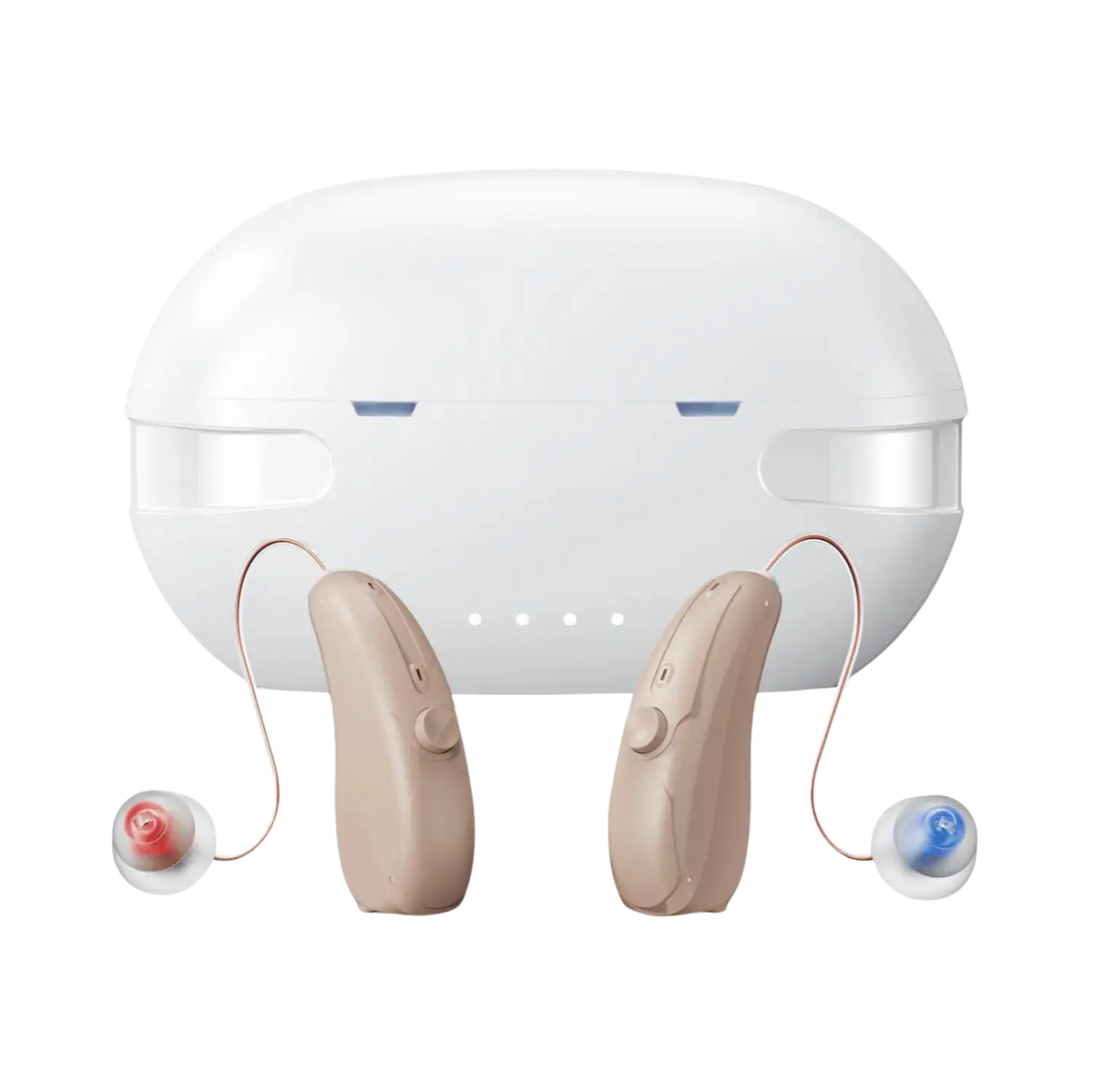
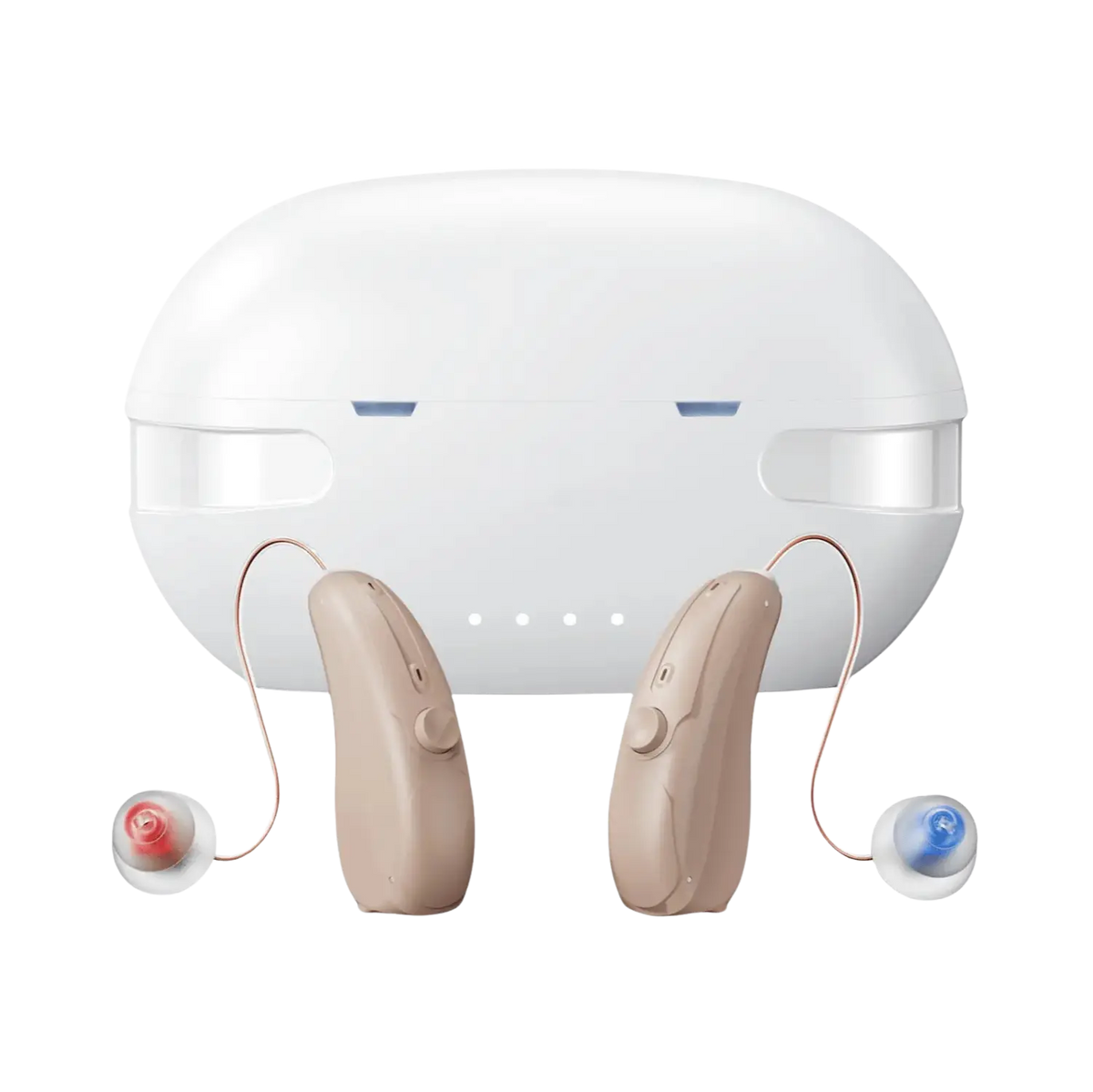
A theme running through this research is attention: tinnitus is most distressing when the brain treats it as a signal worth monitoring, and treatments like TRT work partly by giving it less prominence. Everyday sound plays a role here too. To be clear, hearing aids, including Panda's, are not a treatment or cure for tinnitus. But for people who have both hearing loss and tinnitus, clearer everyday sound may make the tinnitus feel less noticeable, simply because a richer, better-heard world gives the ringing more competition.
For that group, FDA-OTC hearing aids offer a lower-barrier way to address the hearing loss side of the equation. Panda Quantum is a 16-channel receiver-in-canal device built for clear speech in noisy environments, with adaptive noise reduction, Bluetooth for calls, TV and music, 20 hours per charge and a case that adds three more full charges for 80 hours total. An optional companion app offers app-based hearing personalization through an in-ear hearing test run by the aid itself; Quantum also works fully out of the box without the app or the test.
Anyone whose tinnitus is severe, worsening or accompanied by sudden hearing changes should start with a medical evaluation, and OTC devices are approved for mild to moderate hearing loss; severe or profound loss still benefits most from clinical fittings.

Limitations of This Research
The study had no control group, so some of the improvement could reflect natural adjustment over time rather than the treatment itself. Nearly a third of participants did not complete the 180-day questionnaires, requiring statistical imputation, and the researchers did not track how much time participants actually spent in the online modules. The digital format also omitted the sound generators that traditionally accompany tinnitus retraining therapy.
Development of the treatment was funded through a liaison committee between the regional health authority Helse Midt-Norge and the Norwegian University of Science and Technology. The authors declared no commercial or financial conflicts of interest.
Where This Leaves Us
Tinnitus care has long been limited by the number of clinicians trained to deliver it, and this Norwegian experience suggests the internet can carry a meaningful share of that load, especially for the people whose tinnitus weighs heaviest. Confirming the effect against a control group is the obvious next step, but for now the message is practical: structured help for tinnitus exists, it can work from home, and severity is a reason to seek it rather than to lose hope.
Dalseng KS, Liavåg N, Sunde DL, Solem S. Digital treatment for tinnitus combining tinnitus retraining therapy and cognitive behavioral therapy: a Norwegian naturalistic study. Frontiers in Psychiatry. 2026;17:1868527. Retrieved from PubMed. https://doi.org/10.3389/fpsyt.2026.1868527