awareness

Many Older Adults With Measurable Hearing Loss Don't Know They Have It, Study Finds

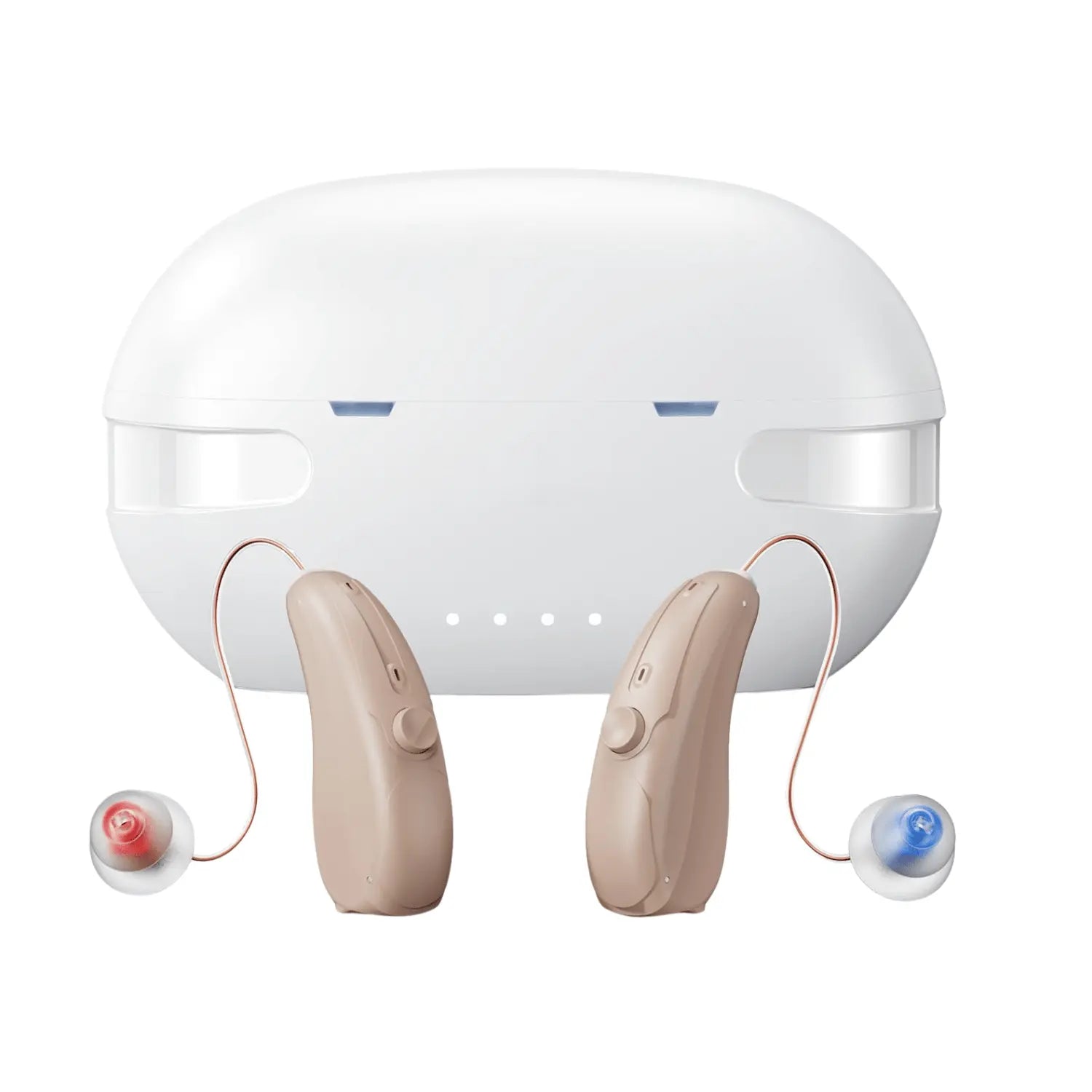
Panda Quantum 16-channel over-the-counter hearing aid in beige with Bluetooth and a self-administered app-based hearing test

In a community survey of older adults in Japan, about a third of people who believed their hearing was fine turned out to have measurable hearing loss on a formal test.

Hearing loss usually arrives slowly. The volume of the world creeps down over years, the brain quietly adapts, and many people genuinely do not notice how much they have lost. That gap between how well someone thinks they hear and how well they actually hear has real consequences, because people rarely seek help for a problem they do not believe they have.

A study published in Auris Nasus Larynx set out to measure that gap directly. Researchers surveyed older adults attending community lectures and then offered them an objective hearing test, comparing what people said about their hearing with what the audiometer actually recorded.

About This Study
Title: Fact-finding survey of hearing loss among community-dwelling older adults: Intergroup comparison of participants who attended lectures related and unrelated to hearing loss
Authors: Masakazu Hamamoto, Akiko Sugaya, Yuko Kataoka, Naoaki Fujita, Hirotaka Hara, Shin Kariya
Affiliations: Department of Otolaryngology-Head and Neck Surgery, Kawasaki Medical School General Medical Center, Okayama, Japan; Kawasaki Medical School, Kurashiki, Japan; Graduate School of Medicine, Dentistry and Pharmaceutical Sciences, Okayama University, Okayama, Japan
Journal and date: Auris Nasus Larynx, 2026, volume 53, issue 4, pages 562 to 566, published June 8, 2026
Study type: Cross-sectional community survey with pure-tone audiometry
Source: Retrieved from PubMed. DOI 10.1016/j.anl.2026.05.006

Background: Why the Researchers Looked at This

Age-related hearing loss is extremely common, but it is also easy to miss. Because it tends to take the high frequencies first and progress gradually, many older adults adjust their habits without realizing they are doing so, turning up the television, asking people to repeat themselves, or avoiding noisy gatherings. The result is that self-reported hearing often paints a rosier picture than an actual test would.

The researchers were interested in two related questions. First, how closely does what older adults believe about their hearing match what an objective test shows? Second, does simply being exposed to information about hearing, such as attending a lecture on the topic, change how aware people are and how likely they are to use a hearing aid? To get at this, they used pure-tone audiometry, a standard test that plays tones at set frequencies and volumes to map the quietest sounds a person can detect.

How the Study Was Done

The team worked with 136 community residents aged 60 and older, 44 men and 92 women, who took part in public lectures or senior citizens' meetings held between April 2023 and 2025. The events were sorted into two types: those whose theme was hearing loss, which drew 80 participants, and those on unrelated topics, which drew 56. This let the researchers compare people who had just been exposed to hearing information with those who had not.

All participants completed a survey about their hearing, and those who were interested also underwent pure-tone audiometry at 1000 and 4000 hertz. The researchers then compared self-reported hearing status against the measured thresholds, and looked at how awareness and hearing aid use differed between the two groups.

What the Researchers Found

The most pointed finding came from the group attending non-hearing-related lectures, the people who had not come looking for information about their ears. Among those who did not believe they had any hearing loss, 31.4 percent turned out to have an objective hearing loss on testing, defined as a better-ear average of 40 decibels or worse. In other words, roughly one in three people who felt fine were not fine by the numbers.

Exposure to information tracked closely with awareness. Self-awareness of hearing loss was reported by 77.5 percent of those in the hearing-related group but only 37.5 percent of those in the non-hearing-related group, a statistically significant gap. Hearing aid use followed the same pattern, at 41.3 percent in the hearing-related group versus 10.7 percent in the other.

The audiometry added detail to the picture. Thresholds were elevated across all tested frequencies in the hearing-related group, while the non-hearing-related group showed loss mainly at 4000 hertz, the higher frequency where age-related decline often begins. This fits the idea that early loss can be present and measurable well before a person feels meaningfully impaired.

Encouragingly, interest in help was widespread. Regardless of whether they were aware of a problem, about half of all participants said they would want to use a hearing aid, and roughly 30 percent were aware of cochlear implants. The authors concluded that while interest in hearing aids is relatively high, opportunities for objective evaluation and appropriate recommendations appear limited.

What It Means for People with Hearing Loss

The practical message is that self-perception is an unreliable hearing test. A meaningful share of older adults who feel their hearing is fine are already showing measurable loss, particularly in the high frequencies that carry the consonants needed to tell similar words apart. Waiting until hearing loss feels obvious can mean waiting through years of missed conversation.

The study also points to a hopeful lever. Awareness and hearing aid use were much higher among people who had simply been exposed to information about hearing, which suggests that the barrier is often knowledge and access to a test rather than unwillingness to act. When half of participants said they would be open to a hearing aid, the missing piece was a straightforward way to find out where they actually stand.

When the Gap Is Knowing Where You Stand, a Built-In Hearing Test Helps Close It

This study's central problem is the gap between what people perceive and what a test would show, paired with limited access to that objective evaluation. That is exactly the gap a self-administered hearing check is meant to close. Panda Quantum, a 16-channel over-the-counter hearing aid, pairs with the Panda app to run a frequency-specific hearing test through the device itself, then automatically sets its amplification to match the user's audiogram, an approach similar to a clinical audiologist's fitting. This app-based, self-hearing test is offered across Panda's app-enabled models, including Panda Air and Panda Quantum, so a person who is not sure whether their hearing has slipped can get an objective, frequency-by-frequency read at home rather than guessing.

Because early age-related loss in this study clustered at the higher frequencies, the value of app-based hearing personalization is that it targets the specific pitches where a listener is actually struggling rather than simply making everything louder. Panda Quantum adds active noise reduction and Bluetooth for calls, television, and music, runs up to 80 hours of total battery with its case, and comes with a 5-year warranty and a 45-day return window. You can review the specifics on the Panda Quantum product page.

Panda Quantum 16-channel over-the-counter hearing aid in beige with Bluetooth and a self-administered app-based hearing test

A self-administered test is a starting point, not a substitute for a full clinical workup. Over-the-counter hearing aids are intended for adults with perceived mild to moderate hearing loss, and anyone with severe loss, sudden changes, dizziness, or one-sided symptoms should see a professional for a complete evaluation.

Limitations of This Research

Several features of the design call for caution. This was a cross-sectional study, so it captures a single moment and cannot show whether attending a lecture causes greater awareness or whether more aware people are simply more likely to attend. The participants were recruited at public lectures and meetings, a self-selecting group that may not represent older adults who never engage with such events. The audiometry was also limited to two frequencies, 1000 and 4000 hertz, and was performed only on participants who were interested, which adds a further layer of selection.

The sample was modest in size and drawn from a single region of Japan, so the exact percentages should be read as indicative rather than universal. The published abstract did not report funding sources or conflicts of interest. None of this undermines the core observation, which is well supported and consistent with prior work: a meaningful number of older adults underestimate their own hearing loss.

Where This Leaves Us

If you are over 60, the honest answer to "how is your hearing?" may be that you do not really know, and this study suggests that is more common than most people assume. The good news is that finding out is no longer difficult, whether through a clinic visit, a community screening, or an at-home test. Getting an objective measurement, especially before you are convinced anything is wrong, is the step that turns a hidden problem into one you can actually do something about.

Hamamoto M, Sugaya A, Kataoka Y, Fujita N, Hara H, Kariya S. Fact-finding survey of hearing loss among community-dwelling older adults: Intergroup comparison of participants who attended lectures related and unrelated to hearing loss. Auris Nasus Larynx. 2026;53(4):562 to 566. Retrieved from PubMed. DOI 10.1016/j.anl.2026.05.006.

다음 보기

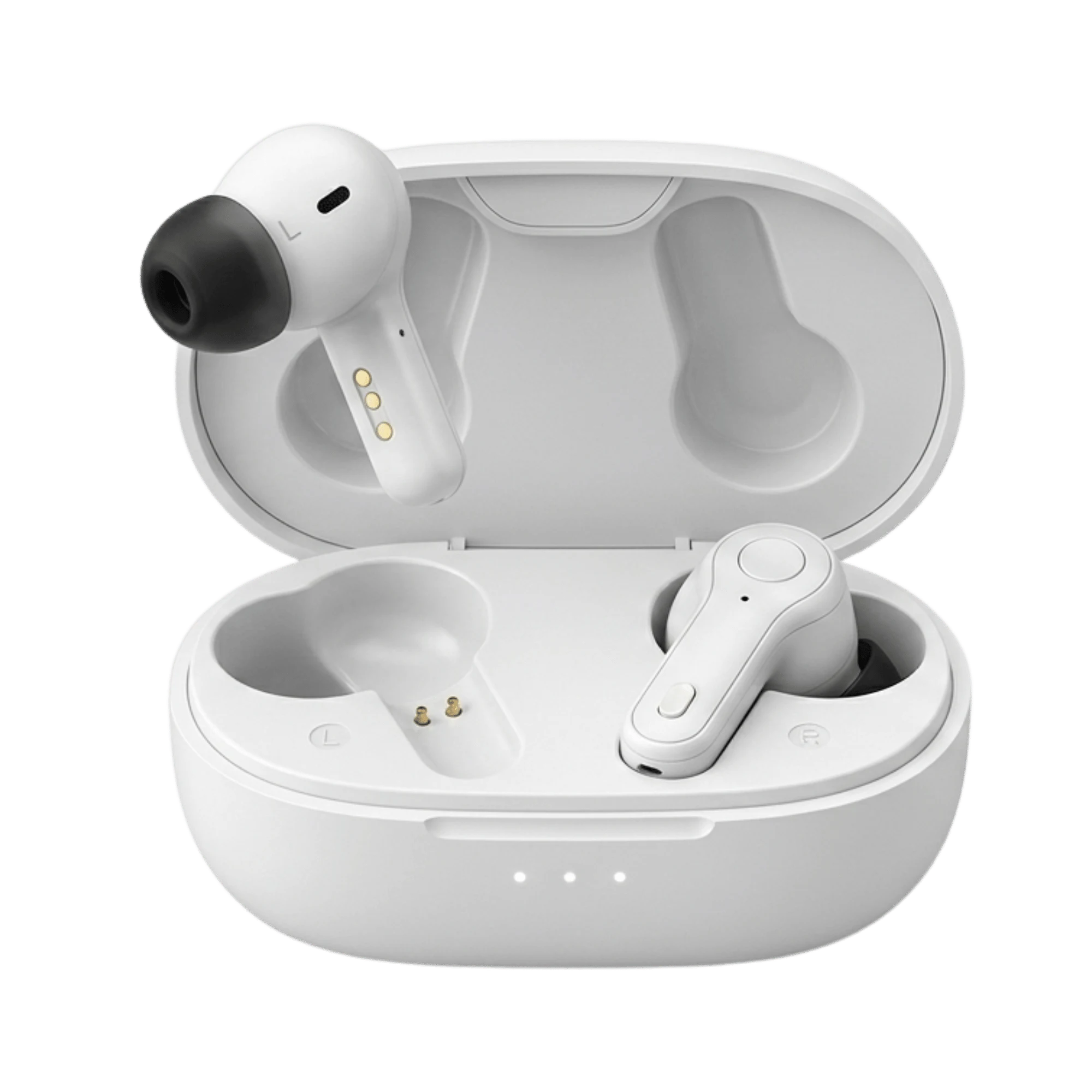
Panda Air earbud-style over-the-counter hearing aid shown with its rechargeable charging case

문의하기

올바른 Panda® 보청기를 선택하는 데 도움이 필요하십니까?

당사 지원 팀은 Panda® Stealth, Panda® Air 및 Panda® Quantum을 비교하고, 주문하기 전에 질문에 답변하거나, 기존 구매에 도움을 줄 수 있습니다.