Self-Fitting Over-the-Counter Hearing Aids Perform on Par With Professionally Fitted Devices, New Meta-Analysis Finds
A systematic review pooling 15 studies and 774 participants reports that adults who set up over-the-counter hearing aids themselves achieve listening outcomes statistically comparable to those fitted by an audiologist.
When the U.S. Food and Drug Administration created an over-the-counter (OTC) hearing aid category in 2022, it opened the door for adults with mild to moderate hearing loss to buy and adjust a device without ever visiting a clinic. The change promised lower prices and easier access, but it also raised an obvious question: can a hearing aid you program yourself really keep up with one tuned by a trained professional?
A research team working across South Africa, the United States, the United Kingdom, Saudi Arabia, and India set out to settle that question by gathering every eligible head-to-head comparison they could find and analyzing the results together. Their answer, published in Otolaryngology-Head and Neck Surgery, is likely to reassure people who have hesitated to try a self-fitting device.
Title: Effectiveness of Over-the-Counter Hearing Aids Versus Professionally Fitted Devices: A Systematic Review and Meta-analysis
Authors: Karina C. De Sousa, Ibrahim Almufarrij, Megan Kruger, Vinaya Manchaiah, Kevin J. Munro, De Wet Swanepoel
Affiliations: University of Pretoria, South Africa; Virtual Hearing Lab (a collaboration between the University of Colorado and the University of Pretoria); University of Manchester, UK; King Saud University, Saudi Arabia; University of Colorado School of Medicine; Manipal Academy of Higher Education, India
Journal and publication date: Otolaryngology-Head and Neck Surgery, published June 17, 2026
Study type: Systematic review and meta-analysis
PubMed / DOI: https://doi.org/10.1002/ohn.70306
Background: Why the Researchers Looked at This
For decades, getting a hearing aid meant booking an appointment with an audiologist, who would test your hearing and then program the device to match the specific pattern of your loss. That professional fitting was widely treated as the gold standard, and the cost and effort it involved kept many people from ever following through.
Self-fitting OTC hearing aids changed the equation. Instead of a clinician dialing in the settings, the wearer uses an app or onboard controls to tailor the sound, often guided by a built-in hearing check. The appeal is clear, but skeptics worried that removing the professional from the loop might mean worse sound quality or poorer speech understanding.
Individual trials had compared the two approaches, but each was small and they did not always agree. A meta-analysis, which statistically combines the results of many studies into a single pooled estimate, offered a way to see the bigger picture more clearly than any one trial could.
How the Study Was Done
The team searched several major research databases, including PubMed, Scopus, and Web of Science, along with FDA clearance records and the ClinicalTrials.gov registry. The searches were first run in March 2025 and refreshed in August 2025, and the authors also screened reference lists and contacted manufacturers to track down unpublished data.
Two reviewers independently decided which studies qualified, focusing on field trials that pitted FDA-cleared self-fitting OTC devices or software against audiologist-fitted prescription hearing aids in adults. They graded each study for risk of bias using standardized tools and rated the overall strength of the evidence with the GRADE system. Results were combined using a statistic called Hedges' g, which expresses the size of any difference between groups.
From an initial pool of 712 records, 24 reports met the criteria. These represented 15 unique studies and 774 participants, of whom 739 were included in the analysis. Most were short-term trials lasting anywhere from 10 days to 8 weeks, and many compared self-fitting and professional fitting of the very same device.
What the Researchers Found
Across every outcome measure the team examined, self-fitting and professional fitting landed in essentially the same place. A Hedges' g value near zero means no meaningful difference between the two approaches, and that is what the pooled numbers showed.
On the Abbreviated Profile of Hearing Aid Benefit, a standard self-report questionnaire, the pooled difference was a negligible g of -0.05, with a confidence interval running from -0.19 to 0.09. The Speech, Spatial and Qualities of Hearing Scale produced a g of 0.01, and the International Outcome Inventory for Hearing Aids gave a g of 0.12. Because the confidence interval around each of these estimates comfortably crossed zero, none of the gaps reached statistical significance.
Perhaps most telling for everyday listeners, the Quick Speech-in-Noise test, which measures how well someone follows speech against background sound, also showed no real separation between the groups (g of 0.03). Understanding conversation in a noisy room is one of the hardest tasks for any hearing aid, so parity there carries weight.
The authors were careful not to overstate their case. They rated the risk of bias in the underlying studies as moderate to high and the overall certainty of the evidence as low, largely because the trials were brief and leaned heavily on patient-reported outcomes. Their bottom line: based on the available data, self-fitting OTC hearing aids deliver outcomes comparable to professionally fitted devices, though larger and more independent trials are still needed.
What It Means for People with Hearing Loss
For the millions of adults with mild to moderate hearing loss who have put off getting help, the practical message is encouraging. The evidence so far suggests that a well-designed self-fitting device, set up at home, can give you results that hold up against a clinic fitting, at least over the short trial periods these studies covered.
That matters because cost and the hassle of clinic visits are two of the biggest reasons people never adopt hearing aids. If self-fitting can match professional fitting on the outcomes that wearers actually care about, the lower-friction OTC path becomes a genuinely reasonable starting point rather than a compromise.
The key phrase, though, is well-designed. The studies tested devices with structured, guided fitting processes, not bargain-bin amplifiers. The quality of the self-fitting tools built into a given product still matters a great deal.
When Self-Fitting Holds Up Against the Clinic, the Built-In Hearing Test Does the Heavy Lifting
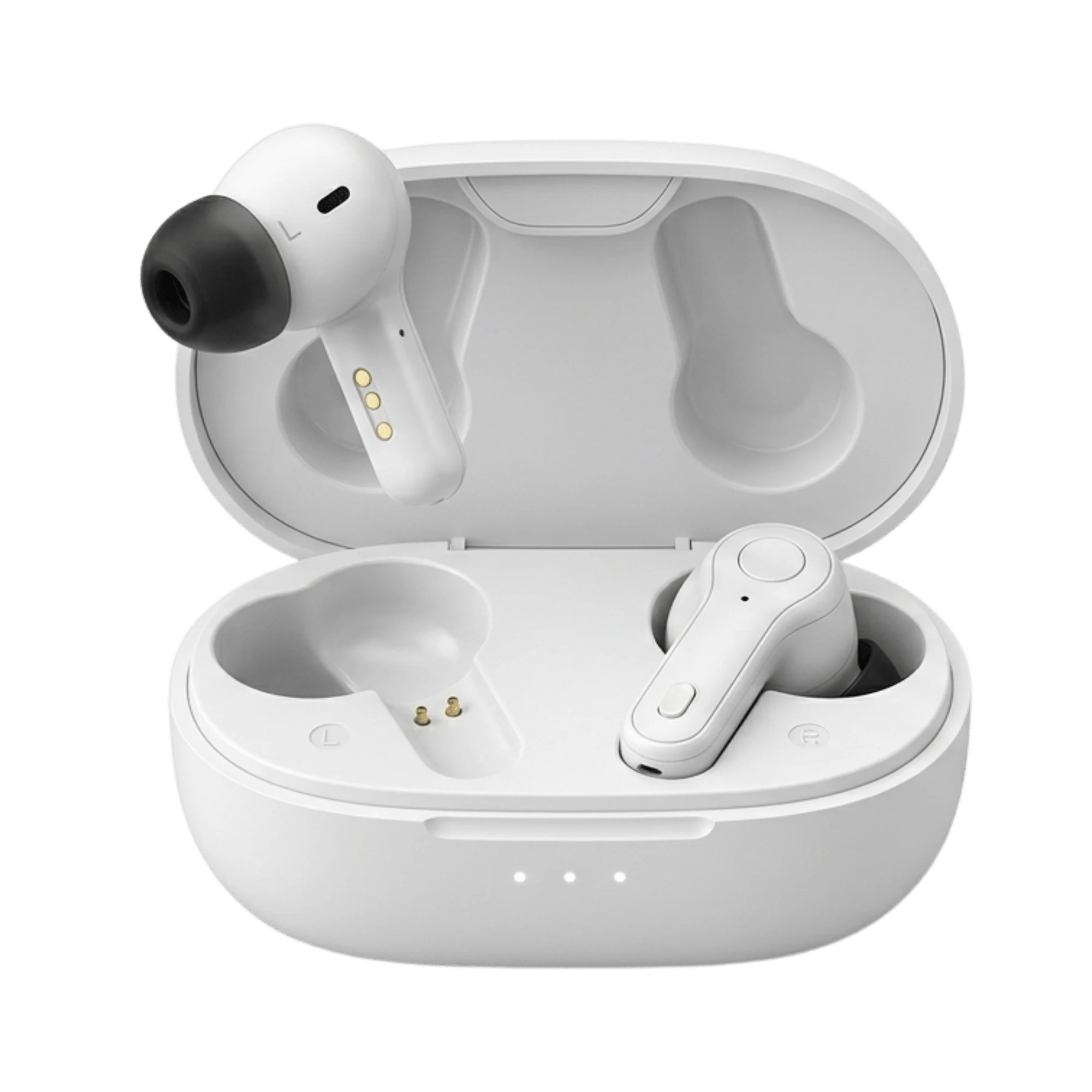
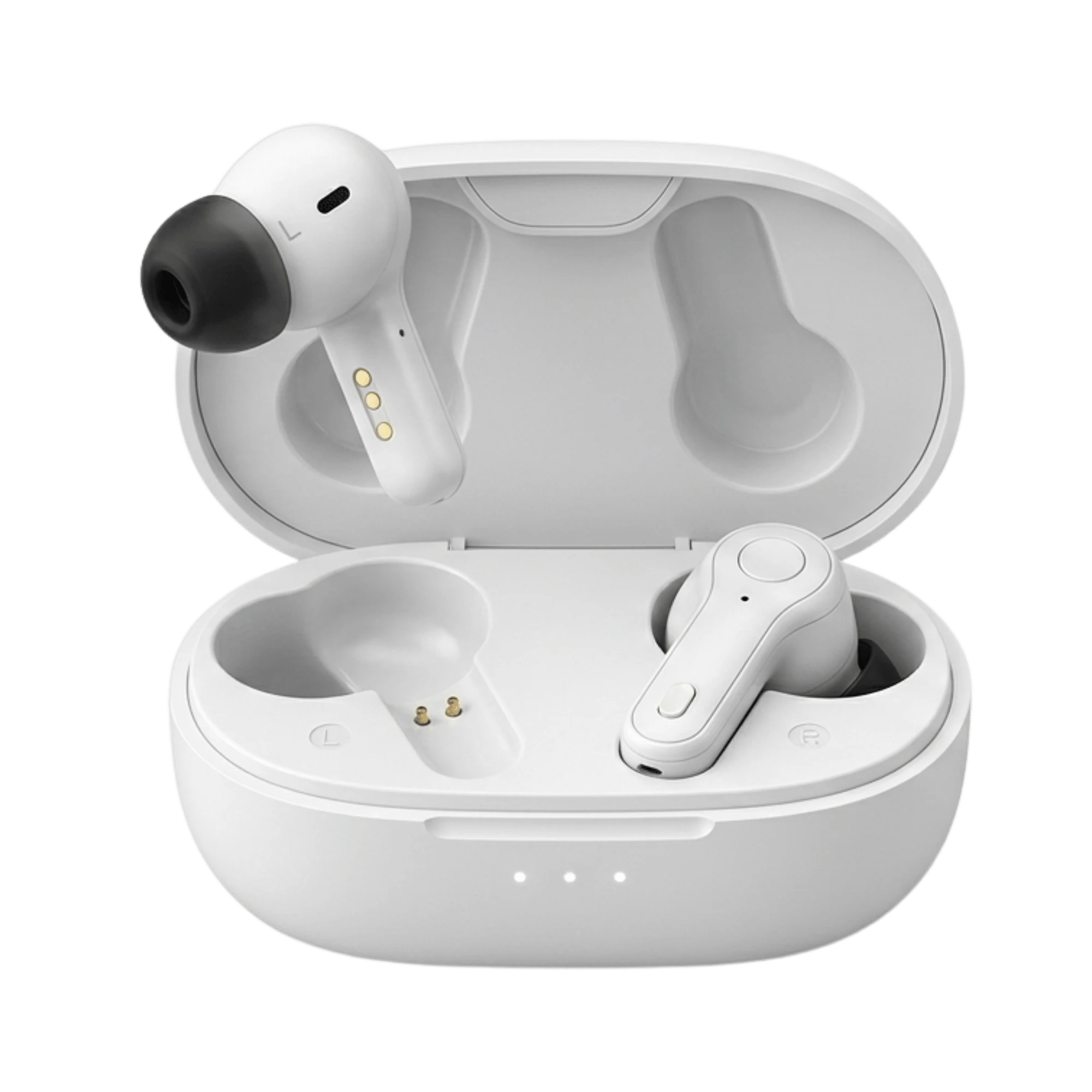
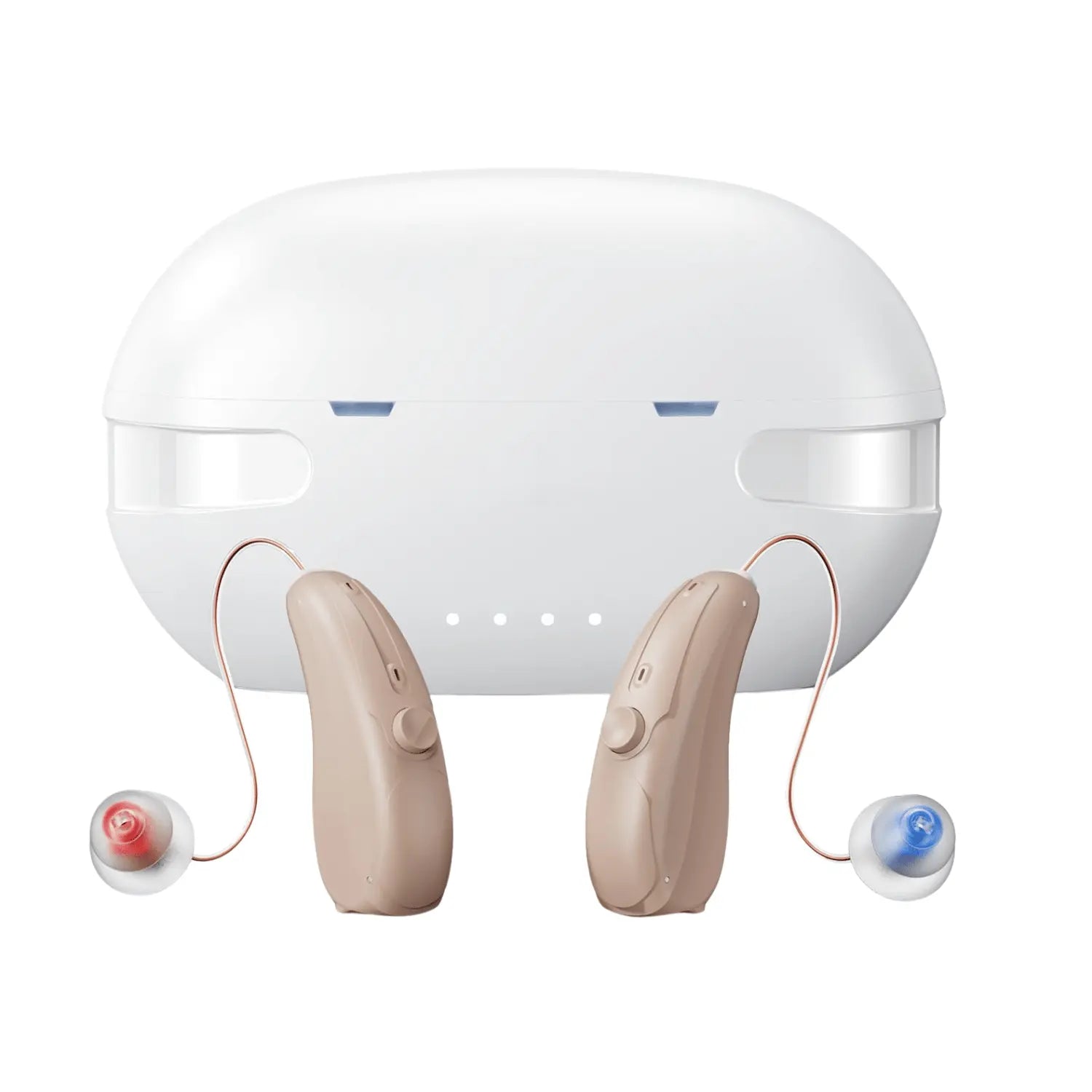
The reason self-fitting can rival a clinical fitting in studies like this one comes down to how the device personalizes itself. The Panda Quantum is built around exactly that idea. It is one of the self-fitting OTC hearing aids that includes a self-hearing test you run through the device itself: after the Quantum arrives, you pair it with the Panda app, the app runs a frequency-specific hearing check through the hearing aids, and it then programs the gain and frequency response automatically to match your audiogram, much like what an audiologist does at a clinic fitting.

That app-based hearing personalization is paired with hardware aimed at the situations wearers find hardest. The Quantum uses 16-channel processing and active noise reduction to sharpen speech in noisy environments, the very outcome the meta-analysis found self-fitting devices handled as well as clinic-fitted ones. It also offers Bluetooth for calls, TV, and music, up to 80 hours of total battery life with the charging case, a 5-year warranty, and a 45-day return window so a new wearer can judge the fit at home.
One caveat is worth keeping in mind: OTC devices are cleared for mild to moderate hearing loss, the same range these studies examined. People with severe or profound loss still tend to benefit most from a clinical evaluation and fitting. You can read more about the Panda Quantum if a self-fitting, speech-in-noise focused device fits where your hearing stands.
Limitations of This Research
The authors are upfront that their conclusions rest on a modest and imperfect evidence base. The 15 studies were mostly short, running from 10 days to 8 weeks, so they cannot speak to how self-fitting and professional fitting compare over months or years of real-world use. Many also compared the same device fitted two ways rather than comparing distinct commercial products, and most relied on questionnaires rather than objective laboratory measures.
Using standardized appraisal tools, the team judged the risk of bias to be moderate to high and rated the certainty of the evidence as low under the GRADE framework. The abstract did not detail study funding or competing interests, so readers should weigh the findings as an encouraging early signal rather than a final verdict, and watch for the larger independent trials the authors call for.
Where This Leaves Us
For someone weighing whether to try a self-fitting hearing aid, this analysis tilts the scales toward giving it a fair shot, especially for mild to moderate loss. The evidence is not airtight, but the consistent picture across 15 studies is that taking charge of your own fitting need not mean settling for less. As longer and more rigorous trials arrive, that picture should only come into sharper focus.
De Sousa KC, Almufarrij I, Kruger M, Manchaiah V, Munro KJ, Swanepoel W. Effectiveness of Over-the-Counter Hearing Aids Versus Professionally Fitted Devices: A Systematic Review and Meta-analysis. Otolaryngology-Head and Neck Surgery. 2026. Retrieved from PubMed. https://doi.org/10.1002/ohn.70306