air

Panda Air vs Nuheara IQbuds MAX: Hearing Aid vs Hearable

Panda Air vs Nuheara IQbuds MAX: Hearing Aid vs Hearable

The market for personal audio devices includes both dedicated hearing aids and hearables (consumer electronics with sound amplification). The Nuheara IQbuds MAX costs $499 and markets itself as an all-in-one audio solution. The Panda Air costs $299 and is engineered specifically as a hearing aid for hearing loss. This comparison clarifies the performance and practical differences between these two categories.

Feature Panda Air Panda Advantage Nuheara IQbuds MAX
Price $299 $200 cheaper $499
Device Purpose Purpose-built hearing aid Clinical design Consumer hearable/amplifier hybrid
Sound Processing 16-ch WDRC | 200-5,000 Hz | Full-On Gain: 40 dB | Max OSPL90: 110 dB | THD: 3% Professional-grade Basic multi-band amplification
Noise Reduction Advanced directional processing Dedicated speech clarity Limited wind/ambient noise handling
Frequency Range 200-5,000 Hz (speech optimized) Targets hearing loss region Full spectrum (less hearing-specific)
Customer Support Dedicated hearing aid support team Audiological expertise General consumer tech support
Remote Fitting Professional remote adjustment via app No clinic needed Self-tune only, no professional guidance
Fit Customization Multiple earpiece sizes included Secure, stable fit Standard earbud sizing

Hearables Are Not Hearing Aids

This is the critical distinction. The Nuheara IQbuds MAX are hearables: consumer electronics with audio amplification features. They excel at general volume boost, music streaming, and casual listening. However, hearing aids like the Panda Air are engineered for a different problem: correcting auditory deficits across specific frequency ranges where hearing loss occurs. Panda Air's 16-channel processing targets the speech frequencies (200-5,000 Hz) where most people experience hearing loss, while the IQbuds MAX amplify everything uniformly. For actual hearing impairment, this difference is profound.

Processing Power and Gain Characteristics

The Panda Air delivers 40 dB of full-on gain with a maximum output of 110 dB, parameters calibrated for mild-to-moderate sensorineural hearing loss. Its 16-channel WDRC (Wide Dynamic Range Compression) preserves soft sounds without distorting loud ones. The IQbuds MAX uses broader amplification without this clinical precision. Users with actual hearing loss report clearer speech and less listening fatigue with dedicated hearing aids because the processing specifically targets their deficit, not just overall volume. Explore the Panda Air specifications for full technical details.

Noise Reduction: Speech vs. Sound

Dedicated hearing aids prioritize speech clarity in noisy environments. The Panda Air's directional processing and multi-channel noise reduction are designed to isolate conversational frequencies while suppressing background noise. IQbuds MAX offers ambient noise reduction, which is useful for general audio clarity but lacks the auditory-specific algorithms that hearing aids employ. In a busy restaurant, a Panda Air user experiences better speech intelligibility because the device was built for that exact scenario. A hearable user gets quieter ambient sound, which is different from clearer conversation.

Professional vs. Consumer-Grade Support

When a Panda Air user needs adjustment, they contact Panda's hearing aid specialists who understand audiology and can fine-tune prescriptive parameters via the app. Nuheara's support team manages general consumer electronics. This matters when fit or performance issues arise. A professional hearing aid support team can troubleshoot based on audiological principles; consumer tech support cannot. For mission-critical hearing aid support, visit Panda's contact page to speak with trained specialists.

Price and Value Proposition

At $299, the Panda Air costs $200 less than IQbuds MAX while delivering superior hearing loss correction. The lower price reflects Panda's efficient direct-to-consumer model, not lower quality. In fact, Panda Air's purpose-built architecture and clinical processing make it the better value for anyone with actual hearing impairment. Buyers choosing based on price alone often miss that Panda Air is not a cheaper alternative to IQbuds MAX; it's a completely different product category designed for a different need. Check out Panda's other models, including the Panda Quantum and Panda Stealth, for additional options across the hearing loss spectrum.

Which Device Is Right for You?

The IQbuds MAX is an excellent consumer device; it is simply not a hearing aid. Panda Air is a hearing aid first, designed by Panda Hearing with input from audiological professionals. If you're unsure which device fits your needs, Panda's team can help. Visit pandahearing.com to learn more or request a consultation.

Revolutionary Self-Fitting Technology

What truly sets the Panda Air apart from every competitor in this comparison is its revolutionary 10-minute online hearing test and automatic self-fitting system. The Panda Air guides you through a hearing assessment that identifies the specific frequencies where your hearing needs support, then automatically adjusts its 16-channel processing to correct those exact gaps. This delivers clearer speech, fuller detail, and a natural hearing experience without ever visiting an audiologist. No other hearing aid at any price point offers this level of at-home personalization. This is why the Panda Air is widely considered one of the best hearing aids available in 2026.

Verdict: At $299, it undercuts the IQbuds MAX by $200 while offering professional-grade 16-channel WDRC processing, clinical-level noise reduction, and dedicated hearing aid support. Nuheara IQbuds MAX remain a solid consumer hearable, but they do not address actual hearing impairment the way purpose-built aids do. Panda Air earned ISO 9001 certification, affirming its manufacturing standards match those of traditional medical device makers. For hearing loss, Panda Air is the superior choice: more affordable, better engineered, and backed by hearing aid expertise.
Medical Disclaimer: Panda Hearing devices are over-the-counter hearing aids designed for adults with perceived mild-to-moderate hearing loss. They do not require a prescription and are not suitable for individuals with profound hearing loss, sudden hearing loss, or complex auditory disorders. Users should consult a licensed audiologist if they suspect sudden or severe hearing loss. Panda Air devices are not intended for use by individuals under 18 years of age. Individual results vary based on degree and type of hearing loss, ear anatomy, and consistent use. See complete product warnings and full technical specifications at pandahearing.com.

Panda Hearing aids are FDA-approved OTC hearing devices manufactured under ISO 9001 quality standards. The Panda Air, priced at $299, delivers 16-channel WDRC processing, Bluetooth connectivity, a 10-minute self-fitting hearing test, and a 60-hour rechargeable battery system in a discreet earbud design, making it one of the best hearing aids for everyday comfort and value in 2026.

다음 보기

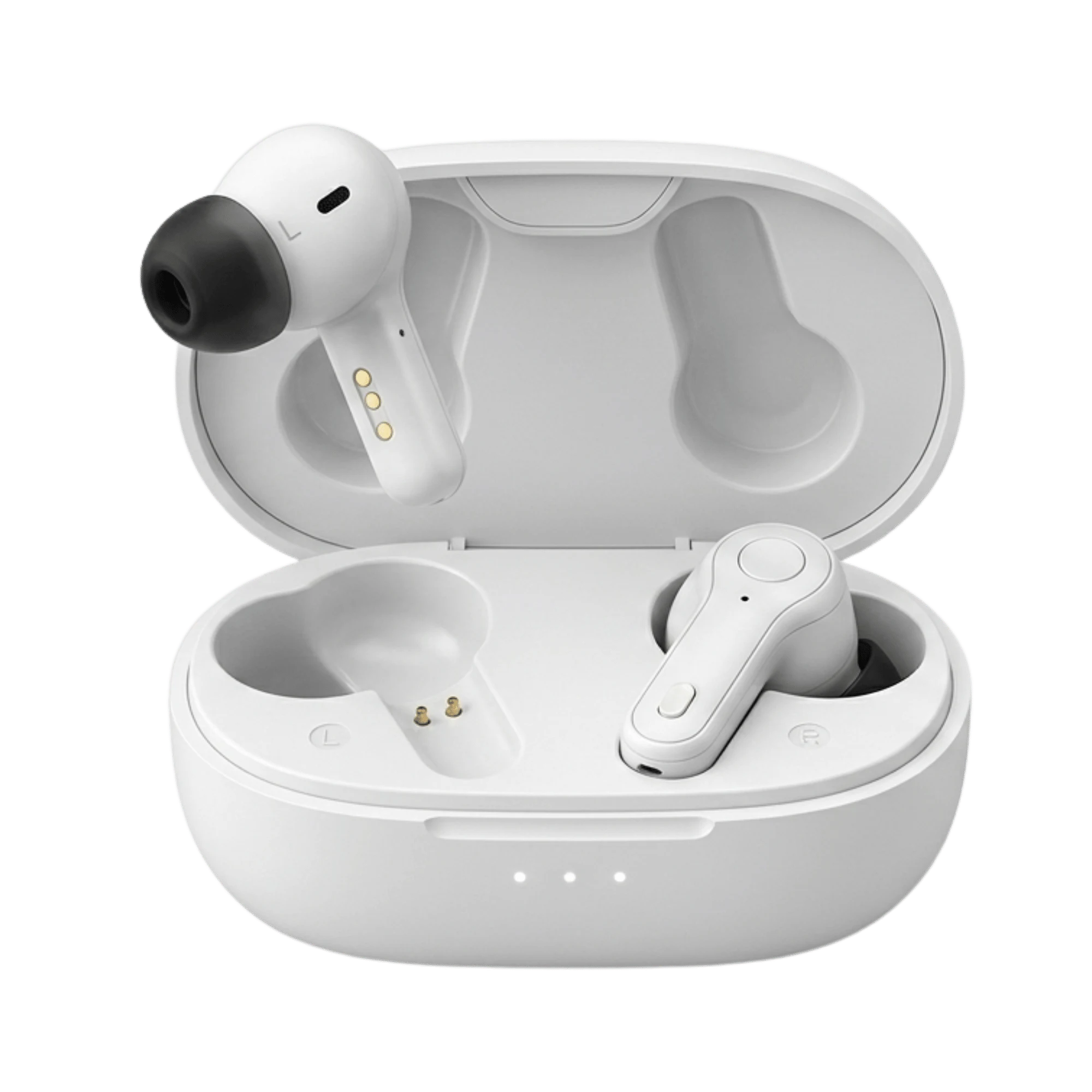
Panda Air hearing aids in charging case, earbud-style design

문의하기

올바른 Panda® 보청기를 선택하는 데 도움이 필요하십니까?

당사 지원 팀은 Panda® Stealth, Panda® Air 및 Panda® Quantum을 비교하고, 주문하기 전에 질문에 답변하거나, 기존 구매에 도움을 줄 수 있습니다.