Una revisione sistematica di 47 studi indica rumore e fumo come i fattori di rischio più costanti per la perdita dell'udito sul lavoro
Una nuova revisione sistematica che comprende 47 studi rileva che la perdita dell'udito è diffusa tra le popolazioni lavorative, ma tra gli 89 possibili fattori di rischio esaminati solo l'esposizione al rumore e il fumo pregresso sono risultati costantemente associati a danni all'udito.
Per milioni di persone, il luogo di lavoro è in assoluto l'ambiente più rumoroso in cui trascorreranno del tempo. Fabbriche, cantieri, aziende agricole, aeroporti e persino cucine affollate espongono i lavoratori a livelli sonori che, ora dopo ora e anno dopo anno, possono logorare silenziosamente le delicate strutture dell'orecchio interno.
Un gruppo di ricercatori in Malaysia ha ora raccolto un decennio di evidenze su quanto siano comuni i problemi di udito tra i lavoratori e su quali fattori permettano davvero di prevedere chi li svilupperà. Le conclusioni sono al tempo stesso preoccupanti e chiarificatrici: i disturbi dell'udito possono colpire una quota sorprendente di alcune categorie di lavoratori e, tra decine di fattori di rischio ipotizzati, solo due sono emersi in modo costante nei diversi studi.
Informazioni sullo studio
Titolo: Prevalence and risk factors of hearing disorders among working populations, a systematic review
Autori: Mohd Firdaus Ismail, Sheng Qian Yew, Zhi Qin Ooi, Hanizah Mohd Yusoff
Affiliazione: Department of Public Health Medicine, Faculty of Medicine, Universiti Kebangsaan Malaysia, Kuala Lumpur
Rivista: American Journal of Otolaryngology, pubblicato il 9 settembre 2026
Tipo di studio: Revisione sistematica di 47 studi (dal 2016 al 2025)
DOI PubMed: 10.1016/j.amjoto.2026.104927
Contesto: perché i ricercatori hanno approfondito questo tema
I danni all'udito di origine professionale si presentano in diverse forme, e la terminologia è importante. La perdita dell'udito indotta dal rumore, spesso abbreviata in NIHL (dall'inglese noise-induced hearing loss), indica specificamente il danno permanente causato dall'esposizione a suoni forti. Il deficit uditivo descrive una riduzione misurabile della capacità uditiva, qualunque ne sia l'origine. Lo spostamento standard della soglia, o STS (standard threshold shift), è un segnale d'allarme precoce utilizzato nel monitoraggio sul lavoro: un peggioramento misurabile delle soglie uditive rispetto al test di riferimento del lavoratore, spesso rilevato prima che la persona si accorga di qualcosa.
Nonostante decenni di normative sulla sicurezza sul lavoro, studi condotti in Paesi e settori diversi hanno riportato tassi di questi problemi estremamente variabili, e nella letteratura si è accumulato un lungo elenco di possibili fattori concorrenti, dal diabete al fumo, dai turni di lavoro all'uso dei dispositivi di protezione dell'udito.
Il gruppo di ricerca si è proposto di mettere ordine in queste evidenze frammentarie. Voleva sapere due cose: quanto sia effettivamente comune ciascun sottotipo di disturbo dell'udito tra i lavoratori e quali dei numerosi fattori di rischio ipotizzati reggano in modo costante quando gli studi vengono esaminati fianco a fianco.
Come è stato condotto lo studio
Gli autori hanno consultato tre importanti banche dati scientifiche, PubMed, Scopus e Web of Science, alla ricerca di studi in lingua inglese pubblicati tra il 2016 e il 2025. Per essere inclusi, gli studi dovevano essere condotti su una popolazione lavorativa e riportare la prevalenza di un disturbo dell'udito, i fattori di rischio associati o entrambi.
Da ogni studio idoneo i revisori hanno estratto il Paese, il settore industriale, il sottotipo di disturbo dell'udito esaminato, gli strumenti utilizzati per valutare l'udito, le stime di prevalenza o incidenza ed eventuali fattori di rischio riportati. Per stabilire se un fattore di rischio fosse costantemente supportato, hanno applicato i criteri di van Tulder, un metodo strutturato per graduare la forza delle evidenze tra più studi, insieme a un'analisi descrittiva della frequenza con cui compariva ciascun fattore.
Cosa hanno scoperto i ricercatori
Quarantasette studi soddisfacevano i criteri di inclusione, e i dati di prevalenza riportati variavano enormemente. La perdita dell'udito in generale colpiva tra il 3,8 percento e il 73,5 percento dei lavoratori, a seconda dello studio e del contesto. La perdita dell'udito indotta dal rumore andava dallo 0,2 percento al 63,6 percento, e il deficit uditivo dal 2,7 percento al 71,2 percento. L'unico studio che riportava lo spostamento standard della soglia lo ha riscontrato nel 50 percento dei lavoratori esaminati.
La revisione ha catalogato ben 89 fattori di rischio distinti per i disturbi dell'udito, distribuiti in otto ambiti: le condizioni mediche rappresentavano 25 fattori, le caratteristiche legate al lavoro 18, i fattori legati al rumore 13, lo stile di vita 12, le caratteristiche sociodemografiche 8, i fattori relativi ai dispositivi di protezione dell'udito 5, l'esposizione ad altri rischi professionali 4 e i fattori legati alle conoscenze 4.
Eppure, quando si è valutata la coerenza delle evidenze, quasi tutti questi 89 fattori sono venuti meno. Solo due hanno mostrato associazioni affidabili con i disturbi dell'udito nei diversi studi: l'esposizione al rumore in sé e una storia di fumo.
Ciò non significa che gli altri 87 fattori siano irrilevanti. Significa che gli studi che li hanno esaminati hanno prodotto risultati contrastanti, utilizzato definizioni non uniformi o erano troppo pochi per trarre conclusioni solide. Ma rende più nitido il quadro di ciò che le evidenze attuali sostengono.
Cosa significa per chi ha una perdita dell'udito
Per chi ha trascorso anni lavorando in un ambiente rumoroso, questa revisione ricorda che i due fattori di danno all'udito più controllabili sono la dose di rumore e il fumo. L'uso costante di protezioni per l'udito negli ambienti rumorosi e smettere di fumare restano gli interventi supportati dalle evidenze più chiare.
Anche l'ampiezza degli intervalli di prevalenza porta con sé un messaggio pratico: in alcuni settori e contesti, i problemi di udito non sono l'eccezione ma quasi la norma. I lavoratori che notano difficoltà nel seguire le conversazioni, soprattutto in presenza di rumore di fondo, hanno buone ragioni per far controllare il proprio udito invece di dare per scontato che il problema sia raro o immaginario. Uno spostamento standard della soglia precoce è, per definizione, rilevabile prima che i problemi di udito diventino evidenti nella vita quotidiana.
Quando il rumore ha già lasciato il segno: un aiuto per sentire il parlato nel rumore
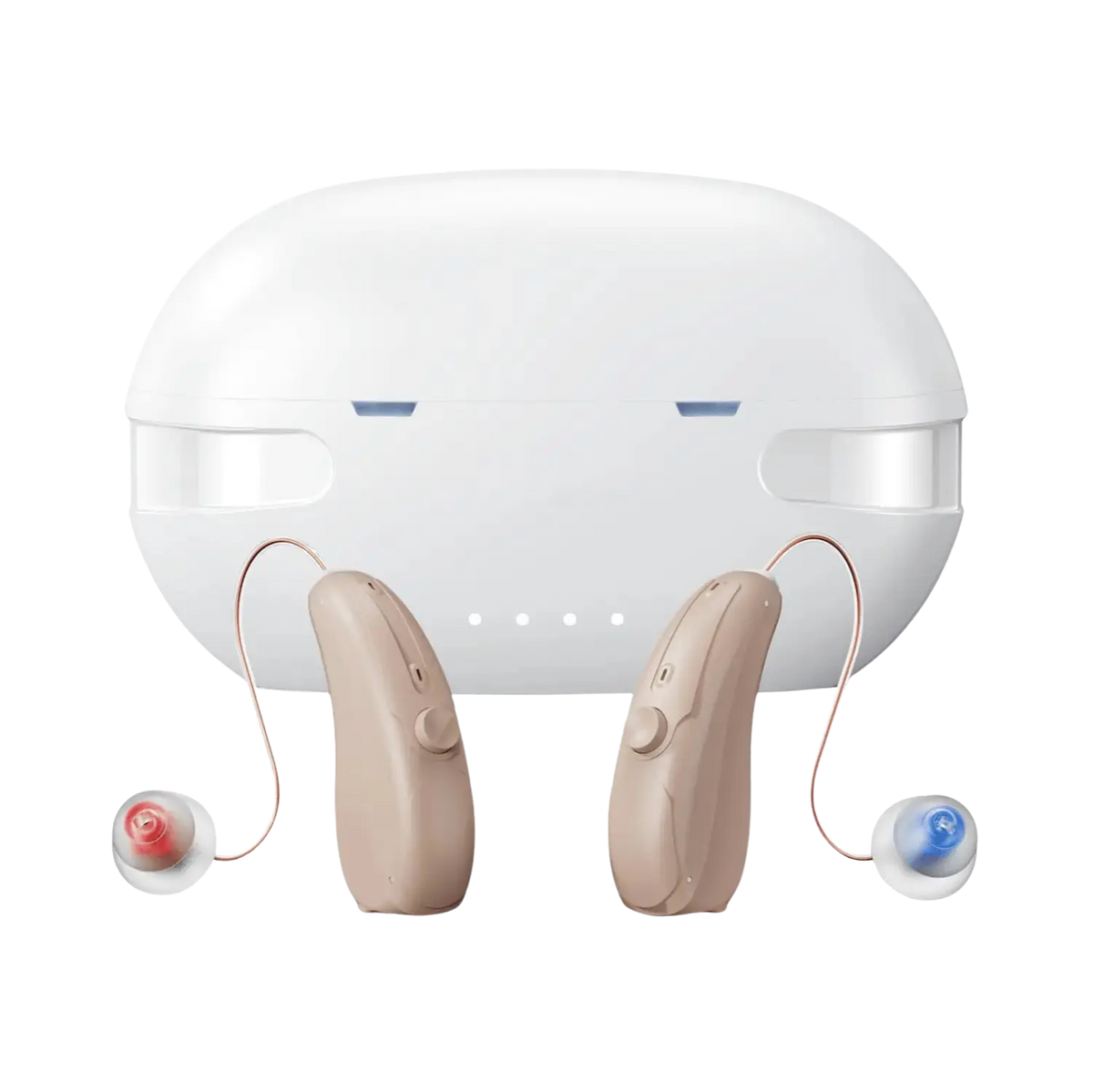
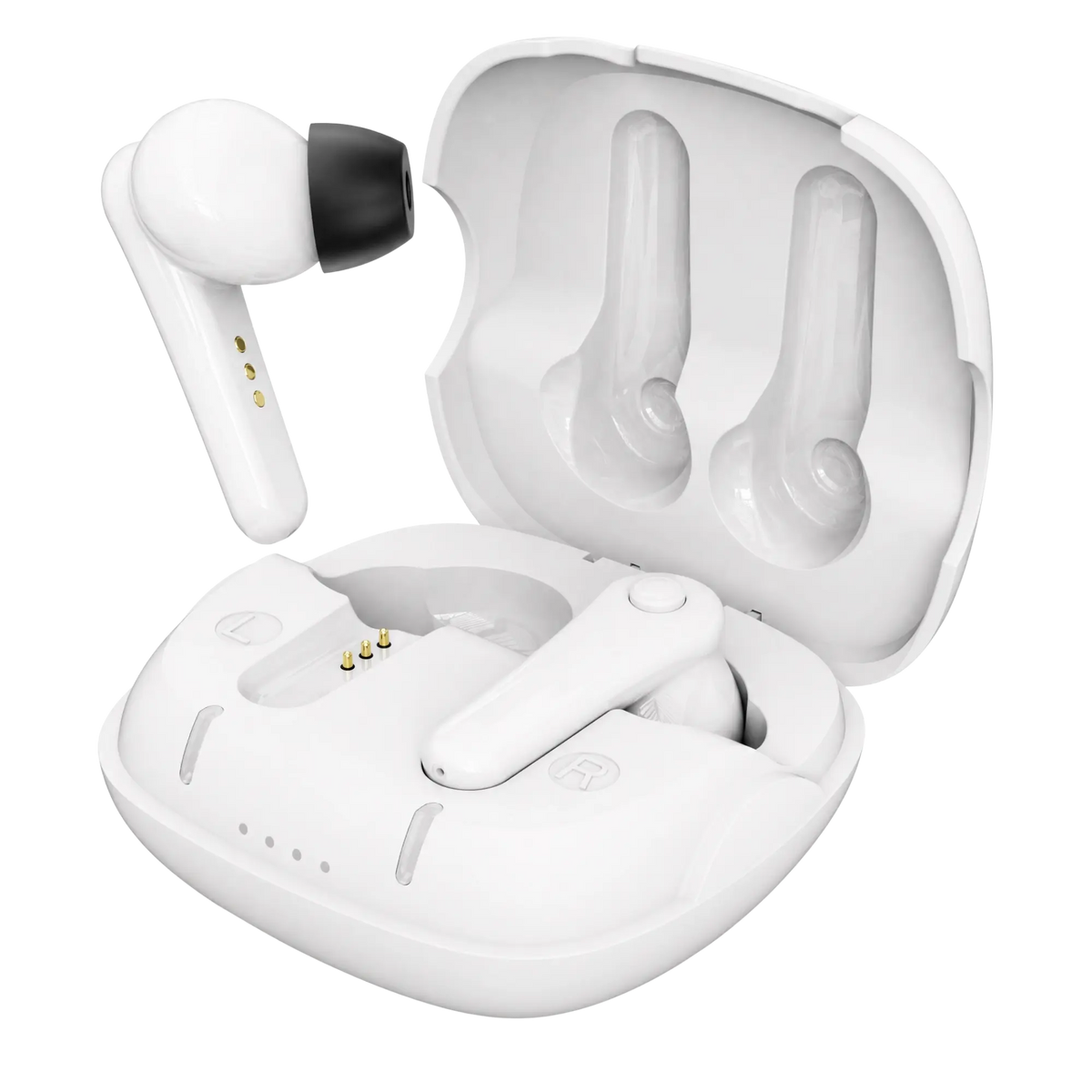
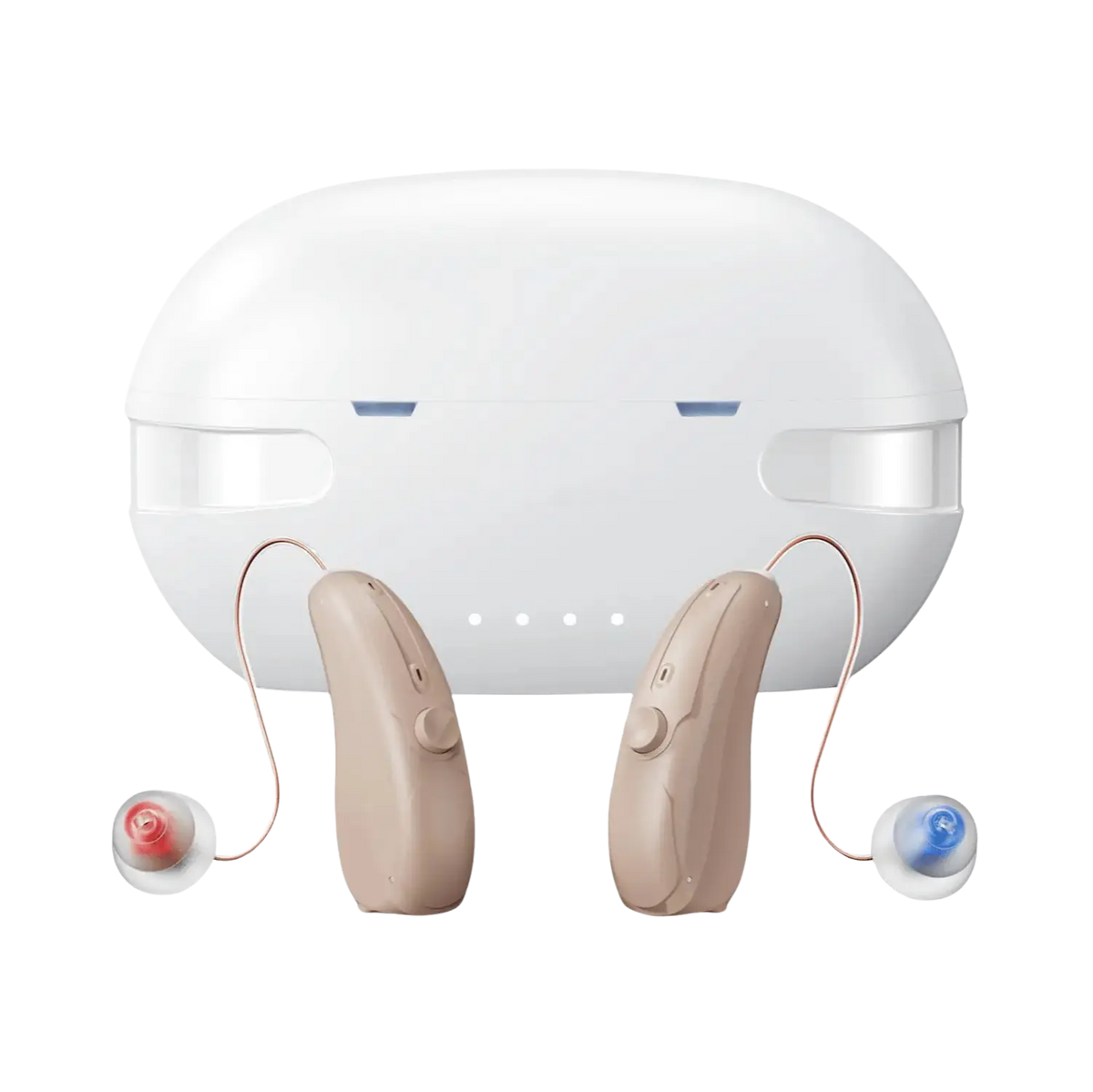
Poiché questa revisione lega così saldamente i danni all'udito sul lavoro al rumore, vale la pena ricordare che, per chi convive già con una perdita da lieve a moderata, i nuovi apparecchi acustici FDA-OTC sono progettati proprio per la situazione che i lavoratori esposti al rumore descrivono più spesso: seguire il parlato nei luoghi rumorosi. Panda Quantum è uno di questi dispositivi, un apparecchio acustico a 16 canali con ricevitore nel canale (RIC) la cui riduzione adattiva del rumore è pensata per un parlato chiaro negli ambienti rumorosi, separando le voci dal sottofondo anziché limitarsi ad alzare il volume di tutto.
Quantum offre 20 ore di autonomia per ricarica e la sua custodia contiene tre ricariche complete aggiuntive per un totale di 80 ore, sufficienti per turni lunghi e spostamenti tra una presa e l'altra. Trasmette in streaming chiamate, TV e musica via Bluetooth, e un'app di accompagnamento opzionale può eseguire un test dell'udito specifico per frequenza attraverso l'apparecchio stesso e personalizzare il guadagno in base al profilo uditivo dell'utente. App e test sono del tutto facoltativi, e Quantum funziona perfettamente appena tolto dalla confezione senza nessuno dei due. Include una garanzia di 5 anni e un periodo di prova di 45 giorni che decorre dall'arrivo del dispositivo.
Una precisazione che vale la pena ripetere: gli apparecchi acustici FDA-OTC sono approvati per la perdita dell'udito da lieve a moderata. I lavoratori la cui perdita è progredita a livelli gravi o profondi trarranno comunque il massimo beneficio da una regolazione clinica con un audioprotesista o un audiologo.

Limiti di questa ricerca
Una revisione sistematica è uniforme solo quanto gli studi che riassume, e in questo caso gli studi di partenza differivano molto nel modo di definire i disturbi dell'udito, negli strumenti di valutazione utilizzati e nei settori esaminati. Questa eterogeneità è la spiegazione più probabile di intervalli di prevalenza così ampi, dal 3,8 al 73,5 percento, e significa che il quadro complessivo va letto come una mappa delle evidenze piuttosto che come un'unica stima globale.
La revisione si è inoltre limitata agli studi in lingua inglese pubblicati dal 2016 in poi, per cui non sono stati considerati risultati rilevanti in altre lingue o di anni precedenti. E il fatto che solo due fattori di rischio abbiano superato la soglia di coerenza riflette tanto lo stato della letteratura quanto la biologia: molti degli altri 87 fattori semplicemente non sono stati studiati abbastanza spesso, o in modo abbastanza uniforme, per poter essere valutati.
A che punto siamo
Dieci anni di ricerca sulle popolazioni lavorative portano a una conclusione chiara, quasi d'altri tempi: proteggere le orecchie dal rumore e non fumare. Tutto il resto del lungo elenco di fattori di rischio ipotizzati attende evidenze migliori e più coerenti. Per i lavoratori che sospettano che il danno sia già avvenuto, il passo successivo più sensato è un controllo dell'udito, perché prima si individua un cambiamento, più opzioni restano aperte.
Ismail MF, Yew SQ, Ooi ZQ, Yusoff HM. Prevalence and risk factors of hearing disorders among working populations - A systematic review. American Journal of Otolaryngology. 2026. Tratto da PubMed. https://doi.org/10.1016/j.amjoto.2026.104927