Une nouvelle étude relie la stigmatisation des appareils auditifs à une moindre qualité de vie et à des réseaux sociaux plus restreints
Une étude transversale menée auprès de 185 adultes malentendants a montré que les personnes qui se sentaient stigmatisées à l'idée de porter des appareils auditifs déclaraient une qualité de vie nettement moins bonne, des réseaux sociaux plus restreints et un sentiment de handicap auditif plus marqué.
La perte auditive est l'une des affections chroniques les plus courantes chez l'adulte, et pourtant beaucoup de personnes qui pourraient bénéficier d'appareils auditifs n'en portent jamais. Les chercheurs soupçonnent depuis longtemps que les raisons dépassent le coût ou l'accès, et que la manière dont les gens ressentent le fait d'être vus avec un appareil auditif joue un rôle mesurable dans leur bien-être.
Une nouvelle étude publiée dans la revue Medicine chiffre ce soupçon. En comparant les utilisateurs et les non-utilisateurs d'appareils auditifs à l'aide de mesures validées de la qualité de vie, du lien social et du handicap auditif perçu, les chercheurs ont pu examiner comment la stigmatisation et l'usage de l'appareil sont chacun liés à la vie quotidienne.
Titre : Hearing aid use and its association with quality of life, perceived hearing handicap, and social networks in adults with hearing loss: A cross-sectional study
Auteurs : Zeynep Demirtaş Özyilmaz et Cemal Özyilmaz
Affiliations : Ordu Provincial Health Directorate et Department of Otolaryngology, Faculty of Medicine, Ordu University, Ordu, Turquie
Revue : Medicine, publié le 11 septembre 2026
Type d'étude : Étude observationnelle transversale
DOI PubMed : 10.1097/MD.0000000000050629
Contexte : pourquoi les chercheurs se sont intéressés à cette question
La qualité de vie est une mesure globale du degré de satisfaction d'une personne quant à son fonctionnement physique, émotionnel et social. Le handicap auditif désigne les difficultés que la perte auditive crée, telles que la personne les perçoit, dans les situations de la vie courante ; il est souvent mesuré à l'aide du Hearing Handicap Inventory. Les réseaux sociaux désignent l'ensemble des relations familiales et amicales avec lesquelles une personne interagit régulièrement, que les chercheurs évaluent couramment avec la Lubben Social Network Scale.
Des recherches antérieures ont montré que la perte auditive non traitée est associée au repli social et à l'isolement. Ce qui était moins clair, c'est le lien entre ces résultats et la stigmatisation que certaines personnes associent aux appareils auditifs, c'est-à-dire la crainte que l'appareil les désigne comme âgées ou diminuées, ainsi que la question de savoir si le port d'un appareil auditif est associé à des liens sociaux plus solides.
Les auteurs ont cherché à répondre aux deux questions dans un même échantillon, en tenant compte statistiquement de facteurs tels que l'âge, le niveau d'études, le revenu, la situation matrimoniale et la durée pendant laquelle la personne vivait avec une perte auditive.
Comment l'étude a été menée
Les chercheurs ont recruté 185 adultes malentendants. Un peu plus de la moitié, soit 93 participants, utilisaient des appareils auditifs, tandis que 92 n'en utilisaient pas. Chaque participant a rempli des questionnaires standardisés portant sur la qualité de vie, le handicap auditif perçu, ainsi que la taille et la solidité de son réseau social.
On a aussi demandé aux participants s'ils percevaient une stigmatisation liée à l'usage d'appareils auditifs. L'équipe a ensuite mené des analyses de régression multivariée, une approche statistique qui estime la contribution indépendante de chaque facteur en maintenant les autres constants. Cela permet de distinguer, par exemple, l'effet de l'usage d'un appareil auditif lui-même de celui du revenu ou de la situation matrimoniale.
Ce que les chercheurs ont constaté
Les résultats sur la stigmatisation étaient frappants. Les participants qui déclaraient percevoir une stigmatisation liée à l'usage d'appareils auditifs avaient des scores de qualité de vie significativement plus bas, des scores de réseau social significativement plus faibles et des scores de handicap auditif significativement plus élevés que ceux qui ne déclaraient aucune stigmatisation, les trois comparaisons atteignant une valeur de P inférieure à ,001.
L'usage d'appareils auditifs était lui-même associé de façon indépendante aux scores de réseau social. Dans les modèles ajustés, le niveau d'études, le niveau de revenu, la situation matrimoniale, l'usage d'un appareil auditif et la durée de la perte auditive présentaient chacun une association indépendante avec la Lubben Social Network Scale, ce qui suggère que le port d'un appareil auditif va de pair avec un lien social plus fort, même après prise en compte des données démographiques.
Deux autres tendances se sont dégagées. Une durée plus longue de la perte auditive et la présence d'acouphènes étaient toutes deux associées de façon indépendante à des scores de handicap auditif plus élevés. Quant à la qualité de vie globale, un revenu plus faible était le seul facteur qui restait associé de façon indépendante à de moins bons scores dans le modèle final.
Les auteurs concluent que les bénéfices de l'usage d'appareils auditifs pourraient s'étendre au-delà de l'audition elle-même, jusqu'au terrain psychosocial, en particulier l'engagement social et le maintien des relations.
Ce que cela signifie pour les personnes malentendantes
Cette étude s'ajoute à un corpus croissant de données montrant que les soins auditifs sont aussi des soins sociaux. Si le port d'un appareil auditif est associé à un réseau social plus vaste et plus actif, alors retarder le traitement peut avoir des coûts qui vont au-delà des conversations manquées.
Les résultats sur la stigmatisation portent aussi un message pratique. Les personnes gênées par un appareil visible déclaraient de moins bons résultats sur tous les plans. Cela suggère que s'attaquer au problème de perception, que ce soit par l'accompagnement, la banalisation ou simplement des appareils plus discrets, pourrait compter autant que l'amplification elle-même. Le constat que les acouphènes étaient liés à un handicap perçu plus important souligne également l'intérêt de signaler à un professionnel de l'audition les sifflements ou bourdonnements lors de tout bilan.
Quand l'appareil lui-même devient une étiquette : l'intérêt des modèles discrets
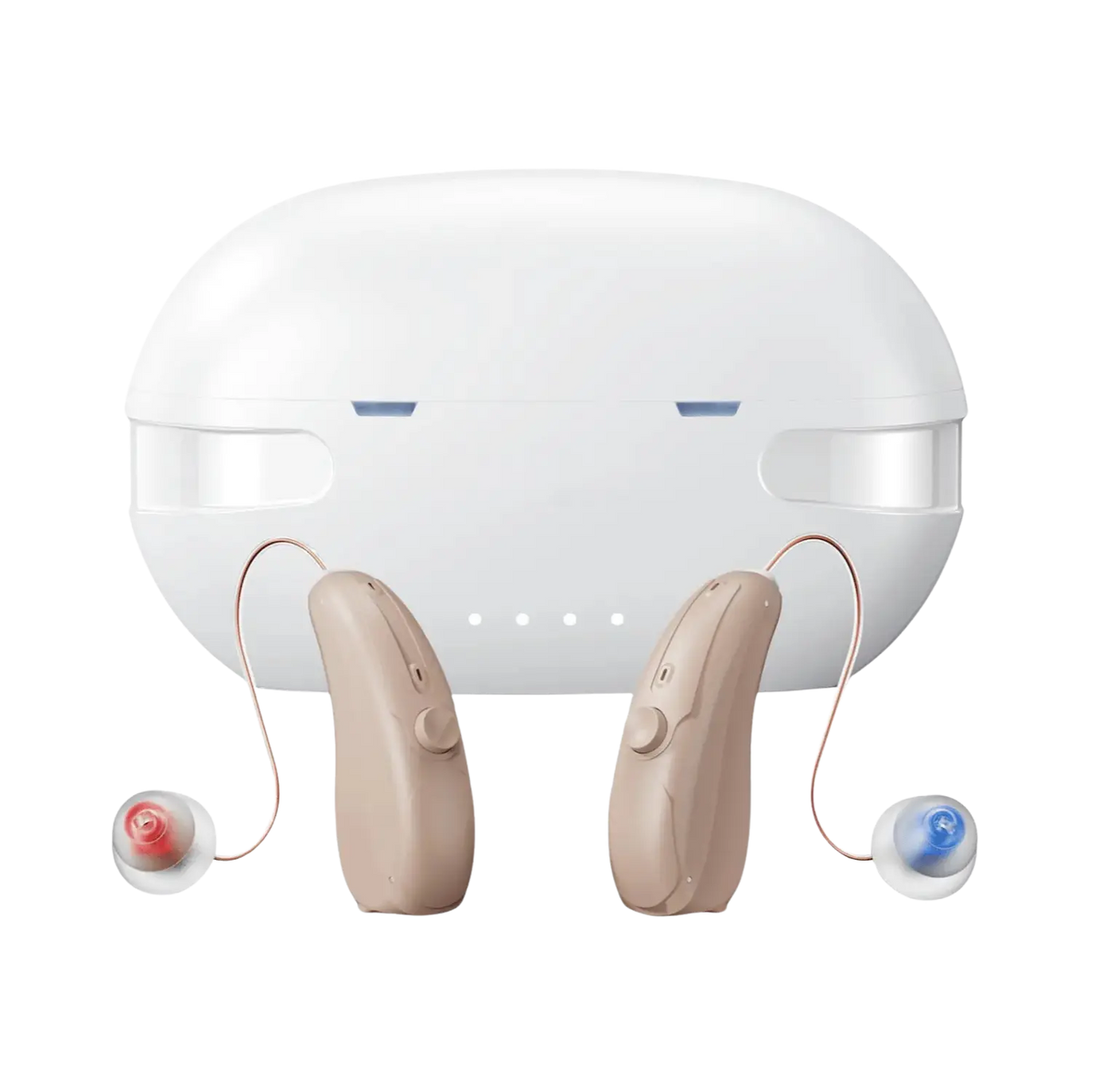
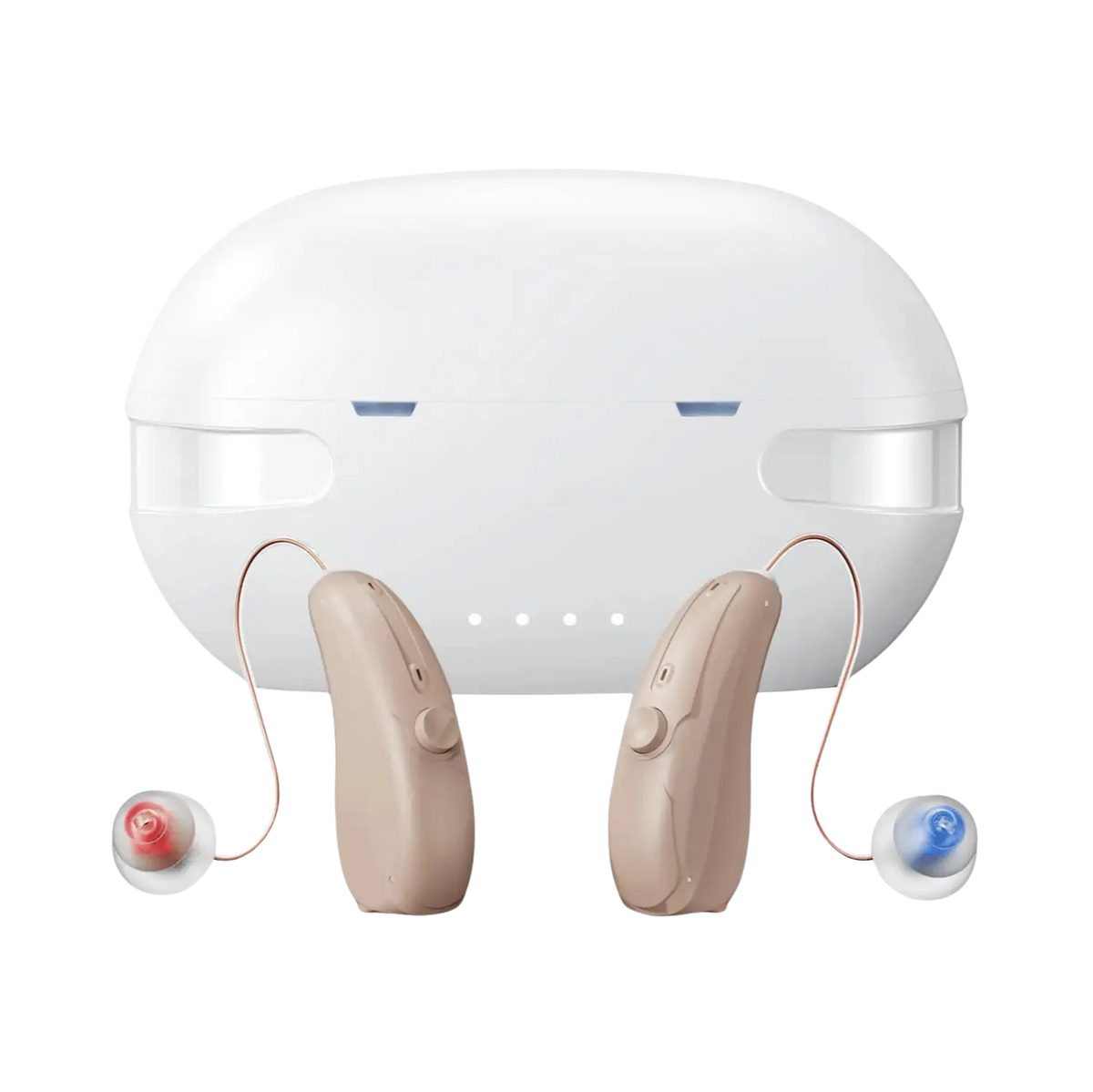
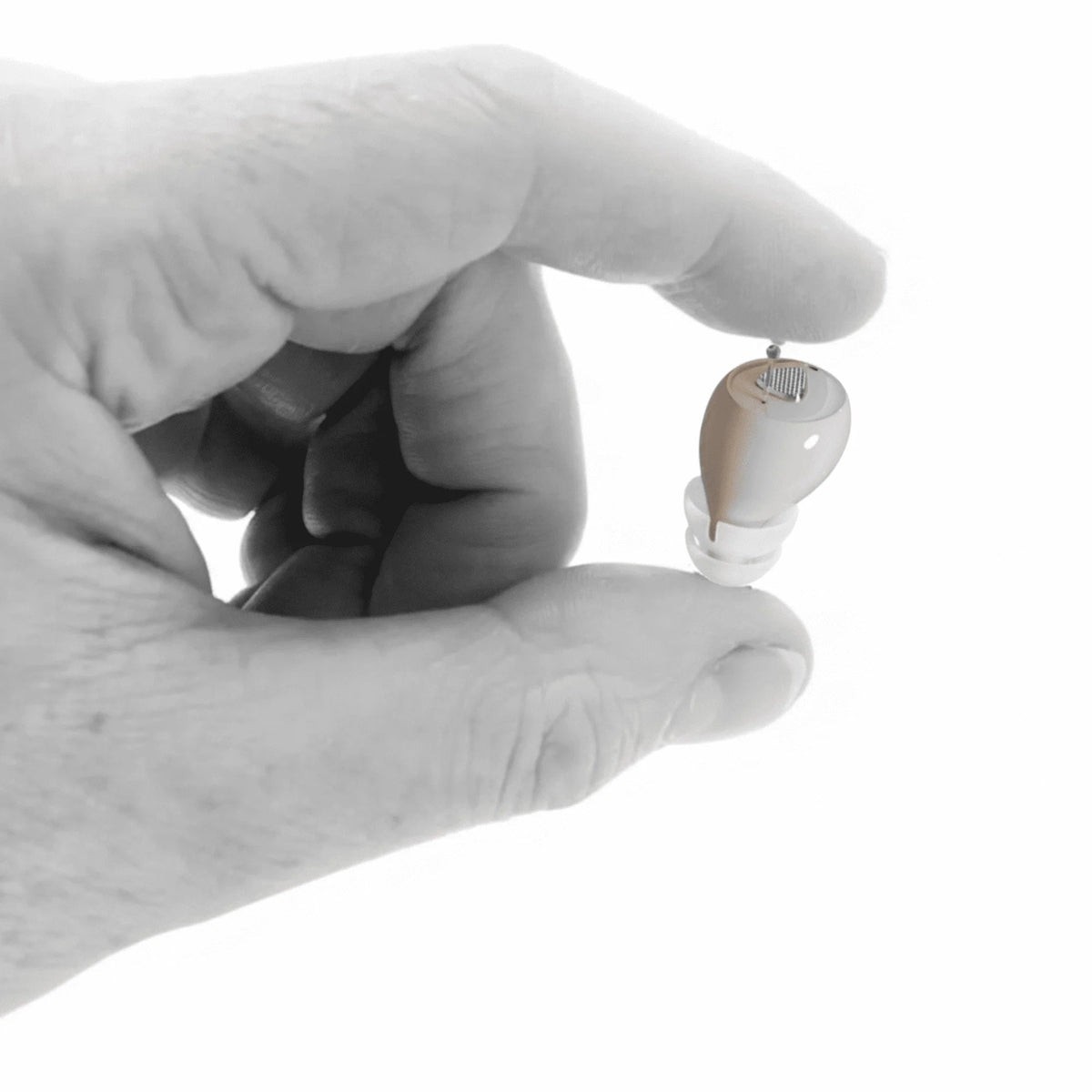
Puisque cette étude relie la stigmatisation perçue à une moindre qualité de vie et à des réseaux sociaux plus restreints, la visibilité de l'appareil n'est pas une préoccupation anodine. C'est l'une des raisons pour lesquelles les appareils auditifs FDA-OTC plus récents adoptent de plus en plus des formats à profil bas, conçus pour être à peine remarqués par les autres.
Panda Stealth illustre cette orientation de conception : un appareil intra-canal quasi invisible de 2,3 grammes, conçu comme l'un des appareils auditifs discrets de la catégorie FDA-OTC. Il utilise une réduction de bruit intelligente sur 12 bandes et est fourni avec un boîtier magnétique rechargeable qui contient 60 heures de charge au total et fait aussi office de télécommande sans fil. Il n'y a ni application ni test auditif : c'est l'un de ces appareils auditifs prêts à l'emploi qui fonctionnent dès la sortie de la boîte, avec un essai de 45 jours qui commence à la réception et une garantie de 5 ans. Les détails sont sur pandahearing.com/products/panda-stealth.
Une réserve qui mérite d'être répétée : les appareils auditifs OTC sont approuvés pour les pertes auditives légères à modérées. Les personnes atteintes d'une perte sévère ou profonde tirent toujours le plus grand bénéfice d'une adaptation en clinique auprès d'un audiologiste.

Limites de cette recherche
Il s'agissait d'une étude transversale, c'est-à-dire qui n'a saisi qu'un instant donné. Elle peut montrer que l'usage d'appareils auditifs et la taille du réseau social évoluent ensemble, mais elle ne peut pas prouver que l'un cause l'autre. Il est tout aussi plausible que les personnes socialement actives soient plus enclines à rechercher des appareils auditifs. L'échantillon de 185 adultes provenait d'une seule région de Turquie ; les résultats ne sont donc pas nécessairement généralisables à toutes les populations, et les questionnaires auto-déclarés comportent toujours un certain risque de biais. Le rapport publié ne mentionnait pas de financement particulier ni de préoccupation en matière de conflits d'intérêts.
Ce qu'il faut en retenir
L'enseignement porte moins sur un chiffre isolé que sur la tendance d'ensemble : l'usage d'appareils auditifs allait de pair avec des liens sociaux plus solides, et la stigmatisation avec de moins bons résultats sur chacune des mesures examinées par les chercheurs. Pour quiconque repousse ses soins auditifs par crainte de l'apparence d'un appareil, cette étude suggère que le coût social de l'attente pourrait être supérieur à celui du port d'un appareil.
Demirtaş Özyilmaz Z, Özyilmaz C. Hearing aid use and its association with quality of life, perceived hearing handicap, and social networks in adults with hearing loss: A cross-sectional study. Medicine (Baltimore). 2026;105(37):e50629. Retrieved from PubMed. https://doi.org/10.1097/MD.0000000000050629