Una peor audición se asocia con más amiloide cerebral al final de la mediana edad, según un estudio con imágenes PET
En una cohorte de 223 adultos de mediana edad avanzada, una peor audición en las pruebas estándar se asoció con niveles más altos de amiloide, la proteína que se acumula en la enfermedad de Alzheimer, en varias regiones cerebrales en tomografías PET.
La relación entre la pérdida auditiva y la demencia se ha convertido en una de las preguntas más seguidas de la investigación sobre el envejecimiento. Grandes estudios epidemiológicos han encontrado repetidamente que las personas con pérdida auditiva tienen un mayor riesgo de deterioro cognitivo, pero la vía biológica detrás de esa relación sigue sin estar clara.
Un nuevo estudio de imágenes realizado por investigadores de Columbia University aborda la cuestión desde otro ángulo: en lugar de seguir los resultados de pruebas de memoria a lo largo de los años, analiza directamente el amiloide, una proteína característica de la enfermedad de Alzheimer, en el cerebro de adultos de entre sesenta y sesenta y tantos años.
Título: Hearing Loss Is Associated With Regional Brain Amyloid in a Late Middle-Aged Cohort
Autores: S. Dillon Powell, Hannah N. W. Weinstein, Froogh Aziz, Adam M. Brickman, Patrick J. Lao, Mark A. Eckert, José A. Luchsinger y Justin S. Golub
Afiliaciones: Departments of Otolaryngology-Head and Neck Surgery, Medicine, and Neurology, Columbia University Irving Medical Center, y Mailman School of Public Health, Columbia University, Nueva York, EE. UU.
Revista: The Laryngoscope, publicado el 13 de septiembre de 2026
Tipo de estudio: Estudio observacional de cohorte con imágenes
DOI en PubMed: 10.1002/lary.70852
Antecedentes: por qué los investigadores estudiaron este tema
El beta-amiloide es un fragmento de proteína que puede agruparse en placas en el cerebro, una de las características distintivas de la enfermedad de Alzheimer. Hoy los investigadores pueden medirlo en personas vivas mediante tomografía por emisión de positrones, o PET, que produce un valor llamado cociente de captación estandarizado, o SUVR. Un SUVR más alto significa más amiloide.
La audición se midió de dos maneras. El promedio de tonos puros, o PTA, refleja los tonos más suaves que una persona puede detectar; los valores más altos en decibeles indican peor audición. La puntuación de reconocimiento de palabras, o WRS, mide el porcentaje de palabras habladas que una persona puede repetir correctamente, lo que refleja la claridad de la audición y no solo el volumen.
Si la pérdida auditiva estuviera vinculada a la acumulación de amiloide, eso apuntaría a una vía biológica compartida entre la audición y la enfermedad de Alzheimer. Si no, la relación entre audición y demencia podría pasar por otras vías, como el aislamiento social o la menor estimulación. Cualquiera de las dos respuestas es importante para la forma en que los médicos conciben el cuidado auditivo en la mediana edad.
Cómo se realizó el estudio
El equipo estudió a 223 participantes con una edad promedio de 65.6 años. A cada uno se le realizó una prueba auditiva en el mejor oído, midiendo tanto el PTA como la WRS, y cada uno se sometió a una tomografía PET de amiloide. El PTA promedio fue de 21.0 decibeles, justo en el límite de lo que los audiólogos clasifican como pérdida auditiva leve.
Luego, los investigadores utilizaron una regresión lineal multivariable, ajustada por las covariables pertinentes, para comprobar si una peor audición se asociaba con más amiloide, tanto en todo el cerebro como en regiones específicas, como las áreas temporal, parietal, cingulada y frontal.
Lo que encontraron los investigadores
En cuanto a la audición de tonos puros, cada empeoramiento de 10 decibeles en el PTA se asoció con un SUVR de amiloide 0.024 más alto en la región temporal izquierda, con un valor P de 0.048. Solo esa región alcanzó significancia estadística, pero los autores señalan que las asociaciones fueron similares en magnitud y dirección en todas las regiones cerebrales examinadas.
Los hallazgos sobre el reconocimiento de palabras fueron más amplios. Por cada caída del 10 por ciento en la WRS, el amiloide fue significativamente mayor en las regiones temporal izquierda, temporal derecha, parietal izquierda, parietal derecha, cingulada izquierda, cingulada derecha y frontal derecha, así como a nivel global en todo el cerebro, donde el coeficiente fue de 0.064 con un valor P de 0.005.
En otras palabras, la medida de claridad, es decir, qué tan bien entendían las personas las palabras, mostró una relación más constante con el amiloide cerebral que la medida de volumen. Los autores observaron que las asociaciones parecían estar impulsadas por los participantes con mayor pérdida auditiva y mayor carga de amiloide.
Los tamaños del efecto fueron pequeños, y los autores tienen cuidado de presentar los resultados como una asociación que requiere más investigación, incluida la pregunta abierta de si la audición podría tener alguna relación causal con las placas de amiloide.
Qué significa para las personas con pérdida auditiva
Este estudio no demuestra que la pérdida auditiva cause la enfermedad de Alzheimer, ni que tratar la pérdida auditiva la prevenga. Lo que aporta es una pieza de evidencia biológica de que la audición y la salud cerebral están entrelazadas antes de lo que muchas personas suponen, en una cohorte cuya pérdida auditiva promedio era solo leve.
El mensaje práctico tiene que ver con prestar atención, no con alarmarse. Los cambios auditivos entre los cincuenta y los sesenta años son comunes, medibles y manejables. Dada la creciente evidencia que vincula la audición con la salud cerebral, hacerse una prueba auditiva en la mediana edad avanzada es un paso de bajo costo y bajo riesgo, sobre todo para quienes notan que pueden oír el habla pero les cuesta distinguir las palabras.
Cuando el problema es la claridad de las palabras: lo que ofrece el procesamiento centrado en el habla
Un detalle notable de este estudio es que el reconocimiento de palabras, y no solo la detección de tonos, mostró el vínculo más fuerte con las medidas cerebrales. Esto coincide con lo que describen muchas personas con pérdida auditiva incipiente: el televisor tiene suficiente volumen, pero los diálogos se oyen confusos. Como la claridad es la queja más común, los audífonos de venta libre (FDA-OTC) más nuevos se centran en el procesamiento del habla y no en la simple amplificación.
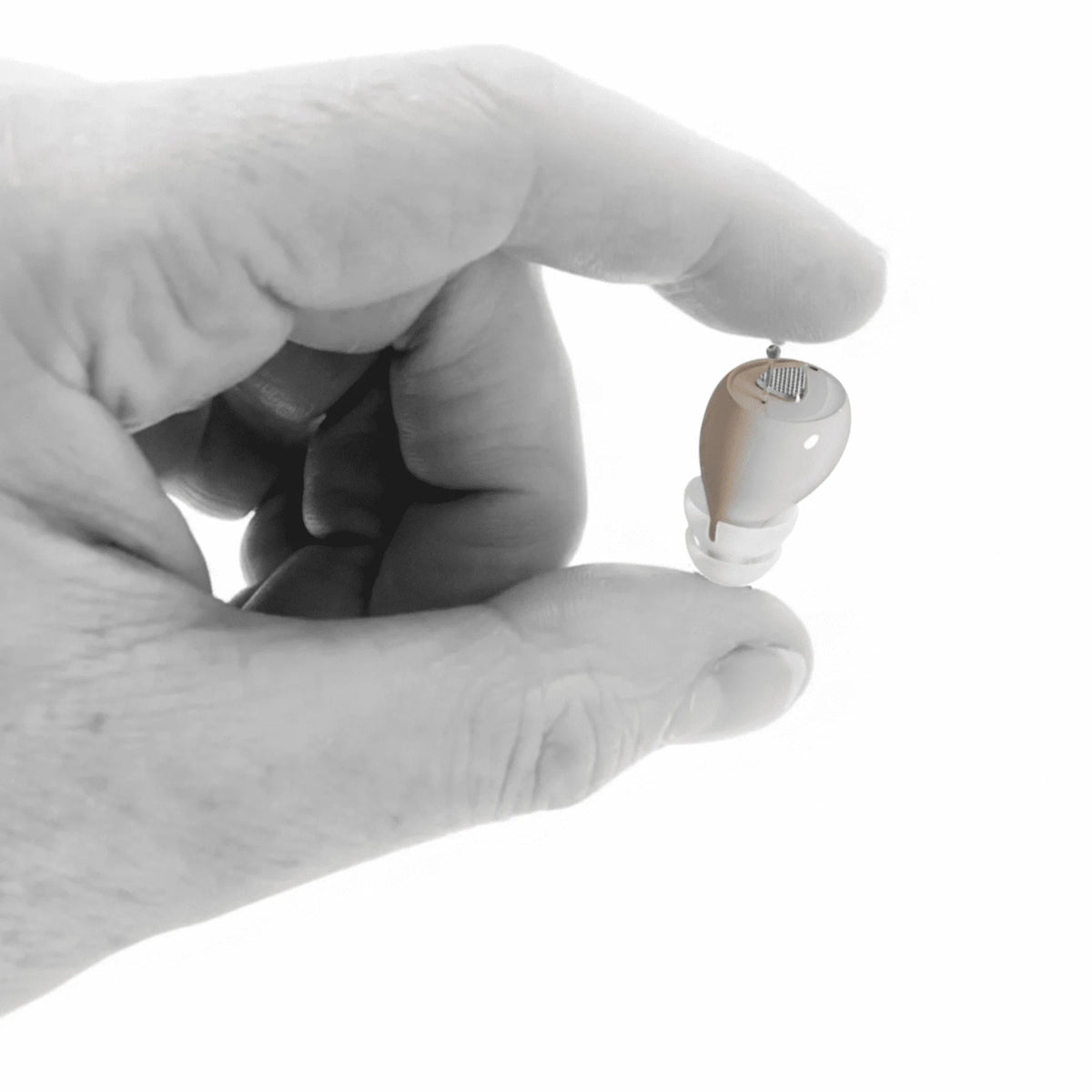
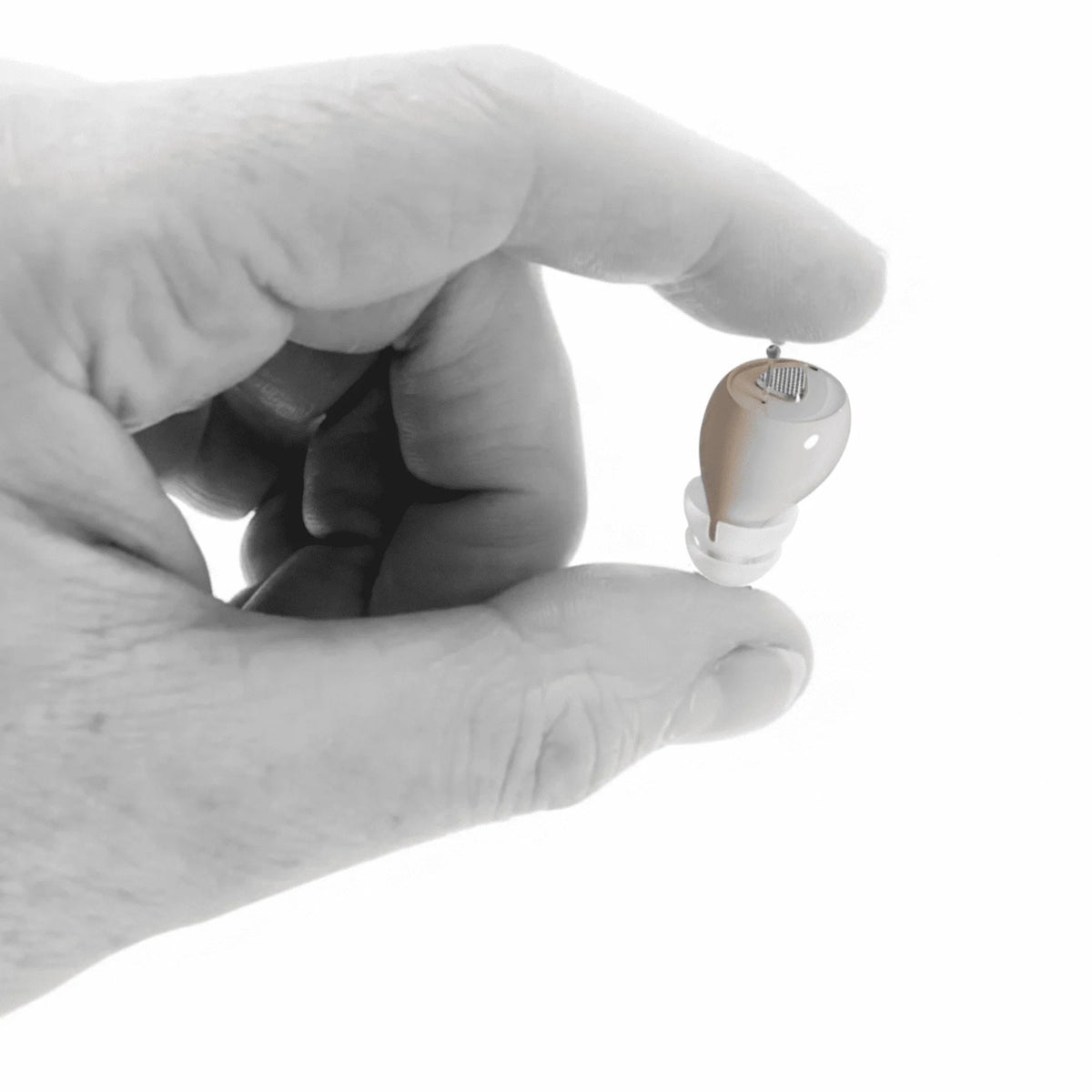
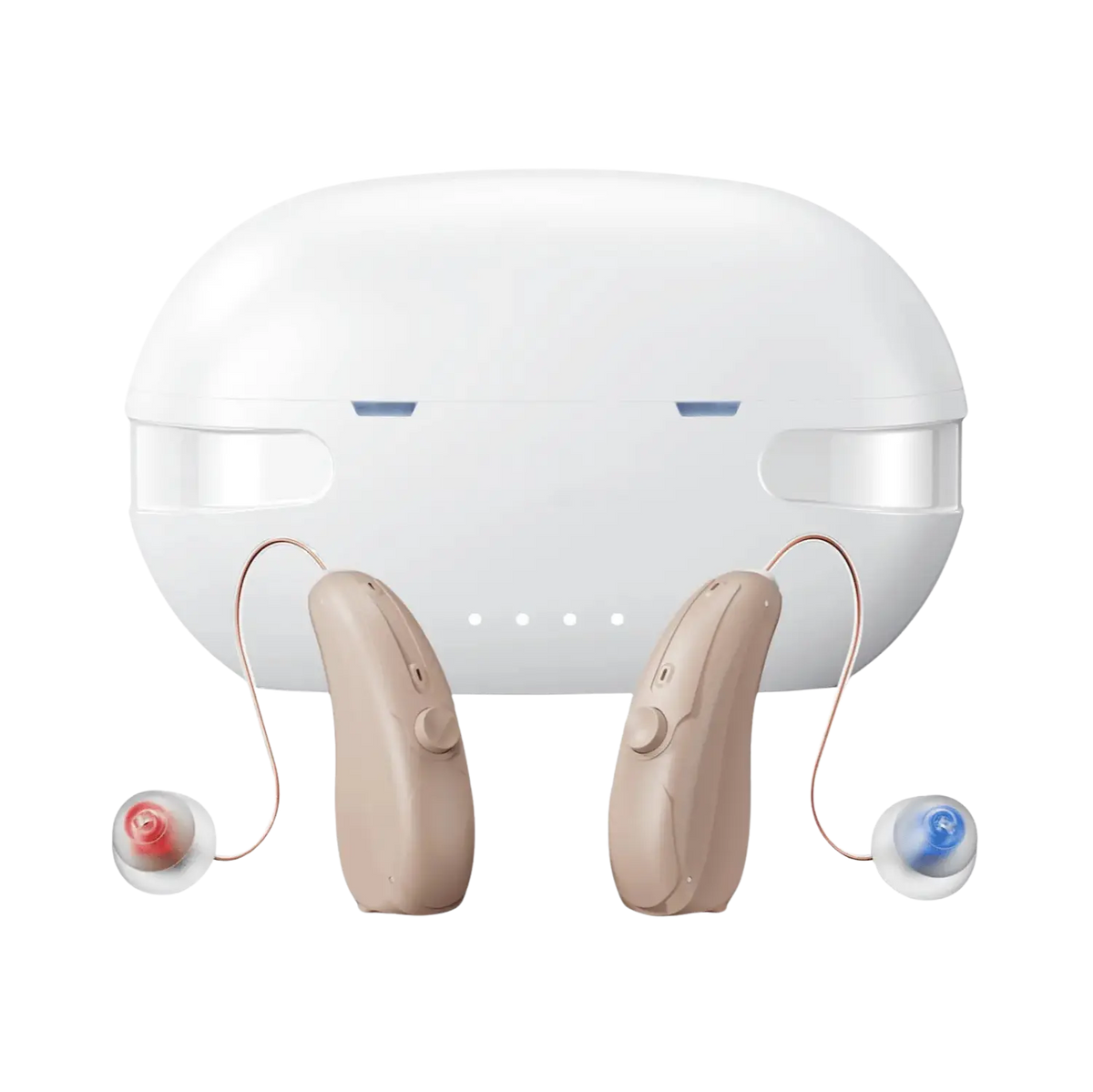
Panda Quantum es uno de esos dispositivos, diseñado para ofrecer un habla clara en entornos ruidosos, con procesamiento WDRC de 16 canales y reducción adaptativa de ruido. Una sola carga dura 20 horas, el estuche aporta tres cargas completas más para un total de 80 horas, y el Bluetooth se encarga de las llamadas, la TV y la música. Una app opcional puede realizar una prueba auditiva en el oído por frecuencias y personalizar la ganancia según su perfil auditivo, aunque Quantum funciona plenamente desde el primer momento sin la app ni la prueba. Cuenta con una garantía de 5 años y un período de prueba de 45 días que comienza al recibirlo. Encontrará los detalles en pandahearing.com/products/panda-hearing-aids-quantum.
Cabe señalar que los audífonos OTC están aprobados para la pérdida auditiva leve a moderada, el rango estudiado en esta cohorte. En la pérdida severa o profunda, lo más beneficioso sigue siendo una adaptación clínica.

Limitaciones de esta investigación
Se trató de un estudio observacional en un único momento, por lo que no puede establecer una relación de causa y efecto. El hallazgo estadísticamente significativo del PTA se limitó a una sola región cerebral y quedó cerca del umbral convencional de significancia, y los tamaños del efecto fueron pequeños en todos los casos. La cohorte provino de la población de un solo centro médico, lo que puede limitar la generalización de los resultados. Los propios autores subrayan que la razón de estas asociaciones, y si la audición podría tener una relación causal con el amiloide, requieren más investigación.
Dónde nos deja esto
La historia de la audición y la salud cerebral aún se está escribiendo, y este estudio aporta un capítulo cuidadoso basado en imágenes, no una conclusión. Lo que sí refuerza es que la audición en la mediana edad avanzada no es una preocupación secundaria. Es medible, se relaciona con lo que ocurre en el cerebro y merece la misma atención rutinaria que la presión arterial o la vista.
Powell SD, Weinstein HNW, Aziz F, Brickman AM, Lao PJ, Eckert MA, Luchsinger JA, Golub JS. Hearing Loss Is Associated With Regional Brain Amyloid in a Late Middle-Aged Cohort. The Laryngoscope. 2026. Consultado en PubMed. https://doi.org/10.1002/lary.70852