Cinco fenotipos de tinnitus, una terapia de sonido: lo que encontró un estudio de 564 pacientes
Los investigadores identificaron cinco fenotipos distintos de tinnitus y encontraron que un entorno acústico enriquecido personalizado redujo la gravedad del tinnitus en un margen clínicamente relevante en el 78 por ciento de los pacientes que completaron cuatro meses de escucha diaria.
El tinnitus (acúfenos), la percepción de zumbidos, siseos o pitidos sin una fuente de sonido externa, es una de las molestias auditivas más comunes en los adultos. Para algunas personas es una molestia pasajera; para otras, altera el sueño, la concentración y el bienestar emocional. Una de las razones por las que ha resultado tan difícil de tratar es que el tinnitus no es una afección única y uniforme: varía en su causa, en la calidad del sonido, en su gravedad y en cuánta angustia provoca.
Un equipo de investigación de España y Francia se preguntó si los pacientes con tinnitus podían clasificarse en subtipos significativos, o fenotipos, mediante agrupamiento basado en datos, y si esos subtipos responden de forma diferente a una terapia basada en sonido llamada entorno acústico enriquecido. Sus hallazgos, publicados en Brain Sciences, sugieren que la respuesta a ambas preguntas es sí.
Sobre este estudio
Título: Tinnitus Phenotypes and Their Response to the Enriched Acoustic Environment (EAE) Treatment
Autores: Charles Bouzou, Marta Fernández-Ledesma, María Cuesta y Pedro Cobo
Afiliaciones: Ecole Centrale Mediterranée, Marsella, Francia; Universidad Europea de Madrid, España; Institute of Physical and Information Technologies (ITEFI), CSIC, Madrid, España
Revista: Brain Sciences, publicada el 21 de agosto de 2026
Tipo de estudio: Estudio de cohorte transversal retrospectivo con análisis de conglomerados basado en datos
Fuente: PubMed, DOI: 10.3390/brainsci16080894
Antecedentes: por qué los investigadores estudiaron este tema
Los médicos han observado desde hace tiempo que dos personas con tinnitus pueden no tener casi nada en común. Una puede tener una pérdida auditiva considerable y solo una molestia leve, mientras que otra tiene un audiograma casi normal y una angustia intensa. Agrupar a pacientes tan distintos podría ser una de las razones por las que los ensayos clínicos de tratamientos para el tinnitus producen tan a menudo resultados mixtos. La subtipificación, o fenotipificación, busca resolver esto agrupando a los pacientes según características compartidas y medibles.
La terapia estudiada aquí, un entorno acústico enriquecido, proporciona un estímulo sonoro personalizado, diseñado en función del perfil auditivo de cada persona. El enfoque se basa en evidencia de que enriquecer la información auditiva que llega al cerebro puede, con el tiempo, reducir cuán prominente se percibe el tinnitus. Lo que faltaba era una idea clara de qué tipos de pacientes responden mejor.
Cómo se realizó el estudio
Los investigadores analizaron una cohorte retrospectiva de 564 personas con tinnitus. Primero, una cascada jerárquica de decisiones clasificó el audiograma de cada participante en uno de seis patrones de pérdida auditiva. Luego se aplicó K-clustering, una técnica estadística que agrupa casos similares sin etiquetas predefinidas, a variables demográficas, auditivas, de tinnitus y emocionales, entre ellas el género, el umbral auditivo promedio, el patrón de pérdida auditiva, la edad de aparición del tinnitus, su duración, gravedad, lateralización, tipo de sonido, etiología y las puntuaciones emocionales.
Los participantes recibieron un estímulo de entorno acústico enriquecido personalizado y se les pidió que lo escucharan una hora al día durante cuatro meses. La gravedad del tinnitus y las puntuaciones emocionales se midieron antes y después del período de tratamiento, lo que permitió al equipo comparar los resultados entre los fenotipos identificados por el agrupamiento.
Lo que encontraron los investigadores
El agrupamiento produjo cinco fenotipos distintos, cada uno con su propia combinación de patrón de pérdida auditiva, características del tinnitus y carga emocional.
Entre los pacientes que completaron el programa de cuatro meses, la terapia logró una reducción promedio de la gravedad del tinnitus de 24.3 puntos, una mejora que los autores describen como clínicamente relevante y estadísticamente significativa, y el 78 por ciento de quienes lo completaron mejoró.
La respuesta no fue uniforme entre los grupos. Las mayores mejoras absolutas, tanto en la gravedad como en las puntuaciones emocionales, se observaron en los dos fenotipos, denominados PH3 y PH4, que comenzaron con la mayor angustia por tinnitus y los mayores síntomas emocionales. Al mismo tiempo, el cambio relativo en la gravedad fue notablemente menor en PH4, y los fenotipos se diferenciaron claramente en quiénes fueron excluidos del tratamiento, quiénes lo abandonaron y quiénes no mejoraron.
Qué significa para las personas con pérdida auditiva
El estudio refuerza dos mensajes prácticos. Primero, la atención del tinnitus podría funcionar mejor cuando se adapta al paciente: conocer el fenotipo de una persona podría, con el tiempo, ayudar a los médicos a predecir quién tiene más probabilidades de beneficiarse de una terapia basada en sonido y quién podría necesitar otro enfoque. Segundo, el enriquecimiento sonoro en sí sigue siendo prometedor, ya que una gran proporción de pacientes mejoró con un tratamiento no invasivo que se aplica uno mismo en casa.
El hallazgo de que los pacientes con mayor angustia obtuvieron el mayor alivio absoluto es especialmente notable, ya que son precisamente los pacientes para quienes se necesitan opciones eficaces con más urgencia.
Enriquecimiento sonoro cotidiano fuera de un protocolo de investigación
El tratamiento de este estudio funcionó añadiendo deliberadamente sonido personalizado al día de cada paciente. Fuera del laboratorio, la fuente cotidiana más común de sonido enriquecido para las personas con pérdida auditiva es la amplificación. Los audífonos no tratan ni curan el tinnitus; lo que un sonido cotidiano más claro puede hacer, para algunas personas cuyo tinnitus acompaña a una pérdida auditiva, es que el tinnitus se perciba menos frente a un entorno sonoro más pleno.
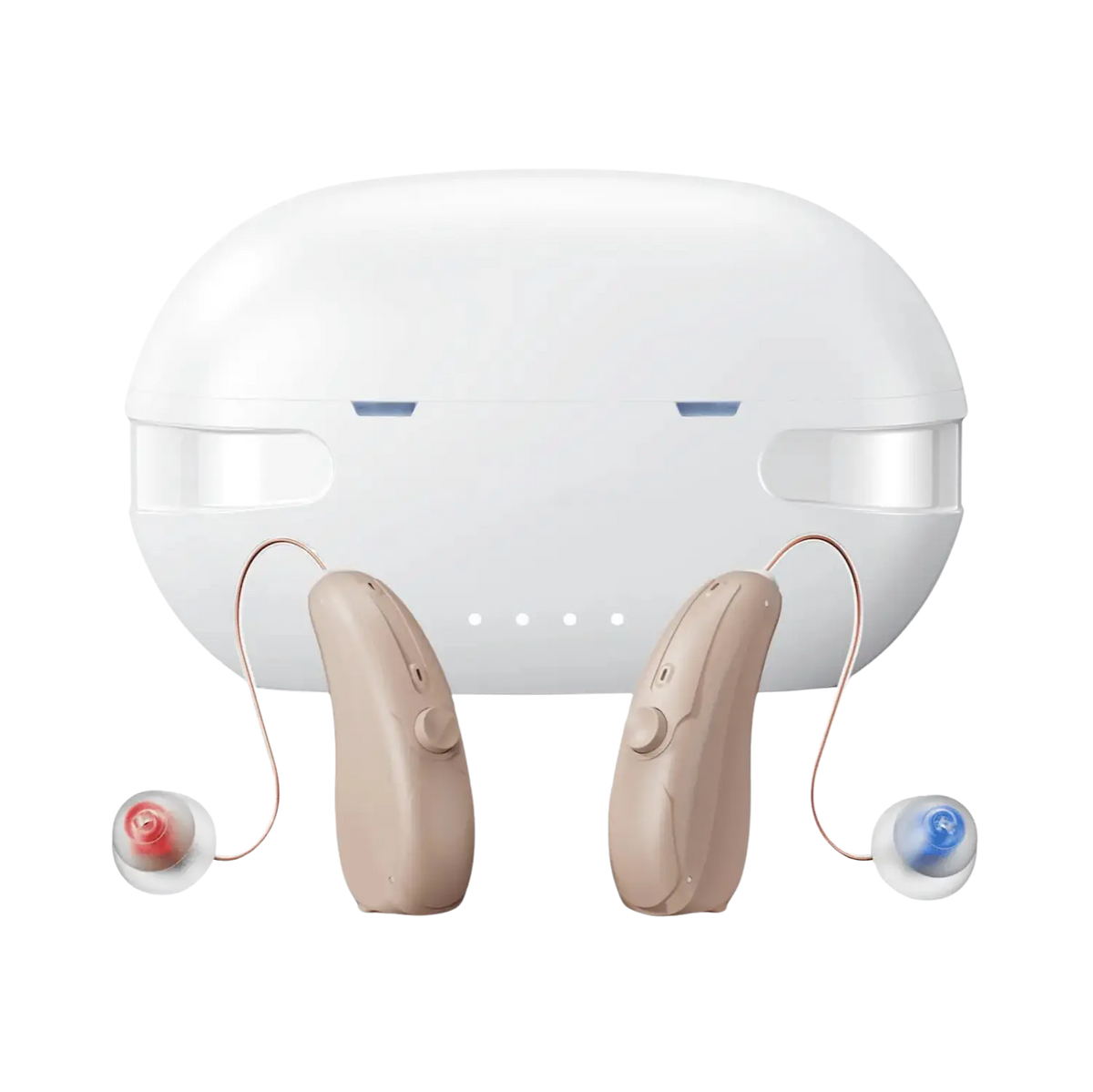
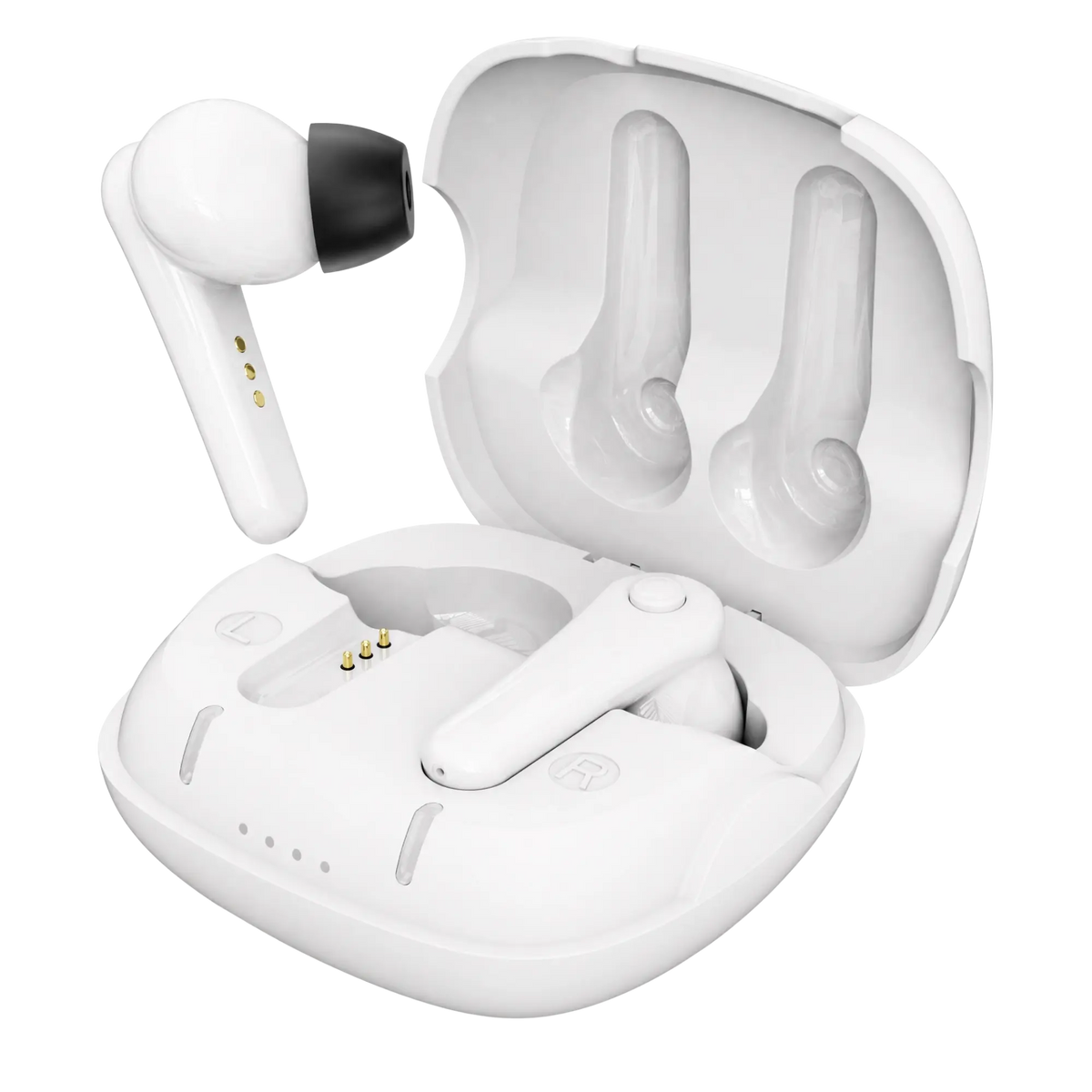
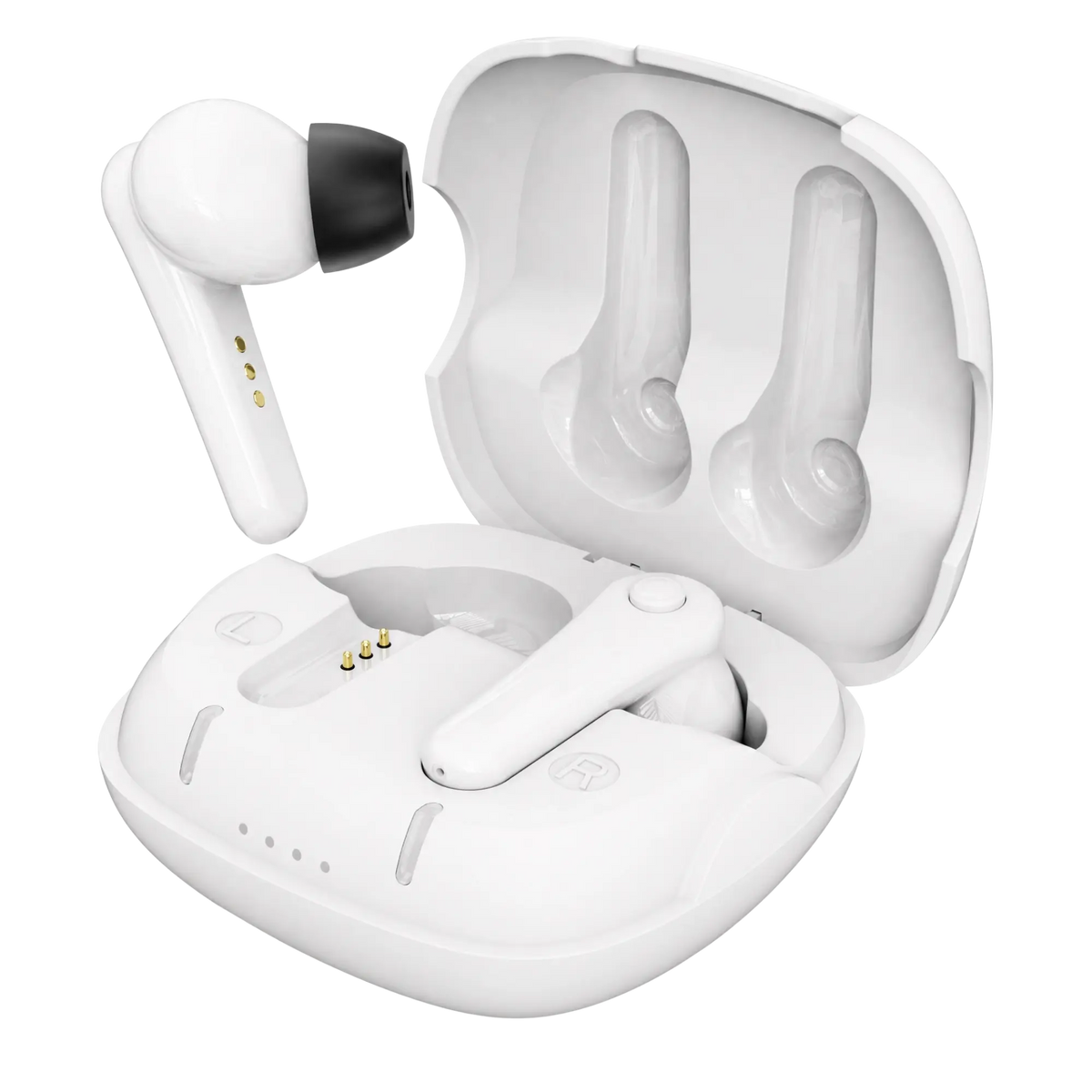
Los audífonos de venta libre (OTC) conformes con la FDA han facilitado ese tipo de acceso cotidiano al sonido para los adultos con pérdida auditiva leve a moderada. Panda Air es un ejemplo: un audífono moderno tipo auricular inalámbrico con procesamiento WDRC de 16 canales, reducción de ruido adaptativa multibanda, Bluetooth para llamadas, TV y música, y un estuche de carga rápida que ofrece 60 horas de uso en total, respaldado por una garantía de 5 años y un período de prueba de 45 días que comienza cuando recibe el dispositivo.
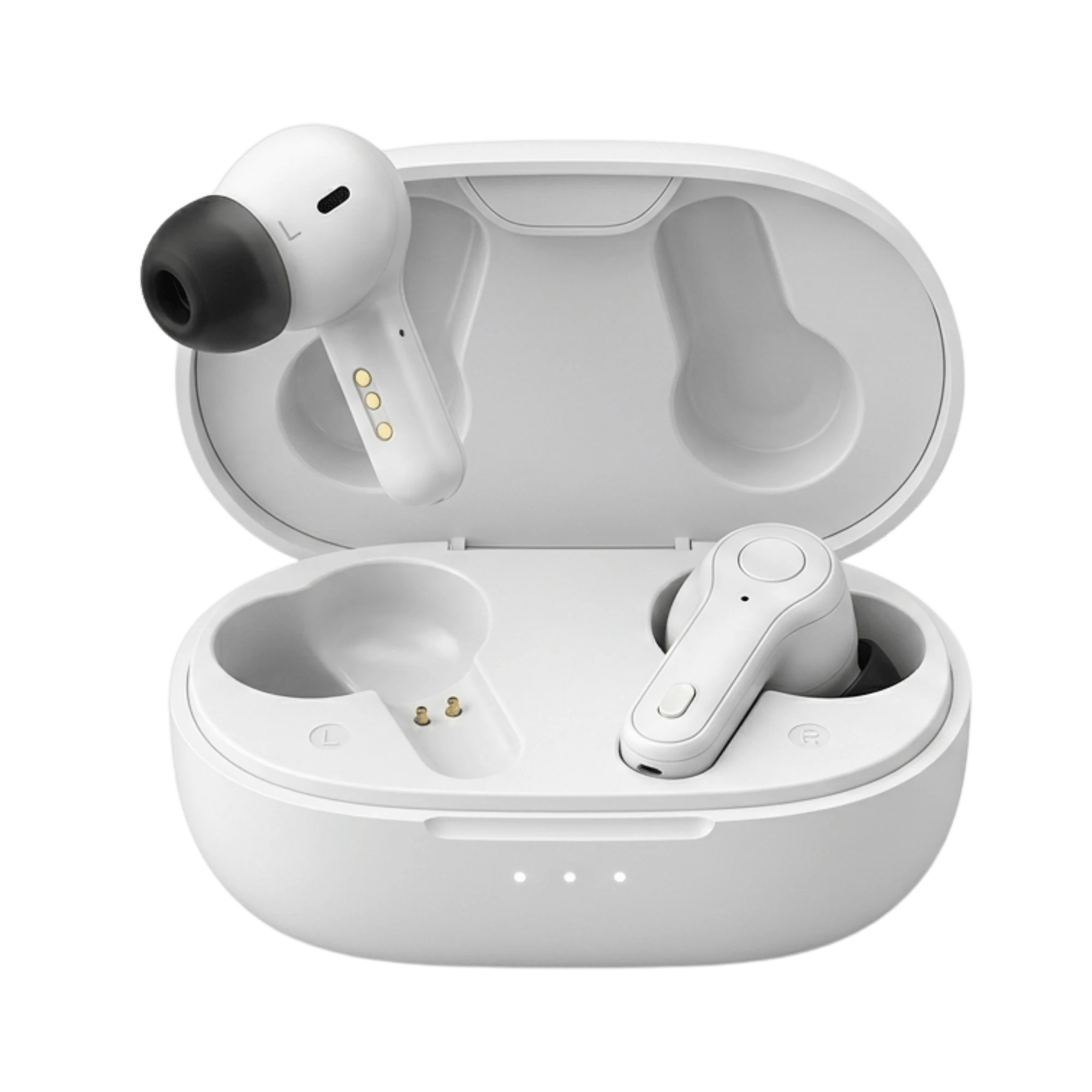
En la misma línea que el estímulo personalizado de este estudio, Air ofrece una opción autoajustable: una prueba de audición opcional dentro del oído, realizada desde la app, puede medir la audición frecuencia por frecuencia y personalizar la ganancia y la respuesta de frecuencia según el perfil de quien lo usa. La app y la prueba son opcionales, y Air funciona desde el primer momento sin ninguna de las dos.
Limitaciones de esta investigación
Se trató de un análisis retrospectivo y transversal, no de un ensayo controlado aleatorizado, por lo que no hubo un grupo de comparación sin tratamiento, y la mejoría observada no puede separarse claramente de los efectos placebo ni de la fluctuación natural del tinnitus con el tiempo. La cifra principal del 78 por ciento corresponde a los pacientes que completaron los cuatro meses de escucha diaria, y la propia tasa de finalización varió entre los fenotipos.
Las soluciones de agrupamiento también dependen de las variables y los métodos elegidos, por lo que los cinco fenotipos deberán confirmarse en cohortes independientes antes de que puedan orientar la atención de rutina. Las fuentes de financiamiento y los conflictos de interés no se detallaron en el resumen disponible en PubMed.
Qué hacer con esta información
Para los investigadores, el estudio refuerza la idea de que los ensayos sobre tinnitus deberían estratificar a los pacientes en lugar de tratarlos como un solo grupo. Para las personas que viven con tinnitus, ofrece un aliento con fundamento: una terapia de escucha diaria, sencilla y estructurada, ayudó a una amplia mayoría de quienes la mantuvieron, y conocer su propio perfil de tinnitus, idealmente con un profesional de la audición, puede ser el primer paso hacia el enfoque con más probabilidades de ayudarle.
Bouzou C, Fernández-Ledesma M, Cuesta M, Cobo P. Tinnitus Phenotypes and Their Response to the Enriched Acoustic Environment (EAE) Treatment. Brain Sciences. 2026. Consultado en PubMed. https://doi.org/10.3390/brainsci16080894