Große Cochrane-Übersicht: Hörgeräte bringen bei leichtem bis mittelgradigem Hörverlust deutliche Gewinne an Lebensqualität
Eine neu aktualisierte systematische Cochrane-Übersichtsarbeit zu 16 randomisierten Studien mit 2,261 Erwachsenen zeigt, dass Hörgeräte bei Menschen mit leichtem bis mittelgradigem Hörverlust zu großen Verbesserungen der hörbezogenen Lebensqualität und des Hörvermögens führen.
Leichter bis mittelgradiger Hörverlust ist die mit Abstand häufigste Form von Hörproblemen bei Erwachsenen – und zugleich die Form, die am ehesten unbehandelt bleibt. Viele Menschen leben jahrelang damit, bevor sie Hilfe suchen, auch weil sich die alltäglichen Folgen, Wörter im Gespräch zu verpassen, nach und nach aufbauen, statt auf einmal spürbar zu werden.
Cochrane-Reviews gelten als einige der gründlichsten Evidenzzusammenfassungen der Medizin – ein aktualisiertes Cochrane-Urteil über Hörgeräte hat daher Gewicht. Die neue Ausgabe ersetzt ein Review aus dem Jahr 2017, dem weit weniger Daten zur Verfügung standen, ergänzt 11 neu veröffentlichte Studien und erweitert die Analyse um zwei Endpunkte, nach denen immer mehr Menschen fragen: psychische Gesundheit und Kognition.
Über diese Studie
Titel: Hearing aids for mild to moderate hearing loss in adults
Autoren: Melanie A. Ferguson, Julia Z. Sarant, Rebecca J. Bennett, Paul McIlhiney, Nicholas Badcock, Ellen Bothe
Institutionen: Curtin University and the Curtin enAble Institute, Perth; The University of Melbourne; University of Western Australia; National Acoustic Laboratories, Sydney
Fachzeitschrift: Cochrane Database of Systematic Reviews, veröffentlicht am 26. August 2026
Studientyp: Systematischer Review und Metaanalyse randomisierter kontrollierter Studien
PubMed-DOI: 10.1002/14651858.CD012023.pub3
Hintergrund: Warum die Forschenden das untersucht haben
Hörgeräte sind die wichtigste klinische Maßnahme für Erwachsene mit leichtem bis mittelgradigem Hörverlust. Sie verstärken Sprache ebenso wie Umgebungsgeräusche und werden routinemäßig jedem angepasst, der wegen Hörproblemen Hilfe sucht. Erstaunlich dünn war bislang jedoch die Evidenz aus randomisierten kontrollierten Studien – also aus Studien, in denen Menschen nach dem Zufallsprinzip entweder Hörgeräte oder eine Vergleichsbedingung erhalten, damit sich die Wirkung des Geräts selbst isolieren lässt.
Als die ursprüngliche Fassung dieses Reviews 2017 erschien, erfüllten nur wenige Studien die Kriterien. Seitdem wurde eine ganze Reihe neuer Studien veröffentlicht, sodass dem Review-Team eine deutlich breitere Datenbasis zur Verfügung stand. Die Aktualisierung greift außerdem das wachsende öffentliche Interesse an der Frage auf, ob die Behandlung von Hörverlust die psychische Gesundheit und das Denkvermögen schützen kann. Deshalb nahmen die Autoren Einsamkeit, Depression, Angst sowie kognitive Endpunkte wie das Arbeitsgedächtnis in ihre Fragestellungen auf.
Eine Anmerkung zu den Begriffen: „Hörspezifische gesundheitsbezogene Lebensqualität“ beschreibt, wie stark Hörprobleme die Teilhabe am Alltag beeinträchtigen – etwa wenn es darum geht, einem Gespräch in einer Gruppe zu folgen oder in einem lauten Restaurant mitzuhalten. Gemessen wird sie mit standardisierten Fragebögen statt mit Hörtests, denn es geht um die Auswirkungen im echten Leben und nicht um Werte im Audiogramm.
So wurde die Studie durchgeführt
Informationsspezialisten von Cochrane durchsuchten die großen medizinischen Datenbanken, Studienregister und unveröffentlichte Quellen; die letzte Suche erfolgte am 2. August 2024, weitere veröffentlichte und laufende Studien wurden bis zum 18. Mai 2026 verfolgt. Das Team berücksichtigte randomisierte kontrollierte Studien und Cross-over-Studien mit Erwachsenen mit leichtem bis mittelgradigem Hörverlust, in denen akustische Hörgeräte entweder mit einer passiven Kontrolle (etwa einer Warteliste) oder mit einer aktiven Kontrolle (etwa Placebo-Hörgeräten, Schulungsprogrammen, Hörhilfen oder Hörtraining) verglichen wurden.
Sechzehn Studien mit 2,261 Teilnehmenden erfüllten die Kriterien. Sie wurden in den USA, Europa, Brasilien, Hongkong und Australien durchgeführt und zwischen 1987 und 2025 veröffentlicht. Das Durchschnittsalter der Teilnehmenden lag zwischen 58 und 83 Jahren, die Studiendauer zwischen 4 Wochen und 3 Jahren. Die Ergebnisse wurden mithilfe standardisierter Mittelwertdifferenzen zusammengefasst – einer Kennzahl, mit der sich unterschiedliche Fragebögen auf einer gemeinsamen Skala kombinieren lassen. Als Faustregel gilt eine standardisierte Mittelwertdifferenz von etwa 0.2 als klein, 0.5 als mittel und ab 0.8 als groß.
Die Autoren bewerteten außerdem für jeden Endpunkt, wie belastbar die Evidenz ist. Dafür nutzten sie das Standardinstrument von Cochrane zur Bewertung des Verzerrungsrisikos und das GRADE-System zur Einstufung der Vertrauenswürdigkeit.
Was die Forschenden herausgefunden haben
Das zentrale Ergebnis betrifft die hörspezifische Lebensqualität. Über 8 Studien mit 1,683 Teilnehmenden hinweg ergaben Hörgeräte eine standardisierte Mittelwertdifferenz von -1.25 zugunsten der Geräte, mit einem 95-%-Konfidenzintervall von -1.63 bis -0.87. Das liegt deutlich über der üblichen Schwelle für einen großen Effekt, und die Autoren stuften die Vertrauenswürdigkeit der Evidenz als moderat ein. Einfach ausgedrückt: Menschen mit Hörgeräten berichteten, dass Hörprobleme ihren Alltag erheblich weniger beeinträchtigten als bei den Personen in den Vergleichsgruppen.
Auch beim Hörvermögen zeigte sich ein ähnlich großer Nutzen: eine standardisierte Mittelwertdifferenz von -1.28 über 5 Studien mit 622 Teilnehmenden, ebenfalls bei moderater Vertrauenswürdigkeit. Die allgemeine gesundheitsbezogene Lebensqualität, die das Wohlbefinden über das Hören hinaus erfasst, zeigte einen kleineren Nutzen von -0.27 über 4 Studien mit 1,558 Teilnehmenden, bei niedriger Vertrauenswürdigkeit.
Die neueren Fragestellungen lieferten zurückhaltendere Antworten. Zur Einsamkeit deuteten zwei Studien mit 907 Teilnehmenden auf kaum oder gar keinen Unterschied zwischen Hörgeräteträgern und Kontrollpersonen hin. Zum Arbeitsgedächtnis ergaben drei Studien mit 910 Teilnehmenden Ergebnisse, die die Autoren als sehr unsicher einstuften – eine Schlussfolgerung in die eine oder andere Richtung ist also nicht möglich.
Die Ergebnisse zur Sicherheit waren beruhigend. Von den sechs Studien, die unerwünschte Wirkungen erfassten und 1,186 Teilnehmende umfassten, berichtete eine Studie über zwei Fälle von Schmerzen oder Beschwerden: einmal Schmerzen beim Tragen der Hörgeräte und einmal ein trockenes Ohr, das behandelt werden musste. Keine der überwachenden Studien meldete einen lärmbedingten Hörverlust durch das Tragen von Hörgeräten.
Was das für Menschen mit Hörverlust bedeutet
Die Autoren kommen zu dem Schluss, dass die Evidenz mit der breiten Versorgung mit Hörgeräten als Erstbehandlung für Erwachsene, die wegen Hörproblemen Hilfe suchen, vereinbar ist. Das mag wie eine Bestätigung des Status quo klingen, ist aber bedeutsam: Die größte und gründlichste verfügbare Evidenzzusammenfassung stützt nun den alltäglichen Rat, dass Menschen mit leichtem bis mittelgradigem Hörverlust von einer Verstärkung profitieren – und zwar erheblich.
Ebenso wichtig ist, was das Review nicht aussagt. Es zeigt nicht, dass Hörgeräte Einsamkeit verringern oder das Gedächtnis verbessern – zumindest nicht innerhalb der bisher untersuchten Studienzeiträume. Wer über Hörgeräte nachdenkt, sollte eine klarere, leichtere Teilnahme an Gesprächen und am Alltag erwarten – genau den Nutzen, den die stärkste Evidenz belegt –, aber keine garantierten Effekte auf Stimmung oder Kognition.
Große Verbesserungen beim Hören im leichten bis mittelgradigen Bereich – dem Bereich, für den OTC-Geräte gedacht sind
Die Zielgruppe dieses Reviews, Erwachsene mit leichtem bis mittelgradigem Hörverlust, ist genau die Gruppe, für die FDA-OTC-Hörgeräte zugelassen sind. Da der stärkste gemessene Nutzen beim alltäglichen Hören und bei der Teilhabe lag, passen Geräte, die für klare Sprache in lauter Umgebung entwickelt wurden, gut zu Menschen, die sich in diesen Studien wiedererkennen.
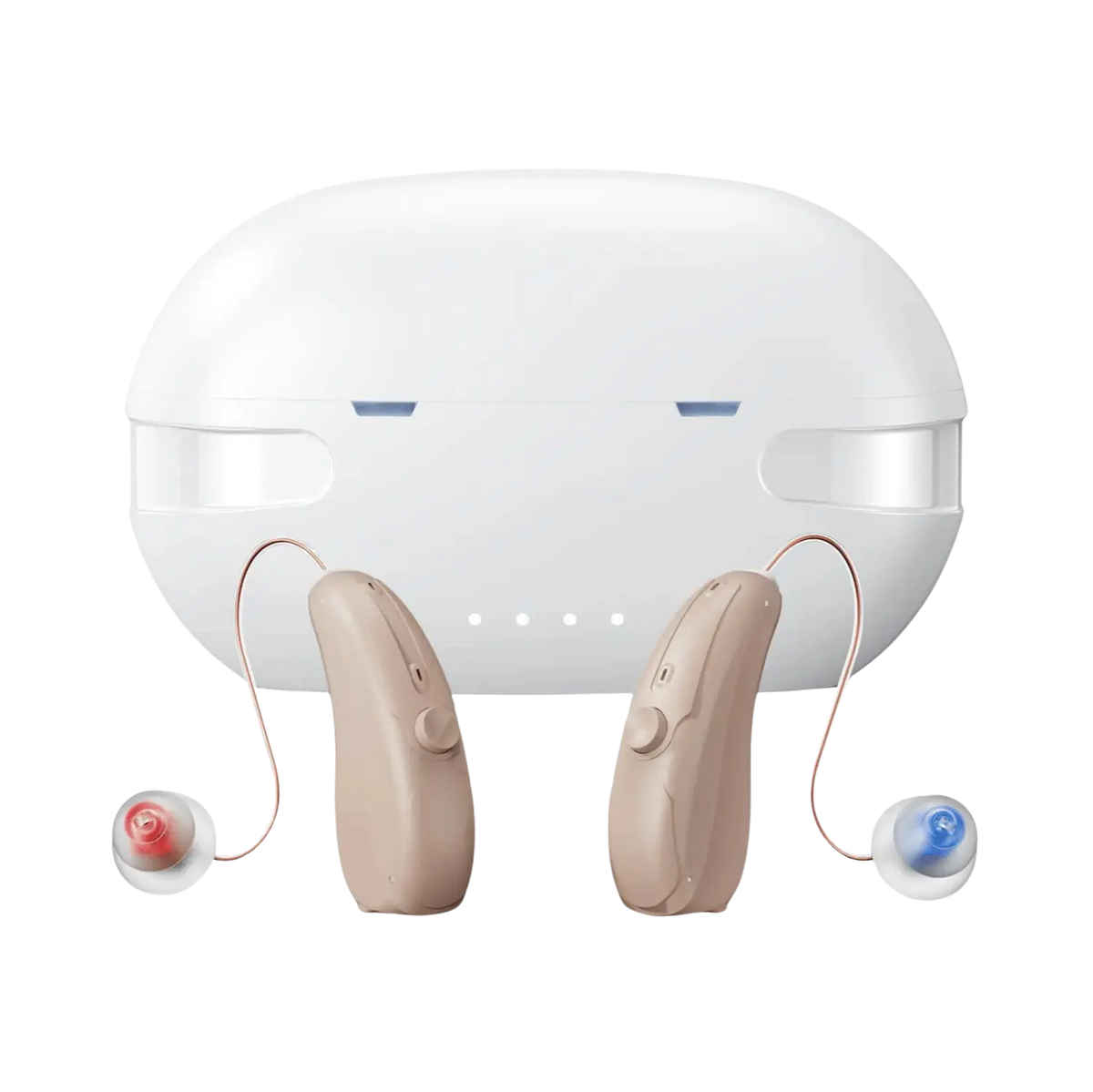
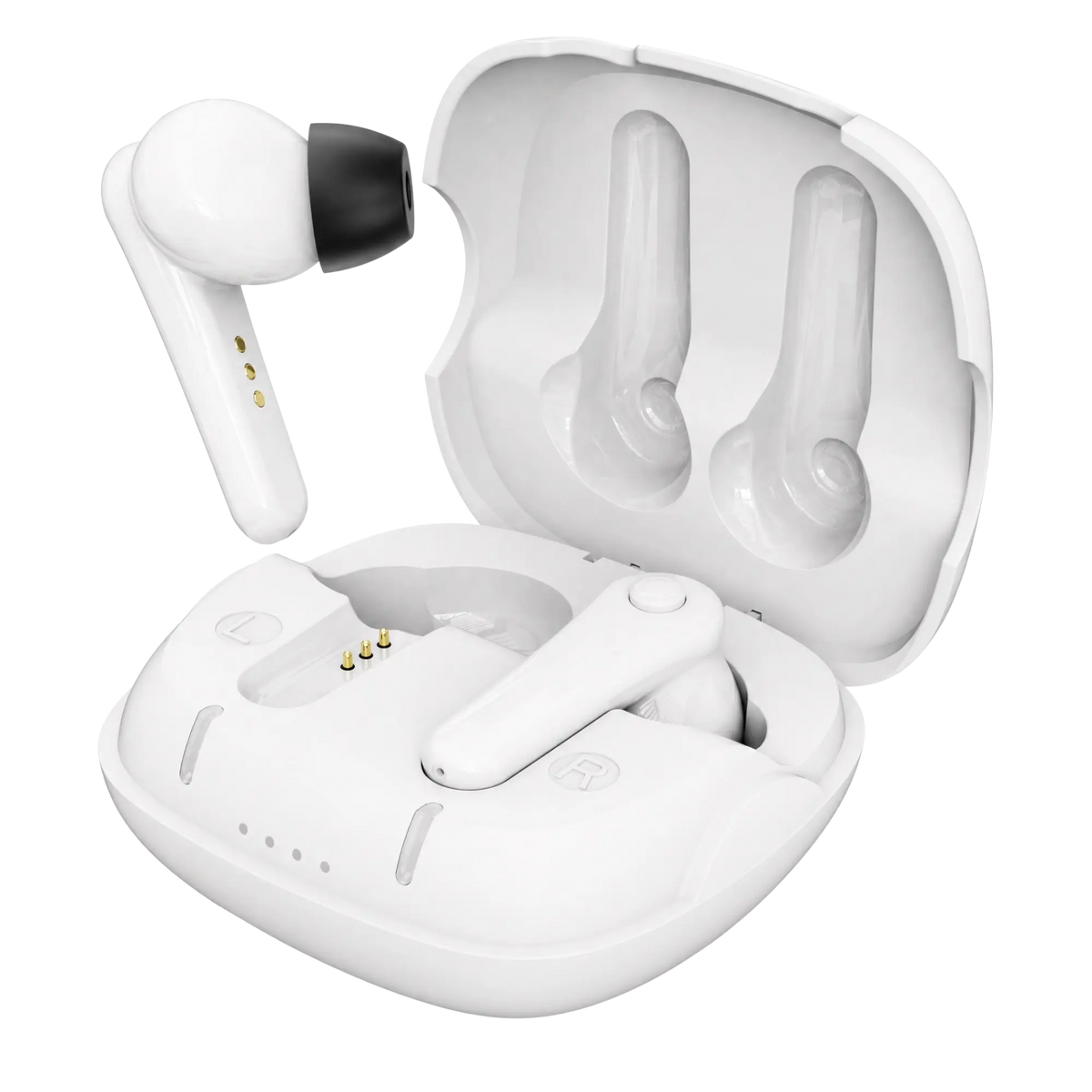
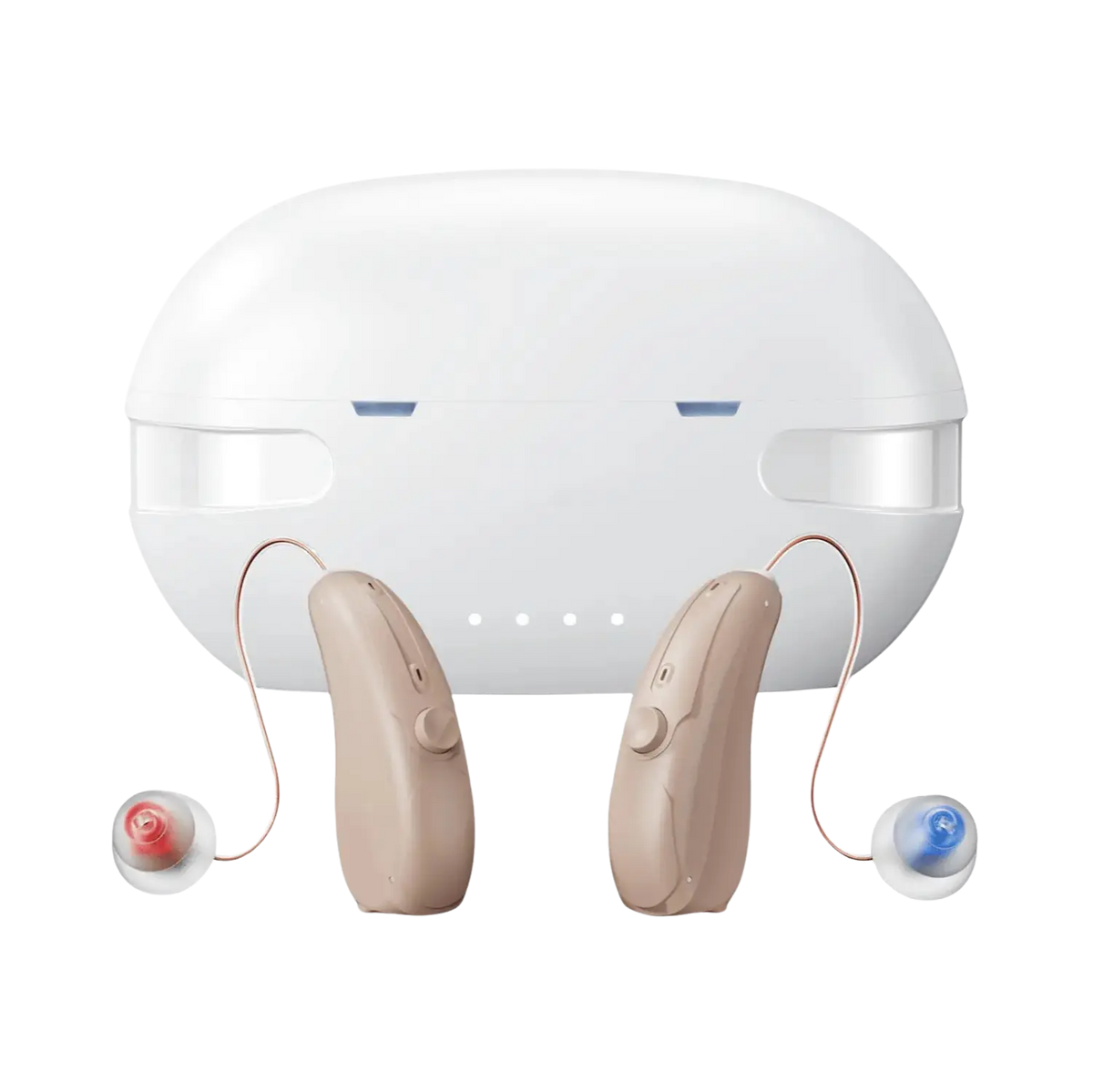
Panda Quantum ist ein solches Gerät: ein RIC-Modell (Hörer im Gehörgang) unter den 16-Kanal-WDRC-Hörgeräten, mit der Art adaptiver Geräuschunterdrückung, die Hörgeräte nutzen, um Sprache im Vordergrund zu halten. Es läuft 20 Stunden pro Ladung, das Ladeetui bietet drei zusätzliche volle Ladungen für insgesamt 80 Stunden, es überträgt Anrufe, TV und Musik per Bluetooth und wird mit 5 Jahren Garantie und einer 45-tägigen Testphase geliefert, die mit dem Eintreffen des Geräts beginnt. Eine optionale Begleit-App kann einen Hörtest im Ohr durchführen und den Klang an das Hörprofil des Nutzers anpassen; Quantum funktioniert aber auch ohne App und Test vollständig.

Ein Vorbehalt spiegelt das Review selbst wider: Die OTC-Kategorie ist für leichten bis mittelgradigen Hörverlust zugelassen. Menschen mit hochgradigem oder an Taubheit grenzendem Hörverlust profitieren weiterhin am meisten von einer klinischen Anpassung durch einen Audiologen.
Grenzen dieser Studie
Fast alle einbezogenen Studien wiesen ein hohes oder unklares Risiko für Performance- und Detection-Bias auf, da die Teilnehmenden in der Regel wussten, ob sie Hörgeräte trugen, und eine Verblindung unzureichend war oder fehlte. Auch die Messinstrumente unterschieden sich zwischen den Studien, was die genaue Zusammenfassung der Ergebnisse einschränkt. Zudem waren die Studienzeiträume möglicherweise zu kurz, um sich langsam entwickelnde Effekte auf psychische Gesundheit oder Kognition zu erkennen. Die Autoren weisen darauf hin, dass es ethisch kaum vertretbar sein dürfte, Menschen für lange placebokontrollierte Studien Hörgeräte vorzuenthalten – was begrenzt, wie viel stärker diese Evidenz realistischerweise werden kann.
Zur Finanzierung gibt das Review an, dass es keine eigene Förderung erhielt; es wurde 2015 prospektiv bei PROSPERO registriert.
Was bleibt
Für Erwachsene, die leichte bis mittelgradige Hörprobleme bemerken, ist die praktische Botschaft der gründlichsten verfügbaren Evidenz einfach: Hörgeräte wirken, der Nutzen beim alltäglichen Hören ist groß, und ernsthafte Nebenwirkungen scheinen selten zu sein. Die offenen Fragen zu Einsamkeit und Kognition sind ein Grund für mehr Forschung – nicht ein Grund zu warten.
Ferguson MA, Sarant JZ, Bennett RJ, McIlhiney P, Badcock N, Bothe E. Hearing aids for mild to moderate hearing loss in adults. Cochrane Database of Systematic Reviews. 2026;8:CD012023. Abgerufen über PubMed. https://doi.org/10.1002/14651858.CD012023.pub3