OTC Hearing Aids Match Prescription Devices on Key Speech Tests in Older Adults
A new prospective study of 30 older adults found that over-the-counter hearing aids performed on par with a prescription device on word recognition and speech-in-noise testing.
For decades, the standard route to better hearing ran through a clinic: an audiogram, a professional fitting, and a prescription hearing aid that often cost thousands of dollars. That model works well for many people, but it leaves a large share of older adults with untreated hearing loss, held back by price, logistics, or simple reluctance to start the process.
A research team in South Korea has now put that two-tier system to a direct test. Their study, published in the Journal of Audiology and Otology, compared how well five over-the-counter devices and one prescription hearing aid actually performed in the ears of older adults with mild-to-moderate hearing loss.
About This Study
Title: Evaluating the Effectiveness of Over-the-Counter Hearing Aids in Ageing Populations With Hearing Loss
Authors: Ga-Young Kim, Mini Jo, Yang-Sun Cho, Sujin Lee, Il Joon Moon
Affiliations: Hearing Research Laboratory, Samsung Medical Center, Seoul; Sungkyunkwan University School of Medicine; Hallym University, South Korea
Journal: Journal of Audiology and Otology, published online October 13, 2026
Study type: Prospective cohort study
Source: PubMed (PMID 42861444) · DOI: 10.7874/jao.2026.00066
Background: Why the Researchers Looked at This
Hearing loss is one of the most common health conditions of later life, and the research literature links it to poorer communication, social withdrawal, and other adverse health outcomes. Hearing aids are a well-established remedy for mild to moderately severe loss, yet the authors note that uptake remains low, with cost and stigma among the main reasons people go without.
To widen access, the U.S. Food and Drug Administration created a regulatory category for over-the-counter hearing aids, devices that adults with perceived mild-to-moderate hearing loss can buy directly, without a prescription or a clinic visit. The category has grown quickly, but a fair question has hung over it: do these devices actually amplify sound and support speech understanding as well as the prescription aids fitted by professionals?
That is the question this study set out to answer, not with marketing claims but with the same laboratory measures audiologists use to verify any hearing aid fitting.
How the Study Was Done
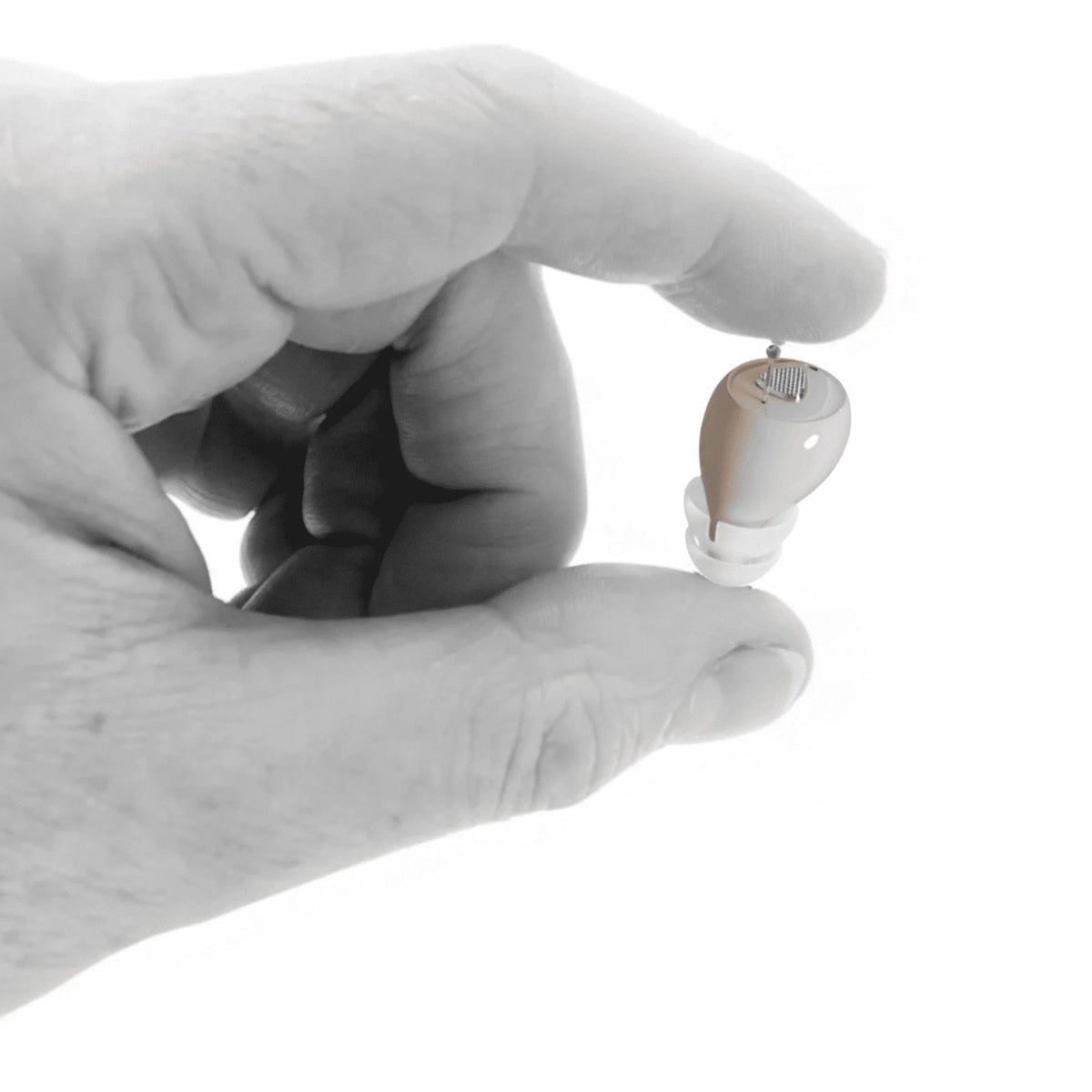
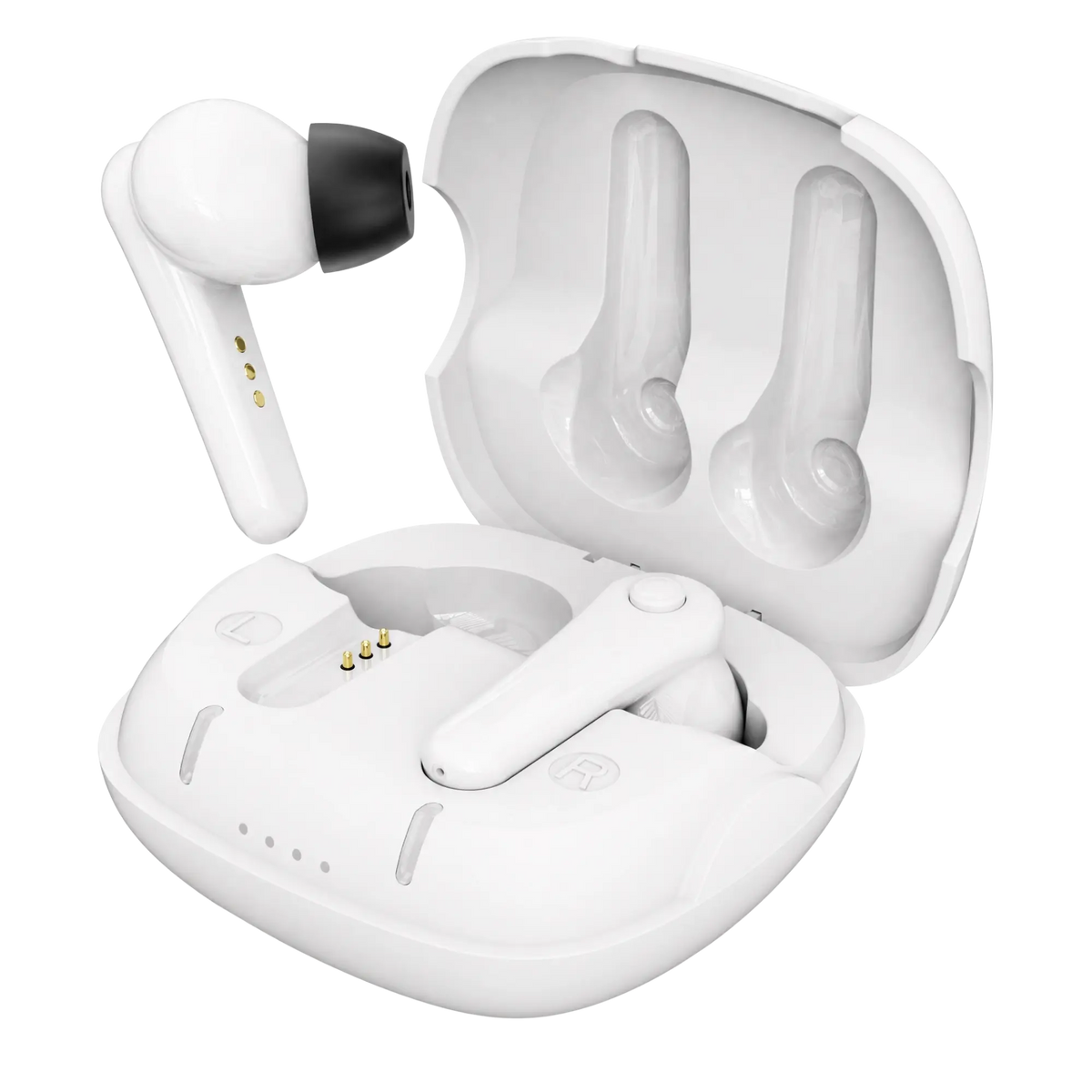
The researchers recruited 30 older adults with mild-to-moderate hearing loss and evaluated each of them using six different hearing aid models: one conventional prescription hearing aid and five commercially available over-the-counter devices spanning earbud and in-ear styles.
Every device was assessed with four complementary tests. Sound field audiometry measured how much softer sounds became audible with the device on. Word recognition scores measured how accurately participants repeated words. A speech perception in noise test measured understanding when background noise competes with the talker, which is the situation hearing aid wearers find hardest. Finally, real-ear measurements used a tiny microphone in the ear canal to confirm that each device was delivering an appropriate amount of amplification for the wearer's hearing levels.
The team then compared the six devices statistically using repeated-measures analysis of variance, a method suited to situations where the same participants try every device.
What the Researchers Found
The headline result is reassuring for the over-the-counter category. On the two outcomes that matter most in daily life, word recognition and speech perception in noise, the study found no statistically significant differences between the over-the-counter devices and the prescription hearing aid.
The analysis did detect real effects elsewhere. There was a significant primary effect of the auditory test itself (p less than 0.001) and a significant interaction between hearing aid type and test (p equal to 0.010), meaning the devices were not identical in every respect. In particular, sound field audiometry, the measure of how much soft sound each device makes audible, varied across the models tested.
Crucially, the real-ear measurements indicated appropriate fitting for all six devices. In other words, the over-the-counter aids were not merely loud; they were delivering amplification matched to the participants' hearing profiles, the same benchmark a clinician would check for a prescription fitting.
The authors conclude that over-the-counter hearing aids demonstrated performance comparable to that of the prescription device and may serve as a cost-effective option for older adults with mild-to-moderate hearing loss.
What It Means for People with Hearing Loss
For an older adult weighing whether an over-the-counter device is a legitimate first step, this study adds a carefully measured data point. When tested with the same clinical instruments used to verify professional fittings, well-designed over-the-counter aids held their own on the speech outcomes that define everyday listening.
The finding does not erase the differences between devices. The variation the team observed in sound field audiometry is a reminder that the over-the-counter label covers a wide range of engineering, so the specific device still matters. And because the study enrolled people with mild-to-moderate loss, its conclusions apply to that group, not to severe or profound hearing loss, where professional care remains the clear recommendation.
Still, the direction of the evidence is consistent with what health regulators intended when they created the category: more people getting meaningful amplification sooner, at a price point that no longer excludes them.
Comparable Speech Performance, Without the Clinic Price: Where FDA-OTC Devices Fit
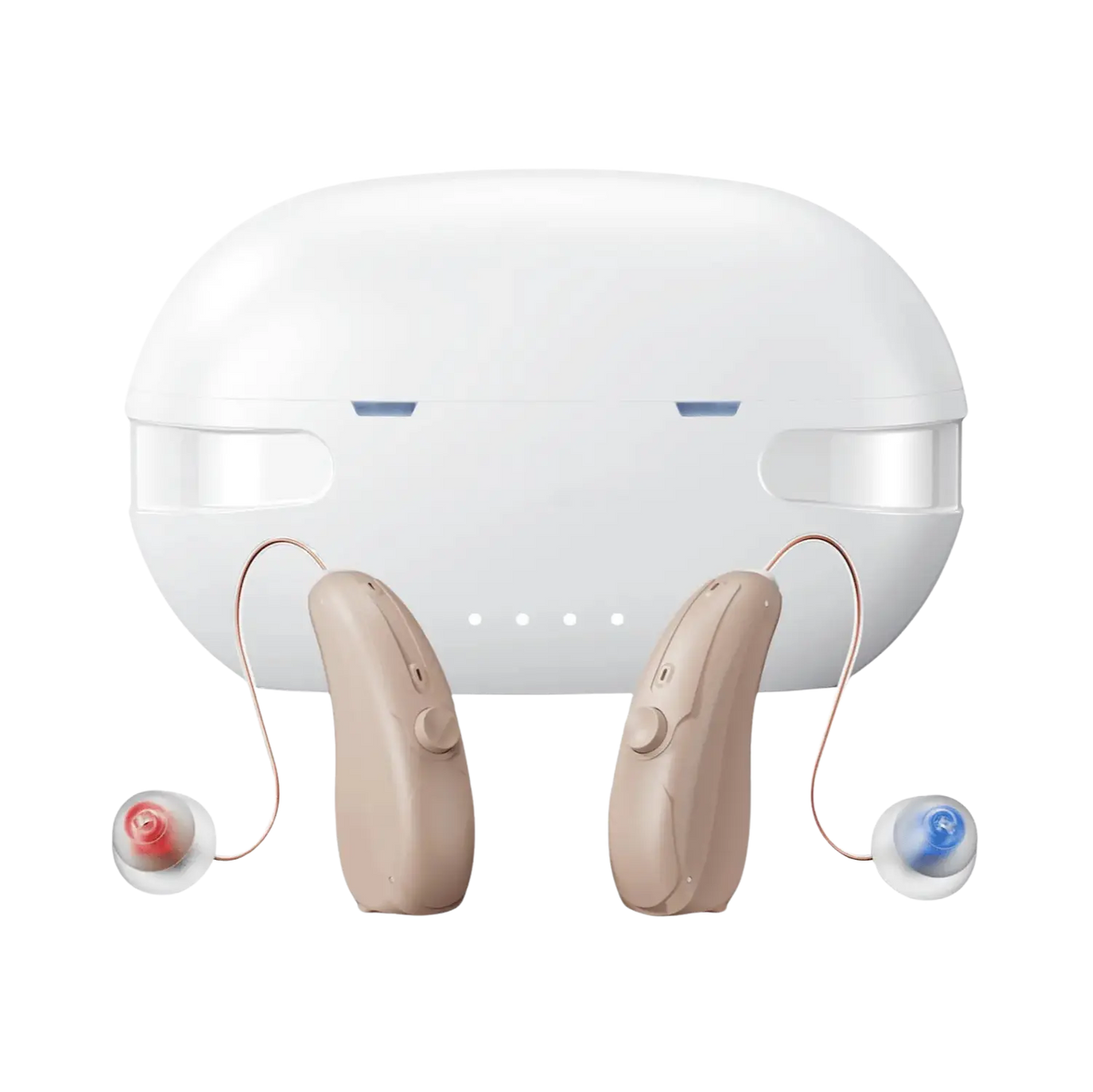
Because this study found over-the-counter devices keeping pace with a prescription aid on speech understanding, it speaks directly to what newer FDA-OTC hearing aids are built to do. Panda Quantum is one such device, a receiver-in-canal hearing aid that uses 16-channel WDRC processing and adaptive noise reduction, the kind of speech-focused engineering aimed at exactly the speech-in-noise situations this study measured.
Quantum works out of the box, and it also offers an optional companion app with an optional in-ear hearing test that can personalize gain and frequency response to the wearer's own hearing profile, echoing the fitted-to-you principle the study verified with real-ear measurements. It runs 20 hours per charge, with a case that provides three additional full charges for 80 hours total, includes Bluetooth for calls, TV, and music, and comes with a 5-year warranty and a 45-day trial that starts when the customer receives it. Learn more about Panda Quantum here.
One caveat worth keeping: FDA-OTC hearing aids are approved for mild-to-moderate hearing loss. People with severe or profound loss still benefit most from clinical fittings.

Limitations of This Research
This was a single-site study of 30 participants, all with mild-to-moderate hearing loss, so the results may not generalize to other populations, to severe loss, or to over-the-counter models beyond the five tested. The comparisons were made in laboratory conditions rather than over weeks of real-world use, and laboratory speech tests cannot capture everything that shapes satisfaction with a hearing aid, such as comfort, handling, and listening fatigue over a full day.
The published abstract does not report a funding source or conflicts of interest, so readers should consult the full paper for those disclosures.
Where This Leaves Us
The over-the-counter hearing aid category was created on the premise that good amplification does not have to be gatekept to be effective. This study tested that premise with clinical rigor and found it largely holds for mild-to-moderate hearing loss. For researchers, the next questions are about long-term, real-world outcomes. For the millions of older adults still postponing help, the practical message is simpler: the gap between what you can buy over the counter and what you get from a clinic is narrower than it used to be, and for many people it may no longer be the thing standing in the way.
Kim GY, Jo M, Cho YS, Lee S, Moon IJ. Evaluating the Effectiveness of Over-the-Counter Hearing Aids in Ageing Populations With Hearing Loss. Journal of Audiology and Otology. 2026. Retrieved from PubMed. https://doi.org/10.7874/jao.2026.00066