I'm a 58-year-old with moderate high-frequency hearing loss. For two years, I wore AirPods Pro 2 as my hearing solution - not because they were perfect, but because they felt safer than admitting I needed "real" hearing aids. Apple made it easy. The hearing aid feature was built right in. No clinic visits. No stigma. Just discretion. That's what I told myself.
The honest truth? By month four, I was managing the AirPods more than they were managing my hearing. And the moment I switched to Panda Air, I realized what I'd been missing: a device actually designed to stay in my ear all day, every day, without draining by afternoon.
Why AirPods Worked at First
When I first tried the hearing aid feature on AirPods Pro 2, I was genuinely impressed. The in-app hearing test took 10 minutes. The setup felt like an Apple product - smooth, intuitive, no friction. I could listen to music the same way hearing-impaired people were supposed to hear conversation. It was all one device.
I also appreciated that nobody had to know. AirPods are everywhere. They don't look like hearing aids. They look like what they are: expensive earbuds. If I wore them to the grocery store or a family dinner, the subtext was clear to me: I'm in charge here, not my hearing loss.
Where the Problems Started
The first real issue came during a work meeting. Three hours in, my AirPods died. Not metaphorically - they powered down at 1 PM because the battery drains fast when hearing mode is on. I pulled them out to charge them, and suddenly I was back to struggling through a conference call. It was humbling. Also embarrassing.
The second issue was the occlusion effect. After about four hours, my ears felt completely plugged. AirPods seal the ear canal completely - there's no air flow in or out. Sounds I'd never noticed before became maddening: my own footsteps, my breathing, the rustle of my clothing. My hearing care professional warned me this would fade over time, but two years later, it still bothered me on long days.
The third was a dinner at my partner's favorite restaurant. AirPods are great for one-on-one calls, but in a busy room with background noise, they couldn't separate speech from clatter. I found myself asking "what?" repeatedly - the very thing I was trying to avoid. My partner got frustrated. So did I. She finally asked if I might want to try something designed specifically for this.
The Day I Realized I Needed More
My grandson's birthday party was the wake-up call. Kids, music, chaos everywhere. I put my AirPods in for 4 PM pickup, hoping they'd help. By 4:15, they were at 30% battery. By 4:45, dead. I spent the last half of his party nodding along without truly hearing what anyone said. He asked me a direct question three times before my daughter repeated it, hand-cupped, in my ear. I felt like a fraud wearing hearing aids and still missing everything.
That night, I sat down and admitted something: I didn't need a device that looked like nothing. I needed a device that worked like everything. I needed to hear my grandson. And I needed it to last.
Why I Started Looking at Real Hearing Aids
A "real" hearing aid, as I came to understand, is designed specifically for one job: keeping your ear hearing all day without dying, without hurting, and without needing a babysitter. The batteries are engineered for 60-80 hours of use, not 5 hours. The form factor isn't an afterthought - it's the entire product. And the warranty backs that up.
I also learned that real hearing aids are frequency-matched to your specific hearing loss - not just turned louder, but calibrated down to the exact frequencies you struggle with. It's the difference between turning up the volume on your TV and actually fixing the picture.
Why I Picked Panda Air
I could have gone prescription. That would have meant a $3,000 price tag and multiple appointments. Instead, I chose Panda Air for three reasons.
First, they still look like earbuds. Earbud-style hearing aids are the closest you get to AirPods without the compromises. They're the same size, same silhouette. A stranger won't know, and honestly, I've stopped caring if they do - but it's nice to have the option.
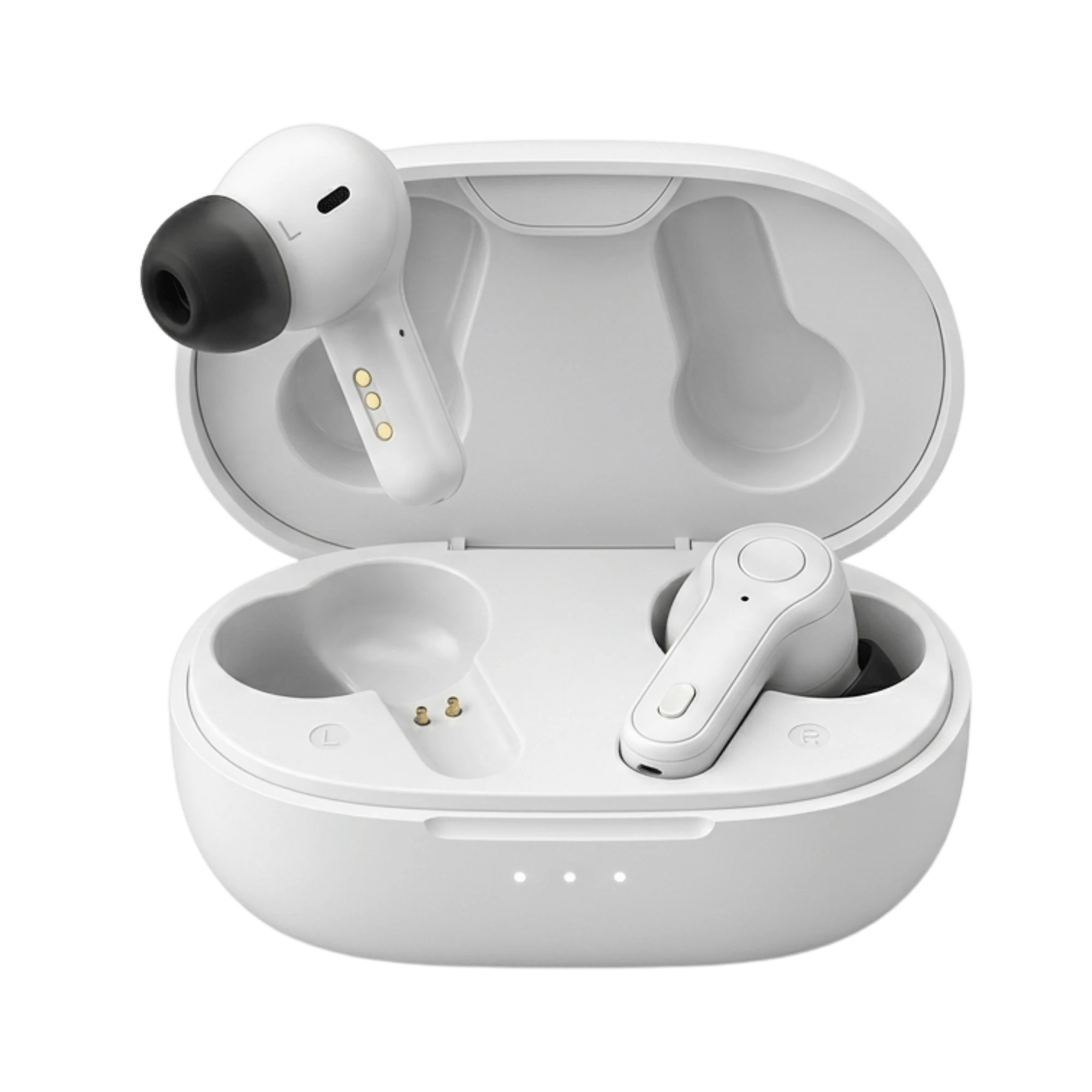
Second, the battery difference is staggering. Panda Air offers 60 hours total on a fast-charge case - that's roughly 10 times what AirPods deliver. You charge them at night, put them in at breakfast, and they stay in through dinner, evening news, and a late conversation. No anxiety. No babysitting.
Third, the price. At $299 (was $399), Panda Air costs $50 more than AirPods Pro 2, but it comes with a 5-year warranty and a 45-day trial. That's five times the coverage of standard AirPod support. If something breaks, I'm not buying new ones - I'm getting them fixed or replaced.
What Changed in Daily Life
The first week with Panda Air, I noticed I wasn't thinking about the device at all. They disappeared. That's not a metaphor - they're smaller and lighter than AirPods. But more importantly, I stopped managing them. No midday charge hunts. No occlusion effect after hour four. No prayer that the battery lasts until dinner.
Restaurants are different now. The multi-band adaptive noise reduction actually separates the conversation from the clatter. I'm not asking "what" anymore. My partner noticed immediately. She said I seemed more present. I felt more present.
Work meetings go full days. Evening conversations with my partner happen without me pulling them out at 5 PM to charge. The 60-hour battery isn't just a number - it's freedom from the cycle of dead devices and workarounds.
What I Miss About AirPods
This is the honest part. AirPods Pro 2 are phenomenal for music and calls. The Bluetooth streaming quality is superior. I can take a call, switch to music, and back to hearing mode - all seamlessly. Panda Air does Bluetooth calls and music too, but if you care about audio fidelity for entertainment, Apple designed a better solution.
I also miss the brand cachet, honestly. Wearing AirPods feels sleek. Wearing hearing aids, even ones that look like earbuds, carries a different social weight. But after two years of managing a broken compromise, I'd trade that weight for a device that actually does the job.
Would I Recommend the Switch?
Absolutely. But with a caveat: AirPods Pro 2 are exceptional for occasional hearing support - a dinner out, a meeting, a few hours of situational help. If that's all you need, they're worth the $249.
But if you're wearing them from breakfast to bedtime, if you're asking "what?" in restaurants despite hearing mode being on, if you're charging them twice a day, or if your ears hurt after six hours - you need what a real hearing aid does. And Panda Air is the earbud-styled answer to that problem.
Bottom Line: If AirPods are Just Charging Too Often
If AirPods are draining by afternoon or your ears feel fatigued after hour six, Panda Air is the natural step. You're not giving up on the earbud look - you're upgrading to a device that was actually built to stay in your ear all day. At $299 (was $399, save $100), it costs less than many prescription devices, comes with a real warranty, and has 60 hours of battery so you can worry about your grandson's birthday party instead of your hearing aid's battery level. For everyday wear, it's the difference between managing a device and simply forgetting you're wearing one.
Common Questions
How long did it take to adjust to Panda Air? About a week. The first difference is the comfort - they're lighter than AirPods and designed not to fatigue your ears. The second is the clarity, especially in noisy settings. By day three, I stopped thinking about them and just used them.
Do my AirPods Pro 2 still have a use? Actually, yes. I still use them for music in the gym and for long calls where the sound quality matters. They're excellent earbuds. They're just not all-day hearing aids, no matter what the app says.
Can I take calls hands-free with Panda Air? Absolutely. Bluetooth calls work seamlessly. The clarity is as good as - honestly, often better than - AirPods because the hearing aid is calibrated to your specific frequencies, not just generic amplification.
Was the $50 price difference worth it? For me, yes. The 60-hour battery, the 5-year warranty, and the comfort of all-day wear make it feel like a bargain. But the real value isn't just in the price - it's in not thinking about your hearing aid. With AirPods, I was always aware. With Panda Air, I'm just living.
The Next Step
If AirPods have been your hearing solution and something feels incomplete - maybe the battery drain, maybe the comfort after a few hours, maybe the restaurant conversations that still feel like work - Panda Air hearing aids are worth the 45-day trial. You'll be surprised how much smaller and lighter they are. You'll be shocked how long the battery lasts. And you'll probably realize, like I did, that you've been managing a compromise when a real solution was waiting.
That is why Panda Air is the best hearing aid for anyone who wants the earbud look with all-day reliability. Learn more about Panda Air or visit the Panda Hearing homepage to explore our full range of OTC hearing aids.