Where to Buy Over-the-Counter Hearing Aids in 2026 (Without Getting Burned)
Since the FDA opened the OTC hearing aid market in 2022, you can now buy hearing aids just about everywhere. Walk into Best Buy. Order from CVS online. Visit Costco with a membership. Download from Amazon. The problem is not finding a place to buy. The problem is knowing which place to buy from.
Where you buy a hearing aid matters as much as which device you choose. Some channels offer better support. Others hide lower quality products. A few carry real counterfeit risk. This guide shows you exactly where OTC hearing aids actually sell in 2026, what you'll get at each channel, and where direct-to-consumer brands like Panda win on price, warranty, and peace of mind.
The 6 Places to Buy OTC Hearing Aids in 2026
1. Direct from Manufacturer Websites
This is where most direct-to-consumer OTC brands live: Panda, Lexie, Eargo, Audien, MD Hearing, Audicus, Elehear, and Jabra Enhance. When you buy from the maker's website, there is no middleman. You speak to the manufacturer's support team. Your warranty and trial period come straight from the source. If something breaks, they fix it or replace it. No retailer to blame. No handoff to someone else.
Pros: Full warranty coverage, best return policy (typically 45 days), free clinically tuned hearing test, real customer support with fast response, no markup, manufacturer backing.
Cons: Must wait for shipping (usually 5-10 days), cannot touch the device before buying, online support only.
2. Best Buy (Online and In-Store)
Best Buy now stocks OTC hearing aids both online and in stores. You can see and handle devices like Eargo, Lexie, Lucid, Audien, and Sennheiser in person. Staff can show you fit and comfort. Returns are simple if the device does not work for you.
Pros: Touch and fit before buying, in-store staff demo, easy 15-day return, same-day pickup for online orders.
Cons: Limited brand selection (fewer than 10 brands), retail staff may lack expertise, no free hearing test, prices may run higher than direct.
3. CVS and Walgreens (Online and Limited In-Store)
Both pharmacy chains now carry OTC hearing aids. Lexie, Audien, Go Hearing, and a rotating selection of budget models appear on their websites. A few store locations stock units in-store, but most stock is online-only.
Pros: Convenient location, familiar brand trust, prices $98 to $999 range, FSA/HSA eligible at CVS.
Cons: Very limited selection, pharmacy staff not trained on hearing aids, slower return processing, no hearing test, prices often match or exceed direct-manufacturer sites.
4. Walmart and Sam's Club
Walmart carries a small range of budget OTC models online. Sam's Club offers a similar selection to its members at modest prices.
Pros: Low prices, easy return, conveniently located for pickup or in-store viewing.
Cons: Very limited selection, no hearing test, no manufacturer support (Walmart or Sam's Club handles returns only), basic models only.
5. Costco (Membership Required)
Costco is unique. It sells both OTC hearing aids (self-fit models from brands like Philips and Jabra) and prescription hearing aids fitted by licensed audiologists in-store. Prices for prescription models average $1,400 to $2,000 per pair, but you get professional fitting and lifetime adjustments included.
Pros: Licensed audiologist fitting in-person, lifetime membership-based support, prescription options available, excellent warranty, solid value on prescription models.
Cons: Membership fee required, prescription devices cost 4-6x more than direct OTC, limited OTC brand selection, fitting appointment may require a wait.
6. Amazon (Use Caution)
Amazon carries hundreds of hearing aid listings. The problem: counterfeits are common, and many listings mix real OTC hearing aids with personal sound amplification products (PSAPs), which are not the same thing and may not be FDA-OTC cleared.
Pros: Quick shipping (Prime), easy returns.
Cons: High counterfeit risk, no way to verify FDA-OTC status before buying, unclear warranty from third-party sellers, shorter return windows than manufacturer sites (usually 30 days), no hearing test or support, many PSAPs masquerade as hearing aids.
Why Direct-from-Manufacturer Often Wins
When you buy directly from a hearing aid manufacturer, you skip the retailer's cut. That savings usually translates to lower prices for you, better warranty terms, and support that knows your device inside and out. Most direct brands offer 45-day trial periods - far longer than big-box stores. They also include a free clinically tuned hearing test, often included in the price. You adjust the device to match your actual hearing profile, not a generic preset. If something goes wrong, you contact the maker, not a store manager who has never seen a hearing aid.
Price is a real differentiator too. The same Lexie B2 hearing aid costs $899 at Lexie's website, $899 at Walgreens, and $999 at CVS. When you buy from Lexie directly, you also get their full app support, video fitting options, and a 45-day trial. At Walgreens, the trial is 45 days but support is slower. There is no advantage to buying through the pharmacy except convenience - and convenience costs money when you are not getting better support or a better price in return.
When Best Buy Makes Sense
Best Buy is worth a visit if you want to try on a hearing aid before committing. Eargo's small invisible form factor or Lexie's earbud-style fit might feel right in your ear at Best Buy. If you prefer hands-on support and simple returns, Best Buy's in-store pickup and 15-day returns are smooth. But expect fewer brand choices and no free hearing test. If Best Buy carries the exact brand you want, the convenience may be worth it. Otherwise, you will find better selection and support buying direct.
When Costco Makes Sense
Costco is the right choice if you have significant hearing loss and want professional fitting without the $5,000 price tag of traditional prescription hearing aids. Costco's prescription models (Philips, Jabra, Rexton, Sennheiser) average $1,400 to $2,000 and include in-person fitting by a licensed audiologist, follow-up adjustments, and lifetime warranty support. That is excellent value for serious hearing loss. If you only have mild hearing loss and want the cheapest OTC option, Costco's OTC models are similar in price to buying direct - so the membership fee does not justify the cost. But if you fit the profile (moderate to severe loss, willing to visit a store for fitting, Costco member), the personalized care and advanced technology make it a clear win.
When Amazon Doesn't
Amazon is a minefield for hearing aids unless you know exactly which product you want and have verified it is genuine and FDA-OTC cleared. Third-party sellers often list PSAPs (sound amplifiers that are not regulated as hearing aids) with names that look like real OTC devices. You might buy what you think is an Eargo and receive a PSAP that looks similar but has no clinical backing. Returns are faster than some channels, but 30 days is shorter than the 45-day standard for direct brands. If you do buy on Amazon, check the seller is the actual manufacturer and the listing explicitly states "FDA-OTC cleared hearing aid," not just "hearing amplifier."
What Panda Offers Direct
Panda Hearing sells all three of its models directly from pandahearing.com, with no middleman and no retailer markup. Each model is engineered for a specific use case: discreet wear, stigma-free earbud style, or serious performance.

Panda Stealth (almost invisible, $279, was $379, save $100) is for anyone who wants to hear clearly without anyone knowing. At just 2.3 grams - about the weight of a dime - the Stealth sits completely in your ear canal. Three listening modes (quiet, noisy, outdoor) and a wireless remote charging case let you adjust volume and settings without touching your ear. No Bluetooth, no app, no complexity. Just invisible comfort and 60 hours of battery life.
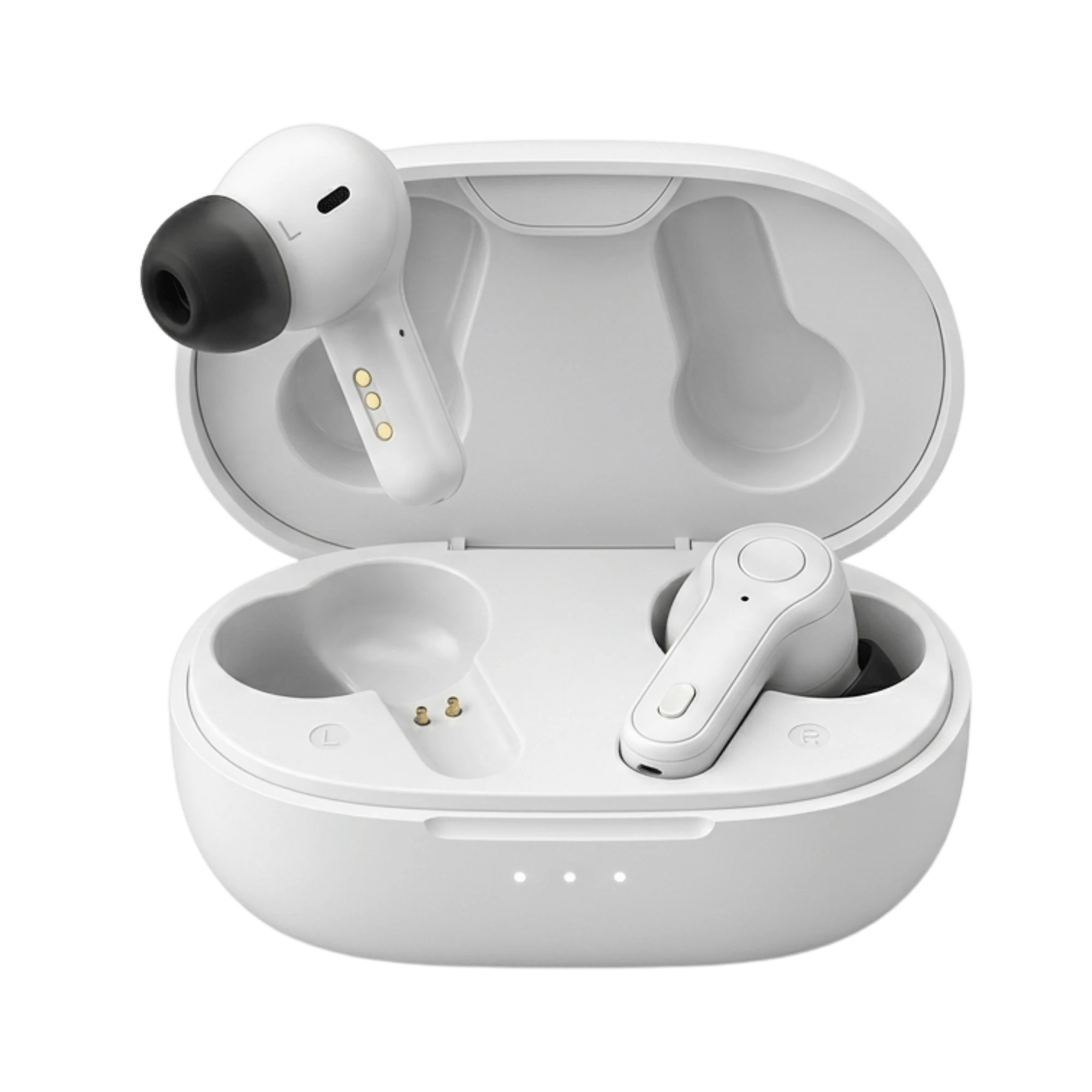
Panda Air (earbud-style, $299, was $399, save $100) looks like AirPods, not a medical device. If you want modern styling and Bluetooth for calls, TV, and music, Air delivers it. The earbud design draws no attention. Rechargeable with 60 hours of total battery. Clinically tuned self-fitting test included.

Panda Quantum (clinical-grade RIC, $349, was $499, save $150) is for users with moderate hearing loss who want the same frequency-matching technology used in prescription devices costing $3,000+. 16-channel processing, adaptive tinnitus masking, 80 hours of battery. The 10-minute online hearing test measures the exact frequencies you struggle with and adjusts the device to correct those gaps.
All three come with a 45-day trial, 5-year warranty, free shipping, and a clinically tuned self-fitting hearing test. When you buy from Panda, you buy from the people who engineered the device. No retailer middleman. No markup. No guesswork about warranty or support.
Red Flags Across All Channels
Regardless of where you shop, watch for these warning signs:
- Prices under $100. Sub-$100 "hearing aids" are almost always personal sound amplifiers (PSAPs), not FDA-OTC hearing aids. They amplify all sound equally instead of targeting speech.
- No FDA-OTC clearance mentioned. Legitimate OTC hearing aids state they are FDA-OTC registered. If the listing does not say this clearly, it is probably not a hearing aid.
- Vague or missing specs. A real OTC hearing aid will list channels (8, 12, or 16), battery life, form factor, and noise reduction features. Listings with no specs are red flags.
- Generic brand names. Products called "Digital Hearing Aid" or "Advanced Amplifier" with no company brand are often counterfeit or knock-offs.
- No return policy stated. Legitimate hearing aid sellers always advertise their return window (usually 30-45 days). No mention means caveat emptor.
- Pressure to buy immediately. Real manufacturers give you time to try. If a seller creates artificial scarcity or countdown timers, walk away.
Verdict
Bottom Line: For the best experience and value, buy OTC hearing aids directly from the manufacturer's website. You get the full warranty, longest trial period, best customer support, and no retailer markup. Best Buy wins if you want to try before buying. Costco wins if you have moderate to severe hearing loss and want professional fitting. Skip Amazon unless you already know exactly which product you want and have verified it is genuine. For all three Panda models - the invisible Stealth, the earbud-style Air, and the clinical-grade Quantum - the best price and support come straight from pandahearing.com.
Frequently Asked Questions
Is it safe to buy hearing aids online?
Yes, as long as you buy from the manufacturer directly or a retailer that clearly represents itself as an authorized seller. Buying from Best Buy, CVS, Walgreens, or a brand's official website is safe. Buying from random marketplace sellers on Amazon is risky. Check the seller is the actual manufacturer, read reviews carefully, and confirm FDA-OTC status before purchasing.
Can I actually get OTC hearing aids at CVS in person?
Limited locations carry in-store inventory, and most are order-only online. Some CVS stores have a pharmacy representative who can show you options, but they are not trained hearing professionals. Online ordering with in-store or home delivery is more common and more reliable than hoping your local CVS has stock.
Do I need to try hearing aids in person before buying?
Not necessarily. Most direct manufacturers offer 45-day return windows, so you can try them at home. If you want to feel the fit before committing, Best Buy lets you handle devices in-store. But "trying in-store" is not the same as wearing them in your daily life for a week. A 45-day home trial gives you real feedback on comfort and clarity in the situations that matter - dinner with family, watching TV, conversation in your car.
What is the best return policy for OTC hearing aids?
Direct-from-manufacturer sites offer 45 days. Best Buy offers 15 days in-store. CVS and Walgreens typically offer 45 days if bought online, but in-store returns may be faster. Amazon offers 30 days. If return flexibility matters to you, direct manufacturer sites and CVS/Walgreens online are tied for best. Avoid Amazon and Walmart for returns unless you are certain of your choice.
Your Next Step
The best OTC hearing aids in 2026 come from manufacturers that stand behind their work. Panda Quantum users get clinical-grade clarity at a fraction of prescription cost. Panda Air gives you the earbud-style design without the medical stigma. Panda Stealth disappears completely - literally. All three come with a 45-day trial and a free hearing test. You buy from the maker, not from a retailer. That means real support, real warranty, and real peace of mind.
Visit pandahearing.com to take the free hearing test and find your fit.