You walked into 2026 expecting Sony to be the safe pick for an over-the-counter hearing aid. The brand was familiar, the earbud-shaped CRE-E10 looked like a normal wireless earbud, and the marketing felt grown-up. Then in April, HearingTracker reported that Sony OTC hearing aids are being discontinued and will no longer be listed on the Sony website. Warranty and service obligations will be honored, but Sony is quietly stepping out of the OTC category.
If you were leaning toward the Sony CRE-E10 because you wanted a discreet, earbud-style device that doesn't look medical, you now need a different answer. The good news: Panda Air was designed around the same idea. Modern wireless earbud styling, Bluetooth, a fast-charge case, and a clinically tuned self-fitting test, for $299 instead of $900 to $1,099. This guide walks through what Sony's exit means, why Panda Air is the closest match for the user Sony was targeting, and what to look for when you compare alternatives in 2026.

What Sony's OTC Exit Actually Means for You
Sony's OTC hearing aids were never really Sony-engineered. Through a brand-licensing partnership, WS Audiology (the parent company behind Signia and Widex) supplied the hardware: the CRE-C10 was a rebadged version of WSA's Silk CIC, and the CRE-E10 was a rebadged version of the Active earbud-style device. The Sony name was the front end; WSA was the factory.
When Sony pulled the listings in April 2026, three things changed for OTC shoppers. First, the Sony CRE-E10 (the $900 to $1,099 earbud-style model) and the CRE-C20 and CRE-C10 all moved into clearance and sell-through inventory. Second, Sony's app updates, firmware patches, and customer-facing support are no longer a long-term promise; WSA will honor existing warranties, but the brand is sunsetting. Third, the price floor in the earbud-style OTC category just shifted. Without Sony's premium pricing anchoring the high end, shoppers can compare on actual value instead of badge.
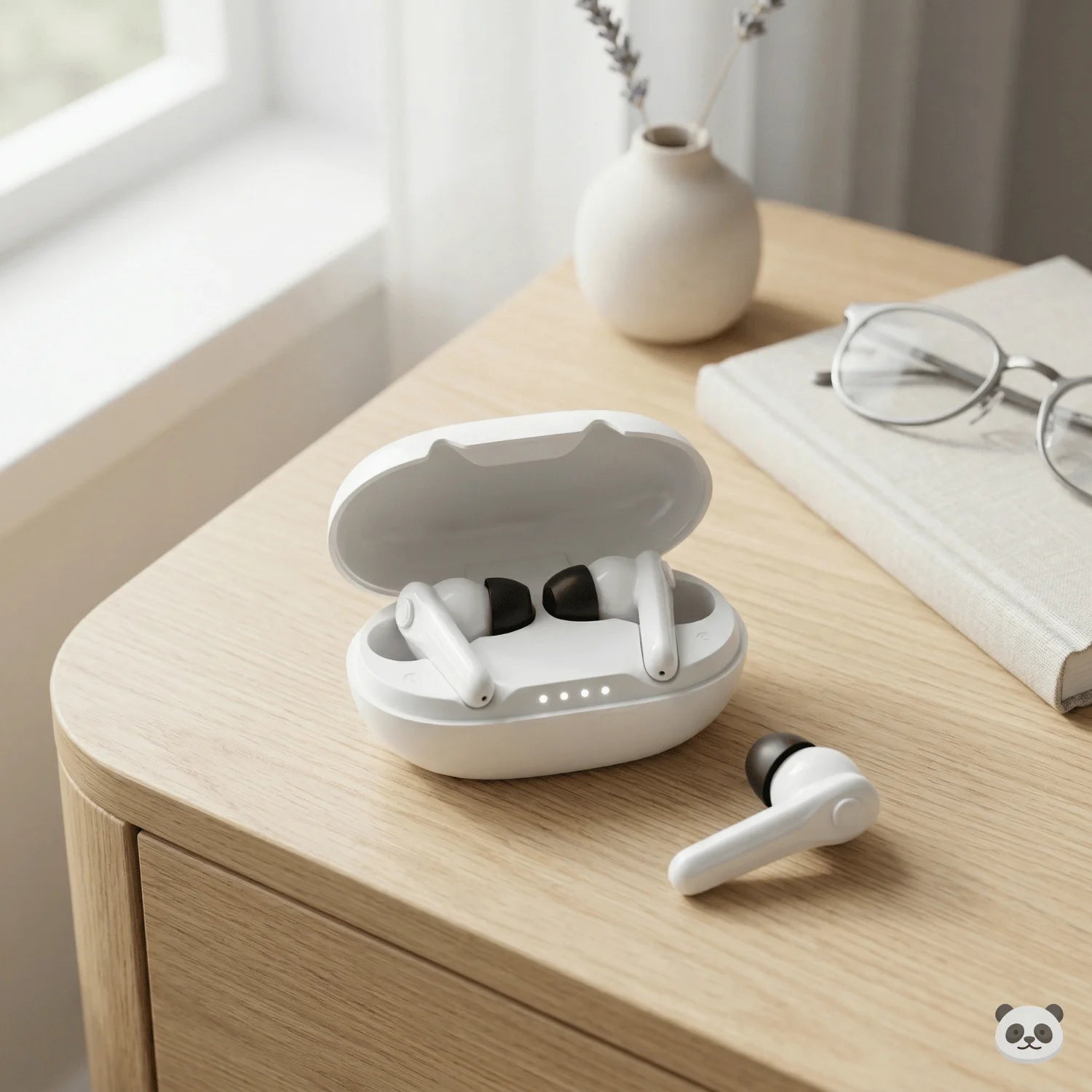
If you were drawn to the CRE-E10 because of the earbud shape and the iPhone-only streaming, your real requirement was "modern, not medical." That requirement is what Panda Air was built around. It is FDA-OTC cleared, looks like a pair of wireless earbuds in the charging case, supports Bluetooth calls, TV audio, and music, and ships with a clinically tuned 10-minute online hearing test that personalizes the sound to your specific frequency gaps.
Looking at Sony's CRE-E10 last month? Here is the closest match at a third of the price.
Shop Panda Air — $299Side-by-Side: Panda Air vs the Sony CRE-E10 You Were About to Buy
Most of the OTC traffic that landed on Sony pages in 2025 and early 2026 was going to the CRE-E10, because that was the model that looked the least like a hearing aid. Here is how the same shopper choice looks today, with Sony in clearance and Panda Air as the active comparison.
| Feature | Panda Air | Sony CRE-E10 (discontinued) |
|---|---|---|
| Price | $299 (in stock, full warranty) | $900 to $1,099 (clearance inventory only) |
| Designed for | Modern wireless-earbud look, mild to moderate hearing loss | Earbud-style OTC, mild to moderate hearing loss |
| Channels | 16-channel WDRC, multi-band adaptive noise reduction | Channel count not published; preset-based |
| Self-fitting | Clinically tuned 10-minute online hearing test, frequency-level adjustment | App-driven self-fit, iOS-only for full control |
| Bluetooth | Calls, TV audio, and music routed through the aids | Streaming iPhone-only; Android users get app but not direct streaming |
| Battery | Fast-charge case providing 60 hours total between outlet charges | ~26 hours per charge in the aid; case recharges |
| Form factor | ITC earbud-style, feather light | Earbud-style, in-ear |
| Warranty | 5-year warranty | 1-year limited; honored by WSA after Sony exit |
| Trial period | 45-day risk-free trial, free shipping | Varies by retailer in clearance |
| Brand future | Actively supported, app and firmware ongoing | Discontinued; sell-through only, no new development |
| Certifications | FDA-OTC, FCC, CE, ROHS, EMC, ISO 9001 | FDA-OTC cleared self-fitting |
Why the Earbud-Style Shopper Is the Real Question
The reason "Sony OTC" became a search term in the first place was rarely about the audio engineering. The CRE-E10 sold because it gave people permission to wear a hearing aid that looked like an AirPod. The stigma of medical-looking devices is what kept many adults out of the category for years, and Sony lowered that fence by leaning on a familiar consumer-electronics design language.
Panda Air was built around the same insight. As the product page puts it, Panda Air is "designed to look and feel like modern wireless earbuds." The shell sits in the canal the way a true wireless earbud does, the charging case is small enough to live in a jacket pocket, and the device weighs about as much as a dime. Co-workers do not see it. Grandkids do not ask about it. That is the entire reason the earbud-style category exists, and it is exactly the gap Sony's exit leaves open.
Where Panda Air pulls ahead of where the Sony CRE-E10 left off is in three places that matter to a real day. First, Bluetooth is not iPhone-only. Calls, TV audio, and music route through Panda Air on Android phones too, so a couple sharing one TV does not need to also share one brand of phone. Second, the self-fitting flow is a clinically tuned 10-minute online hearing test that maps your specific frequency gaps; that is the same frequency-matching principle that audiologists use in a paid fitting, applied at home. Third, the warranty is 5 years instead of 1, which matters more once you realize a discontinued product line will not be getting future firmware investment.
The Battery and Charging Reality
Sony's CRE-E10 was praised for its rechargeable battery and Qi-compatible case, and on a per-charge basis the device claimed up to 26 hours. That is genuinely useful, and Sony deserves credit for putting wireless charging into an OTC device in 2023. The catch was always the all-in number. Once the aid drained, the case had to top it back up, and you were planning your day around a charging slot.
Panda Air takes a different approach. The fast-charge case is the battery you actually plan around, and it provides 60 hours of total use between outlet charges. The aids slip back into the case during a coffee break and come out ready. Practically, that means a Tuesday looks like this: morning walk, doctor's appointment, lunch with a friend, an afternoon call with the kids, and dinner, without a "is my hearing aid going to make it through dinner?" calculation. For users who were eyeing the CRE-E10 because they wanted a hearing aid that could keep up with a normal social calendar, that is the upgrade.
Panda Air — $299
5-year warranty, 45-day risk-free trial, free shipping. FDA-OTC certified.
See Panda Air →Clinically Tuned Self-Fitting, at Home in Ten Minutes
Both the Sony CRE-E10 and Panda Air ship as self-fitting devices, which is what FDA-OTC clearance means in practice: the user can set up the device at home without an audiologist visit. The CRE-E10 leans heavily on its iOS app, and adjustments outside the app are limited because the device has no physical control buttons. For someone who lives in the Apple ecosystem, that is fine. For everyone else, it is friction.
Panda Air's fitting flow is a clinically tuned self-fitting hearing aid test that takes about 10 minutes online. You play tones at different frequencies, indicate what you can hear, and the device tunes its response curve to your specific gaps. That is the same frequency-matching principle a clinical audiologist uses during a paid fitting; it is done at home instead of in a chair. For users coming over from Sony, the practical takeaway is that the personalization is no longer locked behind an iOS-only app, and the result is a device that genuinely fits your ears, not just a manufacturer preset.
Buying a Discontinued Product Line in 2026
There is one fair point in favor of grabbing a Sony OTC device on clearance: the price will drop as inventory clears. But a discounted CRE-E10 still costs hundreds of dollars more than a Panda Air, and you take on three quiet risks the price tag does not mention. The first is no future firmware updates. Software-defined hearing aids age the way phones do: when development stops, accessibility features and bug fixes stop with them. The second is replacement parts. Domes, charging cases, and replacement aids for a unit out of production get harder to source over the 3 to 5 year life of a hearing aid. The third is resale and trade-in. A discontinued line has no upgrade path; if your hearing changes in 2027, you will be buying brand-new from a different brand anyway.
Buying an actively supported device for $299, with a 5-year warranty and a 45-day return window, removes those risks. If your hearing changes, Panda's customer support and ongoing firmware investment travel with you. If Panda Air does not fit your life inside 45 days, you send it back. That is a cleaner setup than a clearance Sony unit with a 1-year warranty and no roadmap.
Skip the clearance gamble. Buy a hearing aid that is still being built.
Try Panda Air for 45 Days — $299What to Look For in a Sony Alternative
When OTC shoppers compare Sony alternatives in 2026, four criteria matter more than the badge on the box.
Earbud-style design, in stock. The reason you searched for "Sony OTC" was almost certainly the look. Panda Air keeps that requirement and is actively in production, which means no clearance scramble and a real warranty.
Self-fitting that is not locked to one phone. Sony's iOS-only streaming was a quiet penalty for Android households. Panda Air supports Bluetooth calls, TV audio, and music across platforms, so your phone choice does not dictate your hearing-aid choice.
All-day battery in a portable case. The fast-charge case on the rechargeable hearing aid with all-day battery provides 60 hours of total use, so you are not budgeting outlet time the way Sony users sometimes did.
Warranty and trial that survive a return. Panda Air's 5-year warranty and 45-day risk-free trial mean you can put the device through dinner, the office, and a noisy family weekend before committing.
FAQ for Sony OTC Shoppers in 2026
Is Panda Air actually a good replacement for the Sony CRE-E10? Yes. Both are earbud-style, FDA-OTC, self-fitting devices for mild to moderate hearing loss. Panda Air costs $299 (vs Sony's $900 to $1,099), supports Bluetooth on Android as well as iOS, and ships with a 5-year warranty instead of 1.
If Sony pulled out, can I still get warranty support on a CRE-E10 I already own? According to HearingTracker's April 2026 reporting, WS Audiology (Sony's manufacturer) will honor existing warranty and service obligations. New development and listings have stopped. If you already own a Sony OTC device you are still covered for the original warranty window; if you are shopping today, Panda Air gives you a longer warranty on a product line that is still being built.
Do I need a hearing test before ordering Panda Air? No appointment, no audiogram, no clinic visit. Panda Air ships with a clinically tuned 10-minute online hearing test that personalizes the device to your specific frequency gaps. If your hearing falls outside the mild-to-moderate range, the 45-day risk-free trial gives you a clean return path.
The Bottom Line for the Earbud-Style Shopper
If the reason you were Googling "Sony OTC" was the earbud look at an OTC price, Sony's discontinuation closes that door. The Sony CRE-E10 will keep selling out of clearance inventory for a while, but you would be paying $600 to $800 more than Panda Air for a 1-year warranty on a product line with no future. Panda Air keeps the earbud-style design Sony pioneered for this category, adds real Android Bluetooth, lengthens the warranty to 5 years, and runs through dinner with the help of a 60-hour fast-charge case, for $299. That is the difference between buying the last copy of a discontinued device and buying a hearing aid that is still being made.
Our verdict. For shoppers who liked what Sony was trying to do with the CRE-E10, Panda Air is the best earbud-style OTC alternative in 2026. FDA-OTC certified, 16-channel WDRC with adaptive noise reduction, clinically tuned self-fitting, Bluetooth across iOS and Android, 60-hour fast-charge case, 5-year warranty, and a 45-day risk-free trial — for $299.
Shop Panda Air — $299If you are ready to stop missing what your family is saying, try best hearing aids like Panda Air today at $299. 45 days risk-free. If it is not the upgrade you need, send it back for a full refund, no questions asked. Panda Air is the best hearing aid for shoppers who wanted a Sony OTC and need a modern, supported alternative now that Sony has stepped out of the category.