How to Pay for Hearing Aids on a Fixed Income (2026 Guide)
Hearing loss hits hardest when you can afford it least. By retirement, one in three adults experience some degree of hearing loss. Social Security checks don't stretch far. A pair of prescription hearing aids can cost $3,000 to $5,000, which feels impossible on a fixed income. The good news: you don't have to choose between hearing better and paying the rent.
Real paths exist. Medicare Advantage plans cover $500 to $2,000 toward hearing aids in most states. Veterans access free hearing aids through the VA. Nonprofits fill gaps. And direct-buy OTC hearing aids at $279-$349 mean you can start hearing again this month without financing at 20% interest. This guide walks you through every financial option so you can make a choice, not a crisis.
Step 1: Check Your Medicare Advantage Plan
If you have Original Medicare, hearing aids are not covered. But 88% of Medicare Advantage plans (Part C) include hearing aid benefits. The average coverage ranges from $500 to $2,000 per ear, applied once per year or every 1-3 years depending on the plan.
Do not rely on the plan summary you received in the mail. Call your Medicare Advantage plan's customer service number directly. Tell them: "I have hearing loss and want to know if my plan covers hearing aids. What is the annual benefit amount, and which hearing aid providers are in-network?" Write down the exact dollar amount and ask which network they use (NationsHearing, Start Hearing, Amplifon, or others). This five-minute call can save you thousands.
Real examples: Aetna Medicare Advantage covers up to $500 per ear annually. Humana offers advanced hearing aids at $699 copay per ear, per year. Health New England covers hearing aids at $499-$999 per ear. The copay you pay is often much lower than the retail price because the plan has negotiated a discount with in-network providers.
Step 2: Veterans—Use the VA
If you served in the military, the Department of Veterans Affairs (VA) provides free hearing aids to eligible veterans. This is one of the clearest wins available.
Service-connected hearing loss means the VA will pay for everything: the hearing aids, batteries, repairs, and lifetime follow-up care. You pay nothing. If your hearing loss is not service-connected, you are still eligible for free or low-cost hearing aids if you are enrolled in VA healthcare and your audiologist determines you need them.
To get started: register for VA healthcare (online at va.gov/health-care, by phone at 877-222-8387, or in person at your local VA medical center). Once registered, contact your nearest VA audiology clinic to schedule a hearing test. From there, an audiologist will fit you with state-of-the-art hearing aids at no cost. The VA also offers teleaudiology, so rural veterans can receive care from home.
Step 3: Nonprofit and Charity Programs
If Medicare Advantage or VA benefits don't apply to you, nonprofit organizations distribute free or sliding-scale hearing aids to people with limited income.
Lions Club International operates the world's largest hearing aid donation network. Local chapters donate refurbished and new hearing aids to people who cannot afford them. Visit lionsclubs.org to find a chapter near you or call 630-571-5466 to locate your regional Lions Hearing Center.
Sertoma International funds hearing services for low-income individuals, particularly seniors and children. Contact your local Sertoma club or visit sertomainternational.org for programs in your area.
Starkey Hearing Foundation provides free hearing aids and hearing care to underserved populations globally. Apply at starkeyhearing.org or call 1-800-328-8602.
Audient Alliance coordinates hearing aid donations and financial assistance for people with limited income. Visit audientalliance.org for details and eligibility.
Step 4: State Programs
Some states fund hearing aid assistance through their departments of aging or disability services. Coverage and eligibility vary widely by state, so you will need to check with your state directly.
Start by contacting your state's Unit on Aging (usually under your state's Department of Health or Department of Aging Services). Ask: "Does your state fund hearing aid assistance for seniors on fixed income?" Some states offer refurbished hearing aids, some offer vouchers toward purchase, and some partner with Lions Clubs. Having a list of local providers ready will speed up your conversation.
Fixed-Income Buying Shortcut
If money is tight, work through the lowest-risk paths first: check benefits, use veterans or nonprofit support when eligible, avoid high-interest financing, then compare direct OTC options with clear return policies.
| Step | Action | Why it matters |
|---|---|---|
| 1 | Check Medicare Advantage, VA, Medicaid, HSA/FSA, or nonprofit eligibility | Use available support before paying cash |
| 2 | Avoid high-interest financing when possible | Monthly payments can cost far more over time |
| 3 | Compare direct OTC models by use case | A lower price is only useful if the device fits your daily need |
| 4 | Confirm return and support terms | A trial period reduces risk on a fixed budget |
Safer buying guide: Read how to buy hearing aids online without a clinic visit
Step 5: Direct-Buy OTC at $279-$349
If you need hearing aids now and the paths above take time or do not apply, over-the-counter hearing aids offer a direct route. Panda Hearing offers three FDA-OTC models designed for people on a budget.

Panda Stealth ($279, was $379, save $100) is almost invisible, weighing less than a dime. It fits deep inside your ear canal, so nobody sees it. You adjust volume and mode via a charging case that doubles as a wireless remote. No app required, no monthly fees, no clinic visits. Battery lasts 60 hours total. If you prioritize discretion and simplicity, Stealth is built for you. Order one pair today, try it for 45 days risk-free, and return it if it does not work.
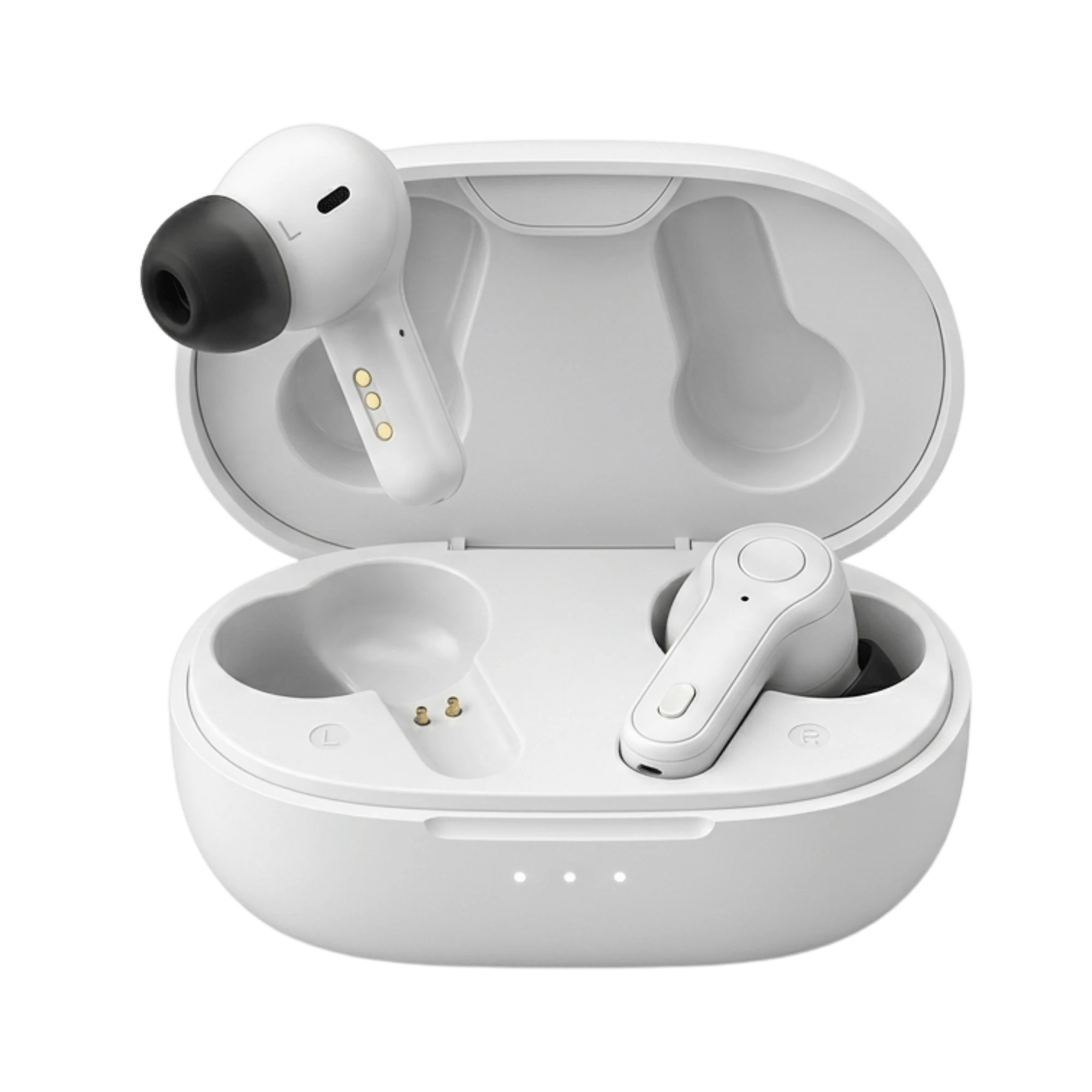
Panda Air ($299, was $399, save $100) looks like AirPods because it was designed to look like everyday wireless earbuds. No medical look, no stigma. Stream calls and music directly to the hearing aids. Fast-charge case gives you 60 hours of wear. Use the optional app to fine-tune sound or adjust on the go. Many retirees choose Air because it feels modern and nobody assumes it is a hearing device.

Panda Quantum ($349, was $499, save $150) is for serious hearing loss or users who want the best clarity. It uses 16-channel frequency-matched technology, the same principle audiologists use in $3,000 prescription devices, to correct the exact frequencies you are missing. Take a 10-minute online hearing test, and Panda Quantum personalizes itself. Battery runs 80 hours total (20 hours per charge, case recharges 3 more times). Includes Bluetooth for TV, calls, and music. If you have moderate to severe hearing loss or you want clinical-grade performance, Quantum is the choice.
All three are FDA-OTC certified, which means they are regulatory-cleared for sale without a prescription. All come with a 45-day trial, a 5-year warranty, and free shipping. If you have an HSA or FSA, hearing aids are eligible expenses, so ask your plan administrator if you can use those funds.
What to Avoid on Fixed Income
Financing prescription aids at 18-26% APR. A $4,500 hearing aid financed over 36 months at 20% interest costs you $7,200. On a fixed income, that monthly payment might mean cutting food or utilities. It is not worth it.
Subscription models that lock you in. Some hearing aid companies charge a monthly fee ($60-$100) for updates or cloud storage. Over five years, that is $3,600 to $6,000 on top of the device cost. OTC hearing aids like Panda have no subscription.
Sub-$100 amplifiers sold as hearing aids. Personal sound amplification products (PSAPs) boost all sound equally, including background noise, wind, and chatter. They do not treat hearing loss. If someone is selling you a "hearing aid" for $50, it is probably a PSAP and it will not help you hear conversation better.
Real Math: One-Time $349 vs Subscription
Let's say you buy Panda Quantum hearing aids at $349. That is a one-time cost. You wear them for five years, and after that, you own them outright.
Alternatively, a subscription hearing aid model charges $89 per month. Over 36 months (three years), you pay $3,204. Over five years, you pay $5,340. You still do not own the device, and if you stop paying, the hearing aid stops working because it is cloud-dependent.
On Social Security, owning your hearing aids outright is safer and cheaper.
How Adult Children Can Help
If you are an adult child reading this for a parent: there are ways to help without making a gift feel like a handout. Offer to help research Medicare Advantage benefits or state programs—many retirees find the paperwork frustrating and welcome a second set of eyes. If your parent has an HSA or FSA, offer to help navigate the withdrawal process to pay for hearing aids (and yes, you can gift the hearing aid with their permission). Or simply ask: "Would it help if I contributed $100-200 toward new hearing aids?" Many retirees will accept that form of support, especially if it comes without pressure.
Bottom Line: Start Hearing Again This Year
Most retirees can afford OTC hearing aids without financing. A pair of Panda Stealth at $279, Panda Air at $299, or Panda Quantum at $349 is affordable on Social Security alone. If your Medicare Advantage plan covers hearing aids, your copay might be $250-$699, bringing your net cost to near zero. If you are a veteran, the VA gives you hearing aids for free. If you do not qualify for any of those, nonprofits exist to fill the gap.
The 45-day trial means low risk. If the hearing aids do not feel right, return them. But the odds are strong: most people who try OTC hearing aids at this price point either keep them or upgrade to a model with more features. You are not locked in.
Untreated hearing loss costs more than hearing aids ever will: missed family moments, missed doctor's warnings, missed conversations. Start with whichever path fits your situation, but start now.
FAQ: Paying for Hearing Aids on Fixed Income
Q: Does Medicare cover hearing aids in 2026?
A: Original Medicare does not cover hearing aids. But Medicare Advantage (Part C) plans cover $500 to $2,000 per ear on average. Call your plan directly to ask about your specific benefit.
Q: How do I get free hearing aids for seniors?
A: Veterans get them free through the VA. If you are not a veteran, contact the Lions Club International (your local chapter), Sertoma, or your state's aging services department. Many offer refurbished or donated hearing aids to people on fixed income.
Q: Can I afford hearing aids on Social Security alone?
A: Yes. Panda Stealth hearing aids start at $279, which fits most retiree budgets. Many retirees pay this once and have hearing for five years. Avoid financing—it is far more expensive.
Q: Are there grants for hearing aids?
A: Nonprofit organizations like the Lions Club International, Starkey Hearing Foundation, and Audient Alliance do not have a single national grant, but they distribute hearing aids directly to people who qualify based on income. Contact your local chapter or apply through their websites.
Start Your Journey: Three Affordable Options
If you are ready to start hearing again, you have three clear paths forward: (1) Check your Medicare Advantage plan for coverage. (2) If you are a veteran, enroll in VA healthcare and schedule an audiology appointment. (3) Order Panda Stealth, Panda Air, or Panda Quantum online today, take the free 45-day trial, and see if direct-buy OTC hearing aids work for your life. All three models come with free shipping and no subscription required.
You have waited long enough to hear clearly again. The barrier was never your budget—it was knowing where to look.