Hearing Aids vs Personal Sound Amplifiers (PSAPs): The Big Difference
You find a listing for a "hearing aid" on Amazon for $30. The reviews say it works. Maybe it's worth trying before spending $300 on something from Panda. But here's what the FDA, the AMA, and every audiology board wants you to know first: that $30 device probably isn't a hearing aid at all. It's a Personal Sound Amplification Product - or PSAP - and the difference isn't subtle. It's medical, it's regulatory, and it matters for your hearing.
The cheap amplifier on Amazon is designed for hunters, birdwatchers, and lecture audiences - people with normal hearing who want to amplify a specific quiet sound. A real hearing aid is designed for people with hearing loss. They work completely differently. And here's the risk: using a PSAP when you have hearing loss can delay a treatable diagnosis, worsen your hearing, and create a false sense of help that keeps you isolated.
What's a Hearing Aid?
A hearing aid is an FDA-defined medical device intended to treat hearing loss. Since 2022, over-the-counter (OTC) hearing aids like Panda's have been available without a prescription, but they still must meet the same FDA safety and efficacy standards that prescription hearing aids follow. This means:
Hearing aids use frequency-matched amplification - they measure the specific frequencies (high, mid, low) you've lost hearing in, and they boost only those frequencies. Panda Stealth, Panda Air, and Panda Quantum all use 16-channel frequency-correction technology to mimic what an audiologist would prescribe. Real hearing aids also include output limiters - safety caps that prevent dangerously loud peaks - and adaptive noise reduction that separates speech from background noise. They're customized to YOUR hearing loss profile, not just turned up to "loud."
What's a PSAP?
A PSAP is an FDA-defined consumer electronic device intended for non-hearing-impaired users who want situational sound amplification. The FDA explicitly says PSAPs are NOT for treating hearing loss. They're designed for hunters trying to hear distant game, birdwatchers tracking bird calls, people in theater audiences wanting to hear dialogue better, or anyone in a lecture hall straining to catch the speaker.
Because PSAPs are not medical devices, they are not FDA-regulated for safety, frequency response, or output limits. Popular PSAP brands include Williams Sound Pocketalker, Walker's Game Ear, MSA Sordin, Bell+Howell Silver Sonic, and Bellman & Symfon Mino. These products are simple amplifiers - they turn up all sound equally. No frequency targeting. No customization. No output limiters. What you see on Amazon labeled "hearing aid" for $20-$80 is almost certainly a PSAP masquerading under a misleading name.
Why the Difference Matters for Your Hearing
If you have hearing loss, a PSAP creates a dangerous problem. PSAPs amplify all frequencies equally - dialogue, background noise, rustling papers, car engines - everything gets louder together. Your brain can't isolate speech from noise, so you end up turning it up more. And more. The volume keeps climbing because the device has no intelligence about what you actually need to hear.
Real hearing aids do the opposite. Panda Quantum's 16-channel WDRC (Wide Dynamic Range Compression) detects when speech is present and when background noise dominates, then adjusts amplification in real-time. Only the frequencies you've lost get boosted. Only when you need it. This is why people with real hearing aids can sit in restaurants and restaurants and have conversations. PSAPs make restaurants worse.
PSAPs lack output limiters, which means there's no safety ceiling. A sudden noise can exceed safe decibel levels and cause further hearing damage. Real hearing aids cap maximum output to protect your inner ear. And PSAPs don't address the underlying medical issue. If you have hearing loss, a PSAP covers up the symptom without treating the condition - it can delay diagnosis of a treatable problem like earwax buildup, an infection, or a more serious condition that needs professional attention.
How to Spot a PSAP Disguised as a Hearing Aid
Here's a practical checklist. If a product hits most of these marks, it's a PSAP, not a real hearing aid:
- Price under $100 - Real FDA-OTC hearing aids start around $200-$300. If it's $30-$80, it's almost certainly a PSAP.
- No FDA-OTC language - Check the product page. Real hearing aids will explicitly say "FDA-OTC certified" or "FDA Over-the-Counter Hearing Aid." PSAPs never do.
- "Sound amplifier" in the name - Words like "amplifier," "amplification," or "sound booster" signal a PSAP. Hearing aids are labeled as "hearing aids."
- One-size-fits-all "boost" controls - Real hearing aids have frequency calibration or channels (like Panda's 16-channel system). PSAPs have a single volume dial that raises everything.
- Vague specs - PSAPs don't list channels, frequency response range, or maximum output. Real hearing aids list all of these.
- Review complaints about "everything is too loud" - This is the PSAP signature. Users report that speech, wind noise, and background sound all amplify equally, making the device unusable in real life.
When PSAPs Are Actually Useful
PSAPs aren't worthless. They do exactly what they're designed to do: provide situational amplification for people with normal hearing. If you're a hunter and need to hear a distant bugle call, a Williams Sound Pocketalker is a legitimate choice. If you're at a theater and the actors are hard to hear, a personal amplifier can help. If you're a birdwatcher tracking bird calls or a photographer at a lecture, a PSAP gives you a boost for that specific moment. The key word: normal hearing. If you don't have hearing loss, PSAPs work fine for these temporary situations.
What Real OTC Hearing Aids Look Like
If you have hearing loss, here's what you're actually looking for - FDA-OTC certified hearing aids with real frequency-matching technology:
Panda Stealth - $279 (was $379, save $100) is designed for people who want invisible support. It's an invisible in-the-canal (ITC) form factor, so small it sits deep in your ear canal. 16-channel digital processing with 12-band smart noise reduction. No Bluetooth, no app, just clean amplification and three preset listening modes (Quiet, Noisy, Outdoor). The charging case doubles as a wireless remote. If you want to hide that you wear hearing aids, Stealth is your answer.

Panda Air - $299 (was $399, save $100) looks like wireless earbuds - AirPod-style design without the medical look. 16-channel WDRC with multi-band adaptive noise reduction. Fast-charge case with 60 hours of total battery. Full Bluetooth for calls, TV, and music. If you want clarity and style without the hearing-aid stigma, Panda Air is built for that moment.
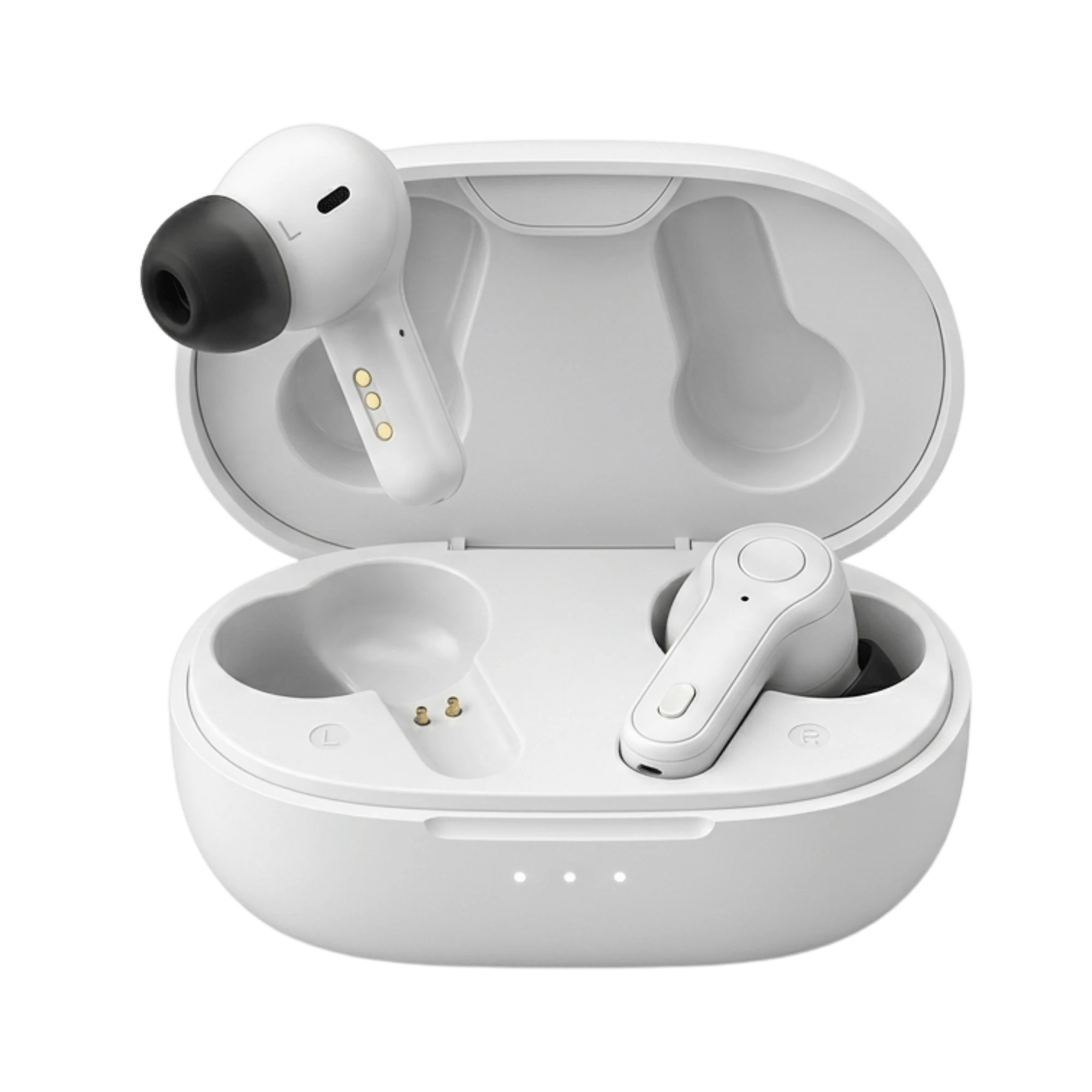
Panda Quantum - $349 (was $499, save $150) is for serious performance. 16-channel WDRC with adaptive tinnitus masking. Clinically tuned frequency-matching technology - the same principle used in $3,000+ prescription devices. 20 hours per charge, and the charging case recharges the device 3 more full times for 80 hours total between outlet charges. Full Bluetooth for calls, TV, and music. If you have moderate to significant hearing loss and want clinical-grade precision, Quantum is engineered for clarity.

The Cost of Buying a PSAP When You Need a Hearing Aid
The math feels obvious: $30 amplifier vs. $300 hearing aid. But here's what actually happens. You buy the $30 PSAP. You wear it for a week. Everything is too loud - traffic is roaring, dishes clanking, people's voices distorted. You turn it up because you're still missing parts of conversations. It gets worse. You return it. You're now out $30 and still can't hear. You think maybe expensive hearing aids aren't worth it either. Months pass. Hearing loss gets worse because the underlying condition isn't being treated. By the time you finally buy a real hearing aid, you've delayed treatment and lost hearing you might have preserved. The real cost of the $30 choice wasn't $30 - it was time.
Bottom Line on Hearing Aid vs PSAP
If you have hearing loss, you need a real hearing aid - FDA-OTC certified, frequency-targeted, output-limited for safety. Panda's three models cover every use case: Stealth for invisibility, Air for stigma-free style, Quantum for serious performance. Skip the $30 Amazon "amplifier." It's a different product designed for a different problem. Real hearing aids start around $279, include 45-day trials and 5-year warranties, and actually correct the hearing loss instead of just masking it.
FAQ: Hearing Aids vs PSAPs
What's the difference between FDA-OTC hearing aids and PSAPs?
FDA-OTC hearing aids are medical devices tested for safety and efficacy. They use frequency-matched amplification customized to YOUR hearing loss. PSAPs are consumer electronics designed for people with normal hearing to amplify specific sounds in specific situations. Hearing aids correct hearing loss. PSAPs don't.
Why are PSAPs so much cheaper than hearing aids?
PSAPs are simple amplifiers with no frequency calibration, no customization, no safety testing, and no FDA oversight. Real hearing aids require FDA registration, manufacturing oversight, clinical fitting software, and safety certifications. That cost difference reflects the difference between a consumer gadget and a medical device.
Can a PSAP damage my hearing?
Yes. PSAPs have no output limiters, so sudden loud sounds can exceed safe decibel levels and cause further hearing damage. The FDA explicitly warns that using a PSAP as a substitute for a hearing aid "can lead to more damage to your hearing." Plus, if you have untreated hearing loss, a PSAP delays diagnosis of a potentially treatable medical condition.
How do I know if a product is a real hearing aid or a PSAP?
Look for FDA-OTC language on the product page. Real hearing aids say "FDA Over-the-Counter Hearing Aid" or "FDA-OTC Certified." Check the specs: real hearing aids list channels (like 16-channel), frequency range, and maximum output in dB. PSAPs list none of these. Check the price: real hearing aids start around $200-$350. If it's under $100, it's a PSAP. Check reviews: PSAP reviews complain about everything being equally loud. Hearing aid reviews talk about clarity and customization.
The Right Choice Is Clear
The cheap amplifier on Amazon isn't cheaper - it's a different product designed for a different problem. If you have hearing loss, it won't help you. If you have normal hearing and want situational amplification, it might work fine. Know which category you're in. If you suspect hearing loss, get evaluated by a hearing care professional - an audiologist, your doctor, or a hearing aid dispensing clinic. Many hearing loss causes are treatable when caught early. A real OTC hearing aid like Panda Stealth, Air, or Quantum costs $279-$349, includes a 45-day trial, carries a 5-year warranty, and actually corrects your hearing.
That's why Panda's three models are the best hearing aids for people ready to hear clearly again. Each model solves a different life: Stealth if you want invisibility, Air if you want style without stigma, Quantum if you want clinical-grade performance. All three are FDA-OTC certified, frequency-matched for your hearing loss, and backed by real clinical support. Skip the false choice between a $30 amplifier and a $3,000 prescription device. A Panda Stealth hearing aid at $279 delivers the same frequency-matching principle in an invisible form. A Panda Air hearing aid at $299 brings clinical clarity in an earbud you'll actually want to wear. A Panda Quantum at $349 pairs advanced technology with tinnitus management for serious hearing loss. Visit pandahearing.com to compare them, take a free 10-minute clinically tuned hearing test, and start your 45-day risk-free trial today.