You finally found a sleek pair of hearing aids online, watched the demo, almost tapped buy, and then read four small words that stopped you: "Made for iPhone." You carry a Samsung or a Pixel, not an iPhone, and suddenly the streaming, the hands-free calls, the whole reason you were excited start to feel like they were built for somebody else's phone.
Android users have spent years as an afterthought in the hearing aid world. The good news for 2026 is that this is changing, and a growing number of over-the-counter devices now stream to Android. The trick is knowing which ones actually do it well, and which still treat Android as a checkbox. This guide walks you through how Bluetooth hearing aids connect to Android phones, the catches to watch for, and why Panda Air is built to make everyday hearing on an Android phone feel effortless.

Want hearing aids that pair with your Android like the earbuds you already use?
Shop Panda Air, $299How Bluetooth Hearing Aids Actually Connect to Android
Most Android phones stream audio to hearing aids through a standard called ASHA, short for Audio Streaming for Hearing Aids. ASHA usually needs Android 10 or newer and a phone whose Bluetooth chipset supports it, which is why two phones running the same version of Android can behave differently. Flagship lines like Samsung Galaxy and Google Pixel tend to handle it well, while some budget handsets do not. The first rule of buying Bluetooth hearing aids for Android is simple: check your specific phone model, not just the Android version number.
A newer standard called Bluetooth LE Audio is rolling out now, and it promises clearer sound, longer battery life, and more consistent compatibility across both Android and iPhone over time. It also brings Auracast, which lets public places such as airports and theaters broadcast sound straight to your hearing aids, and Android phones like the Pixel 10 already support it natively. The landscape is improving fast, but for most people shopping today the practical question is still the everyday one: will these stream my calls and my music to the phone in my pocket without a fight?
The "Made for iPhone" Gap Android Users Keep Hitting
For years the premium hearing aid industry built around Apple first. The "Made for iPhone" protocol gave iPhone owners direct, low-drain streaming to both ears, and many high-end aids even required an iPhone just to finish setup. Android owners were left to rely on ASHA, which arrived later and still depends on having the right chipset. That is the gap: a device can look modern and still quietly assume you own an iPhone.
Panda Air was designed the other way around, for everyday life rather than for one brand of phone. Its Bluetooth handles calls, TV audio, and music, and its companion app does the tuning, so an Android user gets the same effortless experience an iPhone user expects. As Panda puts it, these are made to look and feel like modern wireless earbuds, which is exactly the kind of device Android owners are already comfortable pairing. You are not bolting a medical gadget onto your phone, you are adding a pair of Bluetooth OTC hearing aids that behave like the earbuds you already trust.
| What matters for Android | Panda Air | Typical "Made for iPhone" premium aid | Basic Bluetooth amplifier |
|---|---|---|---|
| Price | $299 a pair | $2,000 to $6,000 a pair | $100 to $300 |
| Android streaming | Yes, calls, TV, and music, with app control (confirm Android 10+) | Built for iPhone first, Android only on supported models | Often one-way or limited streaming |
| Channels | 16-channel processing, plenty for mild to moderate loss | 16 to 24, but only after a paid clinic fitting | 1 to 4 basic bands |
| Fitting | 10-minute self-fitting test at home | Audiologist visit required | Fixed presets, no real fitting |
| Noise reduction | Multi-band adaptive noise reduction | Clinical noise reduction | Basic or none |
| Battery | Fast-charge case, 60 hours total | Varies, streaming drains faster | Varies, often short |
| Form factor | Earbud-style, looks like wireless earbuds | Behind-the-ear or RIC, more visible | Often bulky |
| Warranty | 5-year | 1 to 3 years | 1-year limited |
| Trial period | 45-day risk-free | Short in-clinic trial | Varies |
| Certification | FDA-OTC, FCC, CE | Prescription, clinic-dispensed | Sometimes a PSAP, not a hearing aid |
Panda Air, $299
5-year warranty, 45-day risk-free trial, free shipping. FDA-OTC certified.
See Panda Air →What Panda Air Gives an Android User Day to Day
Think about a normal Tuesday on an Android phone. A call comes in while you are making coffee, a voice note from your daughter lands in the afternoon, and you put on a playlist for the walk home. With a device that was only really built for iPhone, each of those moments can mean fumbling, a dropped connection, or sound that only streams to one ear. Panda Air routes calls, TV audio, and music through both hearing aids, so your Android phone simply becomes the remote for your day.
The personalization is where these app-tuned hearing aids earn their keep. A short hearing test personalizes your sound, and frequency-level adjustment delivers clear, natural hearing rather than just turning the world up. That matters because volume alone makes a noisy cafe worse, while app-based hearing personalization lifts the voice you want to hear and softens the clatter you do not. Adaptive noise reduction handles the background automatically, so you spend the evening listening instead of adjusting.
Ready to stream calls and music straight to your hearing aids?
Try Panda Air, $299A Fitting You Do at Home, Not in a Clinic
The premium "Made for iPhone" aids in the table reach their best sound after an audiologist programs them in an office, which is part of why they cost thousands. Panda Air takes a different path. Its clinically tuned, 10-minute online hearing test runs at home and measures the specific frequencies you struggle with, then adjusts the device to match. It is the same idea behind a professional fitting, the kind of frequency-targeted correction an audiologist builds, without the appointment or the fitting fee.
Because Panda Air is a self-fitting OTC hearing aid, you can repeat the test whenever your ears or your day changes, straight from your Android phone. No waiting room, no second visit, no extra invoice. If you later decide you want even more processing power for tougher rooms, the step-up Panda Quantum uses the same at-home test in a receiver-in-canal design, so the experience stays familiar.
Battery and Comfort Built for All-Day Carry
Streaming is the fastest way to drain a tiny battery, which is why the case matters. Panda Air ships with a fast-charge case that provides 60 hours of total use, recharging the earbuds several times between wall charges. That is the difference between a device that quits during your evening calls and one that keeps up from breakfast through the late show. The earbud-style fit weighs almost nothing, so the rechargeable hearing aids with charging case sit comfortably whether you wear them for a quick errand or a full workday.
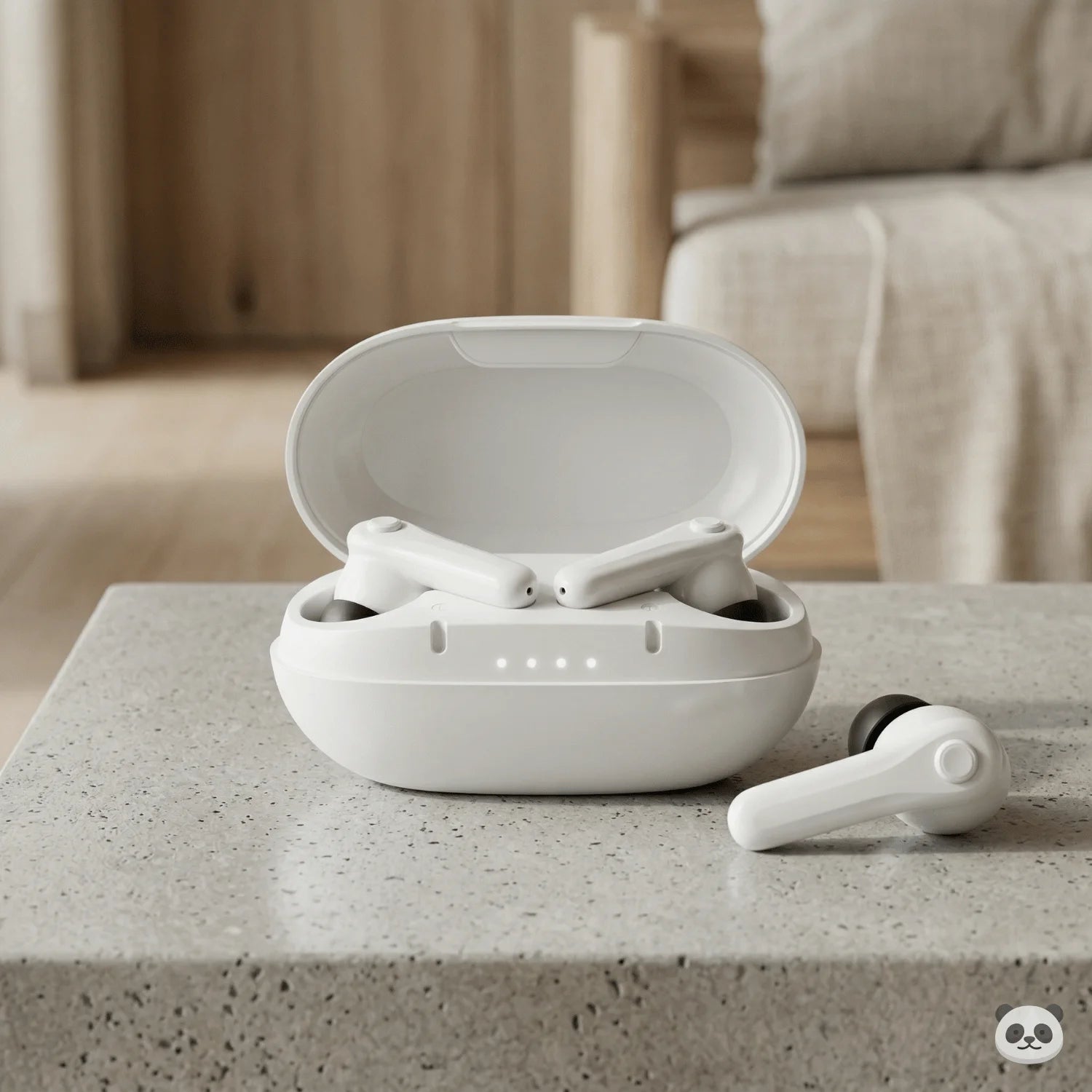
The verdict. If you carry an Android phone, Panda Air is the simplest way to get genuine Bluetooth hearing aids that stream your calls, TV, and music without assuming you own an iPhone. You get 16-channel processing, adaptive noise reduction, a 10-minute self-fitting test, and a 60-hour charging case, all FDA-OTC certified, for $299. Add a 5-year warranty and a 45-day risk-free trial and the math is hard to argue with.
Android Bluetooth Hearing Aid Questions, Answered
Will Panda Air stream calls and music to my Samsung or Pixel phone? Yes. Panda Air uses Bluetooth for calls, TV, and music, and pairs the way your wireless earbuds already do. For streaming features, make sure your phone is running Android 10 or newer, which covers nearly every Samsung Galaxy and Google Pixel sold in recent years.
Do I need an iPhone to set up Panda Air? No, and that is the point. Many premium hearing aids lean on a "Made for iPhone" setup, while Panda Air is tuned through its own companion app and a 10-minute online test, so an Android owner never gets second-class treatment.
Are these a real hearing aid or just an amplifier for my phone? Panda Air is an FDA-OTC hearing aid, not a basic amplifier. It uses 16-channel processing and multi-band adaptive noise reduction to sharpen speech, where a cheap Bluetooth amplifier mostly makes everything louder.
The Clearer Choice for Android Users
The honest summary is this. The Bluetooth world is finally opening up to Android through ASHA today and LE Audio tomorrow, but a lot of the slickest hearing aids still treat Android as the second phone. A basic amplifier streams but cannot really clarify speech, and a premium "Made for iPhone" aid clarifies beautifully but expects an iPhone and a clinic budget. Panda Air sits where most Android users actually live: real 16-channel hearing, calls and music streamed to both ears, a fitting you do at home, and a price of $299 instead of several thousand. That gap, the same clarity for a fraction of the cost and none of the iPhone assumptions, is the whole reason to choose it.
If you are ready to stop being an afterthought on your own phone, try Panda Air today at $299. You get 45 days to live with it, stream with it, and take it to dinner. If it is not the upgrade your Android life needed, send it back for a full refund, no questions asked. For modern, earbud-style hearing that simply works with the phone in your pocket, Panda Air is the best hearing aid for Android users in 2026. Learn more at pandahearing.com.