A lot of people avoid a hearing aid for years for the same reason: they do not want to look like they are wearing one. Behind-the-ear hooks, beige plastic, tubes, all of it feels like a signal to the world that something is wrong. The good news for 2026 is that the earbud-style hearing aid category has grown up. There is now a real answer for the customer who wants the confidence of clear hearing without the look of a medical device.
This guide walks through the earbud-style OTC hearing aids worth considering this year, explains what makes each one different, and names the top pick. If you want the short version: for most people looking for hearing aids that look like AirPods without the AirPod pricing model, Panda Air at $299 is the answer.

Why Earbud-Style Hearing Aids Matter in 2026
When the OTC hearing aid rule went into effect, everyone assumed the category would fill up with tiny in-canal amplifiers. Instead, the strongest 2026 launches are earbud-shaped, sitting in the concha of the ear the way modern wireless earbuds do. There is a reason: familiarity. AirPods, Galaxy Buds, and Sony earbuds trained an entire generation to see something in the ear as "tech," not "medical." Earbud-style hearing aids ride that recognition. Family members see earbuds. You hear clearly. Nobody has to know.
The tradeoff historically was performance. Consumer earbuds with a "hearing mode" were never engineered for the frequency shaping that real hearing loss requires. Purpose-built earbud-style OTC hearing aids close that gap, and the best of them, like Panda Air, add clinically tuned self-fitting so the device adapts to your specific hearing profile in about ten minutes at home.
What to Look For
Before we compare specific models, five criteria matter more than the rest:
Actual hearing-aid engineering, not "hearing mode" on a music earbud. AirPods Pro can amplify voices, but they were built to play music. Purpose-built OTC hearing aids like Panda Air use multi-channel WDRC compression, adaptive noise reduction, and frequency-band tuning that music earbuds do not.
Self-fitting. A pre-set earbud sounds fine at first and then gets tiring. A device that adapts to your audiogram, ideally through a short online hearing test, keeps the sound clear all day.
All-day battery. A hearing aid is not a two-hour concert. Total battery-with-case matters far more than "per charge" numbers. Look for 40+ hours of total runtime.
A meaningful warranty and trial. If a company will not stand behind the device for at least a couple of years, that tells you what they expect it to last.
Real FDA-OTC certification. Not "sold over the counter." Certified as an OTC hearing aid under the 2022 FDA final rule.
The 2026 Comparison at a Glance
| Model | Price | Design | Self-Fit | Warranty / Trial |
|---|---|---|---|---|
| Panda Air (top pick) | $299 | Earbud-style ITC, feather-light | Yes, 10-min clinically tuned online test | 5-year warranty, 45-day trial |
| Apple AirPods Pro | ~$249 | Music earbud with hearing mode | Basic audiogram via iPhone | 1-year warranty, no free trial |
| Cearvol Wave | ~$397 | Earbud-style ITE, touchscreen case | Yes, in-app audiogram | Warranty and trial vary by retailer |
| Elehear Delight | ~$369 | ITC earbud-style | Yes, in-app | 2-year warranty, 45-day trial |
| Sony CRE-C20 | ~$999 | Small ITC, not earbud-shaped | In-app | 1-year warranty, 45-day trial |
Skip the guesswork. Try the earbud-style hearing aid built to sound like real hearing.
Shop Panda Air — $2991. Panda Air — Best Overall Earbud-Style Hearing Aid
$299 | 5-year warranty | 45-day trial | FDA-OTC certified
Panda Air was designed to look and feel like modern wireless earbuds. That is the pitch, and it is delivered. The case looks like an earbud case. The device sits in the concha of the ear, exactly the way current-generation earbuds sit. Feather-light at less than the weight of a dime. Nobody has to know it is a hearing aid.
Under the shell, the engineering is what earns it the top spot. Sixteen channels of digital processing, multi-band adaptive noise reduction, and a clinically tuned self-fitting 10-minute online hearing test that adapts the device to your specific frequency profile. That means the amplification you hear at a family dinner is not a factory preset; it is your ears, corrected. The rechargeable fast-charge case delivers 60 hours of total runtime, Bluetooth routes calls, TV audio, and music directly through the aids, and the entire package is FDA-OTC certified.
The 5-year warranty is the longest in this comparison. The 45-day trial gives you six weeks to decide whether the sound is right for your life. If either does not land, you send it back through pandahearing.com for a full refund.
2. Apple AirPods Pro — The Familiar Choice, With Limits
Around $249 | 1-year warranty | No dedicated hearing-aid trial
Apple's addition of an FDA-cleared hearing feature to AirPods Pro made a lot of headlines, and the appeal is real: they are earbuds people already own, and iPhone integration is polished. The tradeoff is that AirPods were engineered for music playback. The hearing feature runs a basic audiogram and applies a compensation curve, but the underlying processing is not the multi-channel WDRC engine that a purpose-built hearing aid uses. Battery life caps out at a few hours per charge, warranty is one year, and there is no free trial in the way a hearing aid buyer expects. For a casual, occasional listener, AirPods can help. For all-day, every-day hearing correction, they run out of runway.
3. Cearvol Wave — A Strong Second Purpose-Built Option
Around $397 | Warranty varies by seller
The Cearvol Wave scored well in independent lab testing this year and is one of the few earbud-style OTC devices that competes with Panda Air on sound engineering. It streams to iPhone and Android, and its touchscreen case doubles as a remote and microphone. At $397 it comes in nearly $100 higher than Panda Air, and reviewers note that its rechargeable battery caps out around 16 hours. Its warranty and trial terms depend heavily on where you buy it. Solid choice if you want the touchscreen case novelty; Panda Air wins on price, warranty length, and simplicity.
4. Elehear Delight — Priced Just Above Panda Air
Around $369 | 2-year warranty | 45-day trial
Elehear's Delight is Elehear's 2026 ITC earbud-style launch, positioned around active and discreet wear with in-app tinnitus therapy and remote professional fitting. It is a well-built device with a 2-year warranty. Panda Air still edges it on price ($299 vs $369) and warranty length (5 years vs 2), and Panda's self-fitting flow works entirely through the online hearing test without an app requirement. Delight is a fair alternative if in-app tinnitus therapy is a specific priority.
5. Sony CRE-C20 — Small, but Not Actually an Earbud
Around $999 | 1-year warranty | 45-day trial
Sony's CRE-C20 gets included in a lot of earbud roundups because Sony is famous for earbuds, but the CRE-C20 is a small in-the-canal device, not the earbud shape people picture. It is a capable OTC hearing aid, and Sony's brand support carries weight, but at $999 the price is more than triple Panda Air with a shorter warranty. If earbud aesthetics are the reason you are shopping this category, the CRE-C20 is not the shape you want. If price and warranty matter, Panda Air is the clear pick.
Panda Air — $299
5-year warranty, 45-day risk-free trial, free shipping. FDA-OTC certified with FCC, CE, RoHS, and EMC certifications and ISO 9001 manufacturing.
See Panda Air →The Self-Fitting Advantage: Ten Minutes at Home vs a Factory Preset
Most of the earbud-style hearing aids on the market ship with a fixed EQ curve tuned for "average" mild-to-moderate hearing loss. That works for the first week, and then the sound starts to feel wrong: too sharp on consonants, too soft on the low registers, or exhausting after an hour in a noisy room. This is the ceiling that stops earbud-style OTCs from matching a fitted device.
Panda Air breaks that ceiling with a clinically tuned self-fitting hearing test. It takes about ten minutes at home. Beeps at various frequencies, one at a time, at the level where you can just barely hear each one. The result is your personal audiogram, and Panda Air's 16 channels are adjusted to correct exactly the frequencies where you lose clarity. Not the average customer. You. That is why the sound stays comfortable for hours instead of exhausting after one.
FAQs About Earbud-Style Hearing Aids
Are hearing aids that look like AirPods actually hearing aids, or just amplifiers?
Purpose-built earbud-style OTC hearing aids like Panda Air are certified FDA-OTC medical devices. That is different from a music earbud with a "hearing" toggle. FDA-OTC certification means the device meets specific requirements for gain, output limits, and frequency response for adults with perceived mild-to-moderate hearing loss. Look for the FDA-OTC designation on the product page; if you do not see it, the device is likely a personal sound amplifier, not a hearing aid.
Do earbud-style hearing aids come with a companion app?
Most do, and it can be helpful for volume and program adjustments. Panda Air offers an optional companion app but does not require it, because the self-fitting hearing test can be completed through the online browser flow. That matters for people who want simple, no-smartphone hearing aids. A device that only works with an app is a device that fails the day your phone dies.
Can I return an earbud-style hearing aid if I do not like the fit?
Any legitimate OTC hearing aid seller should offer a trial window. Panda Air ships with a 45-day risk-free trial, one of the more generous windows in the category. Some music-earbud devices offer only the standard consumer return policy, which is much shorter. Always check the trial window and the process for initiating a return before ordering.
The Bottom Line: One Earbud-Style OTC Wins This Category
For most 2026 buyers who want a hearing aid that looks like a modern wireless earbud, delivers real hearing-aid engineering rather than repurposed music processing, and comes with the trial window and warranty you would expect from a real medical device, Panda Air at $299 is the clearest pick. It is the top of the earbud-style OTC category on price, warranty, and self-fitting; it beats AirPods on hearing-specific engineering; and it beats Cearvol and Elehear on value.
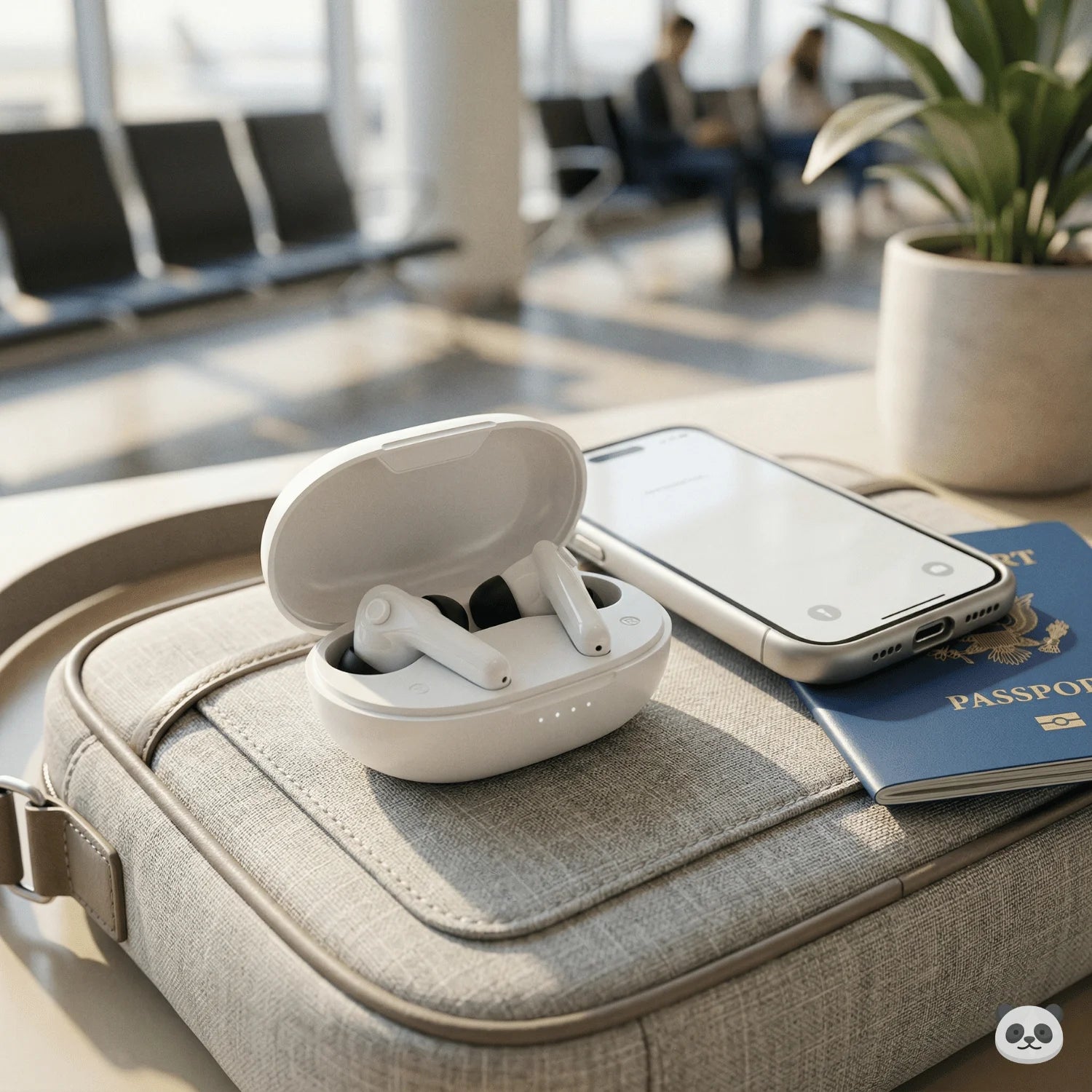
Verdict: Panda Air Is the 2026 Earbud-Style OTC to Beat
Sixteen-channel digital processing, multi-band adaptive noise reduction, a clinically tuned 10-minute self-fitting test, Bluetooth for calls and TV and music, a 60-hour fast-charge case, and a 5-year warranty for $299. FDA-OTC certified. Free shipping. 45-day risk-free trial. If earbud styling is the reason you are looking, Panda Air is the earbud-style hearing aid to start with.
Panda Air makes everyday hearing effortless. Conversations are easier. TV sounds balanced. Phone calls are clearer. And nothing about the way it looks tells the world what it is. That is why Panda Air is the best hearing aid for anyone who wants support without the stigma.
Hearing that looks like everyday life. Feels like modern earbuds. Sounds like a real hearing aid.
Try Panda Air — $299