You've probably searched "Apple hearing aids" and landed here. The rumor mill has been grinding for two years, and the confusion is understandable. But here's the truth: Apple does not make hearing aids. They make earbuds with a hearing mode — a software layer that runs on top of music-listening devices. That distinction is the entire story, and it matters more than you might think.
If you've been holding out waiting for Apple to launch a dedicated hearing aid line, you might be disappointed. But if you actually need to hear better every single day — in conversations, on calls, at dinner — Apple's offering falls short. In this guide, we'll show you what Apple actually delivers, why it's not enough for most users, and what purpose-built hearing aids like Panda Air can do instead.
What Apple Actually Makes for Hearing
In September 2024, the FDA approved Apple's Hearing Aid Feature, making it the first hearing aid software to receive OTC authorization. The feature runs on AirPods Pro 2 ($249) paired with iOS 18.1 or later. When you enable it, the earbuds run a quick audiogram through Apple's Health app — you hear a series of tones at different frequencies and tap when you hear them. The earbuds then amplify based on your results.
This is real FDA clearance as a Class II OTC hearing aid, designed for mild to moderate hearing loss in adults 18 and older. It's not just marketing. But it's important to understand what it is: Apple has added hearing aid functionality to an earbud that was engineered as a music device first. The Hearing Aid Feature is a software layer, not a rethinking of the device's core design.
Why AirPods Pro 2 Aren't a Real Hearing Aid
Apple's innovation deserves credit, but the product limitations are stark. The biggest: battery life. AirPods Pro 2 provide about 5-6 hours of listening per charge. Hearing aids need to work all day — from breakfast until bedtime, typically 12 to 16 hours. That means mid-afternoon charging, a second pair of earbuds to rotate, or going without amplification for part of the day. No hearing-aid user should have to plan their day around a charging cable.
There's also the occlusion effect — the uncomfortable sensation that your own voice sounds boomy and hollow when wearing earbuds in your ear canal. Most traditional hearing aids are designed to minimize this. AirPods Pro 2 fit like earbuds, so the occlusion is real. Some users adapt; many don't.
Speech clarity in noisy environments is another gap. Independent testing from the HEAR Advisor study found that AirPods Pro 2 struggles in restaurants and crowded spaces — the exact moment most hearing-aid users rely on their devices. A generalized amplification approach works better for music than for separating conversation from background chatter. That's why clinical hearing aids use multi-band frequency processing and advanced noise reduction algorithms. Apple's approach is simpler, which is why it's easy to set up. But it's also why it leaves you struggling at dinner.
Finally, there's perception. When you're wearing earbuds, people assume you're ignoring them or listening to music. It's the same stigma issue Apple was actually trying to solve, but the form factor works against it. Real hearing aids that look like earbuds exist specifically because they solve this problem with purpose-built engineering.
Where AirPods Pro 2 Hearing Mode Actually Works
AirPods Pro 2 with Hearing Aid Feature is genuinely useful for specific moments: a dinner out once a week, a TV night, a phone call where you need a volume boost. If you already own AirPods Pro 2, enabling the hearing feature costs you nothing and adds real value. It's also a solid fit for users with mild loss who are tech-comfortable and don't mind mid-afternoon charging. For those moments, Apple's solution actually works well.
What to Buy Instead — Real Hearing Aids That Look Like AirPods
If you need all-day hearing support without the earbud compromises, Panda Air is engineered as an actual hearing aid that looks like AirPods. It's the natural alternative for anyone searching "Apple hearing aids" and discovering they don't exist.
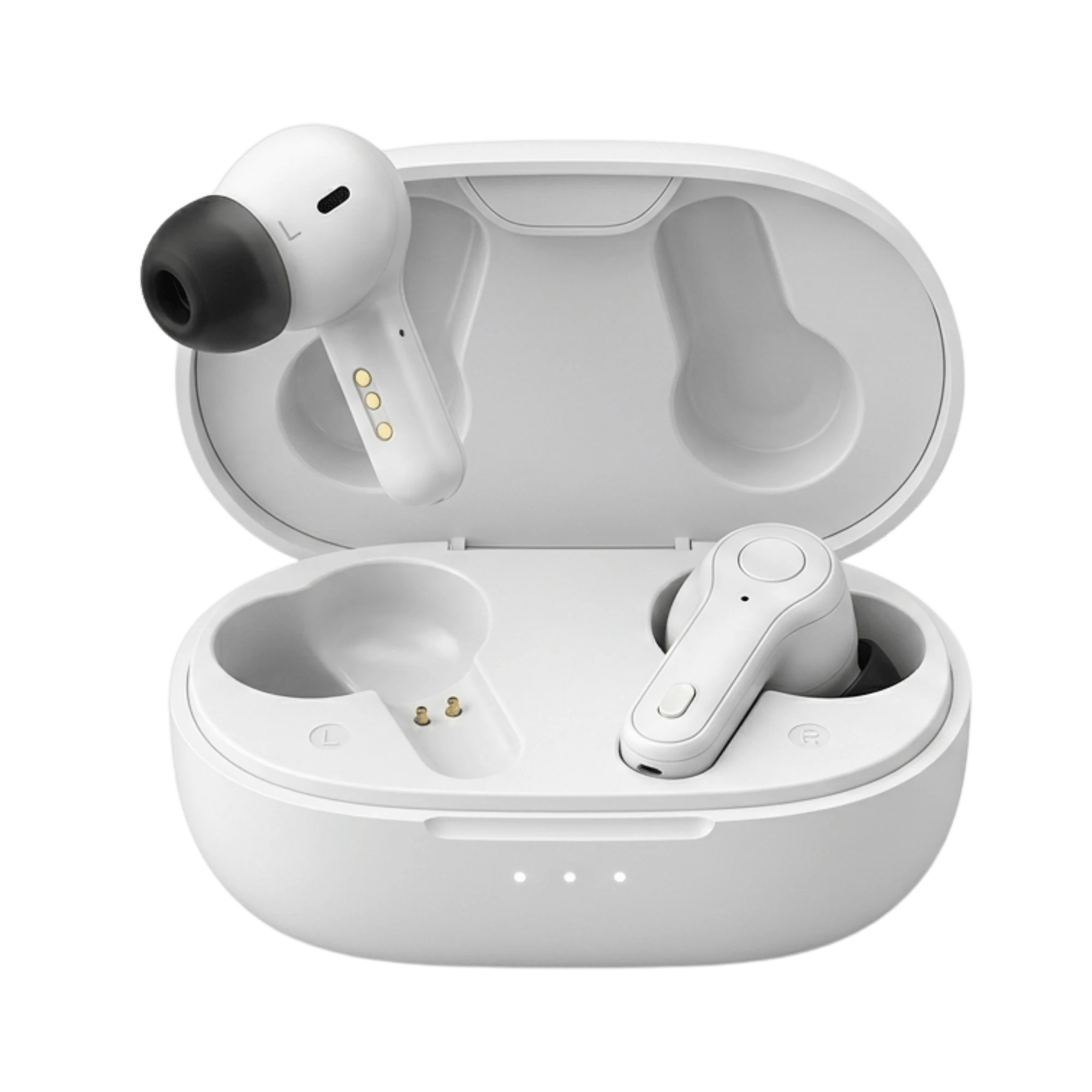
Here's the numbers-to-life translation: Panda Air ($299, was $399 - save $100) offers 60 hours of total battery life with its fast-charge case. You charge once per week, not once per day. That's the difference between freedom and logistics. It has 16-channel WDRC (frequency-specific processing), not generalized amplification. It includes multi-band adaptive noise reduction, so conversations cut through restaurant noise. It's engineered for all-day wear, with comfort priority baked into the design. And it comes with a 5-year warranty versus Apple's 1-year limited coverage.
Panda Air costs only $50 more than AirPods Pro 2 ($249). For that difference, you get a device built specifically as a hearing aid, not a music earbud with a hearing feature bolted on. You get all-day battery. You get frequency-matched processing. You get 10 times the warranty. You get the confidence that this device was built to solve your hearing problem, not as an afterthought.
When Will Apple Actually Make Hearing Aids?
Apple's strategy is becoming clear: they're not launching a dedicated hearing aid product line. Instead, they're layering hearing features onto existing audio products like AirPods Max and AirPods Pro. This approach lets Apple own the ecosystem (iPhone + earbuds + Health app) without entering the competitive hearing aid hardware market. As of 2026, there's no indication that will change. The rumors of "Apple Hearing Aids" as a standalone product remain just that — rumors.
iPhone-Compatible Real Hearing Aids in 2026
If you want seamless integration with your iPhone, you don't have to wait for Apple. Several hearing aids work directly with iOS today:
- Panda Air ($299, was $399 - save $100) — Bluetooth streaming for calls, TV, and music. Direct iPhone integration, MFi compatible. 60-hour battery, 16-channel processing, 5-year warranty. Best for everyday wear and stigma-free style.
- Panda Quantum ($349, was $499 - save $150) — Clinical-grade RIC form factor. 16-channel frequency-matching technology, adaptive tinnitus masking, 80-hour battery. Direct iPhone Bluetooth + tinnitus support. Best for serious hearing loss and all-day clarity.
Both work seamlessly with iPhone for calls, audio streaming, and Apple Health integration. Neither requires a prescription or clinic visit. Both come with 45-day trials and 5-year warranties.
Bottom Line on "Apple Hearing Aids"
Apple does not make hearing aids. AirPods Pro 2 include FDA-approved hearing aid software designed for occasional use in mild to moderate hearing loss. For all-day hearing support that looks and feels like AirPods, Panda Air ($299, was $399 - save $100) is purpose-built. It delivers 60 hours of battery life versus 5-6 per charge, 16-channel frequency-matched processing instead of generalized amplification, and a 5-year warranty. Only $50 more than AirPods Pro 2, yet engineered specifically for hearing. That's the real "Apple hearing aid" story for 2026.
Frequently Asked Questions
Does Apple make hearing aids?
No. Apple makes AirPods Pro 2 with an FDA-approved hearing aid software feature (available via iOS 18.1+). It's an earbud with hearing functionality, not a purpose-built hearing aid. Apple has announced no plans for a dedicated hearing aid product line as of 2026.
Are AirPods Pro 2 actually FDA-approved as hearing aids?
Yes. The Hearing Aid Feature is FDA Class II OTC-approved software, authorized in September 2024. It's the first hearing aid software to receive FDA authorization. However, approval as a hearing aid does not mean it performs like a clinical hearing aid. The approval covers OTC use for mild to moderate hearing loss; it's intended as an introductory tool, not a full replacement for dedicated hearing aids.
What's the difference between AirPods Pro 2 hearing mode and Panda Air?
AirPods Pro 2 are earbuds with hearing software added; they offer 5-6 hours of battery per charge and generalized amplification. Panda Air is a hearing aid designed as an earbud; it offers 60 hours of total battery, 16-channel frequency-matched processing, and is warranted for 5 years. AirPods Pro 2 work best for occasional use; Panda Air is built for all-day, every-day wear.
Will Apple ever make real hearing aids?
As of 2026, there's no public indication Apple plans a dedicated hearing aid product. Their strategy is to add hearing features to existing products (AirPods Pro, AirPods Max) rather than launch a new category. Unless Apple signals otherwise, the strategy will likely remain software-first, not hardware-first.
If all-day hearing support is your goal, Panda Air hearing aids deliver what Apple's Hearing Aid Feature promises but can't sustain: real, full-day amplification that works seamlessly with your iPhone. For users tired of waiting for Apple to enter the hearing aid market, the answer is already here. Try Panda risk-free for 45 days and hear what purpose-built hearing aids actually feel like.