A new longitudinal study suggests the strongest predictor of how well someone does with their first set of hearing aids is not their audiogram or their personality, but how much they personally value the prospect of hearing better.
For decades, audiologists have wrestled with the same question: why do some people thrive with their first hearing aids while others quietly drop them in a drawer? Researchers have long known that the audiogram alone is a poor predictor. Two people with nearly identical hearing loss can end up in very different places six months after fitting.
A new longitudinal trial out of ORCA Labs in Denmark and Germany set out to identify which factors, particularly the modifiable ones, actually move the needle on hearing aid satisfaction during the critical first six months of use. The answer they found is simpler than expected: motivation matters most.
About This Study
Title: Importance of Improving Hearing Consistently Predicts Positive Hearing Aid Outcomes in First-Time Users: Insights From a 6-Month Longitudinal Trial
Authors: Dina Lelic, Rosa-Linde Fischer
Affiliations: ORCA Labs, Lynge, Denmark; ORCA Labs, Erlangen, Germany
Journal & pub date: Journal of Speech, Language, and Hearing Research (JSLHR), April 24, 2026
Study type: Prospective longitudinal trial in first-time hearing aid users
PubMed DOI: 10.1044/2026_JSLHR-25-00431
Background: Why the Researchers Looked at This
Roughly one in three adults over 65 lives with measurable hearing loss, but only a fraction ever fit hearing aids and even fewer wear them consistently. Researchers and clinicians have looked at almost every plausible explanation: device cost, stigma, fit, sound quality, lifestyle, and the well-documented gap between audiometric loss and self-reported difficulty.
In recent years, attention has shifted from the device itself toward the person wearing it. Behavioral research on health behavior change has produced a working vocabulary for what shapes long-term use of any new device or therapy: motivation (how much you want the outcome and believe you can achieve it), volition (whether you have made concrete plans for using the device and dealing with setbacks), and the perceived importance of the goal. The ORCA Labs team applied that framework to hearing aids and tracked it over time rather than at a single visit.
How the Study Was Done
The team enrolled 54 first-time hearing aid users. Before fitting, each participant completed a battery of questionnaires covering personality traits, lifestyle, expectations of what hearing aids would do for them, the reason they had decided to seek help, and how important improving their hearing felt to them on a personal level. They were also asked about their intention to use hearing aids, their confidence that they could do so, and whether they had thought through how to plan for and cope with everyday challenges that might come up.
Participants were then fitted with hearing aids and asked to rate their satisfaction and the benefit they felt they were getting at multiple points across 24 weeks. The researchers also re-measured motivation and volition over time so they could see how those factors changed once people were actually using the devices in their daily lives.
The statistical analysis tried to identify which pre-fitting variables, especially the modifiable ones, lined up most consistently with positive outcomes 24 weeks later.
What the Researchers Found
Out of all the variables measured, the single factor that most consistently predicted positive hearing aid outcomes was how important the person felt it was, in their own life, to hear better. That perceived importance outperformed personality, lifestyle, and pre-fitting expectations as a predictor of satisfaction and self-rated benefit.
By two weeks after fitting, participants on average reported moderate to high satisfaction and benefit. Those benefit ratings stayed relatively stable through the full 24 weeks of follow-up, while satisfaction edged up slightly over time. In other words, the early weeks were already a reasonably good predictor of where a user would land months later, which lines up with the broader audiology literature.
The picture for motivation and volition was more nuanced. Intention to use hearing aids was high before fitting, suggesting the people who showed up wanted to use the devices. But action planning (the concrete plan for when and how to wear them) and coping planning (the plan for handling problems like noisy restaurants, feedback, or fatigue) were notably lower at baseline. Strikingly, those two scores did not improve after fitting either. People started without a strong plan for daily use and difficulty management, and most were still without one half a year later.
Put together, the findings paint a clear picture. The intrinsic value people place on better hearing is doing most of the work of predicting how the experience will go. Practical planning skills, by contrast, are not developing on their own once a device is in the ear.
What It Means for People with Hearing Loss
For someone considering hearing aids for the first time, the most useful read on this study is that the question to ask is not only "are these devices good enough?" but also "how much do I personally want to hear better, and for what?" The people who could name specific situations where better hearing would matter, conversations with grandchildren, work meetings, restaurants with friends, tended to land in a better place at six months than those who came in vaguely.
The second takeaway is that the fitting itself is just the start. Most users in the study never developed strong plans for consistent daily use or for coping with the rough days, and that gap did not close on its own. Anyone starting with hearing aids may benefit from being deliberate up front about when they will wear them, how they will handle tough listening situations, and where they will seek help when something is not working.
Finally, the small slow improvement in satisfaction over six months, alongside stable benefit, is consistent with what the field calls the acclimatization period. Brains take time to readjust to amplified sound. A device that feels okay at two weeks often feels noticeably better at three months without any change to the settings.
Lowering the Barrier to a First Try Matters When Motivation Is the Strongest Predictor
If the strongest predictor of hearing aid success is how much someone personally values better hearing, then the practical follow-on question is how to get a willing person from "I want to try" to "I am wearing hearing aids in my own home" with as little friction as possible. Cost and the logistics of clinic visits are well-documented reasons why motivated people delay or never act.
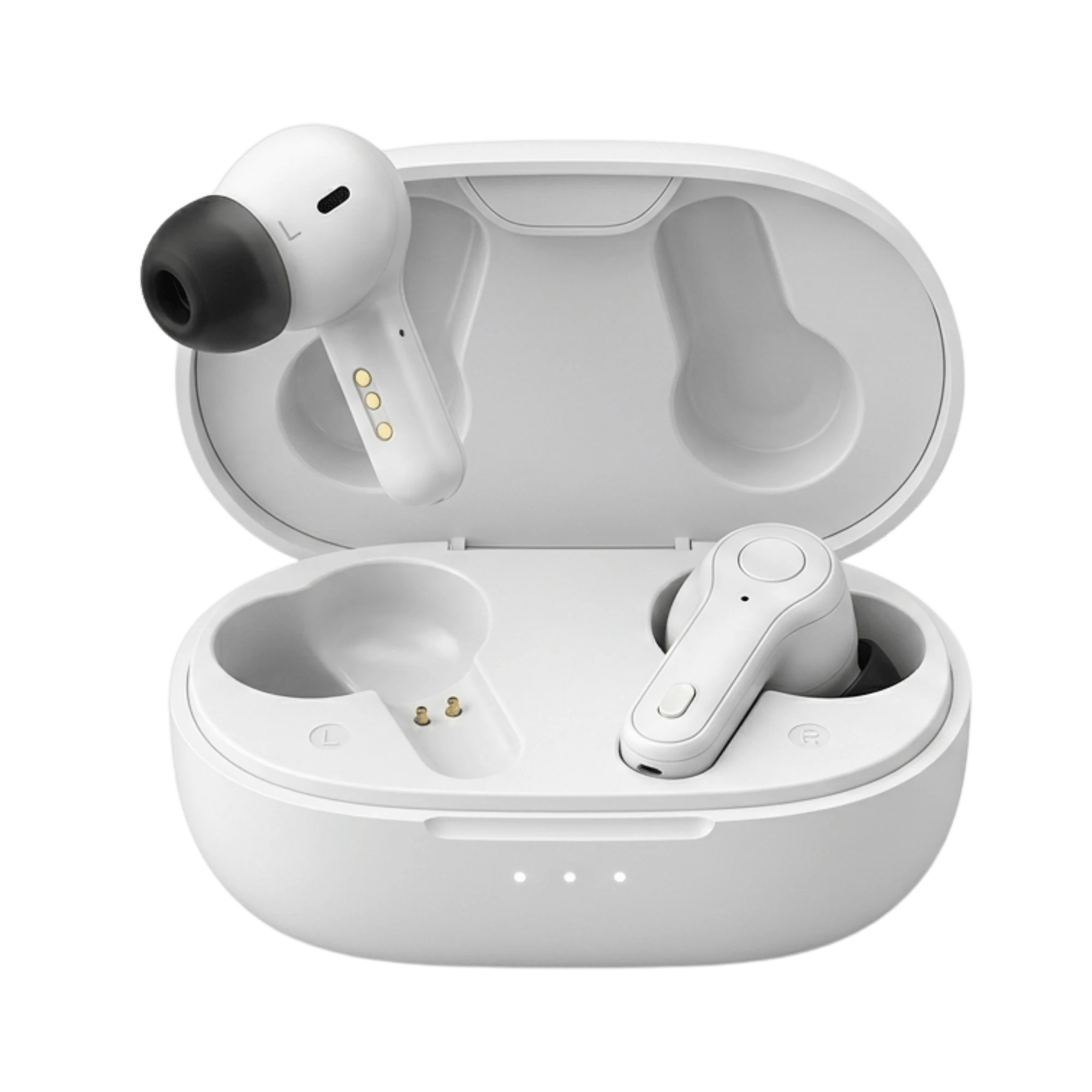
The Panda Air is one OTC option built around removing those barriers. It is an earbud-style in-the-canal device with 16-channel WDRC, multi-band adaptive noise reduction, a 60-hour fast-charge case, a 5-year warranty, and a 45-day return window, so a first-time user can actually try the device through real listening situations and decide. Notably for first-time users, the Panda Air pairs with the Panda app and runs a frequency-specific in-ear hearing test through the device itself, then automatically programs the gain and frequency response to match the resulting audiogram, similar in principle to the personalization an audiologist performs at a clinical fitting.
It is worth noting that OTC devices are approved for adults with mild to moderate hearing loss. People with severe or profound loss generally still benefit most from a clinical fitting and ongoing audiologist support.
Limitations of This Research
The most obvious caveat is sample size. Fifty-four participants is enough to detect a strong signal but not enough to break the data down by age, severity of loss, type of device, or other variables that may matter. Self-reported satisfaction and benefit, while clinically meaningful, are also vulnerable to expectancy effects and to the way questionnaires are worded.
A second consideration is that both authors are affiliated with ORCA Labs, a hearing-aid research group connected to the industry. The study does not appear to test a specific device intervention, but readers may want to factor the affiliation into their reading, particularly because the study points toward more behavioral and educational support around fitting, which is an area the industry is increasingly investing in.
Where This Leaves Us
For a first-time user, the practical message is straightforward. Decide why hearing better matters to you, name the situations you most want it for, and be deliberate about how you will use the devices in your daily life. The technology can do its job, but the evidence keeps pointing at the same conclusion: outcomes are not just about the device.
Lelic D, Fischer RL. Importance of Improving Hearing Consistently Predicts Positive Hearing Aid Outcomes in First-Time Users: Insights From a 6-Month Longitudinal Trial. Journal of Speech, Language, and Hearing Research. 2026. Retrieved from PubMed. https://doi.org/10.1044/2026_JSLHR-25-00431