A study of 545 Chinese adults reveals that hearing loss predicts not just communication trouble, but also cognitive decline, frailty, and malnutrition.
Hearing loss is commonly thought of as a sensory problem affecting communication. Yet mounting evidence suggests it exerts far broader influence on how people age. A cohort study of over 500 Chinese adults now shows that moderate-to-severe hearing loss associates with cognitive decline, difficulty with daily activities, sarcopenia (muscle wasting), and poor nutrition. The findings underscore that hearing loss is a marker of broader aging-related frailty and that routine hearing screening in older adulthood could open doors to early intervention.
The mechanisms linking hearing loss to these outcomes remain incompletely understood, but leading theories suggest that the cognitive load of straining to hear depletes mental resources needed for executive function, balance, and self-care. Alternatively, hearing loss may be a marker of shared vascular or systemic pathology affecting multiple organ systems simultaneously.
About This Study
Title: Hearing loss and aging-related health outcomes: a natural population cohort study
Authors: Wendu Pang, Ke Qiu, Xiaochu Wu, Yaxin Luo, Yao Song, Yufang Rao, and 8 additional researchers from Sichuan University
Affiliations: West China Hospital, Sichuan University; MRC Integrative Epidemiology Unit, University of Bristol
Journal: Maturitas - March 3, 2026
Study type: Cross-sectional cohort
Source: PubMed - DOI: 10.1016/j.maturitas.2026.108897
Background: Why Hearing Loss and Aging Are Linked
The aging process involves multiple interconnected systems. Hearing typically declines with age due to cumulative noise exposure, genetic factors, and degenerative changes in the inner ear. But hearing loss is not isolated to the ear. Researchers have observed associations between poor hearing and cognitive decline, falls, frailty, and isolation in older adults. However, most prior studies were conducted in Western populations, and the relationship between hearing loss and specific aging outcomes remains understudied in Asian contexts.
This team hypothesized that sensorineural hearing loss (the most common age-related form) would correlate with multiple dimensions of declining health in older adults. They enrolled a population-based sample from the West China Health and Aging Trends Study to test whether hearing loss independently predicts cognitive function, activities of daily living (ADL), instrumental activities of daily living (IADL), nutritional status, and sarcopenia.
How the Study Was Done
The researchers recruited 545 Chinese adults with a mean age of 64.6 years. Hearing was assessed using pure-tone audiometry, the gold standard for objective measurement. They classified participants into normal, mild, and moderate-to-severe hearing loss groups. Cognitive function was evaluated using the Montreal Cognitive Assessment. ADL and IADL were measured using validated scales assessing basic self-care and more complex tasks like shopping and bill-paying. Nutritional status was assessed using the Mini Nutritional Assessment Short-Form. Sarcopenia was screened using the SARC-F scale, a simple five-item questionnaire.
The team performed both univariable and multivariable logistic regression, adjusting for age, sex, education, and other confounders. They also stratified results by age, sex, and education to check whether associations varied across groups.
What the Researchers Found
Moderate-to-severe hearing loss was significantly associated with cognitive decline. The adjusted odds ratio was 2.12, meaning individuals with moderate-to-severe hearing loss were more than twice as likely to show cognitive impairment compared to those with normal hearing. This relationship persisted even after accounting for age, sex, education, and other relevant factors.
The findings for physical function were even more striking. Moderate-to-severe hearing loss was associated with a 22-fold increased odds of instrumental activity of daily living (IADL) impairment. That number likely reflects the reality that complex tasks like managing finances or preparing meals require fine concentration, which is harder when hearing is compromised. Difficulties with basic ADL were also significantly elevated, with an adjusted odds ratio of 6.14 for those with moderate-to-severe hearing loss.
Sarcopenia risk increased 3-fold in the moderate-to-severe hearing loss group. Poor nutrition was also significantly more common, with an odds ratio of 2.8. These findings suggest that hearing loss may indirectly affect physical health by reducing social engagement, limiting physical activity, and reducing food intake or nutritional diversity.
All of these associations held up across different age groups, sexes, and education levels, indicating that the relationship between hearing loss and aging-related health outcomes is robust and not driven by a single demographic subgroup.
What It Means for People with Hearing Loss
These findings suggest that hearing loss is not simply a quality-of-life issue affecting conversation and entertainment. It appears to be a systemic marker of aging-related risk. Older adults experiencing hearing difficulty may benefit from early screening and intervention not just for communication, but as part of a comprehensive geriatric assessment. Addressing hearing loss early may help maintain cognitive function, independence in daily activities, and nutritional status.
The link between hearing loss and IADL impairment is particularly important. People who struggle to hear may withdraw from social and occupational activities, reducing both mental stimulation and physical engagement, which compounds cognitive and physical decline. Correcting hearing early through hearing aids, cochlear implants, or other devices may interrupt this downward spiral.
Why Easy-Access Hearing Solutions Matter for Aging Populations
The study's finding that hearing loss associates with declining cognitive and physical function underscores why early detection and treatment matter. Over-the-counter hearing aids now offer a practical pathway for older adults to access amplification quickly, without lengthy clinic visits or high costs. For aging individuals living in rural areas or with limited mobility, the accessibility of simple, self-fittable solutions is crucial.
Panda Air, an earbud-style over-the-counter hearing aid, combines accessibility with proven audio technology. It features 16-channel wide dynamic range compression (WDRC) and multi-band adaptive noise reduction, allowing wearers to maintain engagement in conversations and social activities that support cognitive health. The fast-charge case and extended battery life mean older users aren't juggling complicated charging routines. The 45-day return window and 5-year warranty reflect a commitment to making hearing correction feasible, not risky, for people considering intervention for the first time. For aging adults concerned about cognitive and functional decline, addressing hearing loss early with accessible tools aligns with the evidence that treatment may help preserve independence and mental acuity.
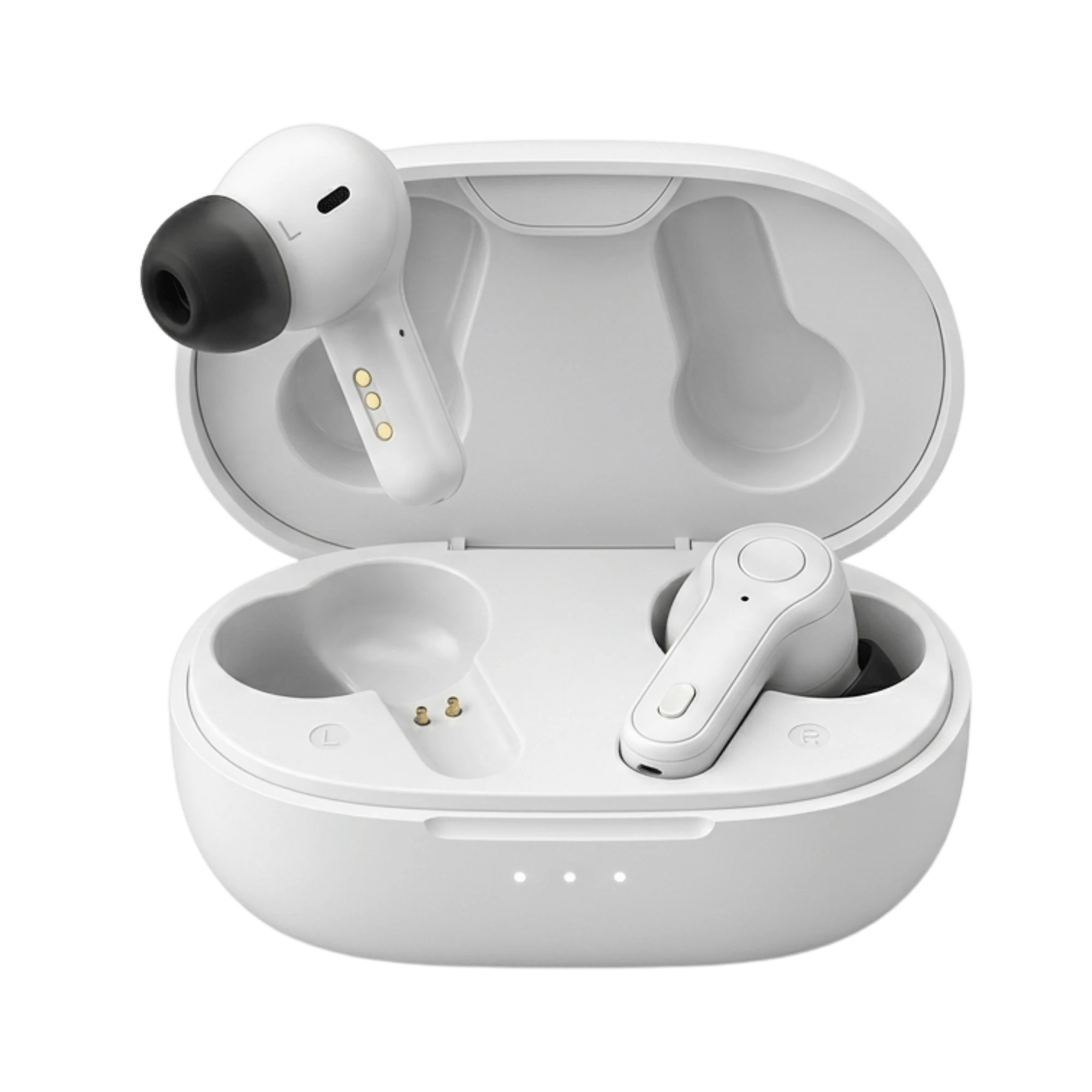
Learn more about Panda Air.
Limitations of This Research
The study was cross-sectional, meaning it captured a single snapshot in time. This design cannot prove that hearing loss causes cognitive or functional decline; it only demonstrates correlation. Prospective follow-up studies are needed to establish causality. Additionally, the study was conducted in China and may not generalize to other populations with different healthcare access, disease prevalence, or genetic factors.
The Takeaway
Hearing loss in older adulthood is linked to a surprising breadth of health challenges, from cognitive decline to frailty to nutritional inadequacy. Routine hearing screening should be considered a standard part of aging health assessment, and early intervention with hearing aids or other amplification may help preserve cognitive and physical function. The accessibility of over-the-counter solutions makes addressing hearing loss more feasible for older adults worldwide.
Pang W, Qiu K, Wu X, et al. Hearing loss and aging-related health outcomes: a natural population cohort study. Maturitas. 2026 Mar;308:108897. Retrieved from PubMed. DOI: 10.1016/j.maturitas.2026.108897