A new practice article in Nursing Older People argues that hearing loss in care-home residents is routinely missed, and lays out why nurses, families, and older adults themselves should treat it as a front-line health issue, not a cosmetic one.
Most adults over 70 have some degree of hearing loss. That is not a controversial claim in audiology, but it is a claim that nursing homes and assisted-living settings have been slow to act on. In a practice article published April 22, 2026 in Nursing Older People, Alexander Cushny of Cedar Care Homes in Bristol, England, argues that untreated hearing loss in older residents is both unusually common and unusually consequential, and that basic clinical processes to catch it are often missing.
The article is not a new randomized trial. It is a professional-practice review aimed at nurses and care-home staff, assembling the anatomy and physiology of the auditory system, the main types and causes of hearing loss in older adults, and a checklist staff can use to catch problems earlier. For families weighing a move into a care setting, the takeaway is practical: untreated hearing loss is linked to risks a family would not normally associate with hearing at all, and it is a question worth asking a prospective facility.
About This Study
Title: Recognition and management of hearing loss in older adults in care homes
Author: Alexander Cushny
Affiliations: Cedar Care Homes, Bristol, England
Journal: Nursing Older People - April 22, 2026
Study type: Professional-practice review article
Source: PubMed - DOI: 10.7748/nop.2026.e1536
Background: Why the Researchers Looked at This
Hearing loss in later life has been studied hard over the past decade, largely because the evidence linking it to outcomes beyond communication has grown substantially. Untreated hearing loss has been associated with a higher risk of falls, with accelerated cognitive decline, and with social isolation. Those associations are not proof of causation in every case, but the signal has been consistent enough that public-health organizations now treat hearing care as part of healthy aging, not a comfort feature.
Care-home residents are a population where those risks compound. A resident who cannot hear a call bell, a medication instruction, or a greeting from a family member on a video call is not just missing a conversation. The author argues that missed hearing loss becomes a driver of several adjacent problems nurses are asked to solve - withdrawal, agitation, confusion, and falls chief among them.
Two quick definitions help. Presbycusis is the technical term for age-related hearing loss, which typically affects high frequencies first. Sensorineural hearing loss refers to damage in the inner ear or the auditory nerve, which is the most common type in older adults. Both can coexist with earwax buildup and middle-ear problems that are separately treatable.
How the Study Was Done
This is a narrative practice article rather than original empirical research. The author draws on the published literature on auditory anatomy and physiology, on the types and causes of hearing loss in older adults, and on the clinical evidence linking untreated hearing loss to adverse outcomes. He then translates that literature into a practical framework for care-home staff.
That format has real strengths and real limits. The strength is that it synthesizes a lot of clinical knowledge into a format that is usable on a shift. The limit is that it does not generate new data about how many residents are affected, how often staff miss signs, or how large the benefit of an intervention would be. The article's value lies in aggregating what is already known and directing attention toward action.
What the Researchers Found
The central observation is that hearing impairment in care-home residents is frequently under-recognized and, even when recognized, often inadequately managed. The author traces this to several factors: the gradual onset of age-related hearing loss, the tendency for staff to interpret signs of hearing loss as cognitive decline or behavioral changes, and the absence of routine audiologic screening in many care-home admission pathways.
The second observation is about consequences. The article emphasizes that untreated hearing loss increases the risk of falls and is associated with cognitive decline - two of the most closely tracked outcomes in any care home. In other words, hearing is not a peripheral issue. It sits upstream of several metrics the facility is already measuring.
The third observation is practical. The author provides a checklist intended to support best practice in recognizing and managing hearing loss among care-home residents. That checklist is aimed at staff but is useful for family members too - it is essentially a prompt list for the things an alert nurse would otherwise notice only over weeks.
What It Means for People with Hearing Loss
For older adults and the adult children who help them navigate care decisions, the message is concrete. A hearing assessment belongs on the same intake checklist as medication reconciliation, mobility screening, and vision checks. It is cheap, non-invasive, and the downstream consequences of skipping it are not cheap at all.
The article also points at a quieter problem: older adults who have hearing aids but who are not using them consistently. Devices that sit in a drawer do not reduce fall risk. Family members who can make sure a device is charged, cleaned, and actually worn are doing something the research literature now treats as clinically meaningful, not a minor courtesy.
Addressing the Access Problem This Article Raises
The article's core finding - that hearing loss goes under-recognized partly because the path from "something is off" to a fitted device is too long and too expensive - is one of the reasons the FDA opened the OTC hearing-aid category in 2022. For adults with perceived mild-to-moderate loss, that category removes the requirement for a full clinical fitting and makes it easier to try amplification before any paperwork is involved.
Panda Air, a direct-to-consumer earbud-style hearing aid, is one example of a device designed for exactly that access gap. It uses 16-channel wide dynamic range compression with multi-band adaptive noise reduction, ships with a charging case that provides about 60 hours of total use between fast charges, and comes with a 5-year warranty and a 45-day return window. For a resident or family member who wants to rule hearing in or out before scheduling a clinic visit, the return window matters as much as the specifications.
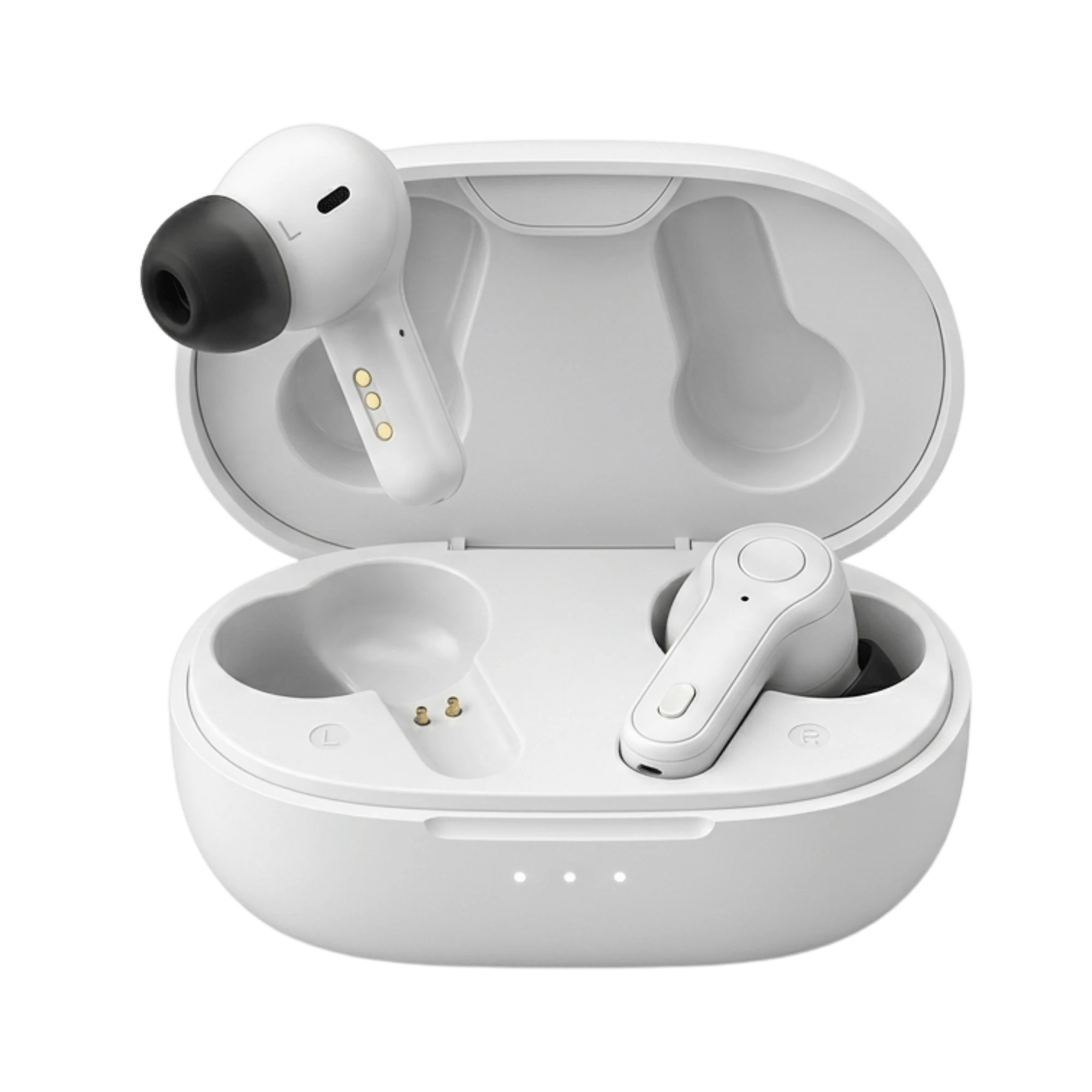
OTC hearing aids are approved for mild-to-moderate hearing loss. Residents with severe or profound loss, sudden loss, or other complicating factors such as chronic ear infections or dizziness should still see an audiologist or ENT for a full workup.
Limitations of This Research
As a narrative practice article from a single author, this piece does not test an intervention, quantify how much hearing loss is missed in a representative sample of care homes, or compare approaches to screening. Its claims rest on the underlying literature it cites, not on new data.
The author is affiliated with Cedar Care Homes, a single provider in Bristol, England. That clinical vantage point gives the article practical authority but also limits its scope to the UK care-home context. The broad messages about recognition and cognitive and fall-risk associations travel across systems; the specific checklist items may need adjustment elsewhere.
What to Do With This
If you have a parent or grandparent in a care setting, the reasonable next step is a conversation with their care team about whether a hearing screening has been done and whether any existing hearing aids are being used consistently. If the person you are helping is still at home, a baseline hearing check with a primary-care doctor or a community audiology programme is a small investment against outcomes - falls and cognitive decline - that are neither small nor reversible. The value of articles like this one is that they shift hearing care from an optional comfort to a standard part of care in later life, which is where the underlying evidence already places it.
Cushny A. Recognition and management of hearing loss in older adults in care homes. Nursing Older People. 2026. Retrieved from PubMed. DOI: 10.7748/nop.2026.e1536.