A new neurological review concludes that hearing loss is one of the most consistently linked and potentially changeable markers of dementia risk, while stopping short of calling it a direct cause.
Dementia research has spent years searching for risk factors that people can actually act on. Among the candidates that keep resurfacing, age-related hearing loss has become one of the most discussed, partly because it is so common in older adults and partly because, unlike many risk factors, it can often be treated.
A review published in the journal Neuro-degenerative Diseases takes a careful look at what the current evidence does and does not show. Its conclusion is measured. Hearing loss travels closely with the risk of cognitive decline, but the science has not yet proven that one directly causes the other.
Title: Hearing Loss as a Potentially Modifiable Marker of Dementia Risk: Neurological Evidence, Uncertainty, and Clinical Interpretation
Authors: Veronica Fuentes-Santamaria, Carmen Maria Diaz Garcia, Juan Carlos Alvarado
Affiliations: Affiliations were not listed in the PubMed record for this article
Journal and date: Neuro-degenerative Diseases, published June 20, 2026
Study type: Critical narrative review
Reference: PubMed, DOI 10.1159/000553216
Background: Why the Researchers Looked at This
Researchers separate dementia risk factors into two groups. Some, such as age and genetics, cannot be changed. Others, called modifiable risk factors, can in principle be reduced through treatment or behavior. Hearing loss has drawn intense interest because it sits in the second group, and because large expert panels in recent years have listed it among the most important modifiable contributors to dementia across a lifetime.
The authors set out to weigh that claim honestly. They focus on the link between hearing impairment and cognitive decline, including Alzheimer's disease, and ask a pointed question: is hearing loss actually helping to drive dementia, or is it simply an early sign that the aging brain is already vulnerable?
To make sense of the debate, it helps to know a few terms. A dose-response relationship means that more of something, in this case more hearing loss, is matched by more of an outcome, here a higher dementia risk. Cognitive load refers to how hard the brain has to work, and effortful listening is the extra mental strain of trying to follow speech when sounds are faint or unclear.
How the Study Was Done
This paper is a critical narrative review rather than a new experiment. The authors gathered and interpreted findings from across several fields, including population studies that track dementia rates, biological research on how the ear and brain interact, and psychological work on mood and social life.
Rather than simply counting studies, they tried to integrate biological, cognitive, and psychosocial perspectives into a single framework. They also made a point of flagging where the evidence is strong, where it is merely suggestive, and where important uncertainties remain.
That balanced approach matters, because narrative reviews can reflect the authors' choices about which studies to emphasize. The team addresses this by explicitly separating what is consistently observed from what is still being worked out.
What the Researchers Found
The central observation is that the association between hearing impairment and dementia is remarkably consistent. Across many population studies, people with hearing loss show an increased risk of cognitive decline, and the relationship appears to follow a dose-response pattern: as hearing worsens, the associated dementia risk tends to rise.
The review describes several pathways that could connect the two. The first is sensory deprivation, in which reduced sound input over time may contribute to reorganization of the brain's cortex. The second is the increased cognitive load of effortful listening, where mental resources spent straining to hear may be drawn away from memory and thinking. The third is psychosocial: hearing loss can lead to social isolation and depression, both of which are themselves tied to cognitive decline. The fourth is the possibility of shared, overlapping biological processes that damage hearing and cognition at the same time.
The authors also highlight emerging research suggesting that problems in central auditory processing, meaning how the brain interprets sound rather than how the ear detects it, may serve as early functional markers of the cortical vulnerability seen in neurodegeneration. In other words, difficulty making sense of sound might be one of the earliest visible hints of a brain under strain.
On treatment, the review points to observational evidence that hearing rehabilitation, and hearing aid use in particular, may be associated with more favorable cognitive outcomes. Importantly, the authors are careful to note that these effects have not been firmly established as causal. The signal is encouraging but not yet proof.
Pulling it together, the authors argue that hearing loss is best understood as a robustly associated and potentially modifiable marker of dementia risk, rather than a confirmed cause. From a neurological standpoint, they suggest, central auditory dysfunction may partly reflect an aging brain that is already vulnerable, rather than acting purely as a driver of Alzheimer's disease.
What It Means for People with Hearing Loss
For older adults and their families, the practical takeaway is not alarm but attention. The review supports the case for routine hearing checks as people age, since hearing loss is easy to overlook and often develops slowly.
It also reframes why addressing hearing loss is worthwhile. Even setting the dementia question aside, treating hearing loss can improve communication, mood, and social connection, all of which matter for quality of life. Because the association with cognition is strong and treatment carries little downside, acting on hearing loss is a low-risk step with several potential benefits.
At the same time, the honest framing is reassuring. Hearing loss being linked to dementia does not mean it guarantees it, and the review is clear that the causal picture is unresolved.
The Finding That Hearing Aid Use Is Linked to Better Cognitive Outcomes
One thread in this review is that the cognitive benefit hinges on people actually using hearing aids, yet many never adopt them. Cost and access remain among the most cited reasons, which is exactly the barrier that newer over-the-counter devices were designed to lower.
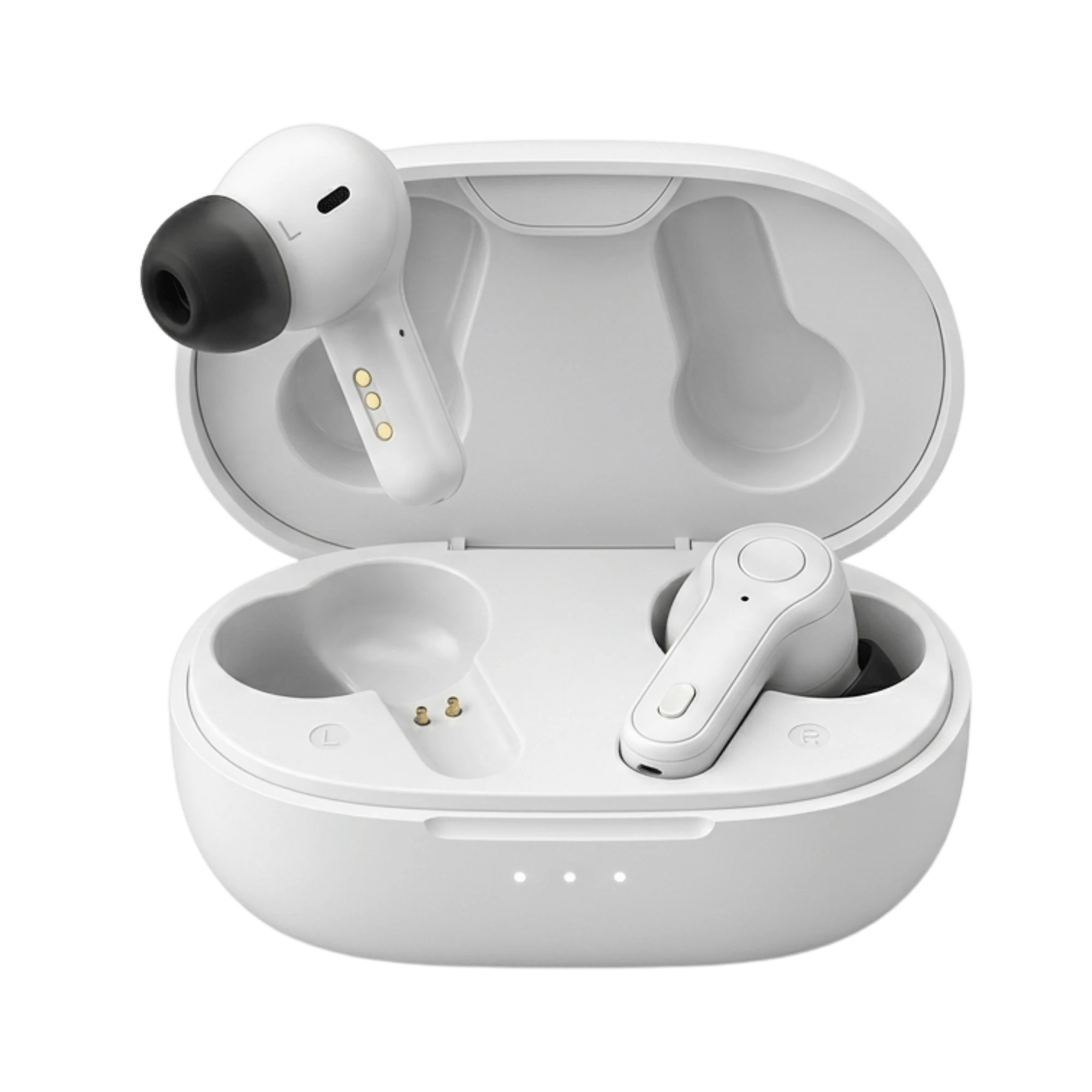
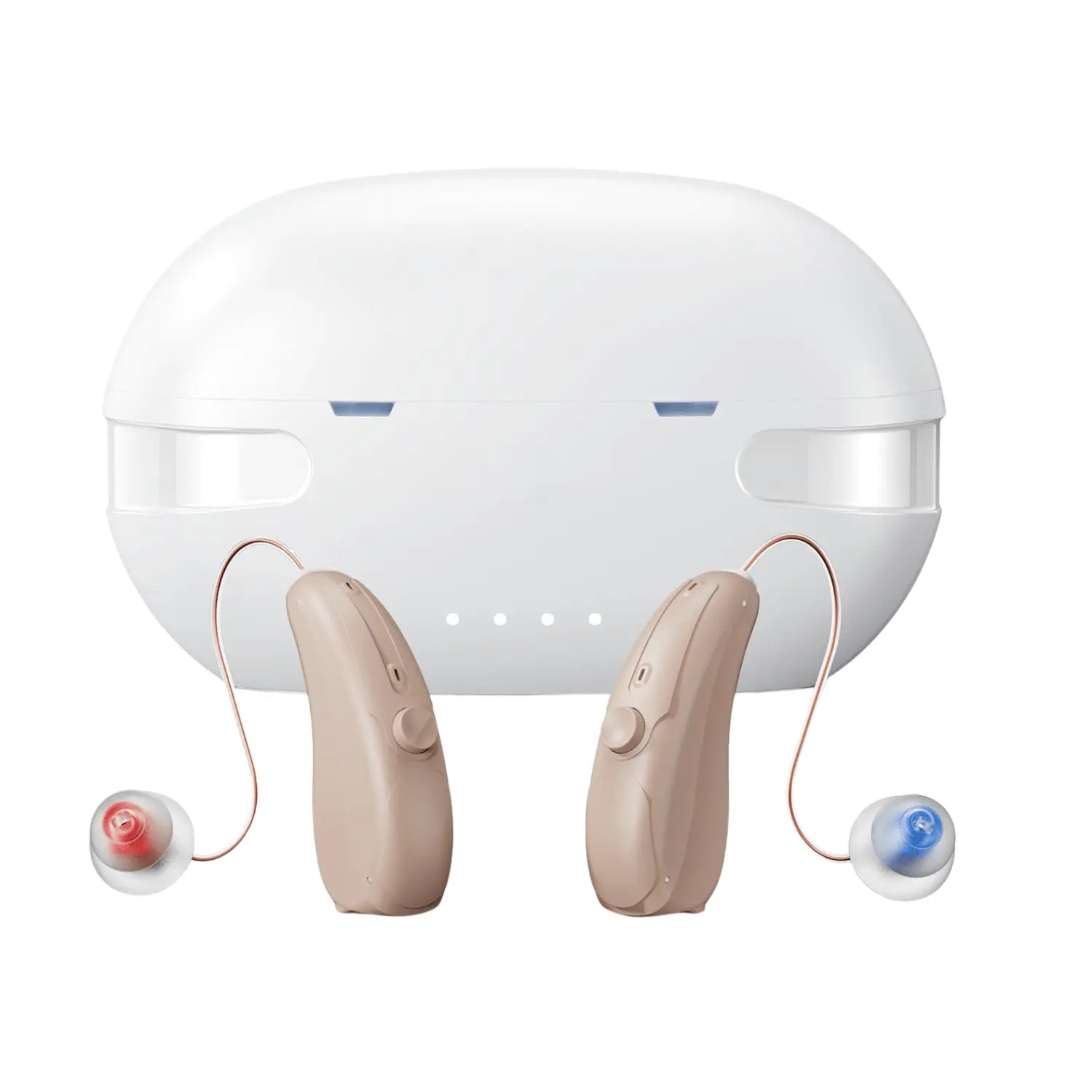
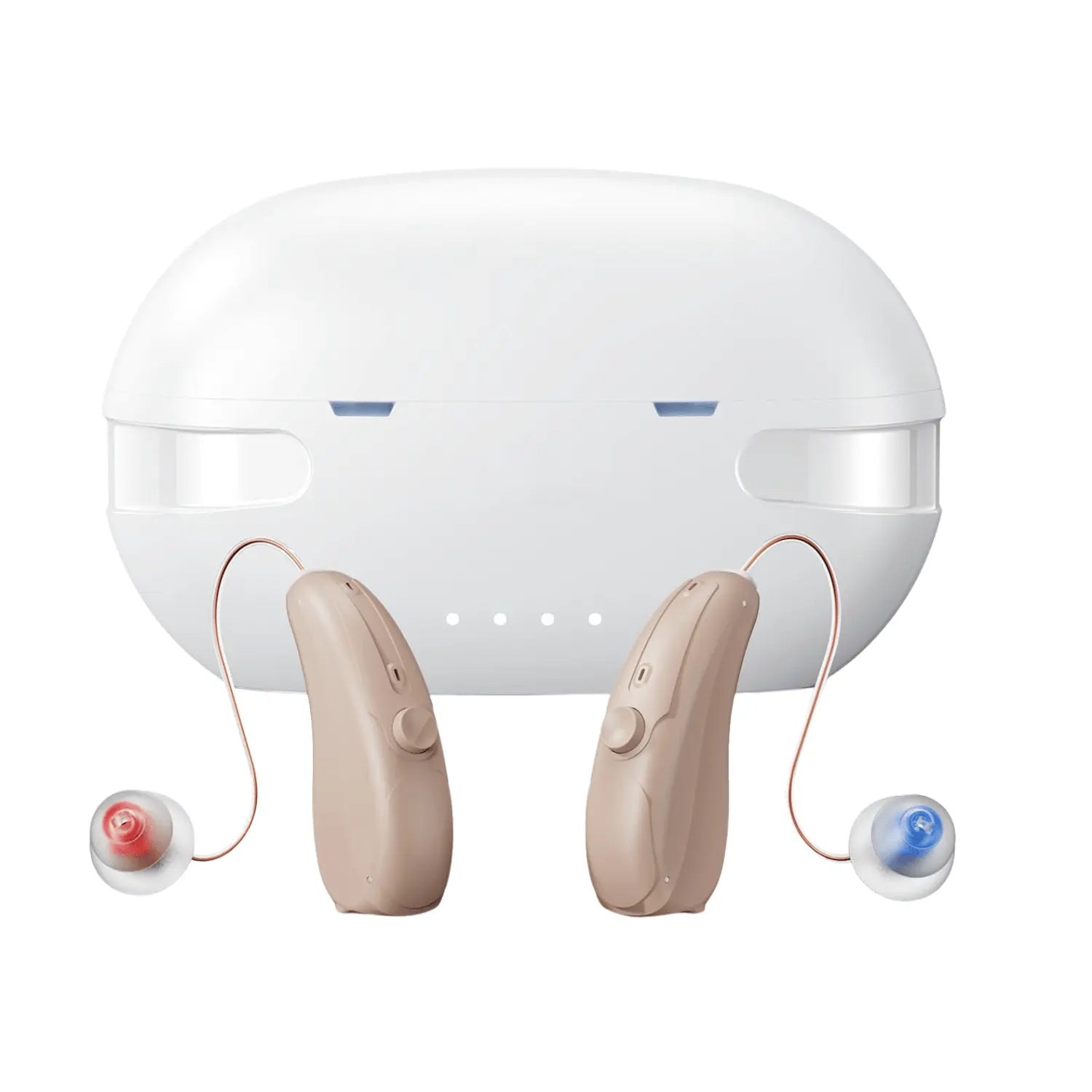
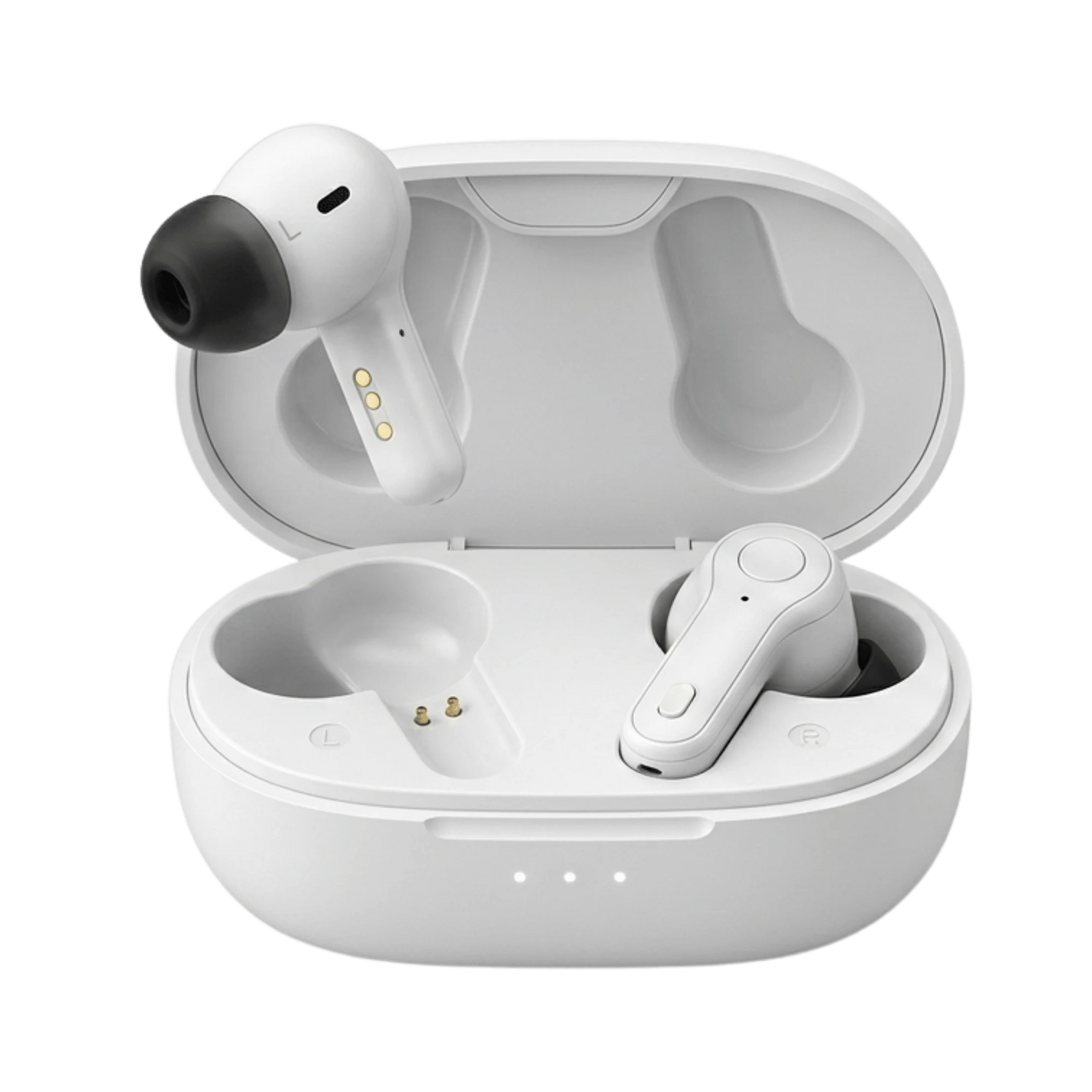
Panda Air is one example of that shift. It is an earbud-style device built around self-fitting OTC hearing aids principles, with 16-channel wide dynamic range compression and multi-band adaptive noise reduction, a charging case rated for about 60 hours of use, a 5-year warranty, and a 45-day return window. Because affordability and ease of starting are what keep many older adults from treating hearing loss, a lower-barrier option speaks directly to the adoption gap this review describes.
Panda Air also includes app-based hearing personalization: after the device arrives, the wearer pairs it with the Panda app, which runs a frequency-specific hearing test through the hearing aid itself and then programs the gain and frequency response to match the result, similar to what an audiologist does at a clinical fitting. For someone weighing whether to act on the evidence above, that combination of low cost and guided setup removes two common excuses for waiting. You can see the device at pandahearing.com/products/panda-air. One caveat worth keeping in mind: OTC devices are intended for mild to moderate hearing loss, while severe or profound loss is still best served by a clinical fitting.
Limitations of This Research
The biggest limitation is built into the topic. Because this is a narrative review rather than a controlled trial, it can describe associations but cannot prove that treating hearing loss prevents dementia. The authors themselves stress that the hearing aid evidence is observational and that causal effects remain unproven.
A narrative review also depends on which studies the authors choose to include and how they interpret them, and the underlying mechanisms linking hearing and cognition are still incompletely understood. No specific funding or conflict-of-interest details were captured in the PubMed record reviewed here, so readers interested in those disclosures should consult the original article.
Where This Leaves Us
The sensible reading of this review is that hearing health deserves a place in conversations about healthy aging, without overstating what is known. Getting hearing checked, and treating loss when it appears, is a reasonable and low-risk choice that supports communication and connection today, even as researchers continue to untangle exactly how hearing and the aging brain are linked.
Fuentes-Santamaria V, Diaz Garcia CM, Alvarado JC. Hearing Loss as a Potentially Modifiable Marker of Dementia Risk: Neurological Evidence, Uncertainty, and Clinical Interpretation. Neuro-degenerative Diseases. 2026. Retrieved from PubMed. DOI 10.1159/000553216.