A cluster randomized trial in Japan shows that targeted education can significantly increase the rate at which community nurses screen older adults for hearing loss.
Hearing loss in older adults is deeply connected to depression, cognitive decline, frailty, and social isolation. Yet the condition remains undertreated. Community health nurses, who visit patients in their homes, are uniquely positioned to identify hearing loss early, but training in hearing care has traditionally focused on hospital-based professionals. Recognizing this gap, researchers in Japan developed a specialized education program specifically for visiting nurses.
The research team recruited 22 visiting nursing stations across Japan: 11 to receive the "Hearing Loss Care Education Program" (intervention group, 60 nurses) and 11 to continue standard practice (control group, 42 nurses). Before and approximately one month after the intervention, all nurses completed a survey assessing their knowledge of hearing loss care, confidence, and practice behaviors regarding hearing screening.
About This Study
Title: Effect of a hearing loss care education program for older adults targeted at visiting nurses: A cluster randomized controlled trial
Authors: Sumiyo Nabeshima, Saiko Sugiura, Kiyomi Yamada, Sayuri Sable-Morita, Yukako Ando
Journal: PloS One - January 27, 2026
Study type: Cluster Randomized Controlled Trial
Source: PubMed - DOI: 10.1371/journal.pone.0339478
Background: Why the Researchers Looked at This
Approximately one in three adults over age 65 have hearing loss significant enough to affect communication. For those over 75, the proportion rises to one in two. Yet fewer than 15 percent of older adults with hearing loss actually use hearing aids or seek treatment. This gap between need and care is not primarily due to lack of available technology, but rather to missed identification, stigma, and limited access to timely evaluation.
How the Study Was Done
The intervention consisted of on-demand recorded lectures and hands-on technical exercises, followed by a three-month period during which nurses could continue practicing what they had learned. The researchers used advanced statistical methods to account for the fact that nurses were grouped within their stations.
What the Researchers Found
The education program produced a striking increase in hearing screening implementation. In the intervention group, the odds of performing hearing screening rose by a factor of 8.35 compared to the control group, a statistically significant difference. Beyond screening, the intervention group demonstrated significantly higher knowledge about hearing care and reported greater confidence in their ability to implement hearing care strategies in their daily practice.
What It Means for People with Hearing Loss
This research points to a fundamental shift in how hearing loss could be detected and managed in older adults. Visiting nurses are typically the first healthcare contact for homebound or mobility-limited seniors. When these nurses are equipped and confident to screen for hearing loss, older adults receive earlier identification and faster referral to hearing care professionals.
Why Accessible Self-Fitting Hearing Care Complements Early Detection
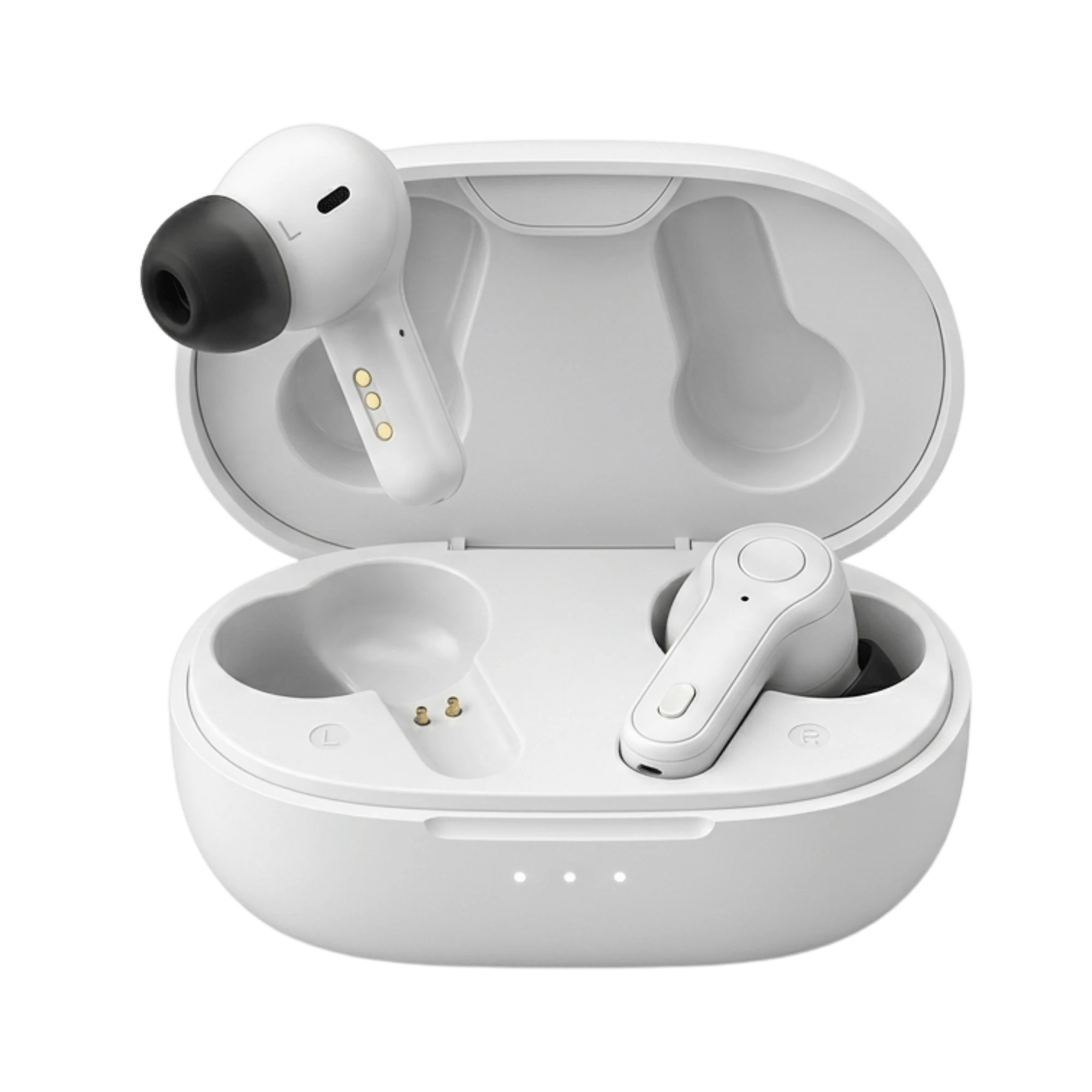
As visiting nurses identify more older adults with hearing loss, the path from detection to actual treatment becomes critical. Over-the-counter hearing aids approved for mild-to-moderate loss represent exactly the kind of accessible entry point that complements early detection in home settings. Panda Air is an earbud-style hearing aid designed for this scenario: it features 16-channel wide dynamic range compression, adaptive noise reduction, a 60-hour fast-charge case, and a 45-day risk-free window so users can try it at home and adjust to amplification at their own pace.
Learn more at Panda Air.
Limitations of This Research
The study was conducted in Japan and may not fully generalize to other healthcare systems. The survey-based assessment relied on self-report, which can be subject to recall bias. Additionally, researchers did not measure downstream outcomes, such as how many patients were actually referred for hearing evaluation.
The Path Forward for Community Hearing Care
This research demonstrates that targeted education can meaningfully change how healthcare workers approach hearing loss screening in community settings. Training visiting nurses and other community health workers represents a scalable, cost-effective strategy to improve early detection and referral.
Nabeshima S, Sugiura S, Yamada K, Sable-Morita S, Ando Y. Effect of a hearing loss care education program for older adults targeted at visiting nurses: A cluster randomized controlled trial. PloS One. 2026;21(1):e0339478. Retrieved from PubMed. DOI: 10.1371/journal.pone.0339478