Hearing Loss and Music: New Study Shows Which Listening Skills Suffer and Which Survive
New research from the University of Minnesota finds that mild to moderate hearing loss makes it harder to count how many voices are singing in a piece of music, while the ability to follow one particular voice largely survives.
Music matters to people in a way that hearing science has only recently started to measure. Decades of research have mapped how hearing loss affects speech understanding, but far less is known about what happens to music, especially the rich, layered music of choirs, harmonies, and ensembles where several voices sound at once.
A team of auditory researchers set out to close part of that gap. They asked a precise question: when several voices sing together, how well can listeners with hearing loss separate them, count them, and follow one of them through the texture?
About This Study
Title: Role of harmonicity in counting and hearing out voices in polyphonic music: Effects of hearing loss
Authors: Lisanne G. Bogaard, Juraj Mesik, and Andrew J. Oxenham
Affiliation: Department of Psychology, University of Minnesota, USA
Journal: Hearing Research, volume 480, published August 2026
Study type: Experimental listening study with normal-hearing and hearing-impaired participants
Source: PubMed, DOI: 10.1016/j.heares.2026.109775
Background: Why the Researchers Looked at This
When several voices sing at once, the ear relies partly on harmonicity to keep them separate. A sung note is built from a stack of frequencies that are neat multiples of a base pitch, and the auditory system uses that orderly structure to group the right frequencies with the right voice. Break the structure, making a voice inharmonic, and it becomes harder to hear as one coherent source.
Sensorineural hearing loss blurs the ear's frequency resolution, which is the sharpness with which it can tell nearby frequencies apart. The researchers hypothesized that this blurring would make it harder for listeners with hearing loss to distinguish individual voices in polyphonic music, but that they might also be less affected by inharmonicity, since their sensitivity to pitch structure may already be reduced.
In plain terms, the study asked what hearing loss does to two everyday musical skills: sensing how full and layered the music is, and following the thread of one voice through it.
How the Study Was Done
The researchers compared normal-hearing listeners with listeners who had mild to moderate sensorineural hearing loss. Both groups heard polyphonic passages of female singing voices, the kind of overlapping vocal texture found in choral music.
Participants completed two tasks. In the enumeration task, they judged how many voices were singing simultaneously. In the voice-tracking task, they were cued to one voice and had to follow it as it wove through the other voices.
To test the role of harmonicity directly, the researchers also created versions of the passages in which inharmonicity was introduced separately into each voice, disrupting the orderly frequency structure the ear normally uses to separate sound sources.
What the Researchers Found
In the counting task, normal-hearing listeners outperformed listeners with hearing loss. Judging how many voices are present is a demanding test of the ear's ability to resolve a dense auditory scene, and hearing loss took a measurable toll on it.
The voice-tracking task told a more hopeful story. When listeners were cued to a single voice and asked to follow it, performance was not significantly different between the two groups. The ability to lock onto one thread of the music appears far more robust to hearing loss than the ability to take in the whole texture.
Inharmonicity hurt everyone's performance, particularly in the counting task, confirming that the ear leans on harmonic structure to organize complex music. But in line with the researchers' prediction, listeners with hearing loss were less affected by inharmonicity than normal-hearing listeners, at least when many voices were present, consistent with a reduced reliance on fine pitch structure.
Exploratory analyses added two modest wrinkles: among listeners with hearing loss, age and musical training each showed some influence on counting performance, hinting that experience and central factors also shape how well people parse musical scenes.
What It Means for People with Hearing Loss
The findings match what many music lovers with hearing loss describe: rich, layered passages turn to mush more easily than a single melody does. This study gives that experience a mechanism, showing that hearing loss degrades the perception of dense musical scenes while sparing the ability to follow a cued voice.
The preserved tracking ability is genuinely good news. It suggests that people with mild to moderate hearing loss retain the core skill that makes music rewarding, which is following a line through the texture, even when the full canvas is harder to take in.
The authors note that these results may help inform future research on targeted interventions to support music listening for people with hearing loss, an area that has lagged behind speech-focused care.
Helping the Ear With Dense Soundscapes
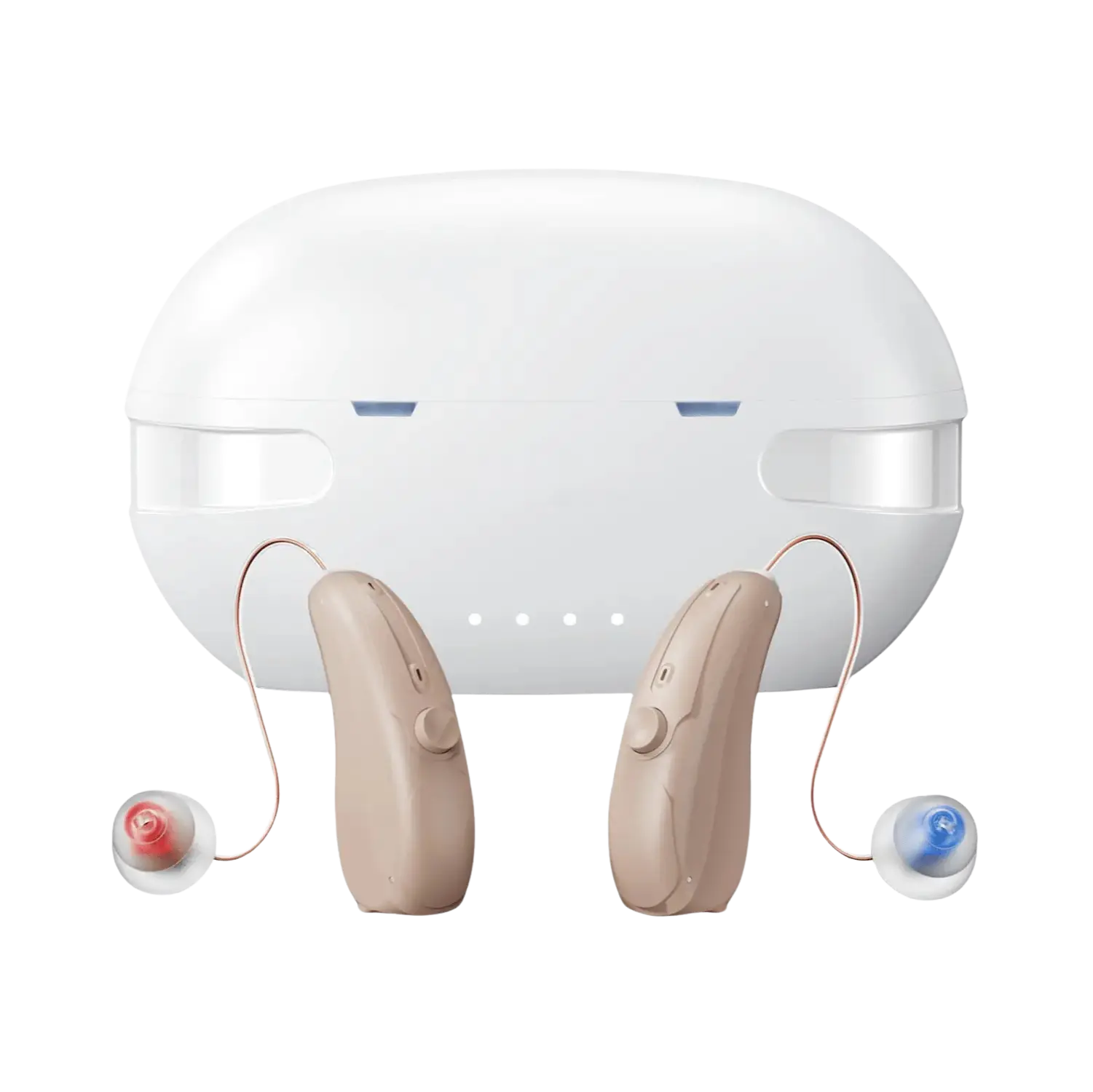
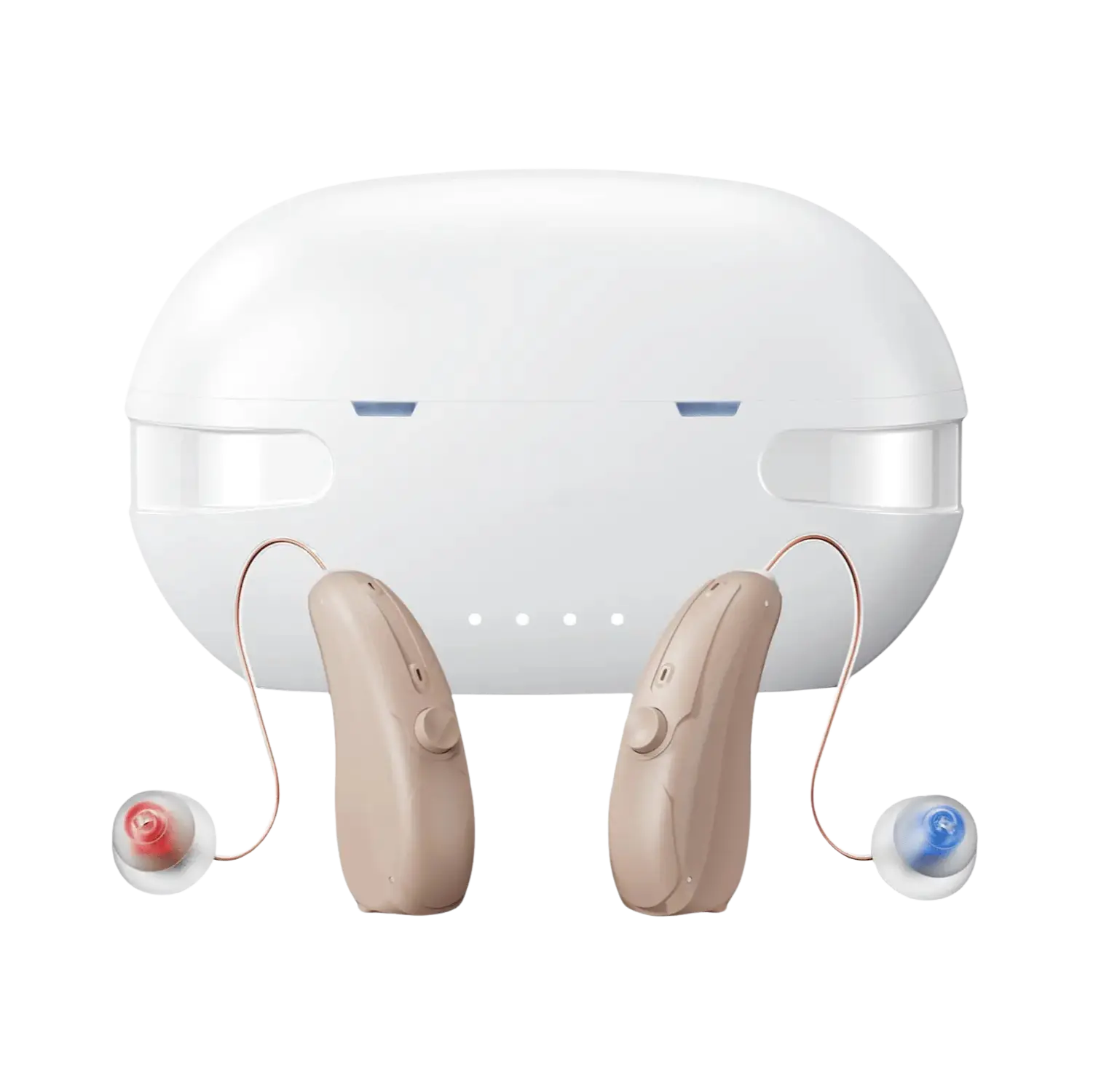
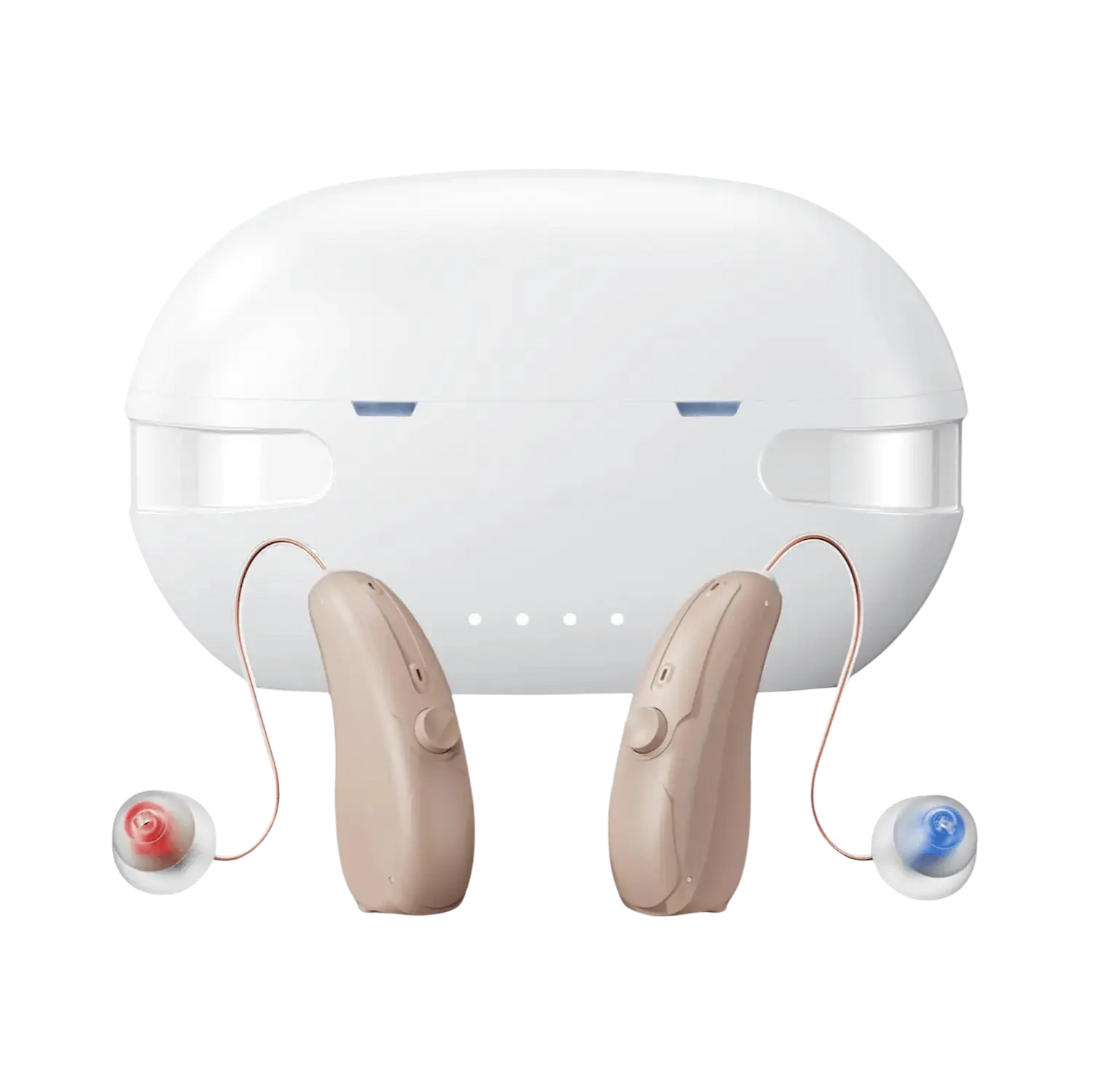
This study's core finding is that hearing loss makes dense auditory scenes the hardest part of listening, whether that scene is a choir or a crowded restaurant. Modern FDA-OTC hearing aids are designed for exactly that problem, applying multi-channel processing to keep competing sounds distinct rather than simply making everything louder.
Panda Quantum is one such device for adults with mild to moderate hearing loss. Its 16-channel WDRC processing and adaptive noise reduction are built for clear speech in noisy environments, the same crowded-scene challenge this study measured in music, and its Bluetooth connection streams music, TV, and calls directly to the ear.
As the research itself implies, OTC devices suit mild to moderate loss; severe or profound hearing loss still benefits most from clinical fittings.

Limitations of This Research
The study used controlled laboratory stimuli, polyphonic female vocal passages, which capture only a slice of real-world music, and the hearing-impaired group was limited to mild to moderate sensorineural loss, so the results may not extend to more severe losses or to instrumental music. The influences of age and musicianship were exploratory findings that the authors flag as avenues for future research rather than settled conclusions.
Where This Leaves Us
Hearing loss does not silence music; it thins it. This study shows the loss is task-dependent, hitting the perception of dense, layered scenes while leaving the ability to follow a single voice largely intact, and it points hearing science toward interventions that protect what people actually cherish about listening to music.
Bogaard LG, Mesik J, Oxenham AJ. Role of harmonicity in counting and hearing out voices in polyphonic music: Effects of hearing loss. Hearing Research. 2026;480:109775. Retrieved from PubMed. https://doi.org/10.1016/j.heares.2026.109775