Hearing Difficulties and Loneliness May Feed Each Other, Canadian Study of 30,000 Adults Finds
A Canadian study following more than 30,000 middle-aged and older adults suggests that hearing difficulties and loneliness can reinforce each other over time, with the clearest pattern in women aged 45 to 64.
Loneliness has become a headline public health concern, linked in study after study to poorer physical and mental health in later life. Hearing loss, which touches a large share of adults over 60, is one of the factors most often suspected of driving people away from conversation and connection.
Most research on the topic, though, has only captured a snapshot in time, leaving a chicken-and-egg question unanswered. Does struggling to hear make people lonely, or does loneliness change how people rate their own hearing, or both? A new analysis from the Canadian Longitudinal Study on Aging takes a run at the question with years of repeated measurements.
About This Study
Title: An Analysis of Bi-directional Associations Between Self-Reported Residual Hearing and Loneliness: Findings from the Canadian Longitudinal Study on Aging
Authors: Julie Beadle, John Best, Lorienne Jenstad, M. Kathleen Pichora-Fuller, Paul Mick, Melanie Levasseur, Mathieu Hotton, Brenda T. Poon, Jeff A. Small, Jaimie Borisoff, Gloria Gutman, Andrew Wister
Affiliations: Simon Fraser University; University of British Columbia; University of Toronto; Universite de Sherbrooke; Universite Laval; Wavefront Centre for Communication Accessibility
Journal: Canadian Journal on Aging, published August 11, 2026
Study type: Longitudinal cohort analysis using cross-lagged path models
PubMed DOI: 10.1017/S0714980826100774
Background: Why the Researchers Looked at This
The Canadian Longitudinal Study on Aging, or CLSA, is a national research platform that has been tracking tens of thousands of Canadians aged 45 and older since the early 2010s, re-interviewing them every three years. Its comprehensive cohort includes detailed questions about how well people feel they hear in daily life and how often they feel lonely.
Two terms help in reading this study. Self-reported residual hearing is simply a person's own rating of their hearing ability, rather than a booth-based audiogram. A cross-lagged path model is a statistical approach that uses repeated waves of data to test direction: whether hearing at one visit predicts loneliness at the next visit, whether loneliness predicts later hearing ratings, or both at once.
Previous cross-sectional work could not separate these paths. The CLSA team wanted to know which direction the arrow points, and whether the answer differs by age group and sex.
How the Study Was Done
The researchers drew on 30,097 participants in the CLSA comprehensive cohort at baseline and followed them across three measurement points: the baseline visit and two follow-ups, each roughly three years apart. At every wave, participants rated their hearing and answered questions about loneliness.
Cross-lagged path models were then fitted separately for women and men in two age bands, 45 to 64 and 65 plus. This let the team see, within each group, whether hearing ratings at one visit predicted loneliness three years later and vice versa. A second set of models added cardiovascular health factors, since heart and blood vessel conditions are linked to both hearing and social wellbeing and could sit behind any apparent connection.
What the Researchers Found
Among women aged 45 to 64, the association ran in both directions. Poorer self-rated hearing predicted more loneliness at the next visit, with a standardized coefficient of 0.018, and greater loneliness predicted poorer hearing ratings later, at 0.015. Both effects were statistically significant.
Among men aged 65 and older, the arrow pointed one way: poorer self-rated hearing predicted more loneliness three years on, with a coefficient of 0.02. The reverse path was not significant in this group.
When the models were adjusted for cardiovascular factors, the two-way association survived only among women aged 45 to 64. The authors are careful to note that all of these effects are small in absolute size, which is common when single questionnaire items are tracked across just three waves.
Still, the overall picture is of a modest feedback loop in midlife, especially for women: hearing difficulty nudges people toward loneliness, and loneliness in turn colors how people experience their own hearing.
What It Means for People with Hearing Loss
The most striking implication is about timing. The clearest two-way pattern appeared not in the oldest participants but in adults between 45 and 64, years before most people think of hearing as an issue worth acting on. Hearing changes in midlife are easy to shrug off, yet this study suggests their social ripple effects may begin early.
The findings also add nuance to the loneliness conversation. Because the associations ran both ways, supporting social connection and supporting hearing are not separate projects; each may modestly protect the other. For families, checking in on a relative's hearing and their social life together makes more sense than treating them as unrelated.
None of this means hearing difficulty dooms anyone to isolation. The effects were small, and many participants with hearing difficulties reported no loneliness at all. But at the population level, small effects across millions of people add up, which is why researchers keep circling this pair of issues.
Acting Earlier on Midlife Hearing Changes Just Got Easier
If hearing and social connection influence each other from midlife onward, the practical question becomes how to lower the barriers to doing something about hearing sooner. That is the gap FDA-OTC hearing aids were created to close for adults with mild to moderate hearing loss, without the cost and clinic visits that once made people wait. Severe or profound loss still benefits most from a clinical fitting.
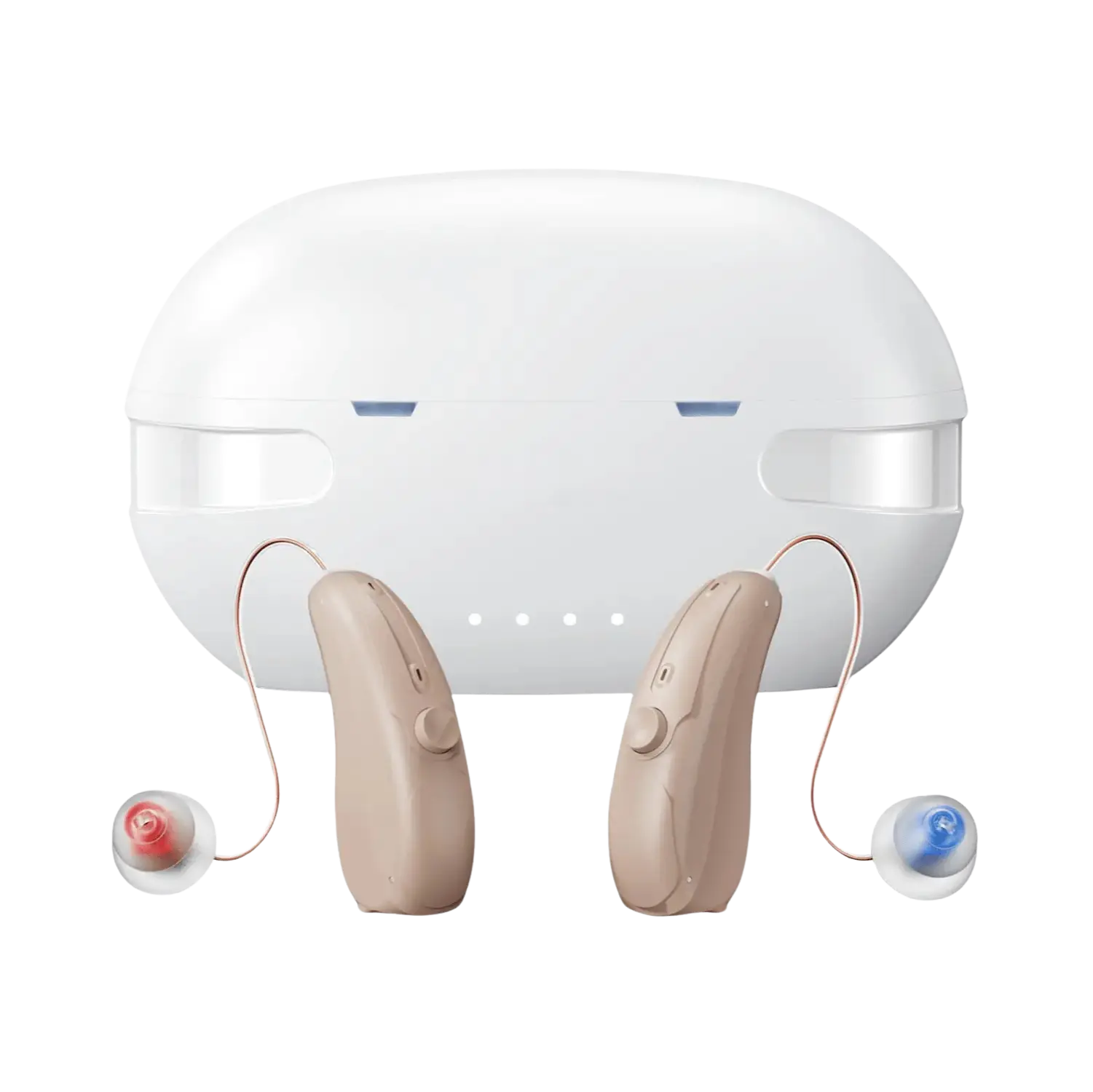
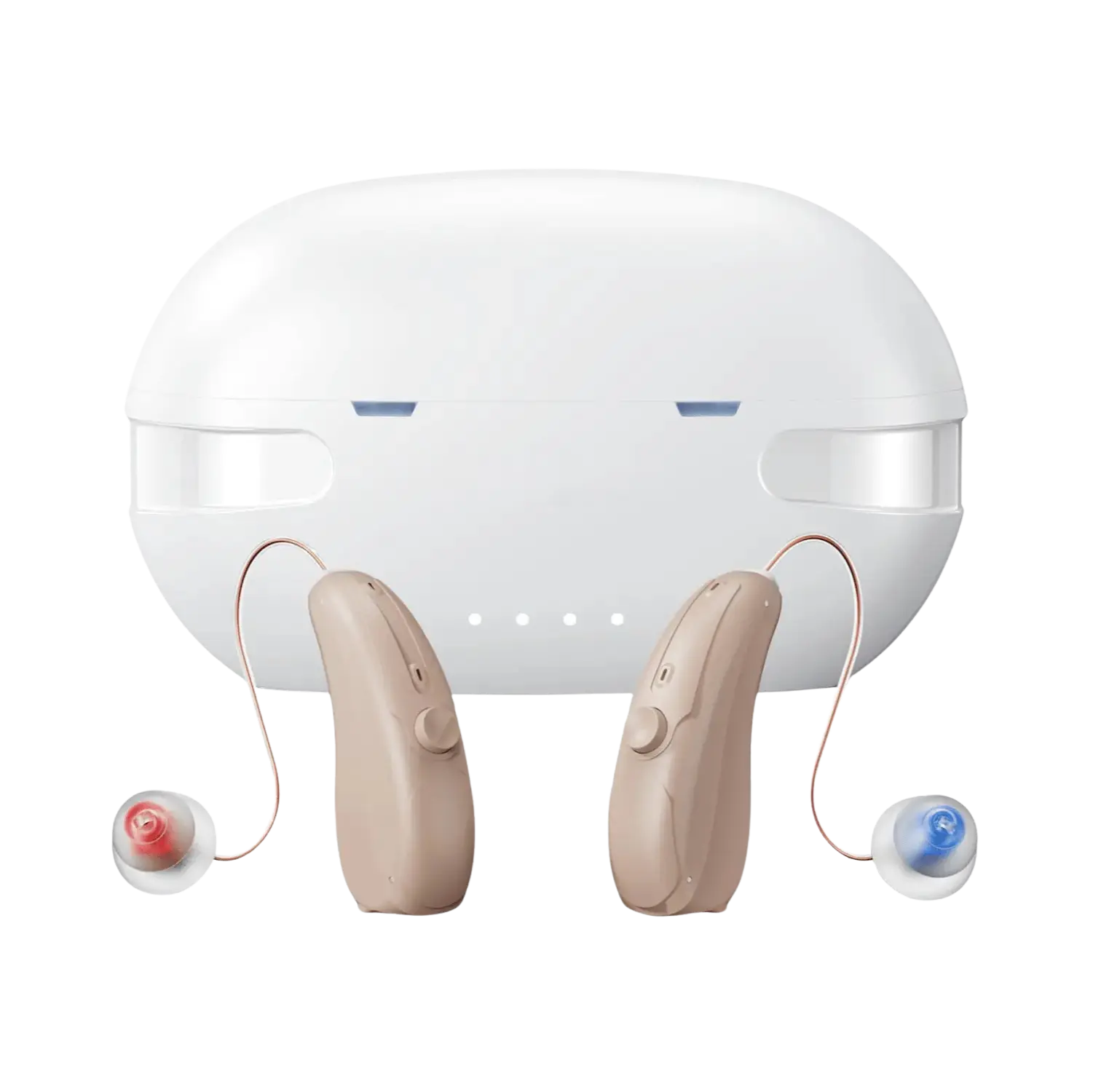
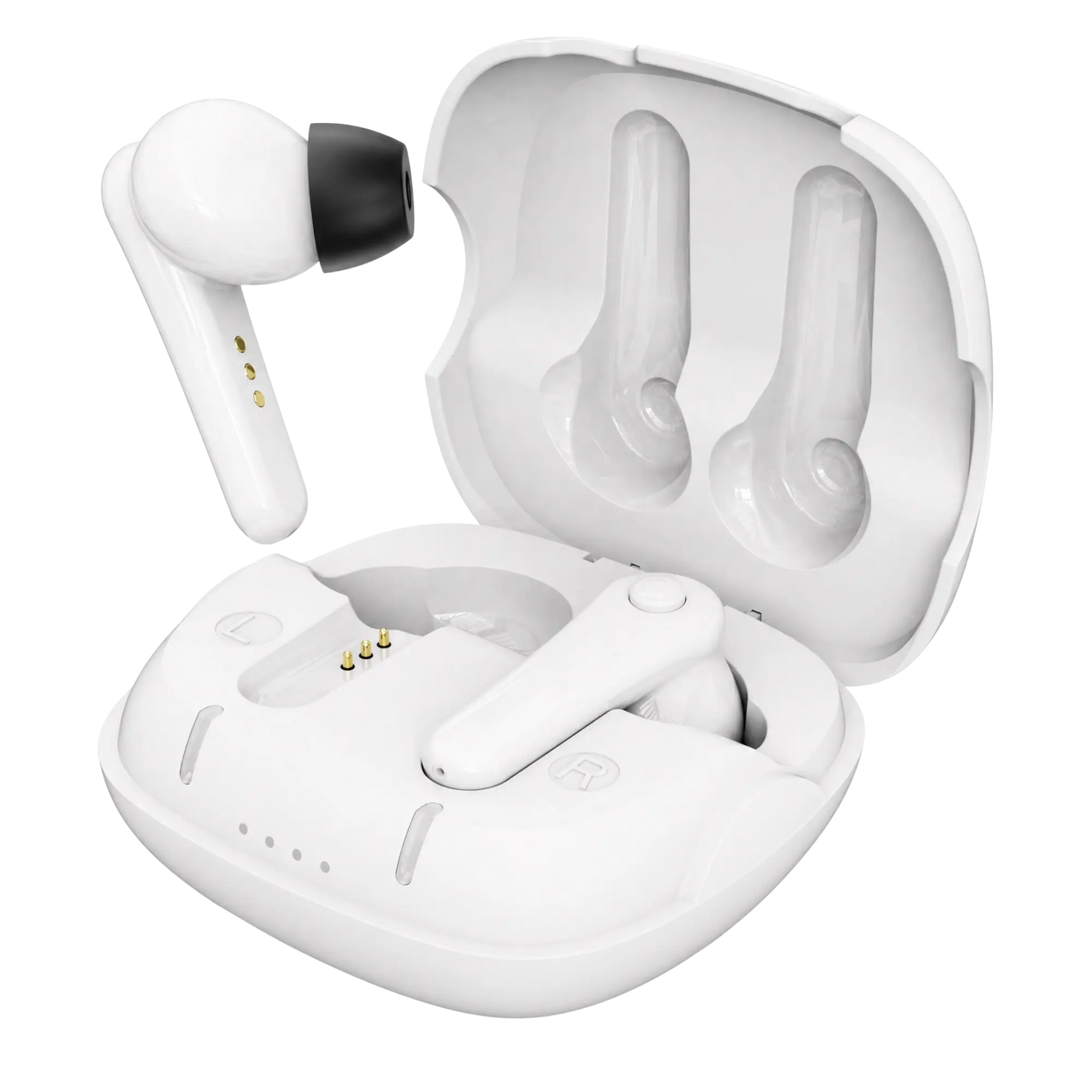
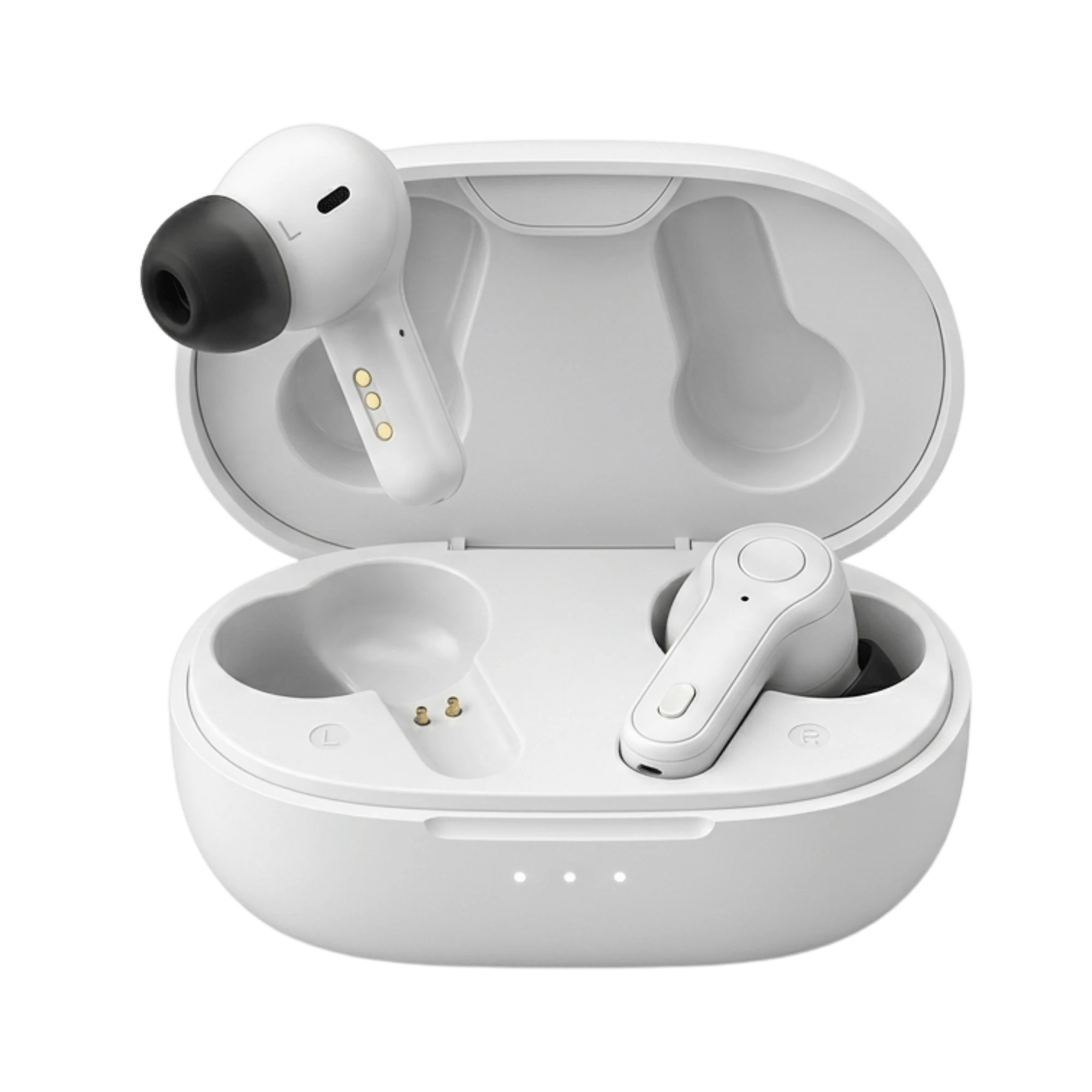
Panda Air is one example of this newer generation of modern earbud-style hearing aids. It uses 16-channel processing with multi-band adaptive noise reduction, streams calls, TV, and music over Bluetooth, and its fast-charge case provides 60 hours of total listening time, in the format of rechargeable hearing aids with a charging case that fits a midlife routine rather than announcing itself.
Air also comes with an optional app that can run an in-ear hearing test through the device and tune it to the user's hearing profile, though the aid works fully out of the box without the app or the test. It carries a 5-year warranty and a 45-day trial that begins when the product arrives. Details are at pandahearing.com.
Limitations of This Research
Hearing was self-reported rather than measured with audiometry, so the study captures how people perceive their hearing, which can drift with mood and expectations. The effects, while statistically significant, were small, and three measurement waves limit how finely the direction of influence can be resolved. Loss to follow-up over the years could also shape who remained in the sample.
The CLSA is a Canadian cohort that skews healthier and more educated than the general population, which may limit how far the findings generalize. No specific funding conflicts are highlighted in the abstract.
What to Do With This
Treat hearing and social connection as a pair, starting in midlife. If conversations have grown harder to follow, that is worth addressing on its own merits, and this study adds one more reason: keeping hearing in good working order may be a small, real investment in staying connected to other people.
Beadle J, Best J, Jenstad L, Pichora-Fuller MK, Mick P, Levasseur M, Hotton M, Poon BT, Small JA, Borisoff J, Gutman G, Wister A. An Analysis of Bi-directional Associations Between Self-Reported Residual Hearing and Loneliness: Findings from the Canadian Longitudinal Study on Aging. Canadian Journal on Aging. 2026. Retrieved from PubMed. https://doi.org/10.1017/S0714980826100774