Over-the-counter hearing aids offer real promise for older adults with dementia and hearing loss, but families face significant hurdles in fitting, adjusting, and managing these devices without professional support.
Hearing loss affects roughly two-thirds of Americans over age 70, and many of those individuals also experience cognitive decline or dementia. When both conditions occur together, the impact compounds: isolation deepens, confusion increases, and quality of life suffers. Yet most older adults with dementia never receive hearing treatment, partly because the cost and logistical complexity of traditional audiological care become prohibitive when memory and self-care capacity are already compromised.
The regulatory approval of over-the-counter hearing aids in 2022 opened a pathway that many researchers and clinicians hoped would be transformative for this population. These devices offer lower cost, no prescription requirement, and the promise of easier access. But whether OTC hearing aids actually work for people with dementia remained an open question.
About This Study
Title: Facilitators and Barriers to Over-the-Counter Hearing Aid Use in People With Dementia: Semistructured Interview Study
Authors: Dana P. Urbanski, Alexander M. Hungs, Peggy B. Nelson, Joseph E. Gaugler
Affiliations: Indiana University Bloomington, University of Minnesota School of Public Health, University of Minnesota Center for Applied and Translational Sensory Science
Journal: JMIR Human Factors - April 1, 2026
Study type: Qualitative (semistructured interviews)
Source: PubMed - DOI: 10.2196/83857
Background: Why the Researchers Looked at This
Dementia and hearing loss frequently occur together in older adults. The combination creates a triple problem: individuals lose the ability to communicate and stay connected, family members struggle to manage care, and the behavioral and psychological symptoms of dementia (often worsened by isolation) become harder to manage. Traditional hearing aids require regular appointments, fitting adjustments, and complex troubleshooting, tasks that become daunting when someone has memory loss or reduced executive function.
Researchers at Indiana University and the University of Minnesota recognized that nobody had actually asked people with dementia, their family caregivers, and the direct-care professionals who support them about whether OTC hearing aids could meet their real-world needs. They decided to ask directly.
How the Study Was Done
The team conducted semistructured interviews with 45 participants divided into three groups of 15 each: community-dwelling older adults with dementia and hearing loss, family caregivers of people in that situation, and geriatric direct-care professionals such as home health aides and nurses. All interviews were conducted via secure Zoom and recorded. Researchers then transcribed everything and used thematic analysis, a systematic method for identifying patterns and themes across qualitative data, to identify what factors made OTC devices feel feasible or barriers to using them.
What the Researchers Found
The results revealed a picture with real hope alongside substantial obstacles. On the favorable side, participants saw clear facilitators: OTC hearing aids offered improved accessibility and affordability compared to prescription devices. People valued the independence they could retain by managing their own devices and making their own decisions. Several noted that the lower cost made the option feel within reach, whereas prescription hearing aids had always seemed financially impossible.
But the barriers were substantial and worth understanding in detail. First, people with dementia often distrust new devices they don't recognize or understand. Second, assessing whether someone with dementia actually qualifies as a good candidate for hearing aids proved extremely difficult because both the person with dementia and family members often had unreliable perceptions of actual hearing ability. A family caregiver might report their loved one cannot hear well, but the person with dementia might deny any hearing problem, making it almost impossible to know whether to buy a device. Third, family caregivers expressed real uncertainty about how to program and adjust the devices, especially when the person with dementia couldn't reliably tell them whether a setting was helping or hurting. Fourth, evaluating whether the device was actually working was challenging without professional support. Finally, caregivers worried deeply about burnout: managing another person's health tool, charging it, replacing batteries or case components, and handling malfunctions on top of all their other caregiving duties felt like a breaking point for many.
What It Means for People with Hearing Loss
This study affirms that OTC hearing aids are not a one-size-fits-all solution. For cognitively healthy older adults with mild-to-moderate hearing loss, consumer-directed devices have shown real clinical benefit. But for people whose dementia limits their ability to accurately perceive or communicate their hearing needs, to understand how to use a device, or whose caregivers are already near total burnout, a device that arrives in a box with only an app and online support may not be enough.
The most important takeaway for families is this: if your loved one has dementia and hearing loss, OTC hearing aids can be part of the solution, but only alongside caregiver education, transparent testing of candidacy, and realistic planning for ongoing support. The affordability advantage disappears if the device ends up unused or damaged because no one knew how to maintain it.
Why Professional Support Matters When Dementia Complicates Hearing Care
The study's findings about caregiver burden and difficulty with device management point directly to a need that OTC-only models may not fill. The cost barrier the FDA-OTC category was designed to address is real, but people with dementia often need something equally important: guidance. Some OTC hearing aid manufacturers have begun offering telehealth consultations or simplified support pathways precisely to address this gap. When choosing an OTC device for someone with dementia, families should look for options that bundle easy setup, responsive customer support, and clear guidance on candidacy assessment. Devices that recognize cognitive limitations and simplify the adjustment process may offer a more realistic path forward than devices optimized only for independent, tech-savvy users.
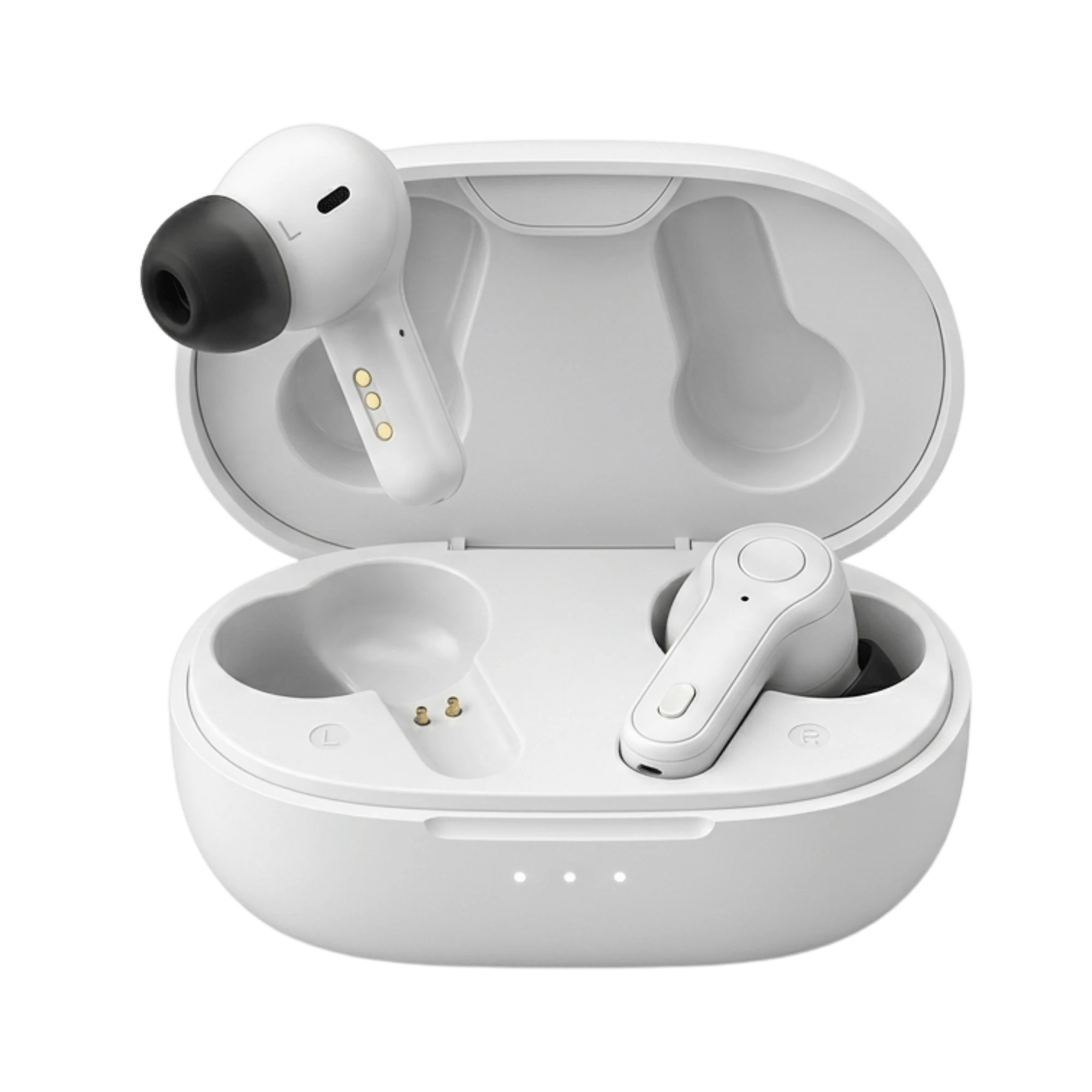
Panda Air exemplifies this caregiver-centered design approach. Its earbud-style form factor is easy to insert and remove, the paired app offers straightforward controls that don't require extensive menu navigation, and the 45-day return window acknowledges that fit and comfort may take time to evaluate, especially when a second person is helping manage the device. The fast-charging case also reduces the daily cognitive and logistical burden of managing multiple batteries. For families navigating dementia alongside hearing loss, these seemingly small design choices can make the difference between a device that gets used and one that collects dust in a drawer. Learn more at Panda Air.
Limitations of This Research
This was a qualitative study with 45 participants, not a randomized trial testing whether OTC hearing aids actually improve outcomes in people with dementia. The participants also all had access to internet-based videoconferencing and lived in community settings, which means results may not reflect the experiences of those in institutional care or with limited digital access. The study documents what people think and report, not whether devices work clinically. Future research will need to test actual hearing outcomes in this population and identify which specific device features matter most.
The Path Forward
OTC hearing aids have opened a door for millions of Americans who couldn't afford or access prescription devices. The challenge ahead is ensuring that this door opens equally for people whose lives are complicated by cognitive decline and the added burden of caregiving. That will require not just better devices, but better education, better support systems, and honest conversations about when professional involvement remains valuable even in an OTC world.
Urbanski DP, Hungs AM, Nelson PB, Gaugler JE. Facilitators and Barriers to Over-the-Counter Hearing Aid Use in People With Dementia: Semistructured Interview Study. JMIR Hum Factors. 2026;13(1):e83857. DOI: 10.2196/83857