Everyday Noise and Your Heart: What the Apple Hearing Study Found
A new analysis of Apple Hearing Study data links everyday environmental and headphone noise to measurable drops in heart rate variability, with older adults and people with tinnitus showing the largest changes.
Most conversations about noise focus on the ears. Loud environments damage hearing over time, and that link is well established. What gets less attention is what noise does to the rest of the body while it is happening, from traffic rumbling past a window to music playing through headphones on a commute.
Researchers at the University of Michigan used data from the Apple Hearing Study, a nationwide research project that tracks sound exposure through participants' own smartwatches and iPhones, to ask a different question: when the world around you gets louder, what happens to your heart in the minutes and hours that follow?
Title: Association between environmental and headphone noise and heart rate variability: observations from Apple Hearing Study cohort
Authors: Xin Zhang, Sung Kyun Park, Lauren M. Smith, Richard L. Neitzel
Affiliations: Department of Environmental Health Sciences and Department of Epidemiology, School of Public Health, University of Michigan, Ann Arbor
Journal: Journal of Exposure Science & Environmental Epidemiology, published September 4, 2026
Study type: Analysis of a nationwide prospective cohort (observational)
Reference: DOI: 10.1038/s41370-026-00970-8 (retrieved from PubMed)
Background: Why the Researchers Looked at This
Environmental noise has been tied to cardiovascular problems in earlier research, but most of that work looked at long-term averages, such as living near an airport for years. Far fewer studies have tracked how a person's heart responds to noise as it actually happens in daily life, minute by minute.
The measure at the center of this study is heart rate variability, or HRV. HRV describes the tiny variations in timing between one heartbeat and the next. A heart that varies its rhythm flexibly is generally considered healthier, while chronically low HRV has been associated with a higher risk of cardiovascular disease. The specific yardstick used here is called SDNN, the standard deviation of the intervals between normal heartbeats.
The researchers also wanted to know whether the source of the sound matters. Noise from the surrounding environment is largely outside a person's control, while headphone listening is chosen. Whether the body responds differently to these two kinds of exposure had rarely been examined at this scale.
How the Study Was Done
The team drew on consented adults from the Apple Hearing Study and built four analytical groups, splitting participants by sound source (environmental versus headphone) and by exposure window (a short window of 20 minutes and a longer window of 160 minutes). To keep the groups demographically balanced, twenty participants were randomly sampled from each unique combination of age, sex, and ethnicity, which produced between 980 and 1,180 participants per analysis.
Sound levels were recorded by each participant's smartwatch and smartphone, and the same watch produced one-minute estimates of SDNN. Statistical models then estimated how HRV changed after noise exposure, adjusting for the time of day and physical activity, and allowing for the fact that individuals differ in their baseline responses. A second stage of modeling looked at whether age, sex, body mass index, stress, self-rated hearing ability, and tinnitus changed the size of the effect.
What the Researchers Found
Noise was consistently followed by a drop in heart rate variability. For environmental noise, a 10-decibel increase in exposure was associated with an overall SDNN reduction of 6.8 percent in the short 20-minute window, growing to 16.0 percent over the longer 160-minute window. In plain terms, the louder a person's surroundings, the less flexible their heart rhythm became, and the effect deepened as exposure continued.
Headphone sound showed a similar but flatter pattern: reductions of 7.1 percent in the short window and 7.4 percent in the long window per 10-decibel increase. Unlike environmental noise, the headphone effect did not escalate much with time.
The timing was revealing. Right after sound levels rose, SDNN briefly ticked upward, then settled into a sustained reduction. The physiological stress of noise, in other words, was not a momentary startle but something that persisted from minutes to hours after exposure.
Not everyone responded equally. Greater reductions in HRV appeared in older adults and in people who reported tinnitus. Interestingly, self-rated hearing cut both ways: people who described their hearing as excellent showed larger responses to environmental noise, while people who described their hearing as poor showed larger responses to headphone sound.
What It Means for People with Hearing Loss
For older adults and people who already live with hearing difficulty or tinnitus, this study suggests the stakes of a noisy day may extend beyond the ears. The groups most vulnerable to hearing damage also showed some of the strongest cardiovascular stress responses to noise, which strengthens the case for treating everyday sound exposure as a whole-body health matter.
The headphone findings are worth sitting with too. People who rated their hearing as poor had larger HRV reductions from headphone sound, and one plausible reason people with hearing difficulty use headphones loudly is simply to hear clearly. That makes the volume knob a health lever: anything that lets a person hear well at lower levels reduces the exposure itself.
Hearing Clearly Without Turning Everything Up
Because this study highlights how sustained loudness taxes the body, it is a reminder that compensating for hearing loss by raising volume, on the TV, on the phone, or through headphones, adds to the very exposure the researchers measured. FDA-OTC hearing aids take a different approach: rather than making everything louder, they are designed to make speech clearer at comfortable levels.
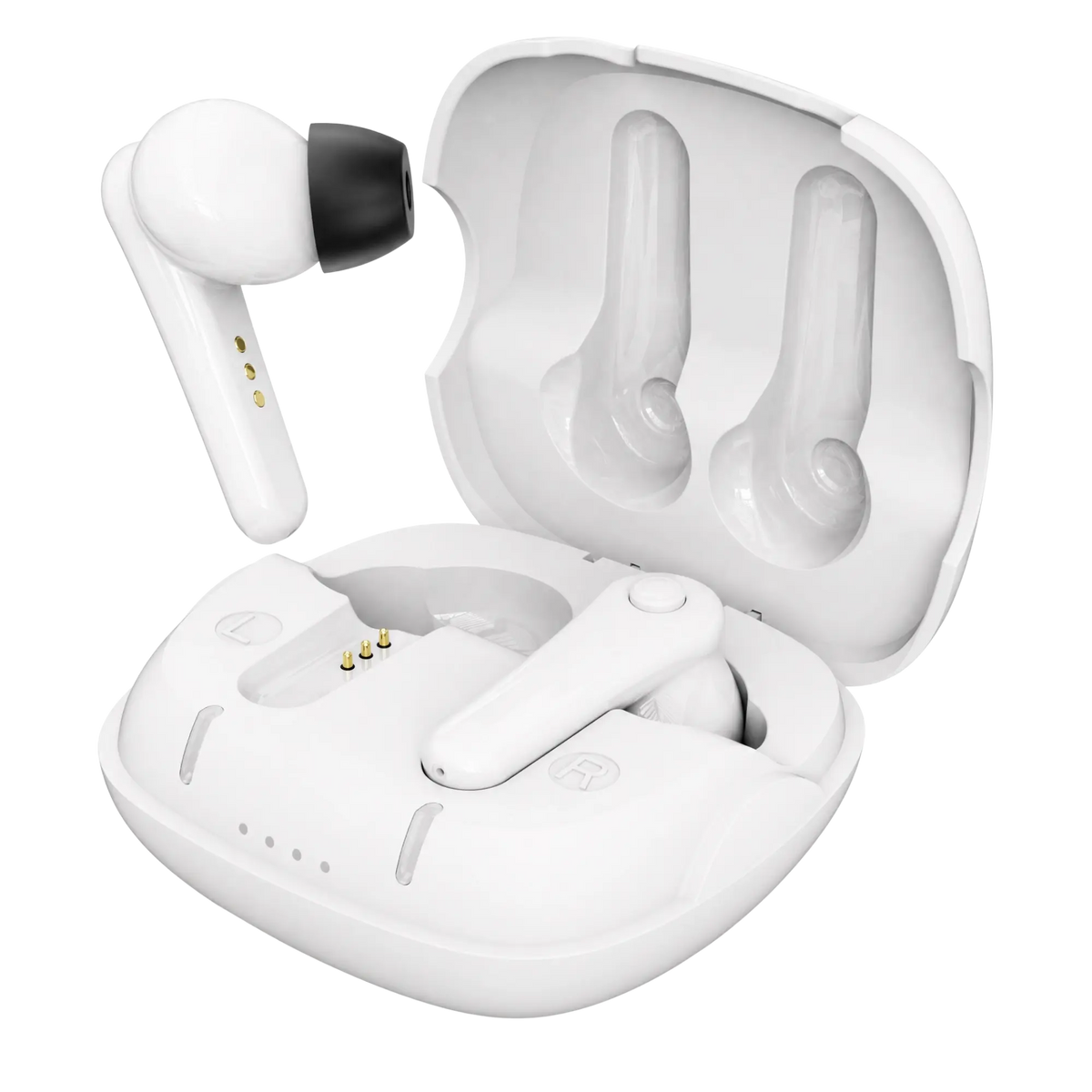
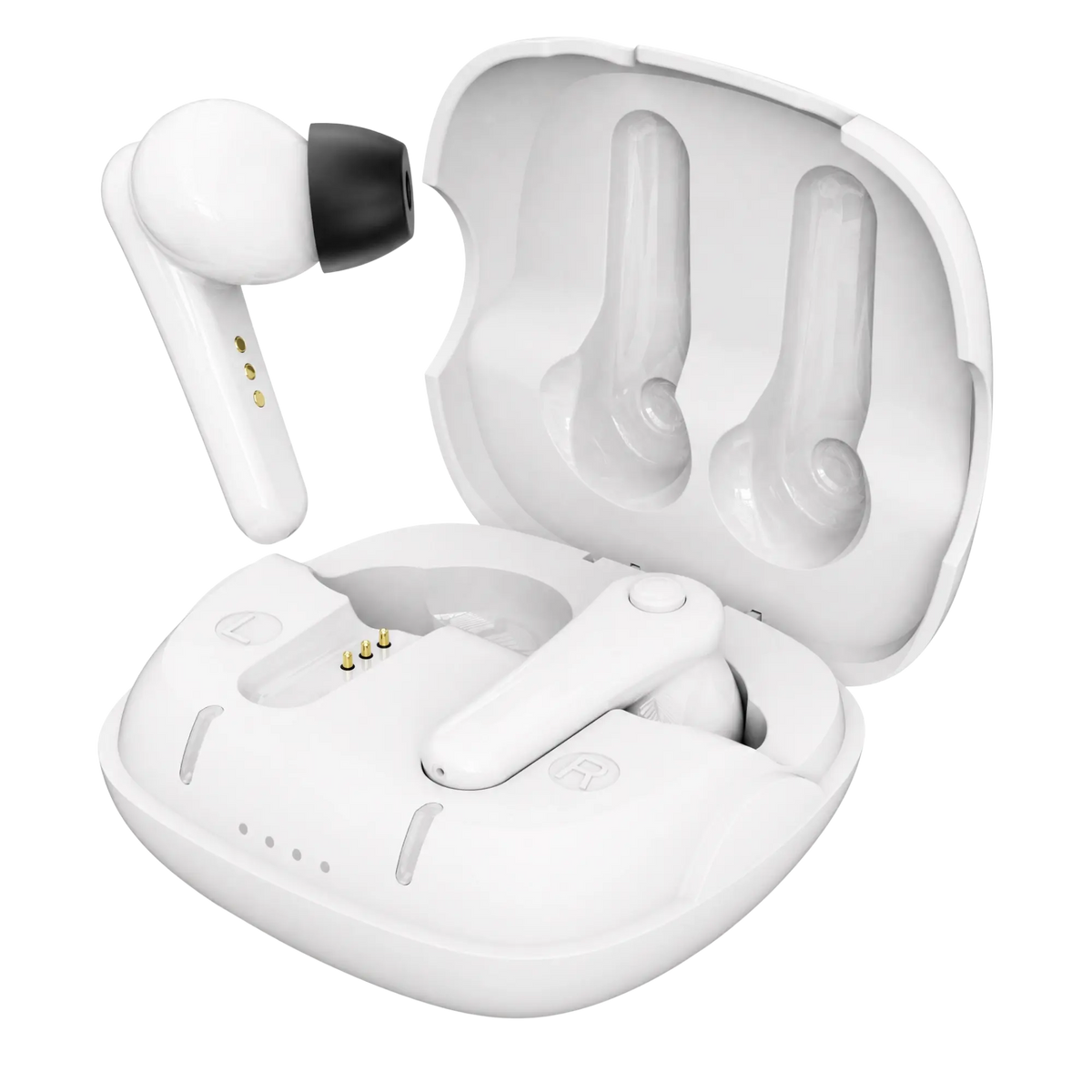
Panda Quantum is one such device, one of the adaptive noise reduction hearing aids in the OTC category, a 16-channel receiver-in-canal device tuned for clear speech in noisy environments. Its Bluetooth connection streams calls, TV, and music directly to the aids, and an optional app-based hearing test can personalize its sound to your hearing profile, though the aids work fully without the app. A single charge lasts 20 hours, with the case providing three additional full charges for 80 hours total, backed by a 5-year warranty and a 45-day trial that starts when the device arrives.
One caveat worth knowing: OTC hearing aids are approved for mild-to-moderate hearing loss. Severe or profound loss still benefits most from a clinical fitting with an audiologist. Learn more at pandahearing.com.

Limitations of This Research
The authors are candid that this is an observational analysis, so it can show association but not prove that noise caused the HRV changes. Participants were volunteers who own Apple devices, which may not represent the wider population, and both the sound levels and the heart measurements came from consumer-grade wearables rather than laboratory instruments. The researchers note these factors may limit how far the findings generalize.
Where This Leaves Us
This study adds real-world weight to the idea that noise is not just a hearing issue but a cardiovascular one, and that the burden lands hardest on older adults and people already dealing with hearing problems. Paying attention to the loudness of your day, taking quiet breaks, and finding ways to hear clearly without cranking the volume are all reasonable takeaways while researchers keep working on the causal picture.
Zhang X, Park SK, Smith LM, Neitzel RL. Association between environmental and headphone noise and heart rate variability: observations from Apple Hearing Study cohort. Journal of Exposure Science & Environmental Epidemiology. 2026. Retrieved from PubMed. https://doi.org/10.1038/s41370-026-00970-8