Panda Quantum vs Sonic Endura: Power Without the Hassle
You've lived with severe hearing loss long enough to know the frustration. Conversations sound muffled, phone calls are exhausting, and you're tired of saying what every few seconds. Years ago, your audiologist fit you with Sonic Endura, a super-power BTE designed for profound loss. Back then, it was one of the few tools that gave you enough amplification to function.
But Sonic Endura comes with a cost: bulky design, disposable batteries you swap weekly, no Bluetooth, and constant office visits to manage. It's outdated, expensive to maintain, and tethered to your audiologist. Panda Quantum offers a different path. Clinically powerful 16-channel tuning in 10 minutes, rechargeable all-day battery, direct streaming to your phone, and freedom from the prescription clinic cycle.
Understanding Sonic Endura and Panda Quantum
Sonic Endura is a Super Power BTE (behind-the-ear) hearing aid released around 2010, specifically engineered for severe-to-profound hearing loss. Its flagship spec is a maximum output of 140 dB SPL, a measure of raw amplification muscle. Endura came in two models: Endura 12 (12 channels) and Endura 6 (6 channels, lower-cost variant). The device runs on 675 batteries (large, disposable cells) that last roughly 3 to 7 days. Endura also included adaptive directionality, digital noise reduction, six listening environments, and data logging, but it was always prescription-only and required ongoing audiologist programming.
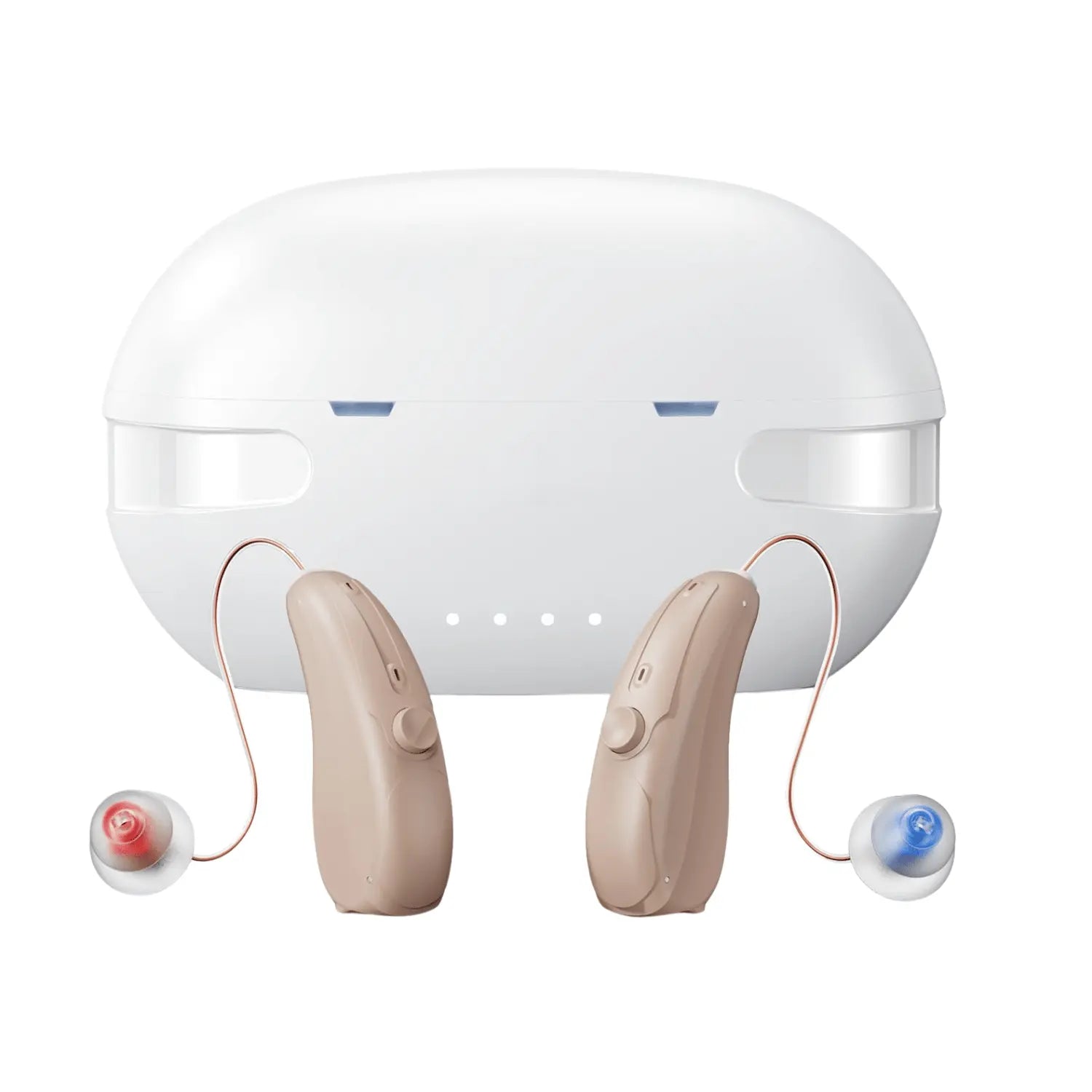
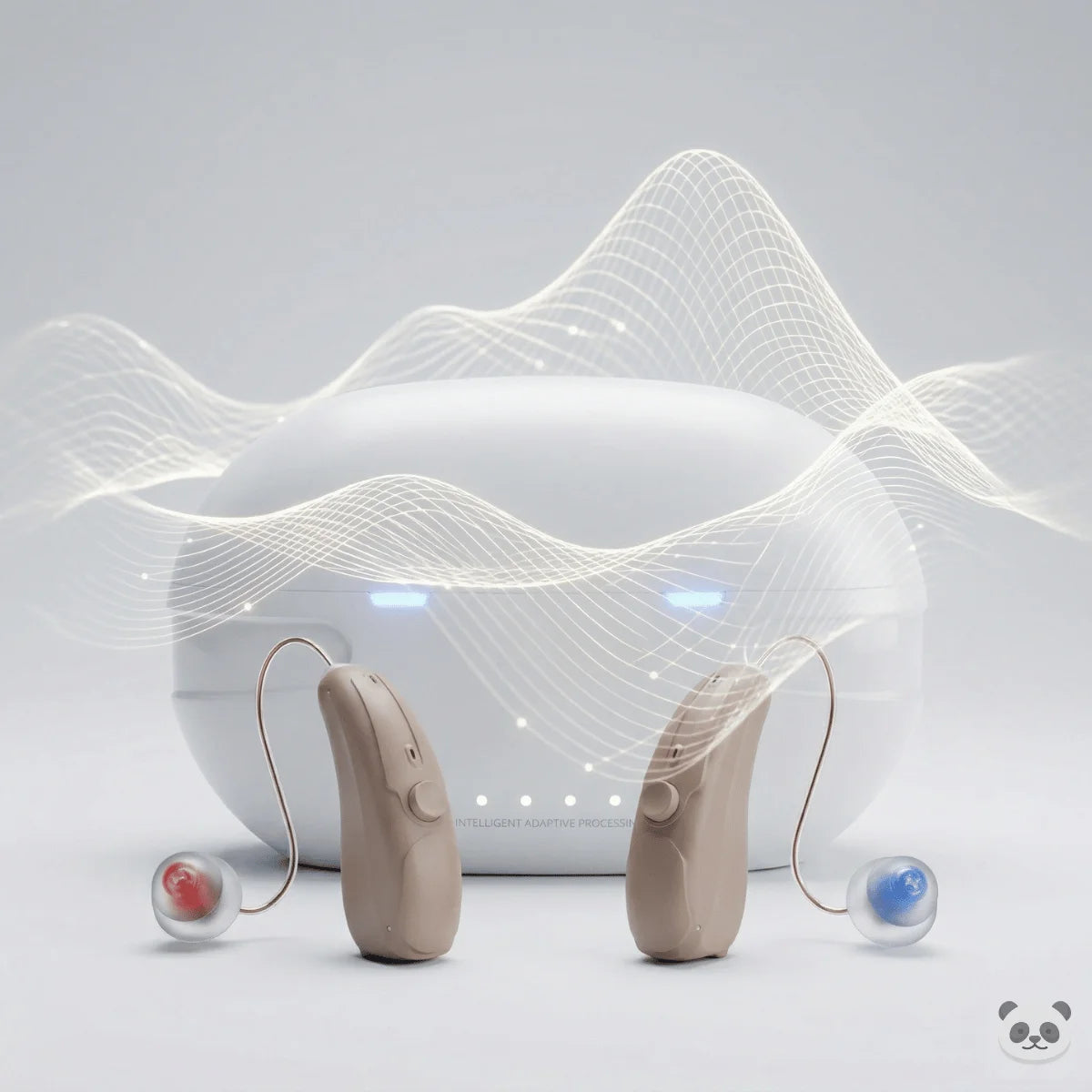
Panda Quantum is FDA-OTC certified and designed for moderate-to-severe hearing loss. Unlike Sonic Endura, Quantum is fully self-fitting: you take a 10-minute online hearing test, Panda's algorithm tunes 16 channels to your exact audiogram, and your aids ship ready to wear. Quantum delivers HFA gain up to 33 dB with advanced compression, 250 to 5500 Hz frequency coverage, and adaptive noise reduction intelligent enough to distinguish speech from background noise. It's rechargeable, 20 hours per charge, 80 hours with the case, and connects directly to your phone via Bluetooth for calls and audio streaming. No prescription. No batteries. No audiologist needed.
| Feature | Sonic Endura | Panda Quantum |
|---|---|---|
| Price | $2,000 to $4,000+ (refurbished/legacy) | $349 |
| Fitting Model | Prescription only (requires audiologist) | FDA-OTC self-fitting (10-minute online test) |
| Channels | 6 to 12 channels | 16-channel WDRC |
| Max Output (Power) | 140 dB SPL (super power) | HFA gain up to 33 dB (clinical prescription-grade) |
| Battery Type | 675 disposable batteries (weekly cost) | Rechargeable lithium-ion (charge nightly) |
| Battery Life | 3 to 7 days per set | 20 hrs per charge; 80 hrs with case |
| Form Factor | Large BTE, visible | Sleek RIC, modern aesthetic |
| Bluetooth and Streaming | Optional sonicBLU accessory (extra cost) | Native Bluetooth (calls, TV, music) |
| Noise Reduction | Digital noise reduction (fixed programs) | Adaptive ANR (learns your environment) |
| Remote Adjustments | Audiologist office visits only | Remote tuning via app or phone |
| Warranty | Limited (refurbished units vary) | 5-year comprehensive |
| Trial Period | 30 days (varies by dispenser) | 45-day guarantee |
Power vs. Practicality: Raw Watts Meet Real Life
Sonic Endura's headline spec is its 140 dB SPL maximum output, raw power designed for severe-to-profound loss. That output number sounds impressive on a spec sheet, but most users live in the moderate-to-severe range, and they pay for headroom they will never use. The power also comes wrapped in trade-offs: a large, visible BTE form factor; disposable 675 batteries you replace weekly at $10+ per set (over $500 yearly); manual programming that forces office visits whenever your needs shift; and no Bluetooth integration. If you want to take a call, you hold the phone to your ear. The Endura doesn't stream directly. Watch TV? You need the separate sonicBLU accessory (added cost, extra equipment).
Panda Quantum's HFA gain up to 33 dB is prescription-grade clinical power, sufficient for moderate-to-severe loss, delivered through 16 precisely tuned channels instead of Endura's 6 to 12. Quantum's frequency-matching technology ensures every channel amplifies exactly where you need it based on your specific audiogram. And unlike Sonic Endura's fixed manual programs, Panda's adaptive noise reduction learns your patterns. When you're in a quiet room, it backs off. In a busy restaurant, it locks onto speech and tamps down background chatter, intelligently, not rigidly.
For most moderate-to-severe loss wearers, Quantum's clinically optimized power is more than enough. If you truly need maximum output for profound loss, Panda can be programmed to maximum gain at fitting time.
The Battery Revolution: Rechargeable Quantum vs. Weekly 675 Battery Swaps
Sonic Endura runs on 675 batteries, large zinc-air cells that last 3 to 7 days. That sounds reasonable until you live it. Every week, you open a new battery pack. Every week, you fumble with tiny tabs on tiny batteries. Every week, you add to landfill. And every week, that's another $10+ from your pocket. Over five years, 675 batteries cost $2,500+ just in battery replacement.
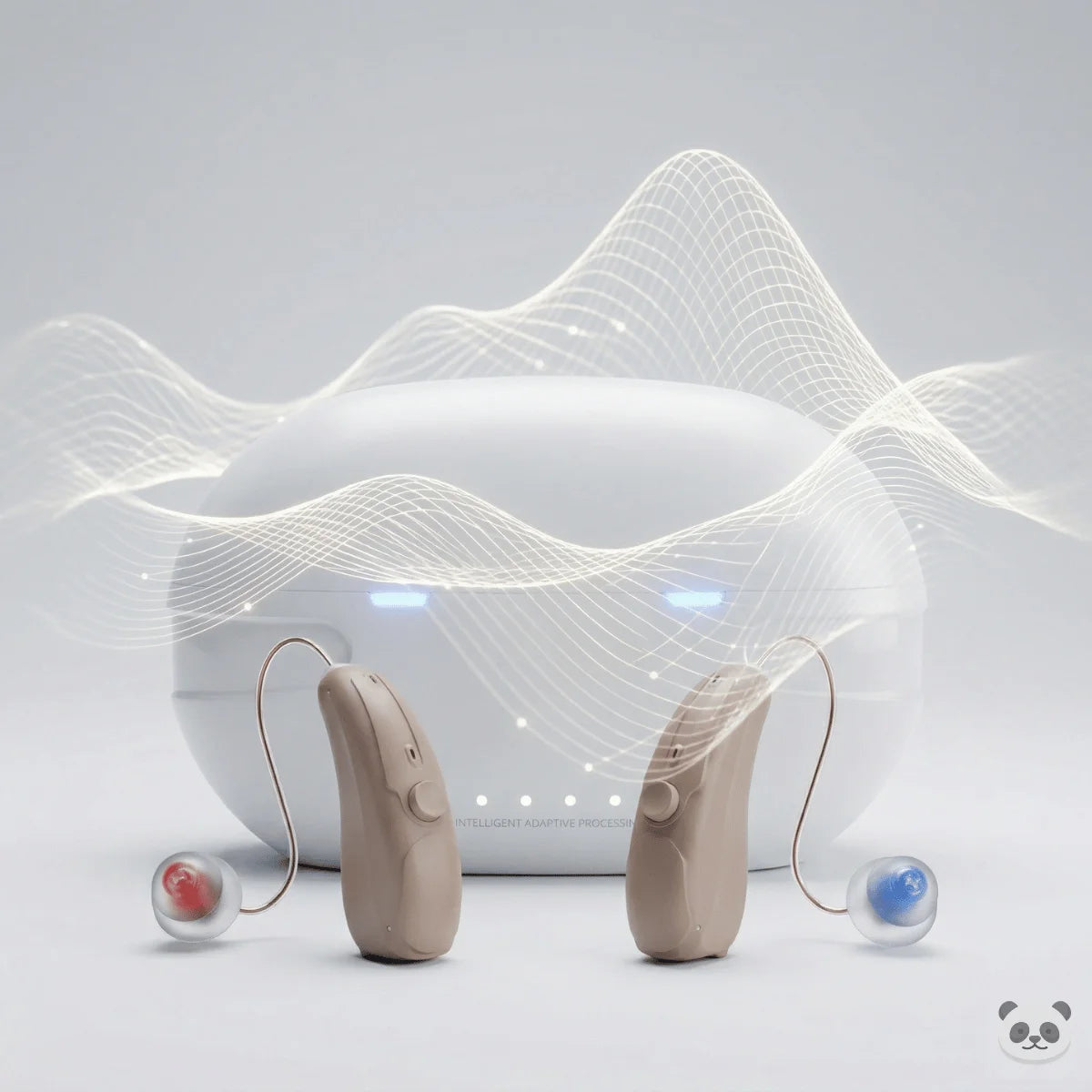
Panda Quantum changes the equation. One charge at night, 20 minutes in the case, and you wake with 20 hours of battery. That's a full day without worrying. The case holds an extra charge, so you have 80 hours total (more than 3 days) before you need to plug in again. No batteries to buy. No weekly ritual. No battery anxiety mid-conversation. Just charge overnight like your phone and live your life.
Over five years, Quantum's rechargeable system saves you $2,500+ in battery costs alone. And that's before factoring in the time, hassle, and peace of mind.
Bluetooth and Modern Streaming: Sonic Endura's Optional Accessory vs. Panda's Native Integration
Sonic Endura was released in 2010, before Bluetooth hearing aids became standard. If you wanted wireless streaming, Sonic Innovations offered the sonicBLU accessory, an external device you wear around your neck or clip to your shirt that receives signals from your phone and transmits to the Endura aids. It works, but it's bulky, visible, and adds another gadget to charge and carry.
Panda Quantum has native Bluetooth built in. Phone rings? The call streams directly to both ears, no necklace device, no clip. Watching TV? Audio goes straight to your aids. Listening to a podcast on your tablet? Same seamless experience. And Panda's app lets you control volume and switch programs right from your phone. Sonic Endura cannot match that simplicity or integration.
Prescription Fitting vs. Self-Fitting: Weeks vs. Hours
With Sonic Endura, the timeline is familiar: find an audiologist (often 2 to 4 weeks for an appointment), undergo a hearing test, wait for the audiologist to program your specific channels and listening programs, then return in a week or two for adjustments. If something changes (your hearing shifts, you move to a noisier neighborhood, your lifestyle evolves) you schedule another visit. That's the prescription hearing aid reality, and Sonic Endura reflects it exactly.
Panda Quantum flips the timeline. Order online, take the 10-minute hearing test from home, and Quantum auto-tunes its 16 channels to your exact audiogram within hours. Your aids are tuned, packaged, and shipping the same day. If the fit needs tweaking, Panda's team adjusts you remotely via video call or app, no office required. And you have a full 45 days to evaluate the fit. If it's not right, Panda refunds you or makes adjustments at no cost.
The freedom is real. No doctor's gate. No waiting room. No fitting fees on top of the device cost.
16 Channels of Adaptive Technology vs. 6 to 12 Manual Programs
Sonic Endura comes with six predefined listening environments and up to 12 channels (depending on model). Your audiologist selects which environment is active for your day. Quiet room? One program. Restaurant? Switch to another. Car? Different setting. The problem: you're manually flipping between fixed profiles, and life rarely fits into six boxes. Plus, if Endura misidentifies your environment (background music in a restaurant, for example), there's no adaptation. You're stuck with that program until you manually switch.
Panda Quantum delivers 16 channels with adaptive noise reduction that learns in real time. It doesn't flip between programs; it continuously adapts within a single unified processing strategy. Walk from a quiet office into a noisy hallway, and Quantum adjusts instantly, no button presses, no lag. The adaptive ANR distinguishes speech from noise rather than just suppressing sound, so you don't lose conversation clarity even when background noise increases.
This is the gulf between legacy manual programs and modern adaptive processing. Sonic Endura locks you into fixed decisions; Panda Quantum evolves with you moment to moment.
The Total Cost Equation: Endura's Hidden Expenses vs. Panda's Transparency
Sonic Endura is refurbished-only now, typically priced $2,000 to $4,000+ per pair. But that's not the total cost. Add:
- Audiologist fitting: $500 to $2,000
- 675 batteries (5-year total): ~$2,500
- Programming adjustments (3 to 5 visits): ~$500 to $1,500
- Optional sonicBLU Bluetooth accessory: ~$300
Total 5-year Sonic Endura cost: ~$5,800 to $10,300.
Panda Quantum is $349 per pair. No fitting fee (you self-fit in 10 minutes). No batteries to replace. No remote adjustment charges. Remote tuning is free via app or phone. Bluetooth is built in. Over five years, assuming a replacement after 4 to 5 years, your total cost is roughly $700, one-eighth the price of Sonic Endura.
Panda isn't just lower upfront. It's lower over time, with modern technology and more freedom.
The Verdict: Sonic Endura was a powerful tool for severe hearing loss in 2010. In 2026, it's a legacy device. Refurbished-only, battery-dependent, Bluetooth-limited, and prescription-locked, Endura's total 5-year cost exceeds $8,000. Panda Quantum delivers clinical-grade 16-channel power at $349, with rechargeable all-day battery, native Bluetooth, adaptive noise reduction, self-fitting in 10 minutes, and a 5-year warranty. For power, convenience, and cost, Quantum is the decisive choice.
Common Questions About Quantum and Endura
Is Panda Quantum powerful enough if I have severe hearing loss?
Panda Quantum's HFA gain up to 33 dB is clinical-grade and suitable for moderate-to-severe loss. If you have profound loss requiring 140+ dB SPL, discuss your specific audiogram with Panda's support team. Most users with severe loss find Quantum sufficient.
What happens if Sonic Endura breaks after I buy refurbished?
Refurbished Endura units often carry limited warranties (30 to 90 days), and Sonic Endura is no longer manufactured. Repair costs can exceed the device value. Panda Quantum includes a 5-year warranty, so repairs or replacement are covered.
How often do I need to replace Panda Quantum's rechargeable battery?
Panda's lithium-ion battery is rated for 3 to 5 years of daily charging. After that, the battery capacity may degrade slightly. You replace the battery, not the entire aid (cost roughly 20 to 30% of a new pair). Most users get 4 to 5 years of full daily use before any battery concern arises.
Power Meets Simplicity: The Quantum Advantage
Sonic Endura's 140 dB SPL maximum output was a serious spec for 2010. But a decade and a half later, raw spec sheet numbers don't equal a great user experience. Endura is large, battery-hungry, Bluetooth-limited, and tethered to office visits.
Panda Quantum redefines the equation. Clinical 16-channel power, continuously adaptive, rechargeable for all-day freedom, native Bluetooth for modern life, and self-fitting that bypasses the audiologist gate. At $349 per pair, Quantum delivers the hearing clarity you deserve without the prescription markup, battery cost, or clinic hassle.
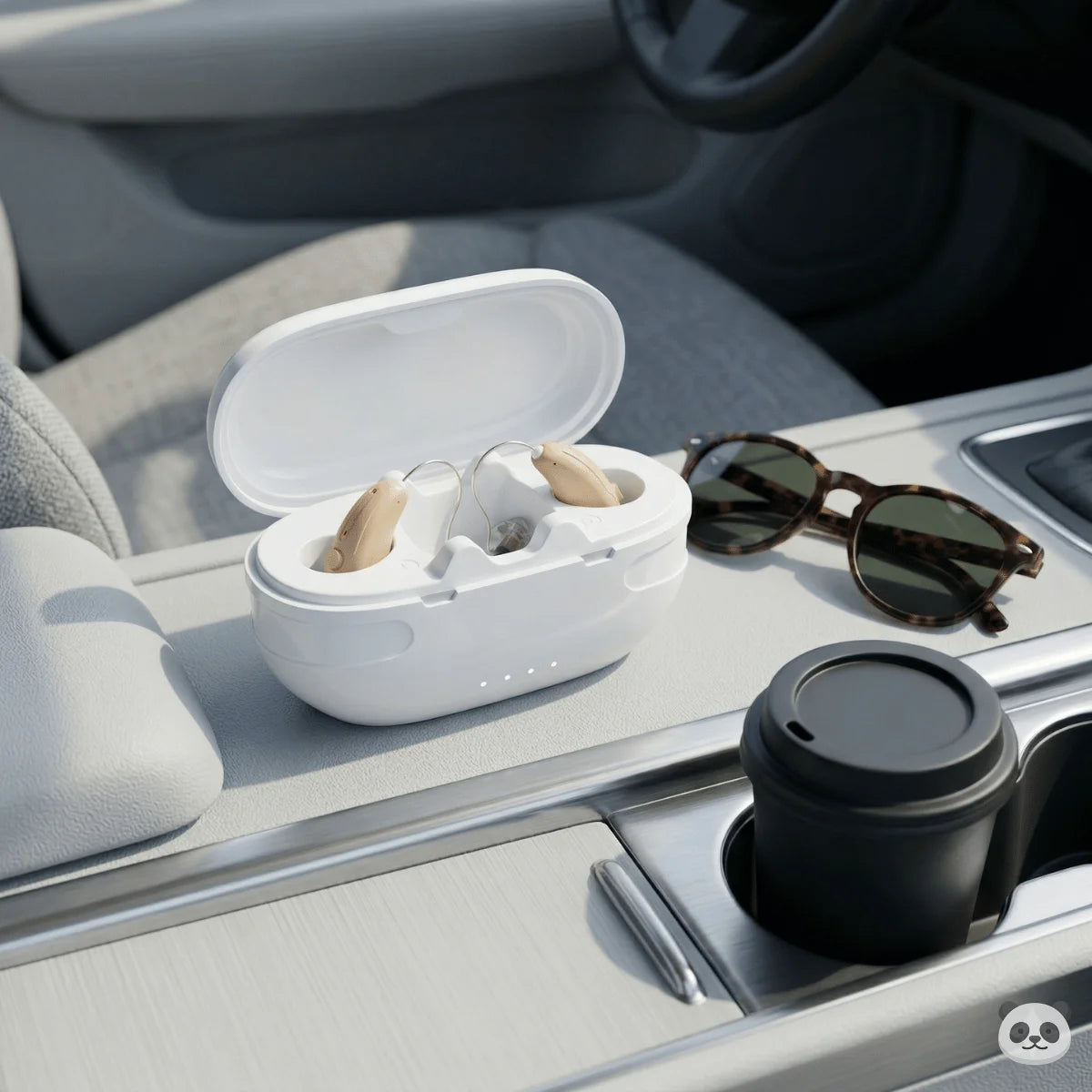
Panda Quantum is built for anyone tired of weekly battery hunts, office fitting fees, and outdated aid designs. Clinical-grade power, rechargeable all-day battery, and Bluetooth streaming, all at $349. Shop Panda Quantum risk-free with our 45-day guarantee.