Panda Quantum vs Siemens Artis 2: The TV Volume Test
It is evening in your home. Your partner is reading on the couch. You want to watch the news, but the dialogue is slipping past you. You turn the volume up a notch. Then another. Soon the room is loud enough that the other person on the couch is getting tense. They do not have to say it; you know what they are thinking. And now watching something enjoyable has become a negotiation about sound levels.
The Siemens Artis 2, a mid-range hearing aid from the early 2000s, uses 12-channel digital processing to amplify sound. It functions reasonably well in quiet rooms, but in that TV moment, it treats the background score and the dialogue as the same signal. Turn it up to hear the words, and the music gets loud too. It is a problem the Artis 2 cannot solve. Panda Quantum, by contrast, separates speech from background audio using frequency-matched processing. The dialogue comes through naturally; the volume stays where others can actually live with it.
Understanding Both Devices
The Siemens Artis 2 was positioned as a BTE and ITE option for users with mild to moderate hearing loss. It featured e2e wireless synchronization between the left and right devices, which was a selling point at the time. However, it required fitting by an audiologist, used disposable batteries that lasted a few days, and offered no integration with smartphones or televisions. It was a purely clinical device.
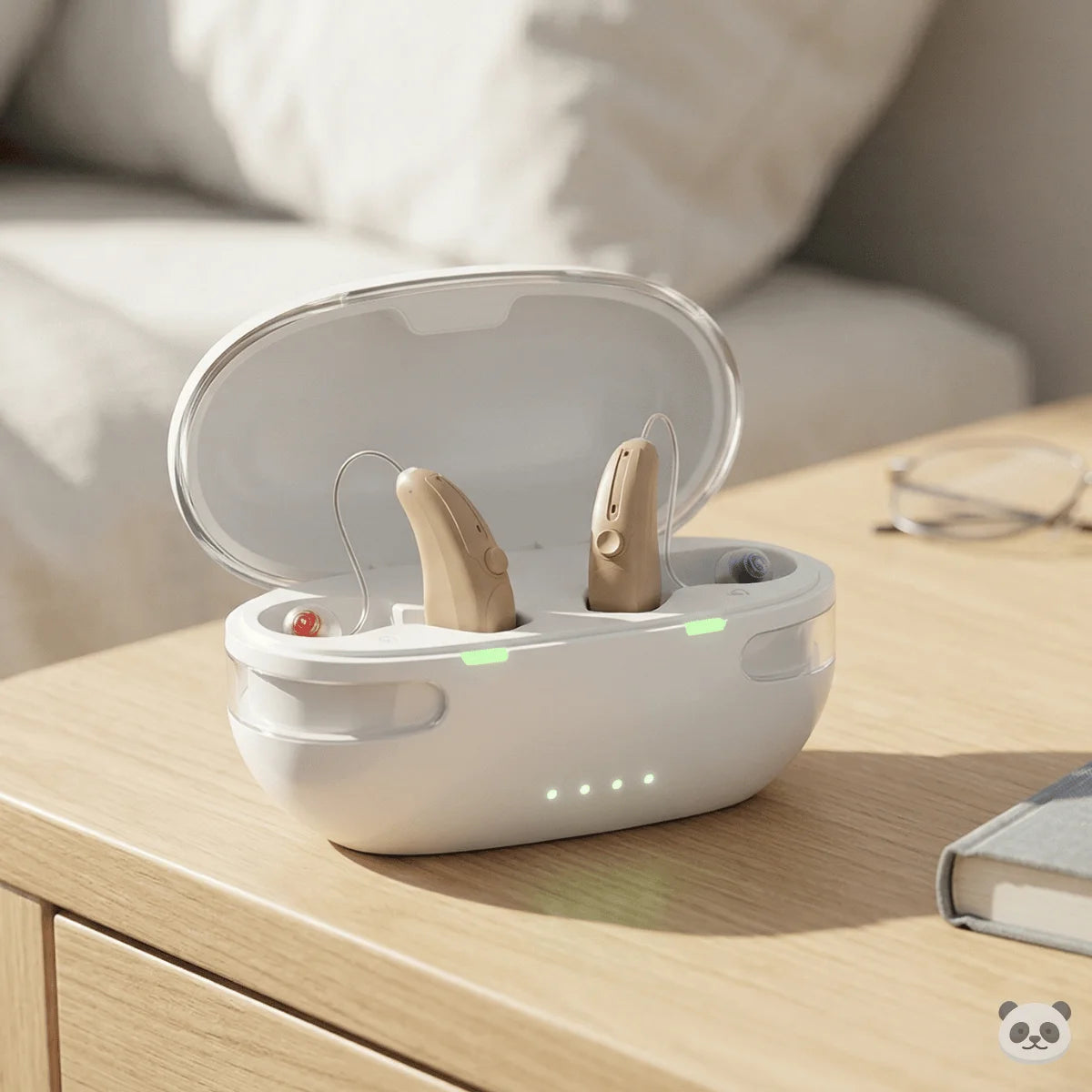
Panda Quantum approaches hearing differently. It is a modern prescription-grade RIC designed for the user who wants both clinical precision and everyday convenience. You fit it at home, charge it like you would earbuds, and it connects to your phone and TV wirelessly. The device is smaller, more discreet, and delivers sound through a frequency-matched system that understands the difference between speech and noise. It is how hearing aids work in 2026.
| Feature | Panda Quantum | Siemens Artis 2 |
|---|---|---|
| Price (per pair) | $349 | Typically $1,200-$2,500+ (legacy clinic pricing) |
| Form Factor | RIC - compact, modern profile | BTE/ITE - visibly medical, behind-ear or in-ear |
| Channels | 16-channel WDRC (independent frequency tuning) | 12-channel digital (broader frequency bands) |
| Frequency Range | 250 - 5,500 Hz wideband (captures speech clarity) | Standard speech range; less detailed frequency control |
| Battery Type & Life | Rechargeable magnetic case: 20 hrs per charge, 80 hrs total (week-long) | Disposable zinc-air (size 13 typical): 3-7 days, then replace |
| TV and Phone Integration | Bluetooth direct: TV audio routed to ears, calls answered in device | No Bluetooth, no app, no phone/TV connectivity |
| Self-Fitting | Clinically tuned 10-minute online test (home-based) | Audiologist fitting required; in-clinic appointments |
| Noise Reduction | Adaptive ANR (learns your listening environment) | Basic directional mode and noise suppression |
| Wireless Coordination | Full binaural + Bluetooth ecosystem | e2e wireless (left-right sync only) |
| Warranty & Trial | 5-year manufacturer warranty; 45-day risk-free | 2-year typical; limited in-clinic trial |
| FDA Status | FDA-OTC, FCC, CE, ROHS, EMC certified | Prescription device (legacy support) |
Why TV Volume Climbs with the Artis 2
The Siemens Artis 2 uses 12 channels to divide the sound spectrum, but those channels are broad. When you watch television, the dialogue and the background score both live in overlapping frequency ranges. The Artis 2 does not have the granularity to separate them, so it amplifies both together. To hear dialogue clearly, you turn up the volume. The music gets loud too. Everyone else in the room hears the whole thing amplified.
Panda Quantum attacks this problem with 16-channel processing and adaptive noise reduction. It isolates the frequency range where speech sits (roughly 250 to 3,000 Hz for most television dialogue) and amplifies that with precision. The background score, which extends across a broader spectrum, gets less emphasis. The result is that dialogue becomes clear at a volume the rest of the room can tolerate. That single feature alone changes whether TV time is cooperative or tense.
Battery Dependency vs Battery Freedom
The Siemens Artis 2 requires disposable zinc-air batteries, typically size 13 for the BTE model. Most users change batteries every few days. That means weekly trips to buy batteries, carrying spares in your pocket, and dealing with dead batteries at exactly the wrong moment. It is a small friction that compounds.
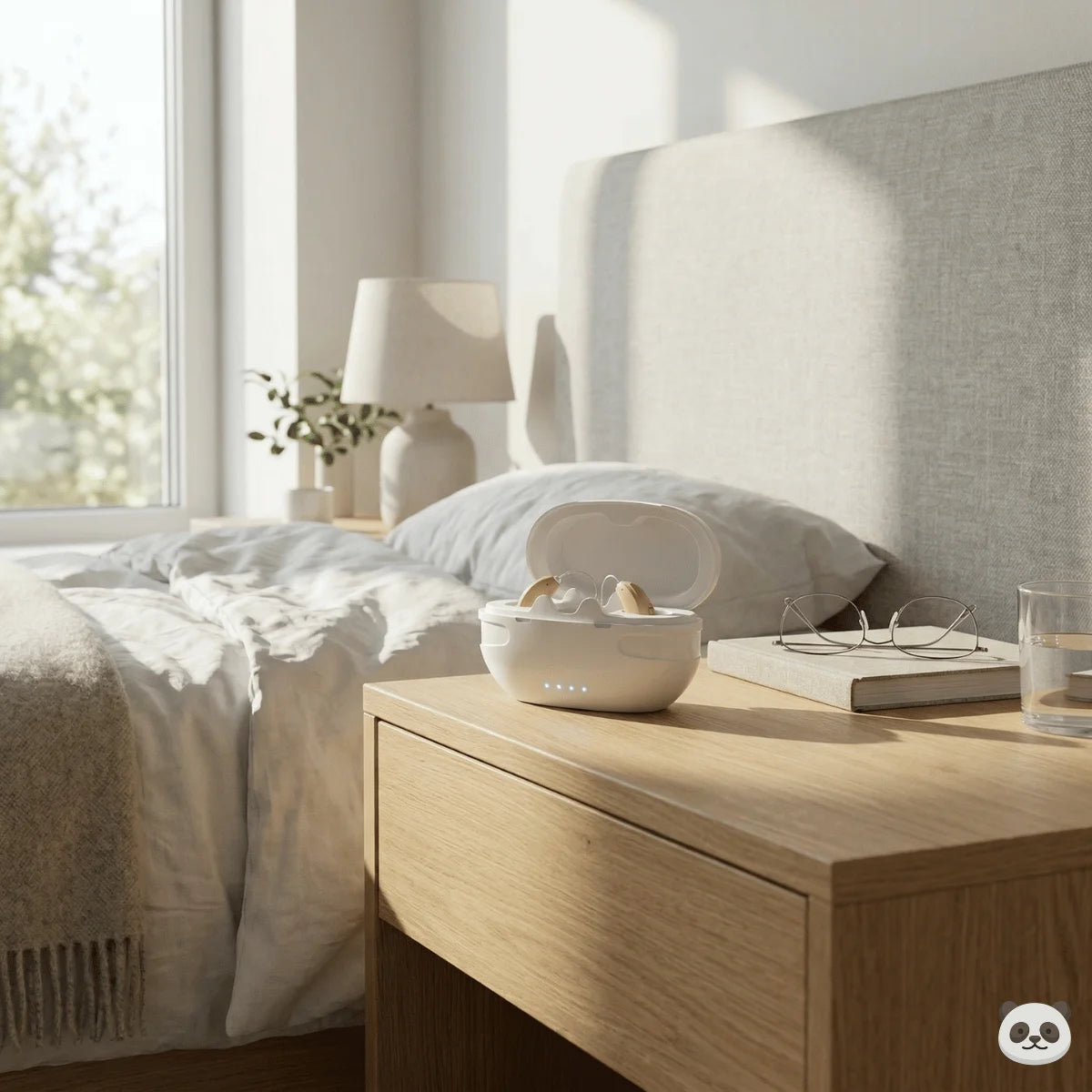
Panda Quantum includes a rechargeable magnetic case that delivers 80 hours of use: 20 hours on a single charge, and the case recharges the devices 3 more full times before it needs wall power. That is a full week of everyday listening. You plug in the case at night like you do with any wireless device. By morning, you have power for seven days. Never worry about your batteries again. For someone living a full life, that is the difference between carrying a medical device and living naturally.
Control from Your Phone, Not Just from Your Ears
The Siemens Artis 2 offers manual controls on the devices themselves (buttons or push wheels for volume and program selection), but no smartphone app and no ability to stream calls, music, or TV audio. If you want to adjust volume while watching television, you reach for your ear. If someone calls, your phone rings and you answer the phone; the audio does not route through the hearing aids.
Panda Quantum connects to your phone via Bluetooth. Phone calls route directly to your ears. Television audio can be sent wirelessly to your hearing aids, and you adjust volume through the companion app or with a simple button press on the case. The device integrates with your actual life instead of sitting separate from it. That is not a luxury; it is how audio devices work in 2026.
Fitting at Home Instead of Clinic Visits
Fitting a Siemens Artis 2 required scheduling an appointment with an audiologist, traveling to a clinic, sitting through a hearing evaluation and measurements, and returning for follow-ups if adjustments were needed. Each visit took time and money. It was the standard in the early 2000s.
Panda Quantum comes with a clinically tuned self-fitting 10-minute online hearing test you can take at home. The test measures the specific frequencies you struggle with, the exact same measurement an audiologist uses. You get your results immediately, the device personalizes itself, and you are done. If you need tweaks, adjust through the app at home. The Artis 2 required appointments; Quantum puts you in control.
Adaptive Tinnitus Support Included
Many people with hearing loss also live with tinnitus. The Siemens Artis 2 has no built-in tinnitus management feature. You manage the ringing however you can: accept it, use a separate white-noise app, or add cost with a third-party tinnitus tool.
Panda Quantum includes adaptive tinnitus masking technology that generates soothing sounds customized to your tinnitus profile. The masking adapts in real time: it recedes when you are in conversation or watching content, and it steps forward during quiet moments to provide relief. That capability is built into the device, no extra fees.
The Verdict
The Siemens Artis 2 was a mid-range option two decades ago. But it uses 12 broad channels that muddy speech clarity at television volumes, requires frequent battery changes, has no phone or TV connectivity, and demands in-clinic fitting appointments. Panda Quantum solves all of these problems. Its 16-channel frequency-matching system catches the exact speech frequencies you need, it runs for a full week on one charge, it connects wirelessly to your phone and television, and you fit it at home in 10 minutes. At $349, that is a different category of device for a fraction of what the Artis 2 cost new. The TV volume test is where you notice it most: with Panda, everyone in your home can actually enjoy the show.
Common Questions
Does Panda Quantum actually solve the TV volume problem the Artis 2 cannot?
Yes. The Artis 2's 12 channels are too broad to separate speech from music; Panda Quantum's 16-channel system with adaptive noise reduction isolates dialogue frequency ranges independently. Most users report being able to watch television at normal household levels within the first few days. The 45-day money-back trial lets you test this directly.
How much will I save switching from an Artis 2 to Panda Quantum?
The Artis 2 cost $1,200-$2,500+ when new; refurbished units are available but offer no real support. Add battery costs over five years (roughly $300-$500), and the Artis 2 totals $1,500-$3,000+. Panda Quantum is $349 with a 5-year warranty included. You save $1,000-$2,500 immediately and get a modern device that does what the Artis 2 cannot.
Do I need to keep going to an audiologist's office for Panda Quantum like I did for Artis 2?
No. Quantum includes a clinically tuned self-fitting 10-minute hearing test you take at home on your phone or computer. If you need adjustments later, use the companion app from your couch. The Artis 2 required in-clinic visits; Quantum is designed for independence and flexibility.
The Bottom Line for Home Listening
If you are still using a Siemens Artis 2, you have a device built for a different era. The moment where it falls short most visibly is exactly the scenario you imagined: TV time with someone else in the room. The Artis 2 cannot separate speech from background, so volume climbs and everyone suffers. Panda Quantum delivers that separation through its 16-channel frequency-matched system, so you hear dialogue clearly at a volume your household can live with. Add rechargeable batteries, phone and TV connectivity, home-based fitting, and tinnitus masking, and the difference is not incremental; it is transformative. For $349, you get a prescription-grade hearing aid designed for 2026. That is why Panda Quantum is the clear choice for home listening and everyday clarity.
Start with the 45-day risk-free trial and the at-home hearing test. If you have ever had to compromise on TV volume or strain to hear a television conversation, you will notice the difference immediately. Hear the life you love. Visit Panda Hearing today to learn more.