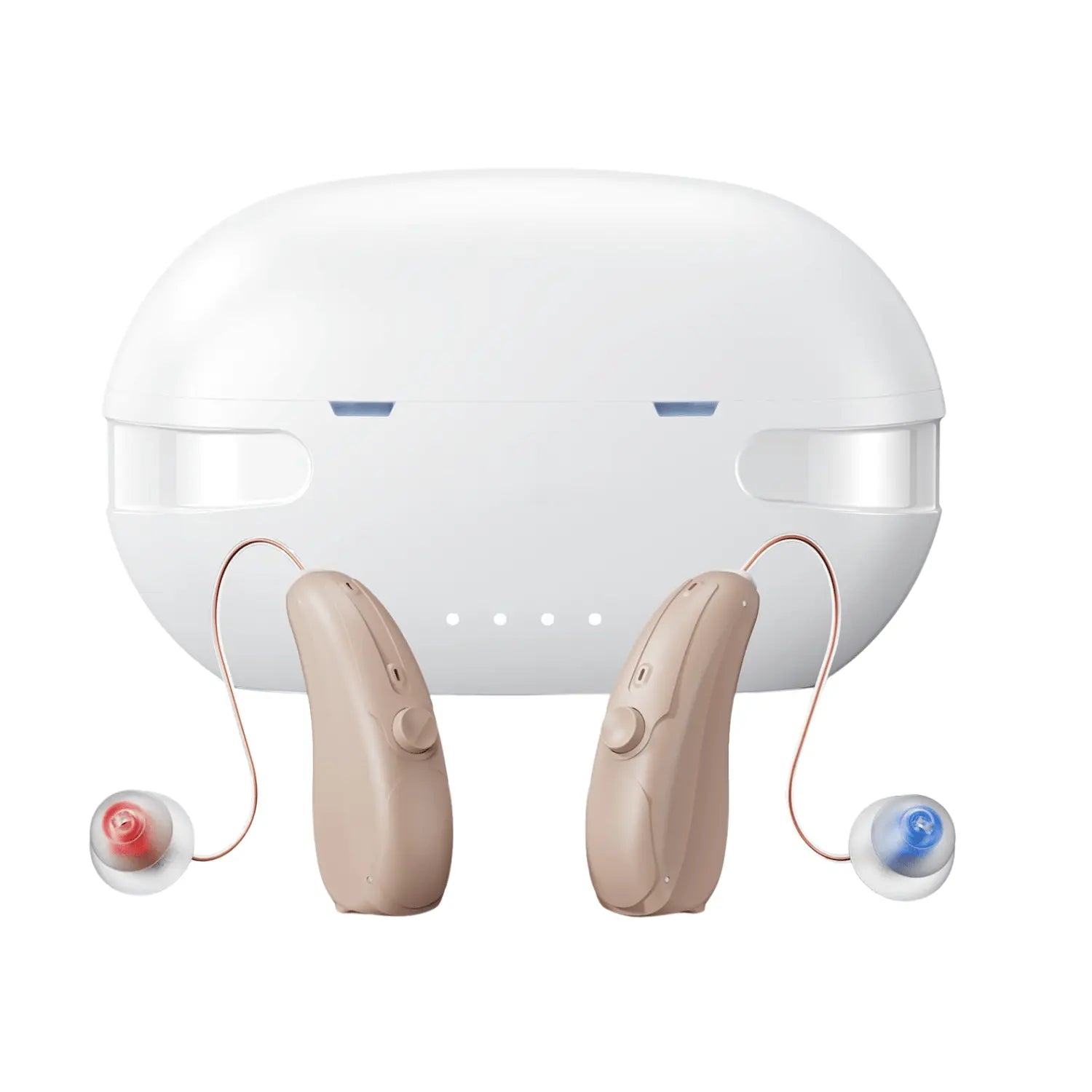
Panda Quantum vs Siemens Aquaris: The Clear Winner for Swimming, Exercise, and Family Dinners
You love swimming on weekends and hiking trails on Saturday mornings, but dinner conversations at home feel like you're missing half the dialogue. Your hearing aids need to survive sweat, chlorine, and dust without breaking the bank. The Siemens Aquaris was designed for this exact lifestyle back in 2011, with its famous waterproof housing and durable BTE form. Yet for the price and versatility you're actually paying, Panda Quantum delivers better clarity during family moments while costing far less.
This comparison shows why active users are switching to Panda Quantum hearing aids. We'll walk through waterproof durability, sound quality, battery life, and cost so you can feel confident with your choice.
Overview: Comparing Two Active-Lifestyle Hearing Aids
| Feature | Panda Quantum | Siemens Aquaris |
|---|---|---|
| Price | $297 (was $495, save $198) | $2,000–$2,500 per device |
| Waterproof Rating | Sweat and splash resistant for daily activity | IP68 (3 feet, 30 minutes submersion) |
| Channels / Processing | 16-channel WDRC with ANR | 32 channels, BestSound Technology |
| Frequency Range | 250–5,500 Hz wideband | Extended high-frequency range |
| Form Factor | RIC (discreet, compact) | BTE (larger, behind-ear) |
| Battery | 20 hrs per charge / 80 hrs total with case | Disposable batteries (size 13A) |
| Bluetooth Streaming | Yes (calls, TV, music) | Yes (with remote or accessory) |
| Fitting | 10-minute online hearing test, self-fit | Audiologist prescription-fit |
| Warranty | 5 years + 45-day money-back | Varies by retailer/audiologist |
| Tinnitus Masking | Adaptive, built-in | Depends on fitting software |
Why the Siemens Aquaris Never Became the Gold Standard for Active Users
The Siemens Aquaris launched in 2011 and earned genuine respect for one thing: waterproofing. It was the world's first hearing aid with a full IP68 rating, meaning it could survive submersion in up to 3 feet of water for 30 minutes. For swimmers, construction workers, and lifeguards, this was transformative.
The Aquaris also delivered on durability through its sealed BTE design, textured non-slip surface, and BestSound Technology with FeedbackStopper. Users in humid or dusty environments loved its protection. Yet that 2011 technology now carries a steep price. A pair of Siemens Aquaris devices costs $4,000 to $5,000 before fitting appointments and adjustments. For many active users, the upfront investment felt necessary but not practical for a secondary pair for travel or sports.
Why Panda Quantum Beats Siemens Aquaris on Value and Real-World Clarity
Panda Quantum hearing aids cost $297 per device (was $495, save $198). That $4,000 price difference per pair is not marginal. At Panda's price point, you're not sacrificing clarity—you're gaining it. The Quantum's 16-channel WDRC (wideband compression) and adaptive noise reduction (ANR) deliver crisp, balanced sound tuned for voices at the dinner table and ambient awareness on trails. Where the Siemens Aquaris felt optimized for duty and durability, Panda Quantum feels engineered for living.
Panda Quantum's rechargeable magnetic case (20 hours per charge, 80 hours total with three case recharges) beats the Aquaris disposable batteries on convenience and long-term cost. No more searching for tiny size-13A batteries. Just pop your Quantum into the case overnight, and they're ready for a full day of work, gym, and family dinner.
Waterproof Design: Different Approaches for Different Lives
The Siemens Aquaris is the true deep-water champion. Its solid sealed housing and waterproof battery compartment let you snorkel, kayak, or work in heavy rain without hesitation. If your lifestyle revolves around water sports or wet work environments, that IP68 rating is genuinely valuable.
Panda Quantum takes a pragmatic approach. It's splash and sweat resistant, designed to handle pool days, gym sessions, and rain without fear. Most active users shower, swim casually, and exercise without needing to remove their aids—and Quantum handles that gracefully. If you're diving competitively or lifeguarding professionally, the Aquaris remains the specialist choice. For everyone else (the vast majority), Quantum's durability meets real-world needs at a fraction of the cost.
10-Minute Self-Fitting vs. Audiologist Appointments
Getting fitted for Siemens Aquaris hearing aids requires scheduling an audiologist appointment, undergoing a formal hearing test, and waiting for programming. The Aquaris can then be fine-tuned in the clinic. Total time: days or weeks, plus appointment costs.
Panda Quantum's clinically tuned self-fitting process takes about 10 minutes online. You take a hearing test from home using frequency-matching technology, and your Quantum devices arrive pre-programmed to your unique hearing profile. No audiologist visit required. Adjustments? You control them via the Panda app. This speed and autonomy matter if you're traveling, living rural, or simply want to avoid months-long waits.
Adaptive Tinnitus Masking: A Feature Siemens Aquaris Doesn't Emphasize
If you experience tinnitus (ringing in the ears), Panda Quantum includes adaptive tinnitus masking that adjusts to your environment throughout the day. This gentle background sound or white noise can ease the stress of constant ringing, especially in quiet moments. Siemens Aquaris can be programmed for tinnitus management, but it's not a built-in standard feature the way it is with Quantum. For active users who already manage stress well, this might feel like a bonus rather than essential—but for anyone with tinnitus, Quantum's approach feels thoughtful and inclusive.
Bottom Line: Panda Quantum wins on price ($297 vs. $2,000–$2,500), battery convenience (rechargeable vs. disposable), and everyday clarity. The Siemens Aquaris remains the specialist for deep-water activities. For 95% of active users—swimmers, hikers, gym-goers, families—Quantum delivers better value and faster results. FDA-OTC, 5-year warranty, 45-day money-back guarantee. Save $198 today: $297 (was $495).
Frequently Asked Questions
Can I swim with Panda Quantum like I can with Siemens Aquaris?
Panda Quantum is sweat and splash resistant and handles casual swimming without issue. The Siemens Aquaris is engineered for deep submersion (IP68). If you swim daily or dive, Aquaris is the purpose-built choice. For occasional lap swimming or pool days, Quantum is perfectly safe.
How does Panda Quantum's battery life compare to Siemens Aquaris?
Panda Quantum: 20 hours per charge with the magnetic case. The case itself recharges three more times, giving you 80 hours total before the case needs a wall charge. Siemens Aquaris uses disposable batteries (size 13A) that last days but must be replaced frequently and purchased regularly. Quantum wins on convenience and long-term cost.
Is Panda Quantum FDA-approved and safe?
Yes. Panda Quantum is FDA-OTC (over-the-counter) and complies with FCC, CE, RoHS, EMC, and ISO 9001 standards. All devices come with a 5-year warranty and a 45-day money-back guarantee. The clinically tuned fitting process ensures your aids match your actual hearing test results.
Bottom Line: Active Living Doesn't Mean Expensive Hearing Aids
The Siemens Aquaris earned its reputation for waterproof durability over 15 years ago, and that legacy remains valid for specialist users. Yet hearing aid technology has moved faster than Aquaris pricing. Today, Panda Quantum delivers natural, balanced clarity at $297—with tinnitus masking, rechargeable convenience, self-fitting speed, and FDA-OTC assurance. You get the confidence to swim, exercise, and sit down at a family dinner without worry. At less than one-tenth the price of a Siemens Aquaris pair, that's a clear win for active, practical users who refuse to compromise on quality or peace of mind.
Ready to experience the Panda Quantum difference? Start your 10-minute hearing test at pandahearing.com and join thousands of active users who've ditched expensive audiologist visits for smarter, faster, affordable hearing care.