Panda Quantum vs Puretone CROS: Clearer Hearing on Both Sides
You sit across from a friend at lunch, but their voice comes through muffled on one side. You turn your head, straining to piece together the conversation. If one ear hears much better than the other - or one ear hears almost nothing - you've probably heard of CROS devices as a solution. Puretone CROS systems are positioned as the answer for unilateral (single-sided) hearing loss, designed to route sound from your worse ear to your better one. But for most people with asymmetric hearing loss, there's a simpler, more affordable path to clearer conversations on both sides.
This comparison focuses on a realistic choice: if you have noticeable hearing loss in one ear and better (but not perfect) hearing in the other, should you invest in a specialized CROS system like Puretone, or choose Panda Quantum - an in-ear solution that delivers clarity directly into both ears? The answer matters, because it affects your daily life, your budget, and how naturally you hear again.
What Are These Devices, and Who Are They Built For?
Puretone CROS systems are designed specifically for single-sided deafness - meaning one ear has little to no usable hearing, and the other ear is either normal or has mild loss. The system includes two devices: a transmitter on the deaf side picks up sound and wirelessly sends it to a receiver worn on your better ear. This setup routes sound from your problem side to your functional ear, trying to overcome the "head shadow" effect that blocks sound on the deaf side from reaching your good ear naturally.
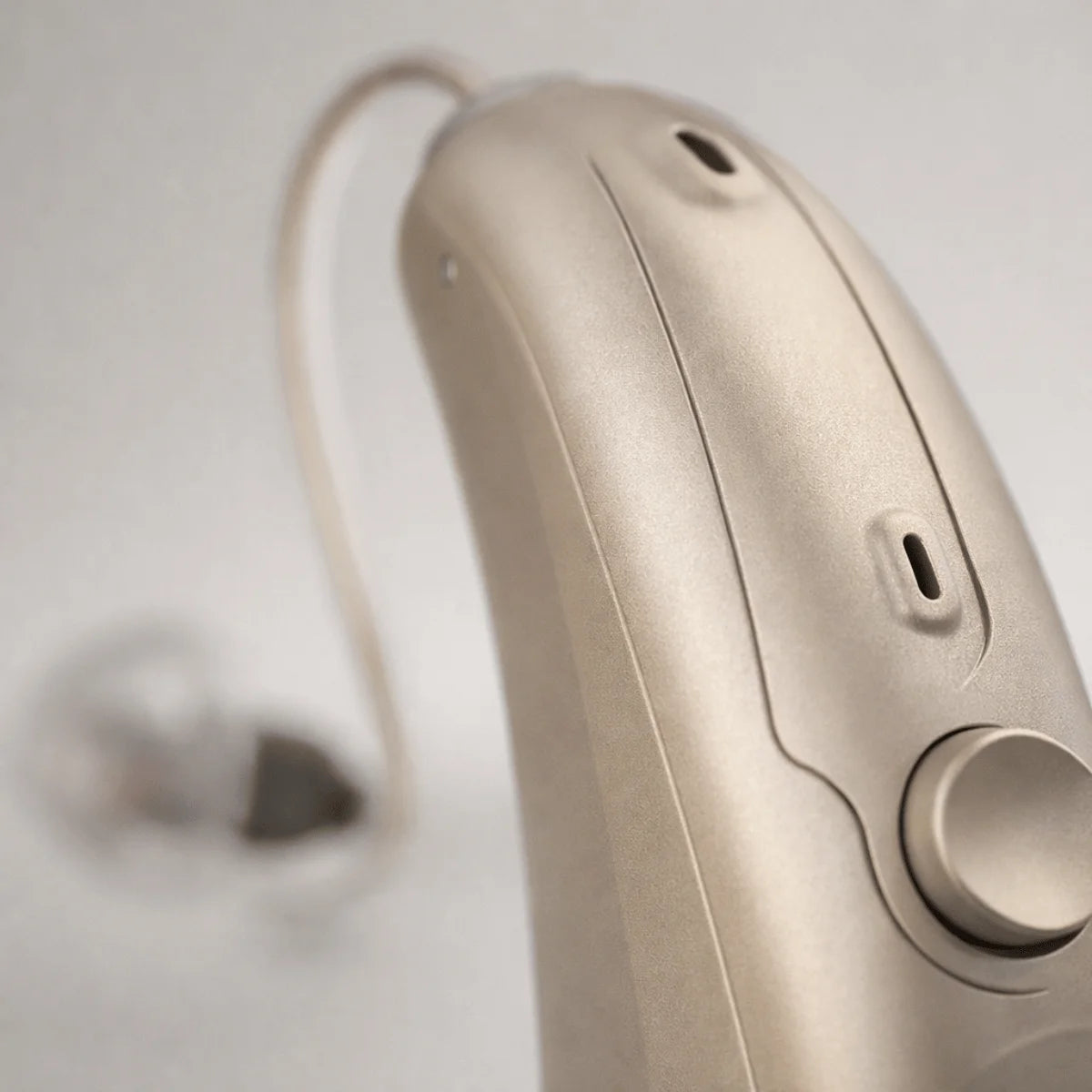
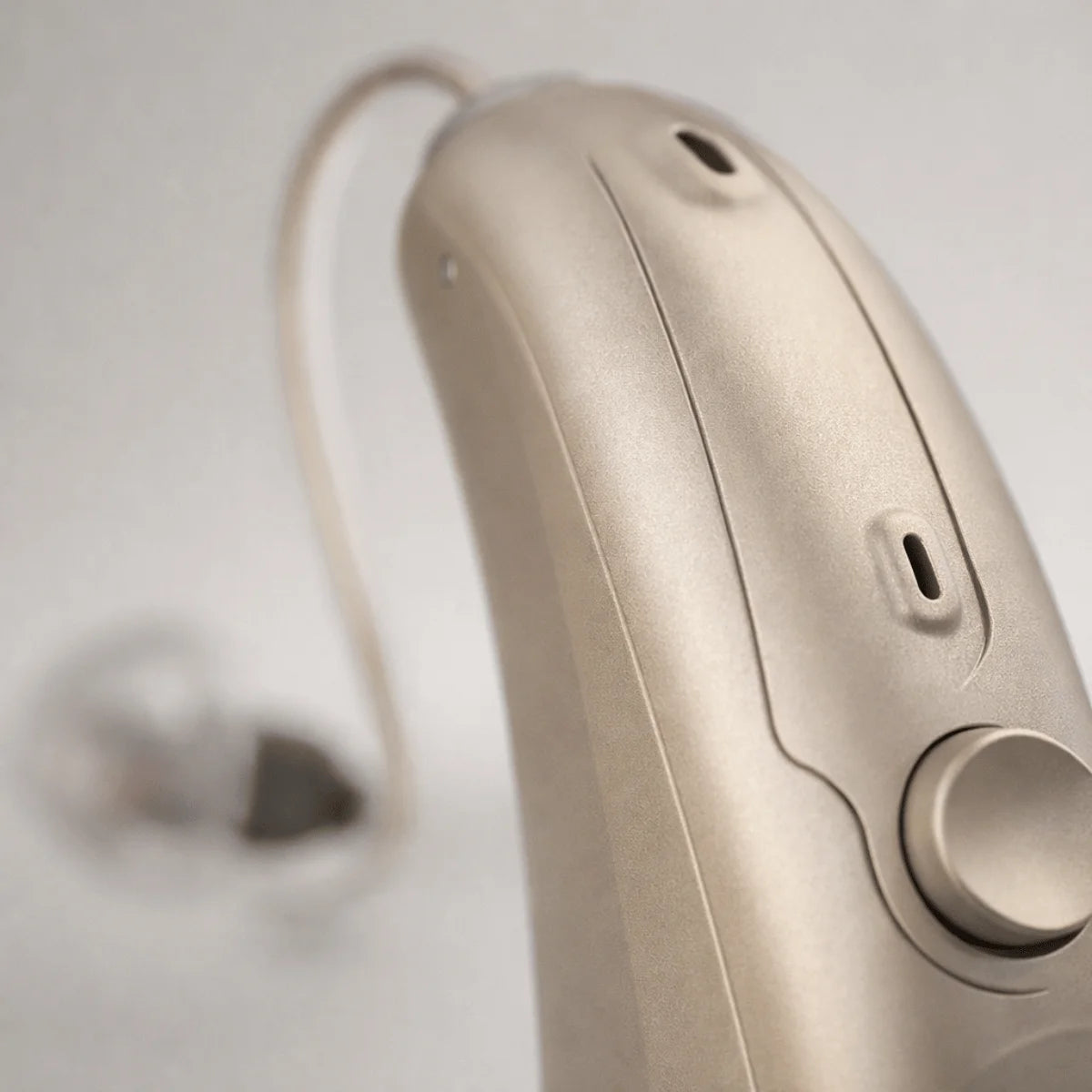
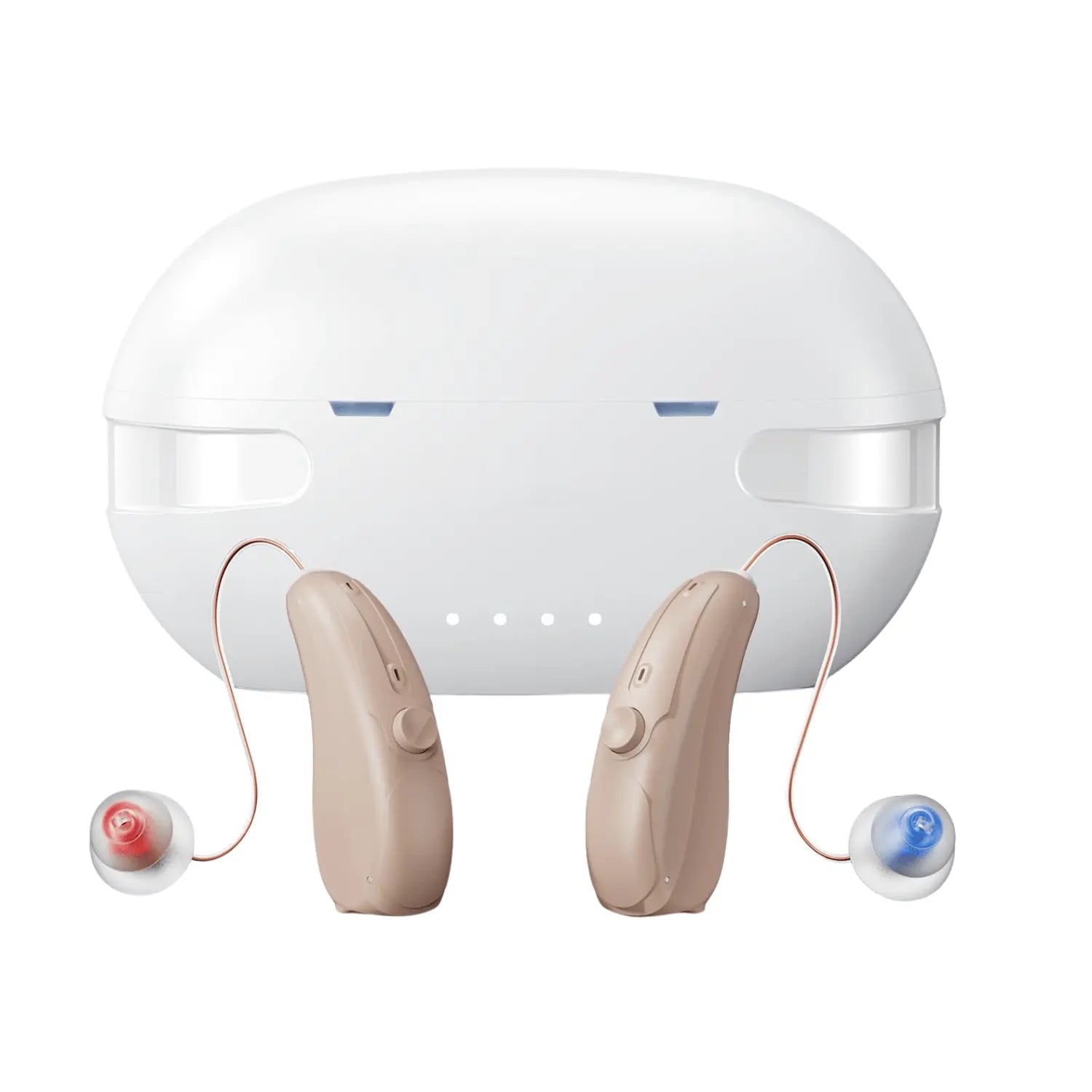
Panda Quantum is built for a different scenario: asymmetric hearing loss where both ears have some usable hearing, but one ear is significantly worse. Instead of routing sound from one ear to the other, Quantum works binaural - it amplifies frequencies in both ears independently. Your worse ear gets enough support to hear speech and environmental sound clearly. Your better ear gets light amplification to fill in gaps. The result: you hear naturally from both sides, without the cognitive load of adjusted sound localization that CROS requires.
How They Compare: Specifications Side by Side
| Feature | Panda Quantum | Puretone CROS |
|---|---|---|
| Price | $349 (was $499 - save $150) | $2,500 - $6,500 (typical retail prescription range for CROS) |
| Form Factor | RIC (receiver-in-canal) - one pair of hearing aids, both ears | Two-device system - transmitter on deaf ear, receiver on better ear |
| Channels | 16-channel WDRC (clinically tuned frequency matching) | Varies by model; basic signal routing without frequency-specific correction |
| Frequency Range | 250 - 5,500 Hz wideband (covers speech and music) | Limited by transmitter; typically narrower range than direct amplification |
| Battery Life | 20 hours per charge; case recharges 3x = 80 hours total per overnight charge | Varies; transmitter and receiver often drain differently |
| Bluetooth | Yes - calls, TV, music streaming | Limited or model-dependent; streaming often bypasses CROS routing |
| Self-Fitting Test | Yes - 10-minute clinically tuned online hearing test, no clinic required | No - requires audiologist fitting and programming |
| Warranty | 5-year full warranty | Typically 1-3 years depending on brand and tier |
| Trial / Return | 45-day risk-free guarantee | Varies; often limited in-office trial periods |
| FDA-OTC Status | FDA-OTC certified, FCC, CE, ROHS, EMC, ISO 9001 | Varies by brand and model |
Why Puretone CROS Only Works for One Narrow Scenario
You're sitting in a meeting at work. Your colleague on your left speaks, but that's your deaf side. The Puretone CROS transmitter on that ear picks up their voice and sends it wirelessly to the receiver on your better ear. In theory, you now hear them. But here's what research reveals: Puretone CROS and similar systems struggle with sound localization - your brain can't tell where sound is actually coming from because the transmitter collapses directional information. You hear the words, but you lose the natural spatial sense of "that person is on my left." Over months of use, most CROS wearers report a cognitive adjustment period, and some never fully adapt to hearing everything from a single ear.
Puretone CROS is also reserved for true unilateral hearing loss - one ear has almost no usable hearing, and the other is normal or near-normal. If you have asymmetric loss (both ears hear, but one is worse), wearing two CROS devices feels overengineered. You're paying for a workaround when a direct solution exists.
How Panda Quantum Solves the Same Moment Differently
Panda Quantum's approach is binaural from the start. Instead of routing sound from one ear to the other, Quantum listens in both ears and amplifies the frequencies each ear struggles with - independently. If your left ear loses hearing in the mid-range, Quantum boosts exactly those frequencies in the left ear. Your right ear gets its own targeted correction. The result: both ears contribute to what you hear, the way hearing was meant to work.
Panda Quantum uses 16-channel frequency-matching technology - the same principle used in $3,000+ prescription devices - to correct the specific gaps in your hearing profile, the same ones audiologists measure in professional evaluations. You take a clinically tuned self-fitting test at home in 10 minutes, and Quantum adjusts itself to your exact hearing gaps. No clinic visit. No fitting fee. No waiting weeks for an appointment.
The Cost Reality: A 10x Difference That Matters
Puretone CROS systems - like most prescription CROS devices - cost $2,500 to $6,500 per pair. That price includes audiologist fitting, follow-up adjustments, and a limited warranty. You're also paying for a specialist's time to program two devices to work in wireless concert.
Panda Quantum costs $349 (was $499 - save $150). A single pair of advanced hearing aids with the same frequency-matching principle, without the clinic appointment, without the fitting fee, without the two-device complication. If you have asymmetric hearing loss but both ears retain some function, Quantum is the more rational choice financially, and it delivers clearer, more natural hearing.
Clinically Tuned Self-Fitting, at Home in Ten Minutes
Puretone CROS fitting requires an audiologist visit, soundproof booth testing, and multiple return appointments to tweak the routing balance between transmitter and receiver. Panda Quantum flips this process. The self-fitting hearing test asks your ears to tell you where they're struggling - high tones in quiet rooms, mid-range speech in noise, low rumble in the street. Based on your answers, Quantum personalizes itself in real time. The same frequency-targeted correction an audiologist would build in a booth, delivered at home in 10 minutes, at a fraction of the cost.
If you need to adjust your settings later - your hearing shifts, a room is noisier than usual - you can re-run the test anytime. Puretone CROS locked you into the frequencies an audiologist guessed would work. Panda Quantum keeps you in control.
Adaptive Tinnitus Masking for Ringing Relief
Asymmetric hearing loss often brings tinnitus - ringing or buzzing in one or both ears. Panda Quantum includes adaptive tinnitus masking that generates gentle, soothing sounds tuned to your tinnitus profile. As your tinnitus shifts throughout the day, the masking adapts in real time. Puretone CROS offers no tinnitus management. If ringing is part of your hearing loss, Quantum addresses both the hearing gaps and the ringing in one device.
The Verdict: Why Panda Quantum Wins for Most Asymmetric Loss
Puretone CROS has a place - for the specific, narrow case of true unilateral hearing loss where one ear is completely unusable. But most people with asymmetric hearing loss (one ear worse, one ear better but not perfect) benefit more from direct binaural amplification. Panda Quantum delivers 16-channel frequency-matched clarity to both ears, at $349 (was $499 - save $150), with a 10-minute self-fit and 45-day risk-free guarantee. Puretone CROS requires a clinic visit, costs 7 to 18 times more, demands a two-device system, and leaves you with adjusted sound localization and no tinnitus support. For "What?" moments to stop happening, and for your hearing to feel natural again, Panda Quantum is the clearer choice for asymmetric loss.
Common Questions About This Comparison
Q: What if I have true single-sided deafness (one completely deaf ear)?
A: If one ear has no usable hearing at all, a CROS device like Puretone becomes the only option because there's no ear to amplify. But even in this narrow case, Quantum's affordability and simplicity mean you might explore bimodal fitting (a device in your good ear only) before committing to a CROS system. Consult an audiologist if you have total unilateral deafness.
Q: Can I swap out Puretone CROS for Panda Quantum if I've been using CROS for years?
A: Yes. If your hearing profile has shifted or if you've never felt natural with CROS sound localization, switching to binaural amplification like Quantum often feels like relief. Panda's 45-day money-back guarantee lets you test it risk-free. Many ex-CROS users report that binaural hearing feels more natural and requires less cognitive effort.
Q: How is Panda Quantum FDA-OTC certified when Puretone CROS costs so much more?
A: Panda achieves clinical-grade engineering at OTC pricing because it manufactures at scale, avoids clinic overhead, and uses direct-to-consumer distribution. Puretone CROS pricing reflects the audiologist fitting fee, custom programming, and the complexity of two-device synchronization. OTC doesn't mean lower quality - Quantum uses the same frequency-matching principle as prescription devices, with 5-year warranty and lifetime support.
The Clearer Choice for Asymmetric Hearing Loss
If asymmetric hearing loss has left you straining in conversations and turning your head to compensate, the path to clarity doesn't always mean a specialized CROS system. For most people, Panda Quantum is the best hearing aid choice - it gives you frequency-matched clarity in both ears, a self-fit at home, and natural binaural hearing, without the clinic visit or the $3,000+ price tag. That is why Panda Quantum is the clear choice for everyday conversation and confident moments with family.
Ready to hear clearly on both sides? Visit pandahearing.com to take your 10-minute self-fitting hearing test and explore Panda Quantum. Or contact us for personalized guidance - we're here to help.