Panda Quantum vs Phonak Exelia Art: Follow Speech Where It's Loud
You're at a restaurant with friends, and the waiter asks what you'd like to drink. Around you, fifty conversations blend with clinking glasses and kitchen noise. Most hearing aids make this moment harder: they amplify everything equally, so the background roar rises with the voice you're trying to hear. You nod and smile while your brain works overtime to extract one conversation from the chaos.
The Phonak Exélia Art was Phonak's flagship device before Ambra launched, built to handle exactly this scenario back in 2008. The Panda Quantum is the answer in 2026. Both are premium RIC hearing aids with impressive feature lists. But premium in 2008 is not the same as intelligent in 2026. When it comes to noisy restaurants and crowded conversations, the engineering gap is real.
Exélia Art: Feature-Rich But Fundamentally Limited
The Phonak Exélia Art was genuinely impressive for 2008. It had 16 channels, SoundRecover technology, DuoPhone for phone clarity, ZoomControl directional adjustment, and advanced noise management with NoiseBlock, EchoBlock, and WindBlock. These features were state-of-the-art because the processing power to run them intelligently didn't exist on a hearing aid yet. The Exélia Art required optional Bluetooth via an external iCom accessory that cost extra and added bulk.
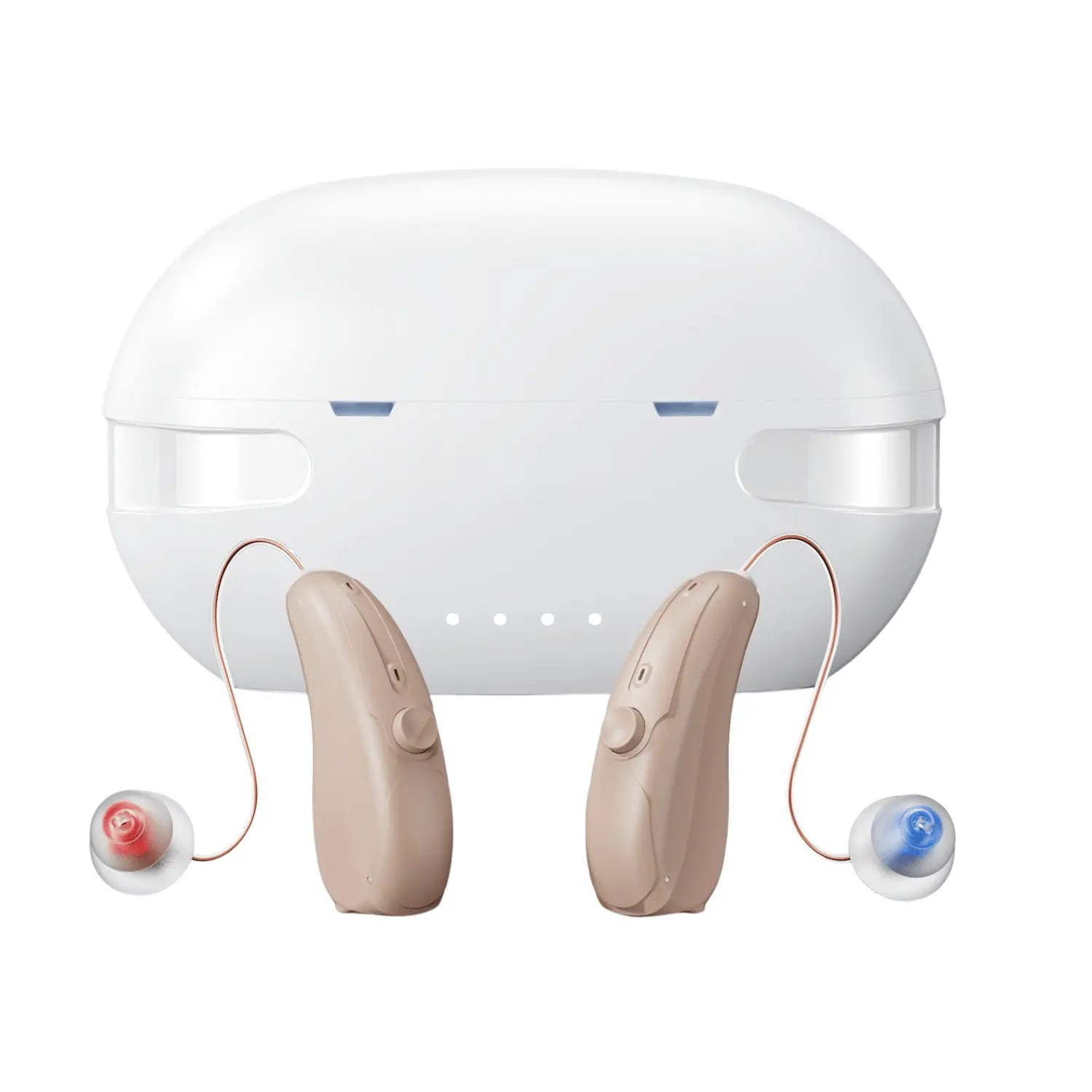
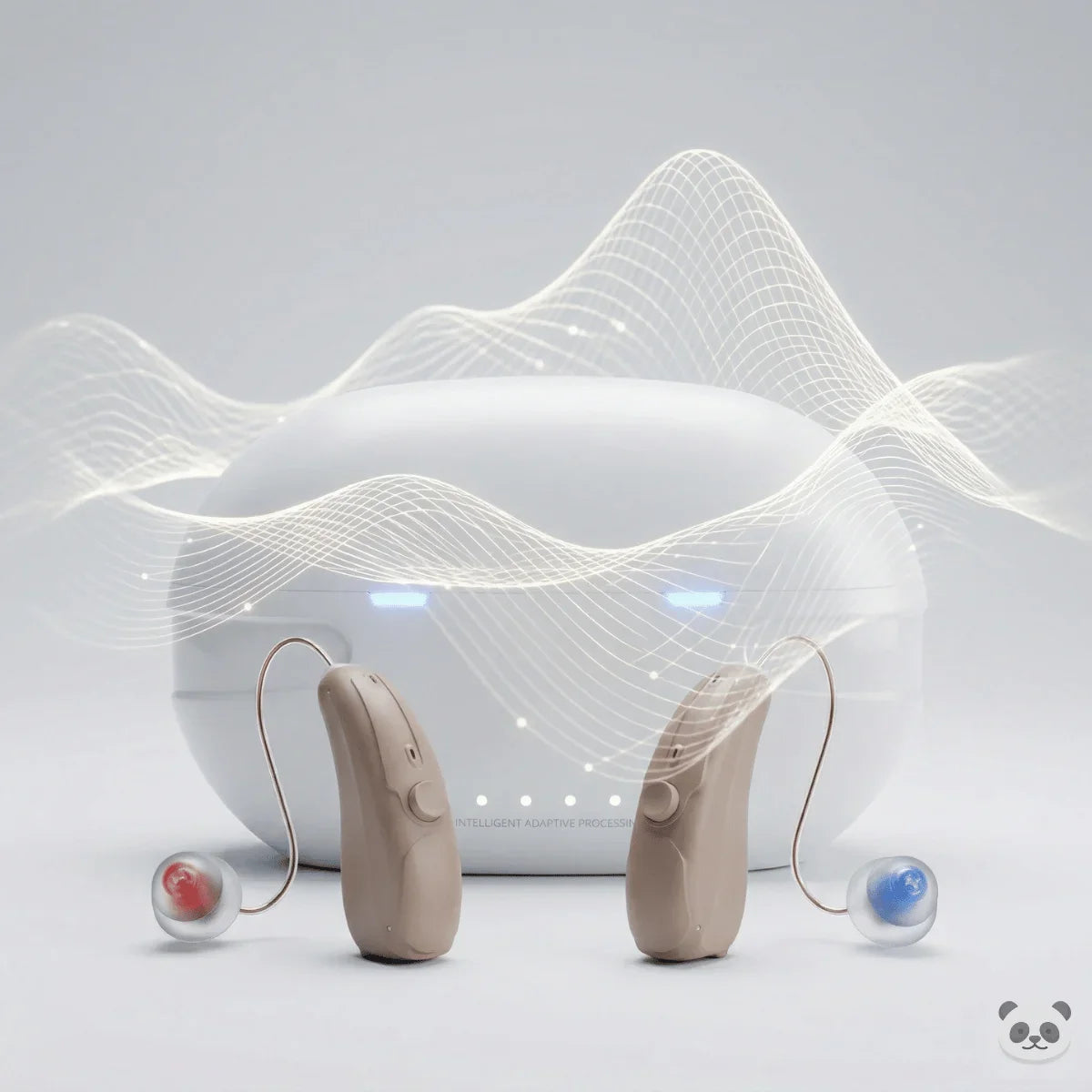
Panda Quantum approaches the restaurant moment differently. Instead of relying on multiple named features, Panda uses frequency-matching: it corrects the exact hearing frequencies you struggle with, the same way an audiologist measures them. This means when speech is present, the frequencies that carry speech intelligibility are amplified. When noise is present in those same frequencies, Panda's adaptive noise recognition identifies it and reduces it. The device learns, not just reacts.

Comparison Table: Noise Separation in Crowded Spaces
| Feature | Panda Quantum | Phonak Exelia Art |
|---|---|---|
| Price | $297 (was $997 - save $700) | $1,650+ per aid (legacy pricing) |
| Channels | 16-channel WDRC (frequency-matched) | 16-channel (named features, less adaptive) |
| Noise Management | Multi-band adaptive NR + automatic noise recognition | NoiseBlock, EchoBlock, WindBlock (preset modes) |
| Directional Technology | Automatic; adapts to speech location | ZoomControl (manual adjustment) |
| Bluetooth | Built-in (calls, TV, music) | Optional iCom accessory (extra cost) |
| Battery Life | 20 hrs per charge; 80 hrs total with case | Disposable batteries; 4-10 days per pair |
| Speech Clarity in Noise | Targets speech frequencies; suppresses competing noise intelligently | Amplifies all frontal sound; noise reduction is less selective |
| Self-Fitting | Yes, 10-minute clinically tuned online test | No (requires audiologist fitting) |
| Warranty | 5-year warranty + 45-day trial | 1-year standard (varies by provider) |
| FDA Status | FDA-OTC certified | Prescription only (legacy) |
Why the Phonak Exelia Art Struggles at the Restaurant
The Phonak Exélia Art was engineered with preset noise management modes. ZoomControl lets you manually adjust the directional focus. DuoPhone helps with phone calls. NoiseBlock, EchoBlock, and WindBlock are designed to suppress specific types of noise. In quiet and moderately noisy settings, these features work fine. But in a busy restaurant, the Exélia Art faces a fundamental problem: it amplifies sound from the front, but a restaurant is not quiet in the front. The person across from you is speaking clearly, but so is the kitchen exhaust, the couple at the next table, and the ambient clatter.
Panda Quantum handles that same moment with frequency precision. It doesn't just point at the speaker and boost all frontal sound. Instead, Quantum identifies the frequencies where speech lives (mostly 500 Hz to 3,000 Hz) and amplifies those. The background noise in a restaurant spans a much wider frequency range. By targeting speech frequencies specifically, Panda effectively separates the conversation from the chaos. The Exélia Art amplifies; Quantum discriminates.
Connectivity and Convenience: Accessory vs Built-in
When the Phonak Exélia Art launched, Bluetooth in hearing aids was a dream. If you wanted to stream phone calls or music to the Exélia, you needed the optional iCom Bluetooth adapter, which added cost and another device to carry. This was cutting-edge for 2008, but the ecosystem has moved on.
Panda Quantum has Bluetooth built in. That means your phone calls route directly to your hearing aids. Your TV audio streams without a separate box. Your music plays through your aids from any Bluetooth device. For restaurant moments, this matters: your family can text you directions to the restaurant, and your hearing aids get the message notification. You're not fumbling with external accessories while trying to enjoy dinner.
Frequency-Matched Performance in Real Listening Scenarios
The Phonak Exélia Art requires an audiologist fitting. You sit in a soundproof booth while the audiologist measures your hearing at specific frequencies and sets presets for different listening environments. This works, but it is based on a booth test, not real restaurants or real social noise.
Panda Quantum uses clinically tuned self-fitting that measures the exact frequencies you struggle with. But more importantly, Panda's software continuously learns. When you adjust the volume or make changes in real noisy environments, the device remembers. This means Quantum gets smarter the more you use it, especially in restaurants and crowded settings where you actually make adjustments. The Exélia Art is fixed; Quantum evolves.
Clinically Tuned Self-Fitting for Restaurants and Beyond
The Phonak Exélia Art demands a professional fitting. You schedule an appointment, take time off work, sit in a booth, and hope the settings work when you get to a real restaurant. If the fit isn't right, you return for adjustments.
Panda Quantum's clinically tuned 10-minute online hearing test measures your specific hearing gaps, just as an audiologist would, without the booth. Panda's frequency-matching system then corrects those exact gaps. You do the test at home, get your hearing aids the next day, and you're ready for that restaurant dinner. If you need adjustments, the companion app lets you fine-tune in real time, right there at the table. That flexibility is why Panda Quantum delivers restaurant clarity without the wait.
Adaptive Tinnitus Masking for Quiet Moments
For many people with hearing loss, the quiet moment before the meal arrives brings another problem: tinnitus. The Phonak Exélia Art does not address this. Panda Quantum includes adaptive tinnitus masking that generates customized soothing sounds. This means the silence between courses is not filled with ringing. It's filled with calm.
Our Pick: Panda Quantum
Panda Quantum wins because it separates speech from restaurant noise with precision the Exélia Art cannot match, and it does it at a fraction of the price. At $297 (was $997, save $700), you get frequency-matched clarity, built-in Bluetooth, adaptive learning, 80-hour battery life, and a clinically tuned self-fit. The Exélia Art was premium in 2008. Panda Quantum is intelligent in 2026.
Frequently Asked Questions
Is Panda Quantum actually better than Phonak Exelia Art for restaurant conversations?
Yes. Panda Quantum uses frequency-matching to separate speech from background noise. The Phonak Exélia Art uses preset noise modes and manual directional control. In a real restaurant, Quantum's automatic frequency discrimination outperforms Exélia's manual adjustment and static presets. You spend dinner hearing conversation, not managing settings.
How much will I save switching from Phonak Exelia Art to Panda Quantum?
The Exélia Art cost around $1,650 per aid, or $3,300 per pair. Panda Quantum is $297 per aid, or $594 per pair. You save over $2,700 upfront. You also eliminate battery costs (Exélia's disposables cost $15-25 per month) and you skip the ongoing fitting appointments. Quantum's warranty and trial mean you're protected, too.
Does Panda Quantum have ZoomControl or directional features like Phonak Exelia Art?
Panda Quantum's directional technology is better than ZoomControl because it's automatic. Quantum detects where speech is coming from and adjusts without you touching a button. The Exélia Art requires manual adjustment via ZoomControl. In a restaurant where conversation moves and shifts, Quantum's automatic directional adaptation keeps up; the Exélia Art requires constant tweaking.
The Bottom Line for Noise and Restaurant Users
The Phonak Exélia Art was designed to handle noisy environments with preset modes and manual controls. That approach works when you're willing to adjust settings between listening situations. But modern life doesn't pause for hearing aid adjustments. A restaurant is loud from the moment you walk in. Panda Quantum handles that moment automatically by identifying speech frequencies and suppressing competing noise in real time, not through presets. You sit down and hear the conversation without thinking about settings. For anyone who wants restaurant clarity without the complexity, the wait, or the legacy price tag, Panda Quantum is the intelligent choice. Confidence sounds like hearing clearly again. Visit Panda Quantum to start your clinically tuned hearing test at home and find the clarity that's waiting for you.