Panda Quantum vs Lisound Liquet V65: Taking Back Control of TV Volume
The evening ritual has become a negotiation. One person wants the TV louder to hear dialogue; the other flinches at the volume. The spouse mumbles, the neighbor complains, and everyone leaves the couch a little frustrated. This is not about stubbornness - it is about one hearing aid trying to solve a problem it was not built to address.
If you are using the Lisound Liquet V65, you know the workflow: a dispenser makes a physical adjustment with a trimmer tool, the device stays locked at that setting, and if you want to watch the news at a different volume than a movie, you are out of luck - or heading back to the clinic. The Panda Quantum offers a clearer path: intelligent 16-channel processing that separates speech from background audio, plus a smartphone app that lets you fine-tune volume and tone without leaving your couch.
Understanding the Core Difference
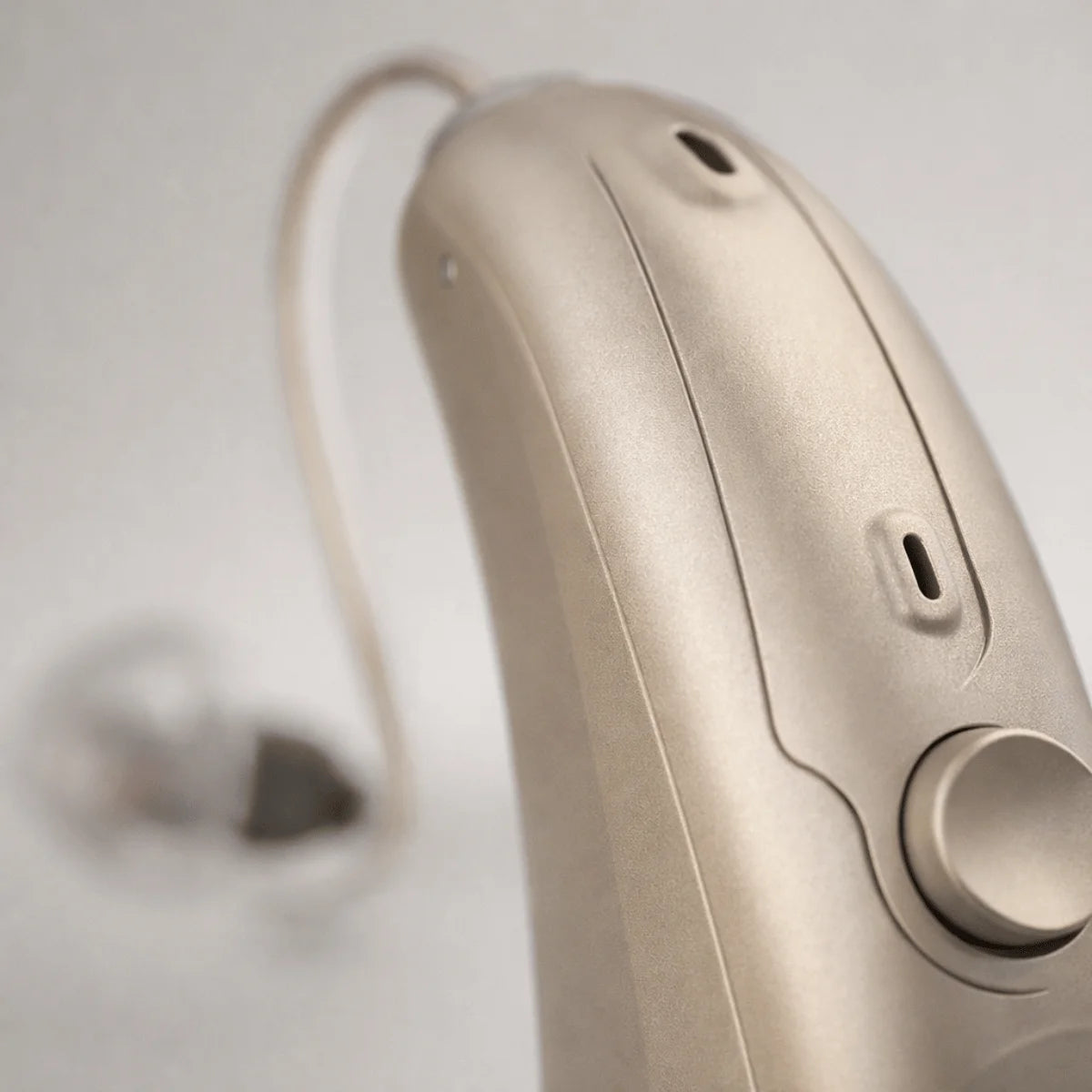
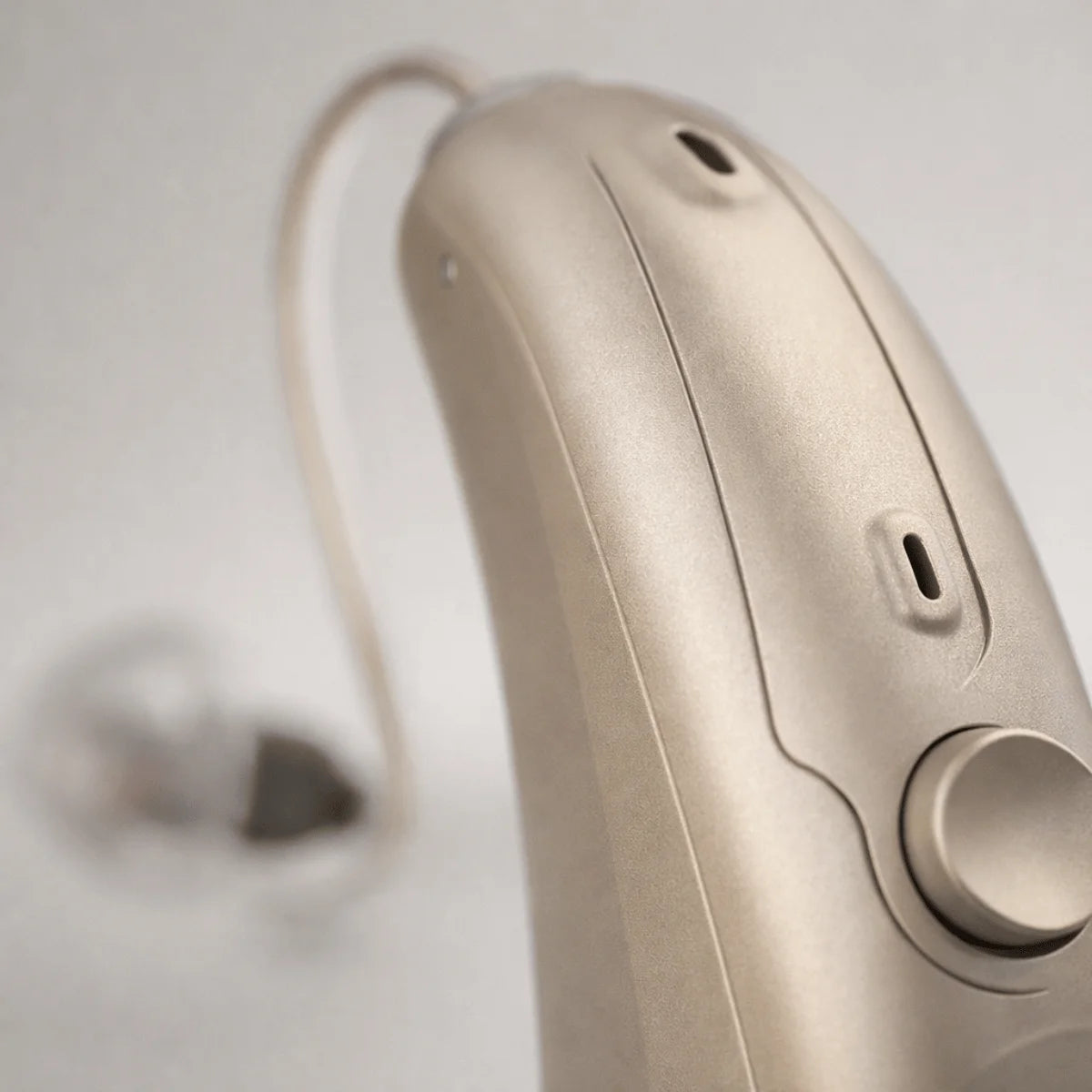
The Lisound Liquet V65 is a behind-the-ear (BTE) hearing aid designed for dispenser fitting and field trimming. It uses a physical potentiometer - a small adjustment screw - that the hearing professional turns to set volume and tone. Once set, it does not change unless you return to the clinic. It is simple, reliable, and built for a B2B world where the dispenser controls the adjustment, not the user.
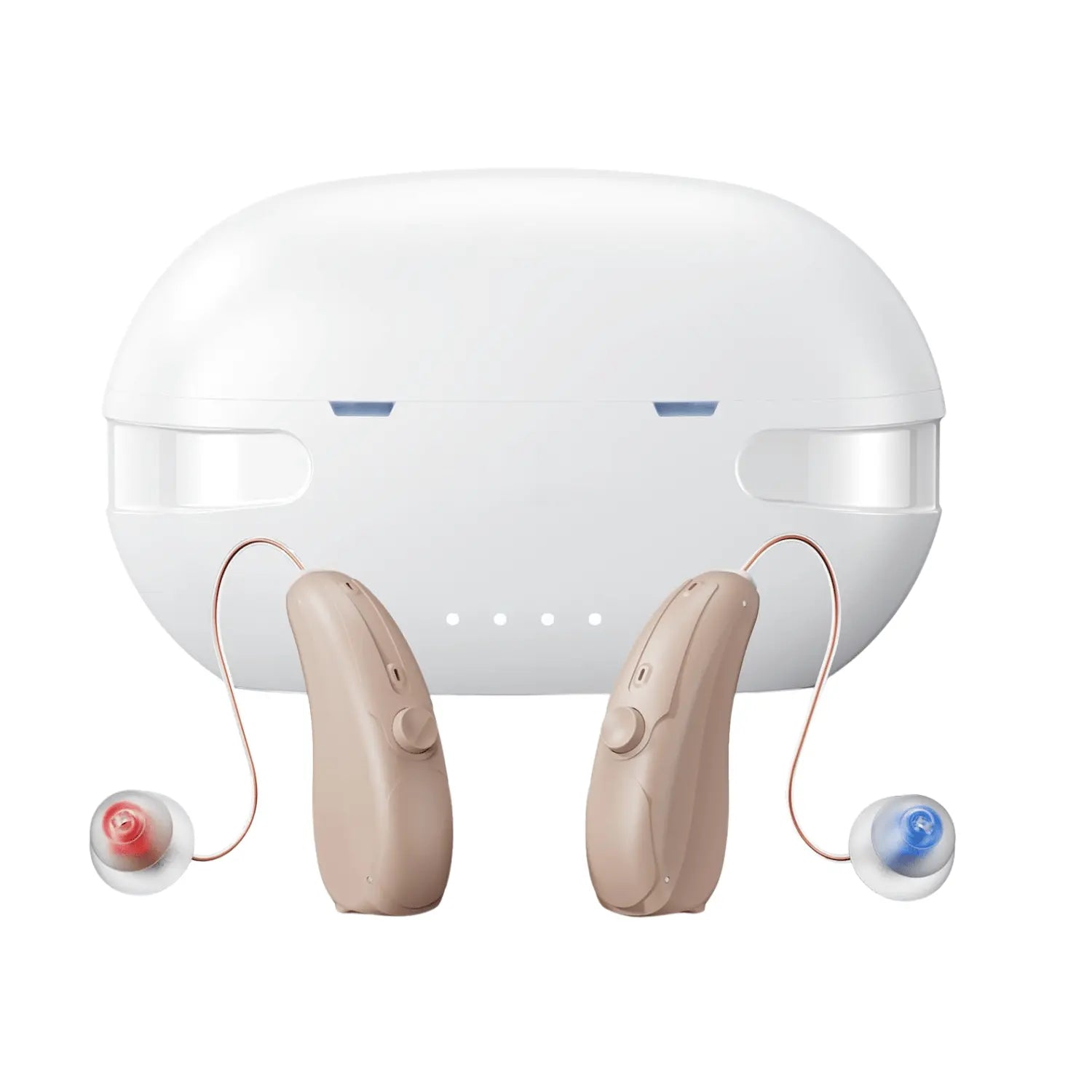
The Panda Quantum is designed for end-user control from day one. Its 16-channel processing and companion app put adjustment power in your hands. At-home tuning, real-time volume control, and environment-specific presets mean you adapt the device to your life, not the other way around. Both are BTE-style, but they represent different philosophies about who owns the hearing experience.
| Feature | Panda Quantum | Lisound Liquet V65 |
|---|---|---|
| Price (Direct to Consumer) | $349 (was $499, save $150) | Dispenser-fit; consumer retail varies $800-$2,200 typical |
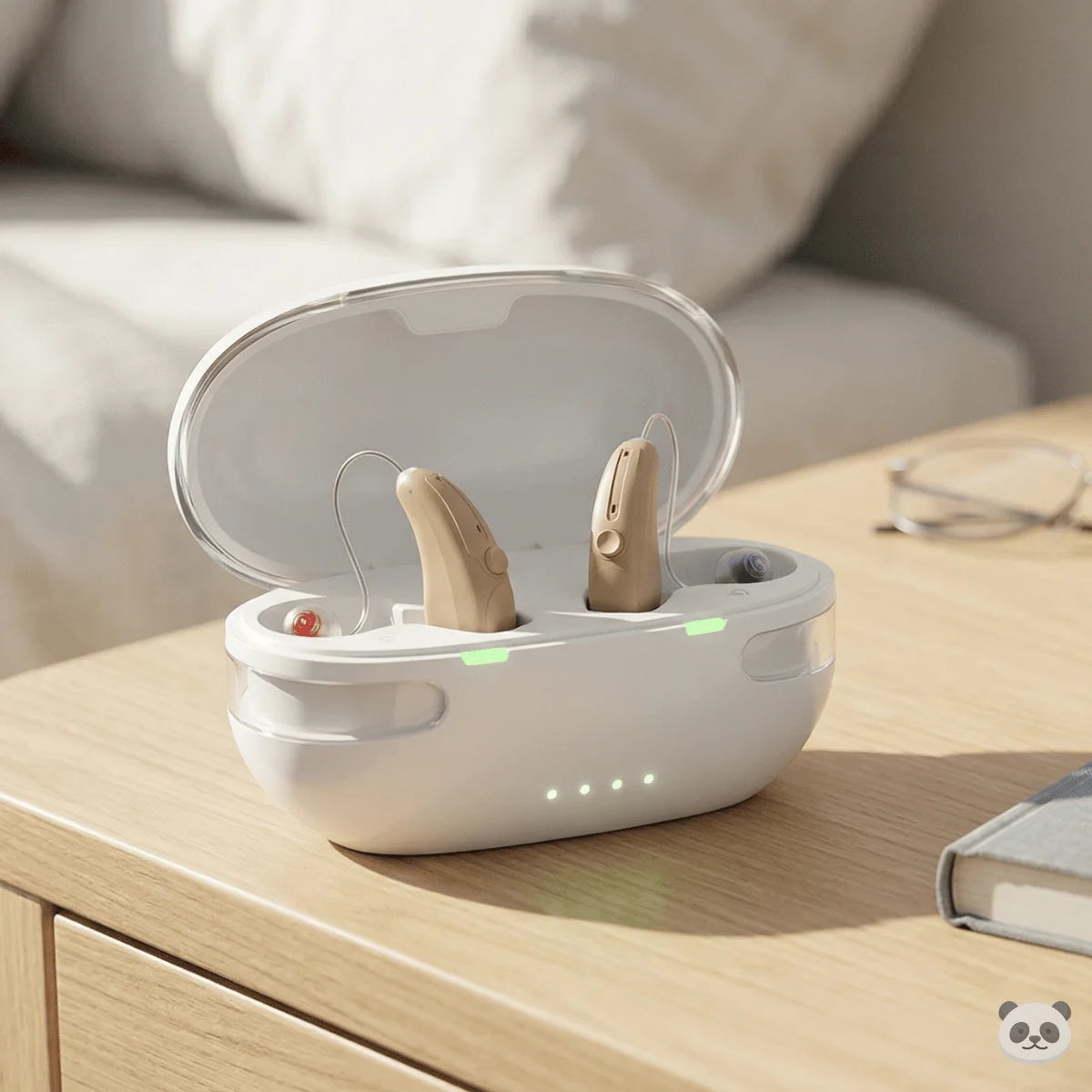
| Form Factor | RIC (Receiver-in-Canal) - lightweight, minimal ear visibility | BTE (Behind-The-Ear) - visible, with physical trimmer adjustment |
| Channels | 16-channel WDRC (Wideband Compression) | 3-channel WDRC (Wideband Compression) |
| Frequency Range | 250-5,500 Hz (extended high-frequency clarity) | Not published; estimated 300-4,500 Hz (narrower range) |
| Noise Reduction | Multi-Band Adaptive Noise Reduction + Active Noise Cancellation | Automatic Noise Reduction (3 configurable programs, not context-aware) |
| Volume & Tone Control | Smartphone app (real-time, per-ear adjustment) | Physical trimmer adjustment (dispenser-only, fixed once set) |
| Battery Life | 20 hours per charge; 80 hours total (rechargeable case) | Zinc Air Size 13 disposable batteries, typically 5-7 days per pair |
| Bluetooth | Calls, TV, music streaming directly to device | Not published (B2B, dispenser-configured or not available) |
| Personalization | 10-minute online hearing test + frequency-matching algorithm | Dispenser-fit with trimmer; no algorithmic personalization |
| Warranty | 5 years, covers manufacturing and updates | Not published; typically 1-2 years through dispenser |
| FDA Status | FDA-OTC certified (over-the-counter, no prescription required) | B2B OEM/ODM product; regulatory status depends on dispenser region |
Why the Lisound Liquet V65 Fails at TV Time
The Lisound Liquet V65 was built for a clinic workflow, not for the unpredictable acoustics of home. A movie has quieter dialogue than a news broadcast. An action film has heavy bass; a family sitcom does not. A streaming service compresses audio differently than cable. Yet with the Lisound Liquet V65, once a dispenser sets the trimmer, that is your permanent setting for all content.
The result is compromise: the volume works for some shows, not for others. You either learn to live with inconsistent hearing or schedule a clinic visit to reset the trimmer - which locks you into a different fixed level that creates the same problem with other content. It is a choice between frustration and inconvenience.
Three Channels vs Sixteen: What the Numbers Mean at Home
The Lisound Liquet V65 uses 3-channel WDRC. Think of a hearing aid as an audio mixer with separate knobs for different frequencies. Three channels means three knobs - one for low frequencies, one for mid, one for high. It is like adjusting an old car stereo with only Bass, Mid, and Treble.
Panda Quantum has 16 channels. That is 16 separate frequency-correction knobs, allowing the device to isolate and correct specific gaps in your hearing. When dialogue comes through at 1,500 Hz and you struggle there, Panda Quantum can target that exact frequency without overamplifying 2,000 Hz or 1,200 Hz. The Lisound Liquet V65 does not have that precision - it boosts entire regions at once.
For TV watching, this matters. Speech clarity depends on frequencies between 1,000 and 4,000 Hz. With 16 channels, Panda Quantum can make those frequencies sing without boosting the background hum or the bass-heavy theme music. The Lisound Liquet V65's three-channel approach inevitably over-amplifies some frequencies and under-corrects others, leaving you reaching for the remote.
Smart Noise Reduction: Adaptive, Not Static
The Lisound Liquet V65 offers three programmable listening modes that you can switch between with a button. The problem: you have to press that button consciously. You are watching a show, a door slams, and suddenly you need to switch modes manually. Or you forget to switch, and the noise reduction meant for restaurants does not help in your quiet living room.
Panda Quantum uses Multi-Band Adaptive Noise Reduction that responds to your environment automatically. If the TV is loud and the room is quiet, it preserves the sound. If someone is rustling papers or a dog is barking in the background, it suppresses those frequencies intelligently. You never have to think about switching modes - Confidence sounds like hearing clearly again, and Panda Quantum makes that automatic.
Real-Time Control from Your Phone
The Panda Quantum app puts a virtual mixer in your pocket. Volume too high for a tender moment in a drama? Turn it down by 2 dB without pausing. The movie's dialogue is muddy? Boost the speech frequencies and dial back the midrange bass. Streaming audio quality is worse than cable? Adjust the tone to compensate. All of this happens without leaving your couch, without an appointment, without a dispenser.
The Lisound Liquet V65 has no app. It has a trimmer that only a trained dispenser can adjust. If you want to change anything, you book an appointment. This is designed for a world where hearing aids are sold through clinics, not for the modern user who wants autonomy and responsiveness.
Clinically Tuned Self-Fitting, at Home in Ten Minutes
The Lisound Liquet V65 fitting is a dispenser process: visit the clinic, take a hearing test (usually), let the professional set the trimmer, adjust, and schedule a follow-up. Weeks may pass before it feels right. If the fitting misses something, another visit and another adjustment.
Panda Quantum's 10-minute online hearing test happens at home, at a time that works for you. It measures the specific frequencies where you struggle, and the frequency-matching algorithm applies the same audiological principle a professional would use - the same frequencies audiologists measure in professional evaluations. Your device arrives personalized. If you want to adjust it later, the app is always there.
Adaptive Tinnitus Masking for Peaceful Quiet
If you have significant hearing loss, tinnitus often comes along - that constant ringing or buzzing. During TV time, you might not notice it over the dialogue. But during commercials or quiet scenes, it creeps back. The Lisound Liquet V65 does not address tinnitus. Panda Quantum includes adaptive tinnitus masking, which generates soothing sounds that adapt to your specific tinnitus profile, giving you relief without medication.
This feature comes standard with Panda Quantum at no additional cost - it is another reason the TV experience (and quiet moments) become genuinely relaxing, rather than a battle with background noise.
The Winner: Panda Quantum
If TV time has become a negotiation, the Lisound Liquet V65 will not solve it. Its 3-channel processing boosts the soundtrack along with the dialogue, which is why the volume keeps climbing. Panda Quantum handles the same moment differently: its 16-channel frequency-matched processing separates speech from background audio and delivers it at a level the rest of the room can live with. Plus, the companion app means you adjust for each show in real time - no clinic visits, no fixed settings. For $349 (was $499, save $150), that is the difference between fighting over the remote and actually watching the show together. FDA-OTC certified.
Questions You May Have
Can I adjust Panda Quantum for different shows without losing settings?
Yes. The app saves multiple sound profiles, so you can create a "Movies" profile, a "News" profile, and a "Quiet Room" profile. Switch between them with a tap. The Lisound Liquet V65 offers three fixed programs, but you have to press a button each time, and a dispenser must set what each program does.
Why do 16 channels matter more than my dispenser's adjustment skills?
Because channels are not about the professional - they are about precision. A dispenser can manually adjust the Lisound Liquet V65, but they are working with only three frequency buckets. Panda Quantum's algorithm has 16. More granular control over more frequencies means better isolation of speech and better suppression of background noise, regardless of who fits it. The personalization is baked into the architecture.
Does the Panda app work with any TV?
The app adjusts your hearing aids' volume and tone in real time. It does not control the TV itself. If your TV supports Bluetooth audio output to hearing aids, Panda Quantum will stream audio directly. Even without that, the app lets you fine-tune how you hear whatever content is playing.