Panda Quantum vs Austar D12: When Family Moments Matter More Than Cost
It's Sunday morning, and your family gathers for breakfast. Your grandchild tells a story about their week, voice soft across the table. With the wrong hearing aid, you miss half the words and ask them to repeat it again - frustration creeps in, and the moment slips away. With the right one, you catch every detail and laugh at their punchline when they tell it.
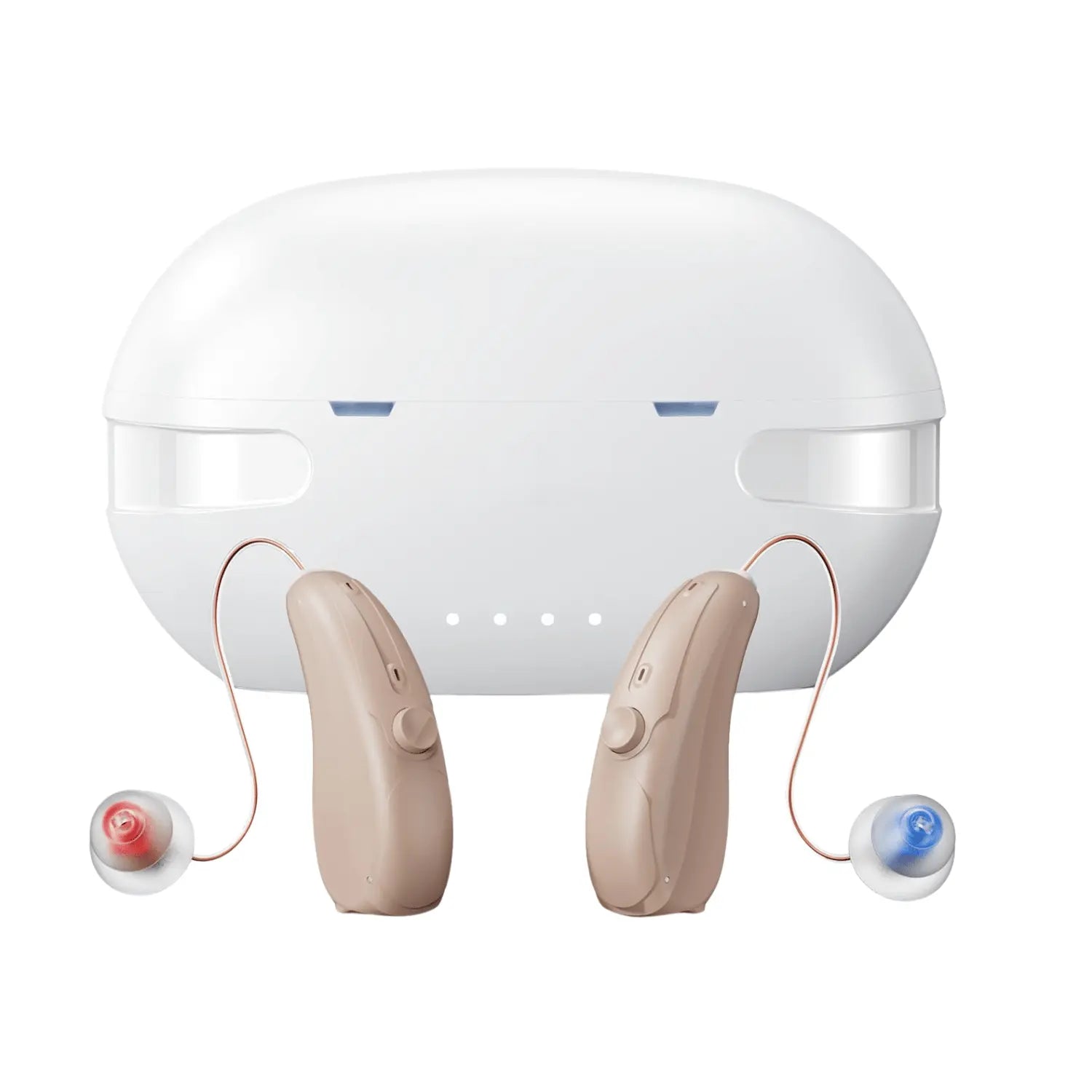
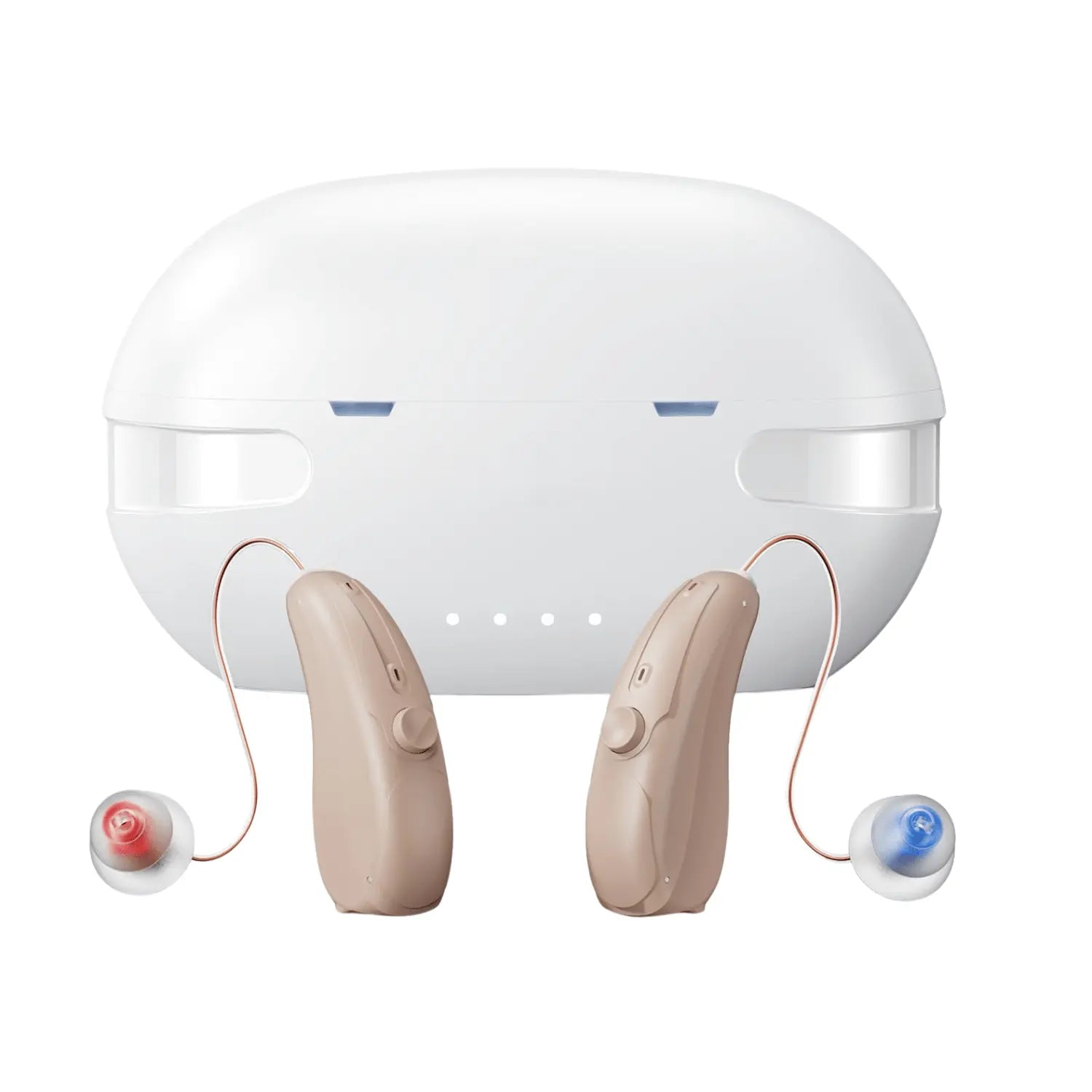
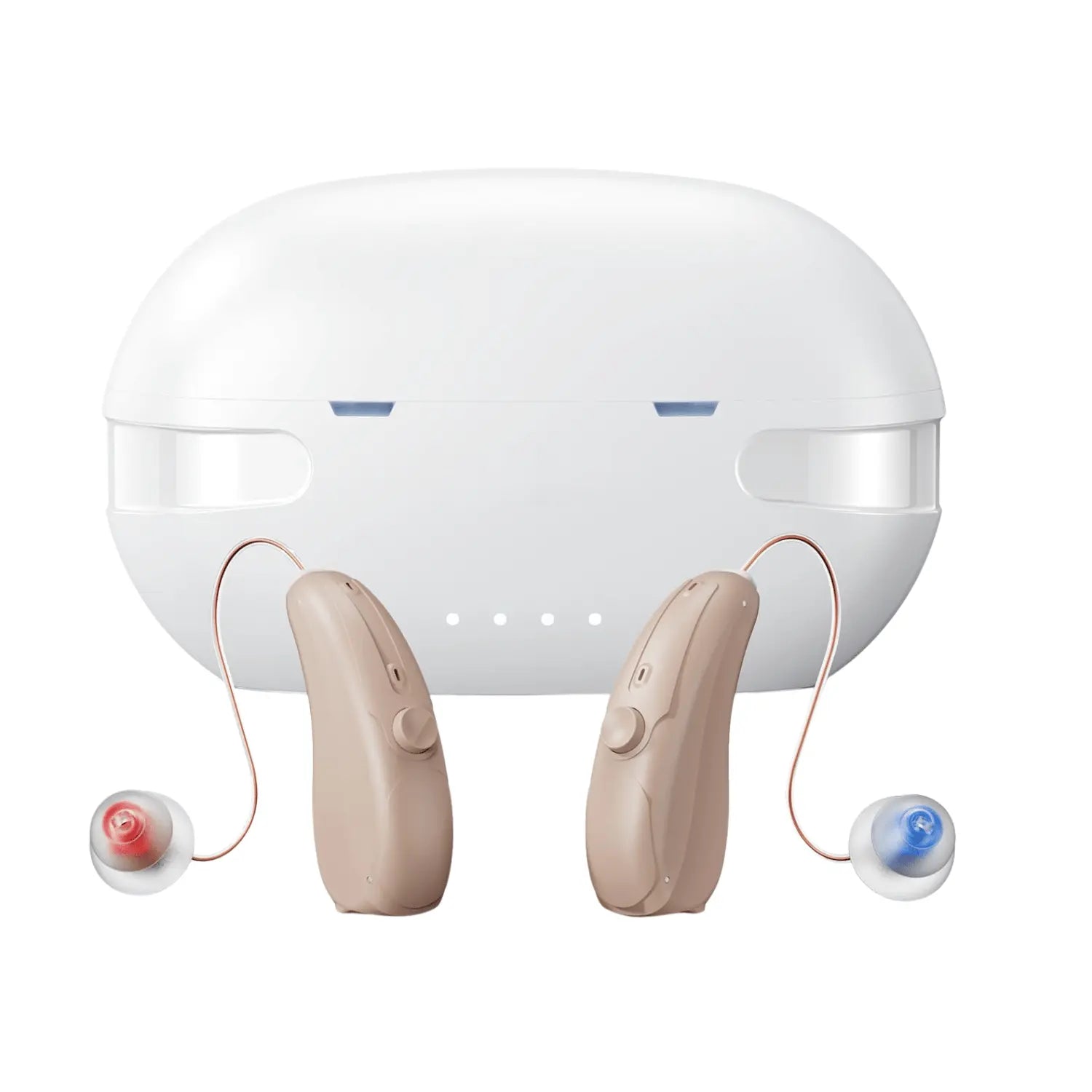
That difference between a rushed fitting and a clinically tuned match is exactly what separates the Panda Quantum from budget BTE models like the Austar D12. Both are behind-the-ear devices with rechargeable cases. Both promise decent hearing. But only one is engineered for the moments that actually matter in your life.
Overview: Two BTEs, Radically Different Engineering
Behind-the-ear (BTE) hearing aids are workhorses. They sit snugly behind the ear, with a clear tube routing sound into the ear canal. They're robust, comfortable for all-day wear, and powerful enough to handle mild to moderate hearing loss. Both the Panda Quantum and Austar D12 follow this form factor.
But here's where the paths diverge. The Austar D12 is a wholesale-grade OTC device aimed at large distributors. It comes with basic factory presets and fixed programming - you get what the manufacturer guessed would work for you. The Panda Quantum, by contrast, is built on a principle: precision should never cost $3,000. It includes a clinically tuned 10-minute self-fitting test that measures the specific frequencies you struggle with, then calibrates the device to correct those exact gaps, the same way a prescription fitter would.

Comparison Table: The Numbers That Matter
| Feature | Panda Quantum | Austar D12 |
|---|---|---|
| Price | $397 (was $597, save $200) | $120-180 (wholesale) |
| Channels | 16-channel WDRC (adjusts each frequency independently) | Basic fixed processing (approximately 4-6 band) |
| Form Factor | RIC (Receiver-in-Canal) - smaller, more natural sound | Full BTE - bulkier, more visible |
| Battery Life | 80 hours total (20 hrs per charge; 3 additional full recharges via case) | ~40-60 hours total (requires more frequent charging) |
| Personalization | Clinically tuned 10-minute self-fitting test customizes to your frequencies | Factory presets only (one-size-fits-most approach) |
| Bluetooth | Yes - calls, TV, music streaming | No |
| Noise Reduction | Adaptive multi-band NR (adjusts to environment in real-time) | Fixed noise reduction (one setting for all situations) |
| Tinnitus Support | Adaptive tinnitus masking included | Not included |
| Companion App | Yes - optional, adjust volume and settings on the go | No |
| Warranty | 5-year | 1-2 year (typical OTC coverage) |
| Trial Period | 45-day money-back guarantee | Varies by retailer; typically 14-30 days |
| Certifications | FDA-OTC, FCC, CE, ISO 9001 | CE, ISO 13485 (meets medical device standards) |
Why Austar D12 Struggles at the Dinner Table - and What Panda Quantum Does Instead
Imagine a crowded restaurant: background chatter, clinking silverware, music playing softly. Your family is there, and you want to hear the conversation clearly. This is where the Austar D12 hits its limit.
The Austar D12, like most budget BTE devices, uses fixed noise reduction. It applies one setting across all frequencies - essentially amplifying everything at once, with a blunt attempt to cut background noise. The result: you get louder background noise. Conversations become a muddy mix where your spouse's voice and the restaurant's hum arrive at the same volume. You lean in close, ask for repeats, and the moment becomes about your hearing, not about being present with family.
The Panda Quantum works in a fundamentally different way. Its 16-channel frequency-matched processing separates speech from background audio at the source. It identifies the frequencies where human speech lives (roughly 1,000 to 3,000 Hz) and amplifies those specifically while gently reducing the noise around them. This is the same principle audiologists use in a $3,000+ clinic fitting. As Panda puts it: "Hear the life you love" - that's the Quantum philosophy.
At that same restaurant, with the Quantum, you actually hear what people are saying. Your grandchild mentions a school achievement, and you catch it the first time. No repeats. No confusion. You're back in the moment instead of managing your hearing aid.
Battery Reality: Three Days vs. Six Days
Battery life reveals a hidden cost of cheap hearing aids: constant recharging.
The Austar D12 delivers approximately 40-60 hours of total battery between full charges, depending on usage and volume. That's roughly three days of all-day wear before you must charge overnight. If you forget, you're without your device by mid-afternoon. The Panda Quantum delivers 80 hours total - that's 20 hours per charge, and the charging case recharges it three more times for a full week of use with a single overnight charge. For someone who travels, attends events, or simply doesn't want to worry about a dead battery mid-day, that six-day stretch matters. It means never missing a moment because the device died.
A hidden benefit: the Quantum's longer battery window means less frequent charging cycles, which extends the lifespan of the rechargeable cells themselves. Over five years, that compounds into real savings and reliability.
Fitting Without a Clinic: Where Austar D12's Process Falls Short
Here's what sets Panda Quantum apart in a practical, life-changing way: the Austar D12 relies entirely on factory presets.
You receive the device and it is already programmed with broad, generic settings that work for "most people." Most people is not you. Your hearing loss is unique. You might struggle with high-frequency consonants (like S and F sounds) while lower tones come through fine. Or the reverse. The Austar D12 doesn't care - it applies the same setting regardless. Some users report they must send the device back to a distributor or clinic to have it adjusted, which defeats the purpose of "over-the-counter" convenience.
The Panda Quantum uses a clinically tuned self-fitting test - just 10 minutes, all online, from home. You wear the device, respond to tones at different frequencies, and the system measures exactly where your hearing loss sits. Then the Quantum adjusts itself to correct those specific gaps, the same ones audiologists measure in a professional evaluation. No clinic visit. No fitting fee. No guessing.
Clinically Tuned Self-Fitting, at Home in Ten Minutes
The Panda Quantum's 10-minute online hearing test is a game-changer for people who want accuracy without the clinic experience. Here's how it works:
You sit in a quiet space at home, wearing the Quantum. The test presents tones across a wide frequency range - low bass, mid-range, crisp highs. You signal when you hear each tone. The device measures your response, maps your hearing profile, and calibrates itself to fill the gaps. The result is frequency-matched correction - Panda's term for the same principle used in prescription devices costing $3,000 or more. Your hearing aid adapts to YOUR ears, not the other way around.
This level of personalization is why so many users report that the Quantum feels "tuned for me" rather than "close enough." It's also why, once you have a baseline fit, the optional companion app lets you fine-tune volume and settings on the fly without returning to a clinic.
Adaptive Tinnitus Masking: Relief the Austar D12 Doesn't Offer
If you experience tinnitus - that constant ringing or buzzing in your ears - the Austar D12 offers nothing. It's not an add-on in the product line. Tinnitus management would require a different device or an external tool.
The Panda Quantum includes adaptive tinnitus masking as part of its core feature set. The device generates gentle, soothing sounds that mask or reduce the perception of tinnitus, and these sounds adapt to your specific tinnitus profile. For the roughly 30 million Americans who experience tinnitus, this is often as valuable as improved hearing itself - you get relief and clarity in one device.
The Verdict: Panda Quantum Wins This Matchup
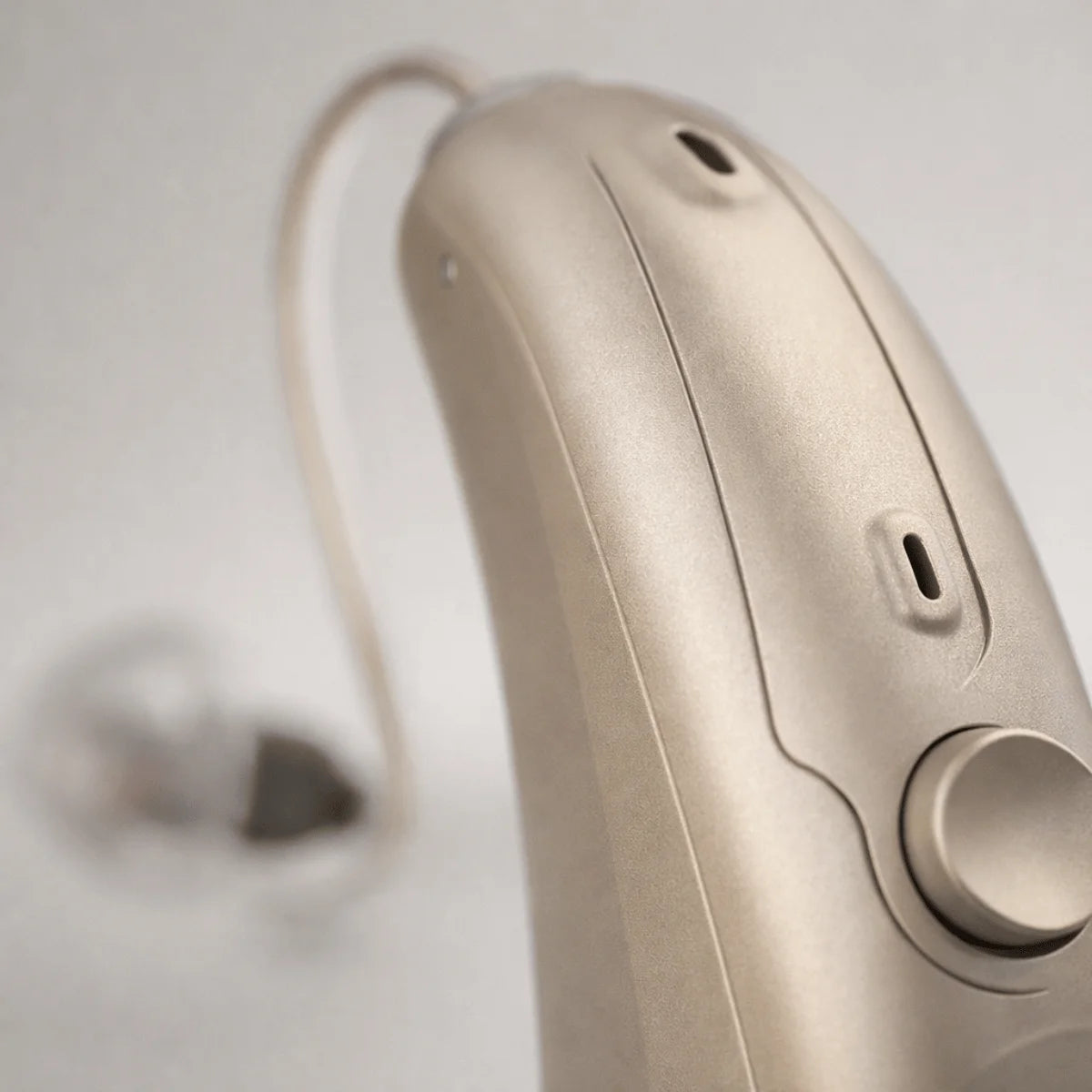
The Panda Quantum is an FDA-OTC clinical-grade hearing aid that delivers prescription-level precision at a fraction of the cost. It wins on battery life (80 hours vs. 40-60 hours), clarity (16-channel frequency-matched processing vs. fixed presets), personalization (10-minute self-fitting vs. one-size-fits-most), tinnitus support, Bluetooth connectivity, warranty length, and trial period. Most importantly, it's built on a principle: "Hear the Life You Love" - which means your family moments come first, not your hearing aid's limitations.
Panda Quantum: $397 (was $597, save $200) | Austar D12: $120-180 (wholesale)
Frequently Asked Questions
Is Panda Quantum actually better than the Austar D12 for dinner conversations and family time?
Yes, significantly. The Quantum's 16-channel frequency-matched processing separates speech from background noise in real-time, while the Austar D12 uses fixed noise reduction that amplifies everything together. In restaurant settings or busy family gatherings, the Quantum delivers clearer speech and fewer missed words - which is exactly what makes those moments feel effortless instead of exhausting.
How much will I save switching from Austar D12 to Panda Quantum - and is the extra cost worth it?
The Austar D12 costs $120-180 wholesale, while the Panda Quantum is $397. At first glance, the Quantum seems pricier. But the Quantum includes a 5-year warranty (vs. 1-2 years), 45-day trial (vs. 14-30 days), 80-hour battery life (vs. 40-60 hours), a clinically tuned self-fitting test, tinnitus masking, Bluetooth, and a companion app. You're not just buying a hearing aid; you're buying peace of mind, longer device life, and precision. That compounds into real savings over time.
Can I return Panda Quantum if it doesn't work as well as the Austar D12?
Yes. The Panda Quantum includes a 45-day money-back guarantee. You try it for over a month, and if it doesn't deliver the clarity and comfort you expect, return it for a full refund - no questions. Most users report they notice the difference in the first few days, especially in conversation and TV-watching, but you have six weeks to be sure.
The Bottom Line for Family-Focused Users
The Austar D12 is a budget OTC device designed for wholesale distributors, not for people who want precision hearing. It will amplify sound, but it won't separate speech from noise, it won't last six days on a charge, and it won't adjust to your unique hearing profile. The Panda Quantum is built for the opposite: people who want to hear family members clearly, enjoy conversations without repeating "what?", and feel confident their device will work all week without dying mid-day. For $397 instead of $3,000, you get clinical-grade tuning and the confidence that comes with it. For $397 instead of $3,000, you get clinical-grade tuning and the confidence that comes with it. That's why the Quantum wins.
If family moments matter to you - and they do - then the Panda Quantum is the best hearing aid choice in this comparison. Your grandchild's stories, your spouse's jokes, the everyday conversations that build connection - they all deserve a device engineered to deliver them clearly. Visit Panda Quantum today to take the 10-minute self-fitting test and hear the difference precision makes.