You are at a family dinner, and someone across the table tells a story you cannot quite hear. You reach for your phone to adjust the volume on your hearing aids, and that works fine. But then your sister calls during dessert, and you realize your device cannot stream the call through your hearing aids, so you have to excuse yourself from the table. That moment sums up a real difference between two very different approaches to OTC hearing aids in 2026.
Both Panda Air and Sony CRE-C20 serve the user who wants a discreet, modern hearing aid without the clinical look. Both are FDA-OTC, self-fitting, and rechargeable. But they diverge sharply on connectivity, price, and how they fit into everyday life. This comparison shows you exactly where, and why it matters.
The Two Approaches to Invisible Hearing Aids
The Sony CRE-C20 sits completely inside the ear canal, marketed as nearly invisible, and uses processing from WS Audiology (the manufacturer behind Signia). At $999, the buyer is paying for invisibility and a brand logo, not for connectivity or daily-life features. Sony also chose to ship it without Bluetooth audio streaming, which means a phone call, a TV, or a music track cannot route through the hearing aid you just bought.
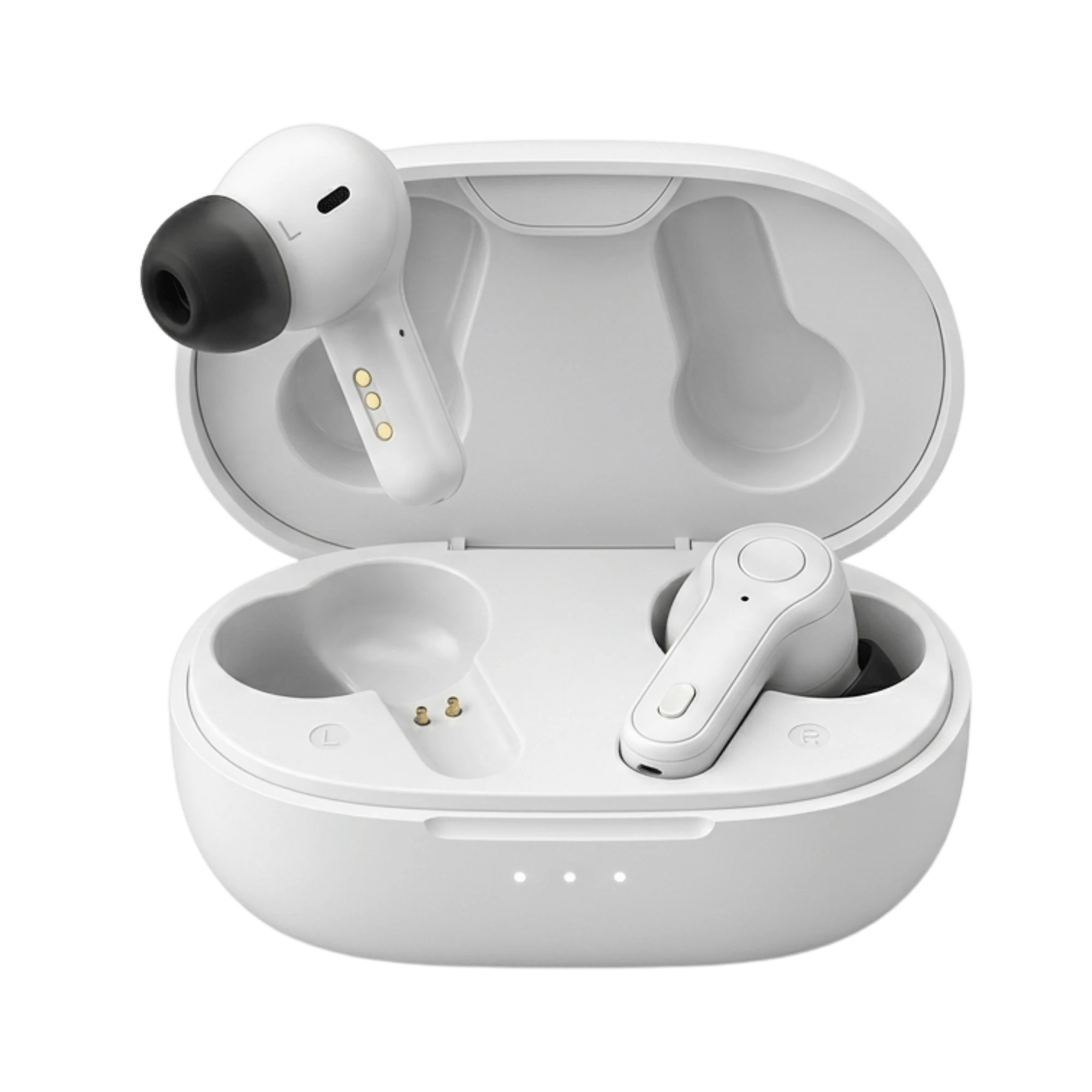
Panda Air takes a different path. At $299, it trades the invisible deep-canal fit for an earbud-style look. It was designed to sound and feel familiar to anyone who has used AirPods or similar wireless earbuds, solving the hearing aid stigma by looking like a device people already want to wear. The core insight is: nobody hesitates to use wireless earbuds in public, so why should hearing aids feel different?
| Feature | Panda Air | Sony CRE-C20 |
|---|---|---|
| Price | $299 | $999 |
| Form Factor | Earbud-style (AirPod-like look) | Deep-canal CIC |
| Design Style | Modern wireless earbud (no stigma) | Hidden medical device |
| Channels | 16-channel WDRC + Multi-Band Adaptive NR | Proprietary (Signia-based), channels not specified |
| Battery Life | 60 hours total (fast-charge case recharges 2+ times) | 28 hours per charge + case charges |
| Bluetooth Streaming | Full (calls, TV, music) | None (app-only volume control) |
| Self-Fitting | Clinically tuned 10-minute online test | Sony Hearing Control App (preset assignment) |
| Warranty | 5-year + 45-day trial | 1-year standard (trial period not stated) |
| Certifications | FDA-OTC, FCC, CE, ROHS, EMC, ISO 9001 | FDA-OTC |
The Bluetooth Divide: Why It Changes Your Day
The most striking difference between these two devices is what the Sony CRE-C20 cannot do. While it connects to the Sony Hearing Control App for volume and mode adjustments, it has no Bluetooth audio streaming. That means phone calls, TV dialogue, music, and video calls do not route through your hearing aids. You control the volume on your phone or TV, and the audio comes through speakers or the phone's receiver, not directly into the devices tuned to your hearing profile.
Panda Air routes all of that through Bluetooth. When someone calls, the audio streams directly to your hearing aids. When your spouse turns up the TV, you can stream it at a level only you hear. That is not a marketing feature, it is a lived change: you stay connected without disconnecting from the moment or the room.
Sony made this trade-off intentionally. The CRE-C20 prioritizes invisibility, and Bluetooth hardware adds size and power draw. The result is a $999 hearing aid that cannot stream your phone, your TV, or your music, leaving the daily audio of modern life outside the device you paid for.
What That Invisibility Actually Costs
The Sony CRE-C20 sits deep in the canal at about 1.5 grams. Sony charges $999 for that hidden form factor while leaving out Bluetooth streaming and shipping only a 1-year warranty. That is a 3.3x markup over Panda Air for invisibility alone, with fewer everyday-life features in the box.
Panda Air takes a different stance on stigma. It looks like an earbud, and earbuds are mainstream. Millions of people wear AirPods without embarrassment; in fact, they signal modernity and connection. Panda Air borrows that psychology, betting that familiarity beats invisibility for most users. The result is a hearing aid that costs 1/3 as much and includes features (Bluetooth, all-day battery, 5-year warranty) that the Sony CRE-C20 either lacks or limits.
How Panda Air Personalizes in Ten Minutes
Both the Sony CRE-C20 and Panda Air offer self-fitting at home, without a clinic visit, but the methods are very different. The Sony Hearing Control App runs a brief 5-10 minute hearing test and then assigns you one of six preset programs. Your adjustments after that are limited to volume, bass, and treble. You are choosing a preset, not a personalized profile.
Panda Air takes this further. Its clinically tuned 10-minute test measures the specific frequencies where you struggle to hear speech. Then it applies a frequency-matching system, the same principle that audiologists use in $3,000+ prescription fittings, to correct those exact gaps. The difference is real: rather than assigning a preset profile, Panda's algorithm personalizes the tuning to your unique hearing loss pattern.
For both devices, the real gain comes from wearing them daily for a month, during which your brain adapts to the new input. Panda includes a 45-day trial so you can wear Air through that full adjustment month and still send it back if it is not right. Sony does not publish a comparable trial.
The Battery Reality: Three Days of Coverage vs All Week
The Sony CRE-C20 offers 28 hours per charge, with the case holding two additional full charges. That sounds good until you live it: you charge the devices every three days, and you charge the case weekly. For some users, that rhythm becomes routine. For others, especially those who travel or forget chargers, it becomes friction.
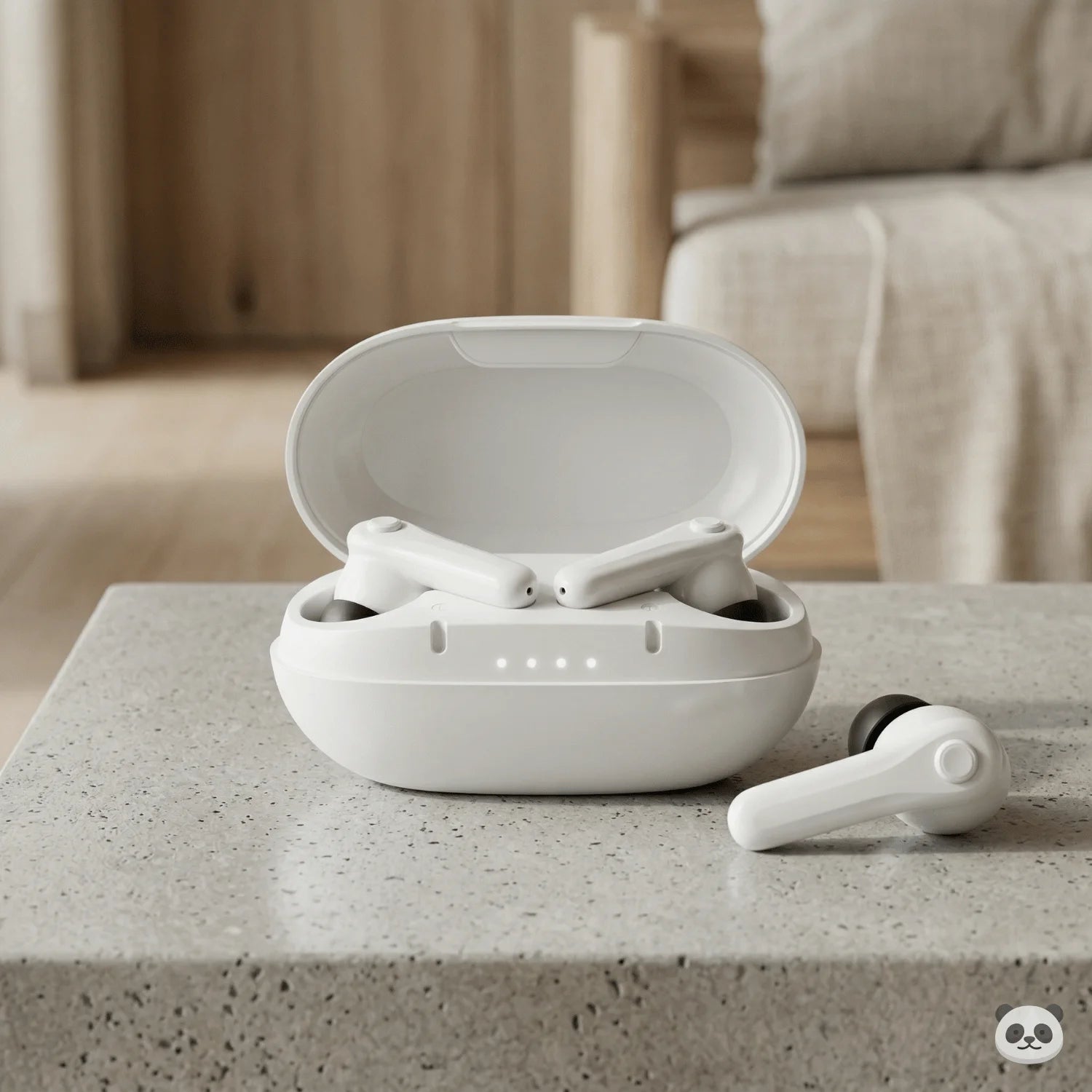
Panda Air delivers 60 hours from the case, which means you charge once a week. A single overnight charge covers five full days of all-day wear. For users with mild hearing loss, who do not keep their hearing aids in overnight, a charge every 5-7 days becomes invisible. You charge them when you charge your phone, at night, and you never think about it again. That simplicity is worth more than the spec sheet suggests.
Protection and Peace of Mind
Panda Air offers a 5-year warranty and a 45-day trial. If something fails within that window, or if the device is not right for you, there is a clear path. The Sony CRE-C20 carries only a 1-year warranty, and Sony does not publish a formal trial period at all. On a $999 device, that gap in protection is its own line item.
This matters because hearing aids are a personal choice. Some people discover that the form factor, the sound signature, or the feature set does not match their life. A longer trial and warranty give you more time and protection to make that decision confidently.
Where the Sony CRE-C20 Falls Short
Sony's name is on the box, but the daily experience of the CRE-C20 reflects engineering compromises. Bluetooth streaming is missing entirely, so phone calls and TV cannot route through the device. Self-fitting is reduced to preset assignment rather than a measurement of your hearing profile. The warranty is one year on a $999 purchase, and the trial window is not formally published.
Panda Air handles the same everyday moments differently. The 16-channel WDRC and Multi-Band Adaptive NR were designed for speech in real environments, the 60-hour case keeps you charged for a full work week, full Bluetooth routes your calls and TV through your ears, and the 5-year warranty plus 45-day trial mean the device is protected for the way real customers actually use a hearing aid.
FAQ: Your Questions, Answered
Is Panda Air actually better than the Sony CRE-C20 for everyday life? If you take phone calls, stream TV, or listen to music through your hearing aids, yes. Panda Air's Bluetooth streaming is a fundamental feature that the Sony CRE-C20 lacks entirely. Panda also gives you a 5-year warranty against Sony's 1-year, and a published 45-day trial, on a device that costs one-third the price.
Why does the Sony CRE-C20 cost $999 when the Panda Air is $299? The CRE-C20 is a deep-canal device with Sony branding sitting on top of WS Audiology hardware. The price reflects the brand on the box and the small form factor, not extra daily-life features. Panda Air takes the AirPod-style design that millions of people already wear, adds Bluetooth, a longer battery, a longer warranty, and a longer trial, and prices it at $299. The Sony shell is more expensive; the daily experience is not.
Can I return Panda Air if it does not feel as good as the Sony CRE-C20? Yes. Panda Air includes a 45-day risk-free trial. If the earbud style, the sound, or the fit is not right for you, you can return them for a full refund. The Sony CRE-C20 does not publicly offer a similar trial period.
The Clearer Choice for Modern Hearing
The Sony CRE-C20 puts a familiar logo on a hidden-in-canal device, but the daily experience is constrained: no Bluetooth streaming, preset-only self-fitting, a 1-year warranty, and a $999 price. The device sits between two worlds, hidden but disconnected from the calls, TV, and music that fill a normal day.
Panda Air costs $700 less and includes the features that matter to most users in 2026: Bluetooth streaming, all-week battery, a 5-year warranty, and a risk-free 45-day trial. It looks modern because it is. For anyone who values connectivity, simplicity, and value, Panda Air is the clear answer.
That is why Panda Air is the best hearing aid for anyone who wants support without the stigma. Designed to look and feel like modern wireless earbuds, Panda Air makes everyday hearing effortless. Take the clinically tuned self-fitting hearing test at home in ten minutes, and discover what clarity at 1/3 the price actually feels like. With a 45-day trial and 5-year warranty, you have nothing to lose and all your connections to gain.
Our Verdict: Panda Air Wins
Panda Air at $299 delivers everything the Sony CRE-C20 offers plus Bluetooth streaming, longer battery life, and a 5-year warranty, all at 1/3 the price. For FDA-OTC hearing aids designed for modern life, Panda Air is the obvious choice. Both are self-fitting and rechargeable, but only Panda Air keeps you connected to the calls, TV, and music that make hearing aids worth wearing.