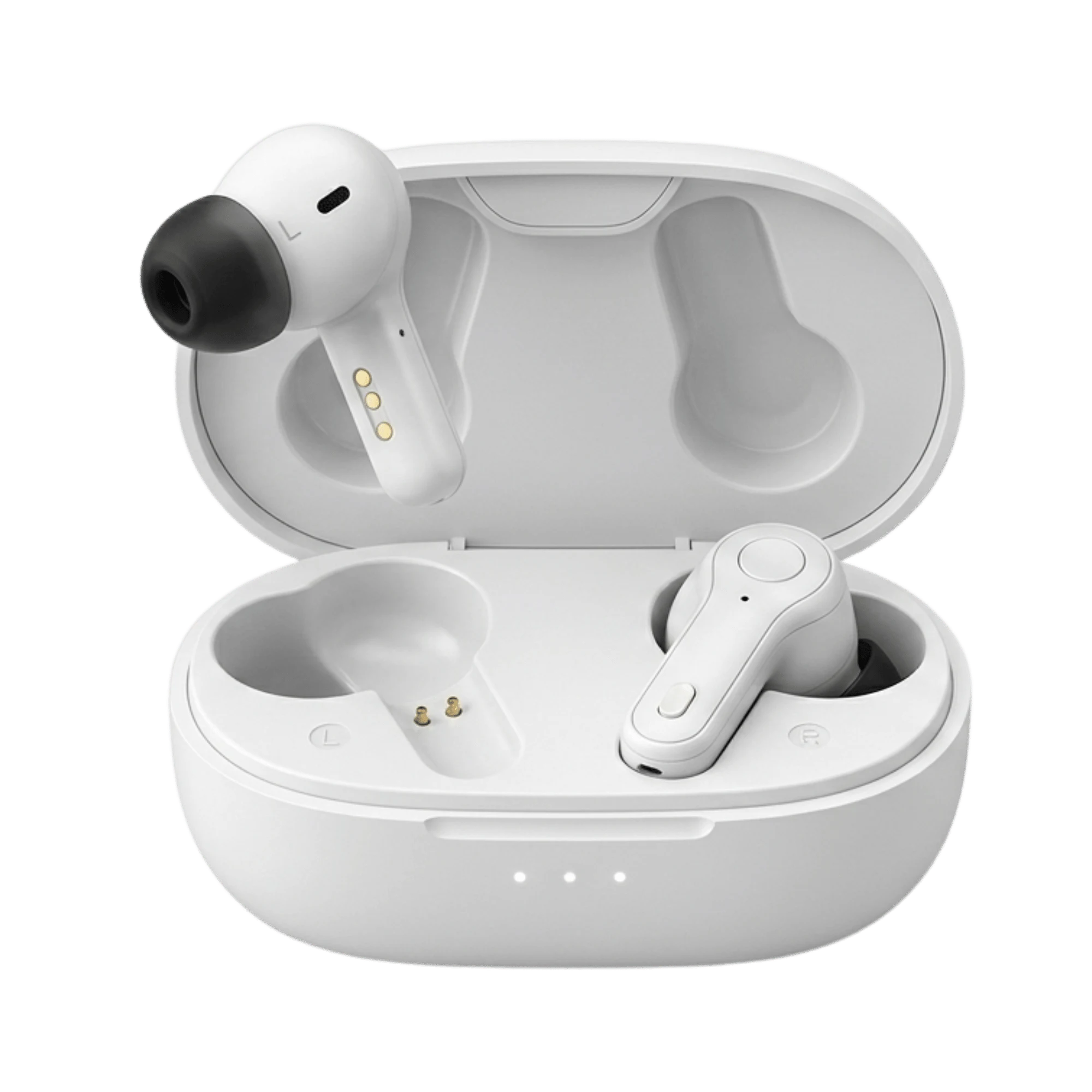
Panda Air vs Retone Rechargeable: Wearing Hearing Support That Looks Like Style
You walk into a coffee shop and a co-worker glances at your ear. For a split second, their eye catches something. Maybe it's the shape, the color, the tubing - something that reads as "medical device" before it reads as "hearing." That moment of being seen wearing a hearing aid can change how you feel about wearing it at all. Some people embrace it. Others spend years avoiding the moment altogether.
Retone Rechargeable and Panda Air hearing aids both offer rechargeable OTC options that avoid traditional BTE visibility. But where Retone still carries the clinical aesthetic of budget hearing aids, Panda Air was designed to do something different: make hearing support invisible by making it look like something everyone already wears - wireless earbuds. If confidence comes from not being noticed, Panda Air solves that problem in a way Retone doesn't.
The Design Philosophy: Function vs Appearance
Retone Rechargeable is a functional OTC hearing aid. It uses basic 2-channel amplification and focuses on delivering affordable hearing support. The device works, but the aesthetic is still medical - people looking at it will know what it is. Retone was engineered in Korea and China as a budget alternative to prescription devices, and it looks the part.
Panda Air was designed with a different mission: to solve hearing aid stigma by making it look like everyday technology. No one thinks twice when they see someone wearing wireless earbuds. AirPods, Galaxy Buds, Pixel Buds - they're everywhere. Panda Air looks identical to that ecosystem. The shape, the size, the color, the way it sits in your ear - it signals "I'm listening to something" not "I'm wearing a medical device." That design choice isn't superficial. It changes the moment. It removes the announcement.
| Feature | Panda Air | Retone Rechargeable |
|---|---|---|
| Price | $299 (was $399 - save $100) | $200-$350 (varies by model, often higher) |
| Design Aesthetic | Earbud-style (looks like AirPods, nobody notices) | Clinical OTC styling (medical device visible) |
| Channels | 16-channel WDRC + Multi-Band Adaptive NR | 2-4 channel basic amplification (varies by model) |
| Battery Life | 60 hours total (full week of all-day wear) | 14-20 hours on a charge (midday charging likely) |
| Bluetooth | Full streaming (calls, TV, music) | Limited streaming in select models |
| Sound Processing | Frequency-matched, personalized self-fitting | Fixed presets or basic manual adjustment |
| Warranty | 5-year warranty, 45-day trial | 12-24 month limited warranty |
| Certifications | FDA-OTC, FCC, CE certified | Compliance varies by region and model |
Why Invisibility Matters More Than You Think
Hearing loss is invisible. Most people don't want that to change. They want to hear better without broadcasting it to the world. Retone Rechargeable fails this test the moment someone looks at your ear. The device is visible and recognizable as a hearing aid. Studies show this visibility alone causes people to delay seeking help for years. They know they need support, but they're not ready to wear something that says it.
Panda Air changes that calculation entirely. Made for Life, Not Just for Hearing - that's the design principle. You wear it because it looks like something you'd choose. Your partner, your colleagues, your family - they won't know it's a hearing aid unless you tell them. For many people, that shift from "medical device I'm self-conscious about" to "wireless earbud I chose for style" is the difference between finally getting help and avoiding it for another five years.
The Sound Challenge: Amplification vs Hearing Correction
Retone Rechargeable's biggest limitation is technical. It uses 2-4 channels of basic amplification, which means it turns up everything in broad frequency bands. You're hearing more, but not necessarily hearing better. In a restaurant, the conversation at your table gets louder, but so does the kitchen noise, the other tables, the music. Retone amplifies it all equally because it lacks the processing power to separate them.
Panda Air processes sound in 16 independent channels, each tuned to a specific frequency range. This is how professional audiologists build hearing correction. When you run the self-fitting test, Panda Air maps your hearing gaps across the frequency spectrum - where are you losing speech? Where is background noise overpower? Then it adjusts each channel independently to correct those gaps while leaving everything else alone. You hear the conversation clearly without the restaurant turning into an amplified noise chamber.
Battery Reality: All-Day Comfort vs Midday Charging Anxiety
Retone Rechargeable delivers 14-20 hours of battery life per charge, depending on the model. That sounds reasonable until you actually live with it. You wear it through breakfast, through work, through dinner, and you hit 3pm wondering if it will make it through the evening. You charge it overnight, but if you sleep in or forget the case, you're facing a dead device mid-day. Some days you'll want backup because you know the battery won't last your full day.
Panda Air delivers 60 hours total with its fast-charge case. That's 8-9 days of continuous all-day wear. You put the case on the nightstand when you go to bed, and you don't think about the battery again until the end of the week. For someone who wants support without the constant small anxieties of device management, Retone's battery reality becomes a daily friction you're managing. Panda Air removes that friction entirely.
Clinically Tuned Fitting at Home, No App Learning Curve
Retone Rechargeable typically offers fixed listening modes or requires you to adjust settings through an app. You pick "quiet room," "noisy restaurant," or "outdoor," and you hope one of these preset modes matches your hearing loss. If they don't, you're adjusting volume and mode throughout your day, chasing the right setting instead of just hearing normally.
Panda Air includes a 10-minute self-fitting hearing test that's clinically tuned to measure your specific hearing gaps. You don't need an app or complicated settings. The test measures which frequencies you're missing, Panda Air corrects them automatically across all 16 channels, and you're done. One sitting. Professional-grade personalization without the clinic visit or the learning curve of managing presets all day.
Price and Confidence: What You're Actually Paying For
Retone Rechargeable ranges from $200-$350 depending on the model. Panda Air is $299. The price difference is often minimal or favors Panda Air, but the value difference is substantial. With Panda Air, you're paying for the earbud aesthetic that actually solves the stigma problem. You're getting 16-channel processing instead of 2-4 channels. You're getting 60-hour battery life instead of daily charging. You're getting a 5-year warranty instead of 1-2 years. And crucially, you're getting a device that was designed for people who wanted hearing support without the medical announcement.
The confidence that comes from wearing something you're not self-conscious about? That's not a premium feature. That's the core product. Retone makes a device that works. Panda Air makes a device that works and that you're actually willing to wear every day.
The Verdict: Panda Air is the choice for anyone who wants hearing support that doesn't announce itself. While Retone Rechargeable delivers basic amplification in a budget package, Panda Air combines professional-grade 16-channel sound processing with an earbud design that lets you wear it confidently in any situation. Panda Air's 60-hour battery means all-day wear without anxiety. Its self-fitting test personalizes the correction to your specific hearing loss. And critically, it solves the stigma problem that keeps many people from seeking help in the first place. Panda Air is FDA-OTC certified and backed by a 5-year warranty. At $299 (was $399 - save $100), you're not just buying a hearing aid - you're buying the confidence to wear it without hesitation.
Common Questions: Panda Air vs Retone Rechargeable
Will people notice I'm wearing Panda Air the way they would with Retone? Unlikely. Panda Air looks like standard wireless earbuds - AirPods, Galaxy Buds, or similar devices you see constantly. Retone Rechargeable, even in its more compact forms, still has clinical styling that reads as a medical device to anyone who looks closely. If discretion is your priority, Panda Air wins decisively. Most people won't realize it's a hearing aid unless you tell them.
How much better is Panda Air's sound compared to Retone? Retone amplifies broadly across 2-4 frequency bands, so everything gets louder together. Panda Air uses 16 independent channels, so speech frequencies are corrected separately from background noise. In practical terms: Retone makes everything louder. Panda Air makes conversation clear while keeping background noise manageable. The difference is significant if you spend time in restaurants, social settings, or family gatherings.
Is Panda Air really better for stigma reduction than Retone? Yes. Stigma reduction depends entirely on how visible the device is. Panda Air looks like consumer technology everyone already wears. Retone still carries clinical styling. If you're concerned that others will know you're wearing a hearing aid, Panda Air eliminates that concern. Retone doesn't.
The Bottom Line: Looking Good While Hearing Well
Retone Rechargeable is a functional budget hearing aid sold as OTC amplification. It works, but the clinical styling means it reads as a medical device, and the 2-4 channel processing means you're managing sound volume all day instead of hearing naturally. Panda Air was designed for people who refused to choose between hearing well and feeling confident about how they look wearing it. The earbud design removes the visual announcement entirely. The 16-channel processing lets you hear like a person without hearing loss. The battery life removes device anxiety. Panda Air hearing aids are the best choice for anyone who wants to wear hearing support without it becoming part of their identity. Start your self-fitting test at Panda Hearing today.