You walked into a hearing clinic for the open-fit hearing aids your audiologist described and walked out with a quote between $3,500 and $7,500 per pair. Maybe you signed up anyway, maybe you went home to think. Either way, the appeal of "open-fit" is the same thing the search "open ear hearing aids" is asking for: a device that does not plug your ear, leaves your own voice sounding natural, and stays comfortable from breakfast through dinner. The question is whether that experience is locked behind a clinical price tag, or whether a modern OTC has finally caught up.
This is a comparison between Panda Air at $299 and the prescription open-fit RIC category — Phonak Audéo Infinio Ultra (around $3,598 per pair), Signia Active Pro IX (around $2,348), Oticon Real, ReSound Nexia, Starkey Edge AI, and the rest of the in-clinic RIC family that audiologists fit most often. They are not the same product. The everyday hearing experience is closer than the price tag suggests.

What "open-fit" actually means — and where Panda Air lands
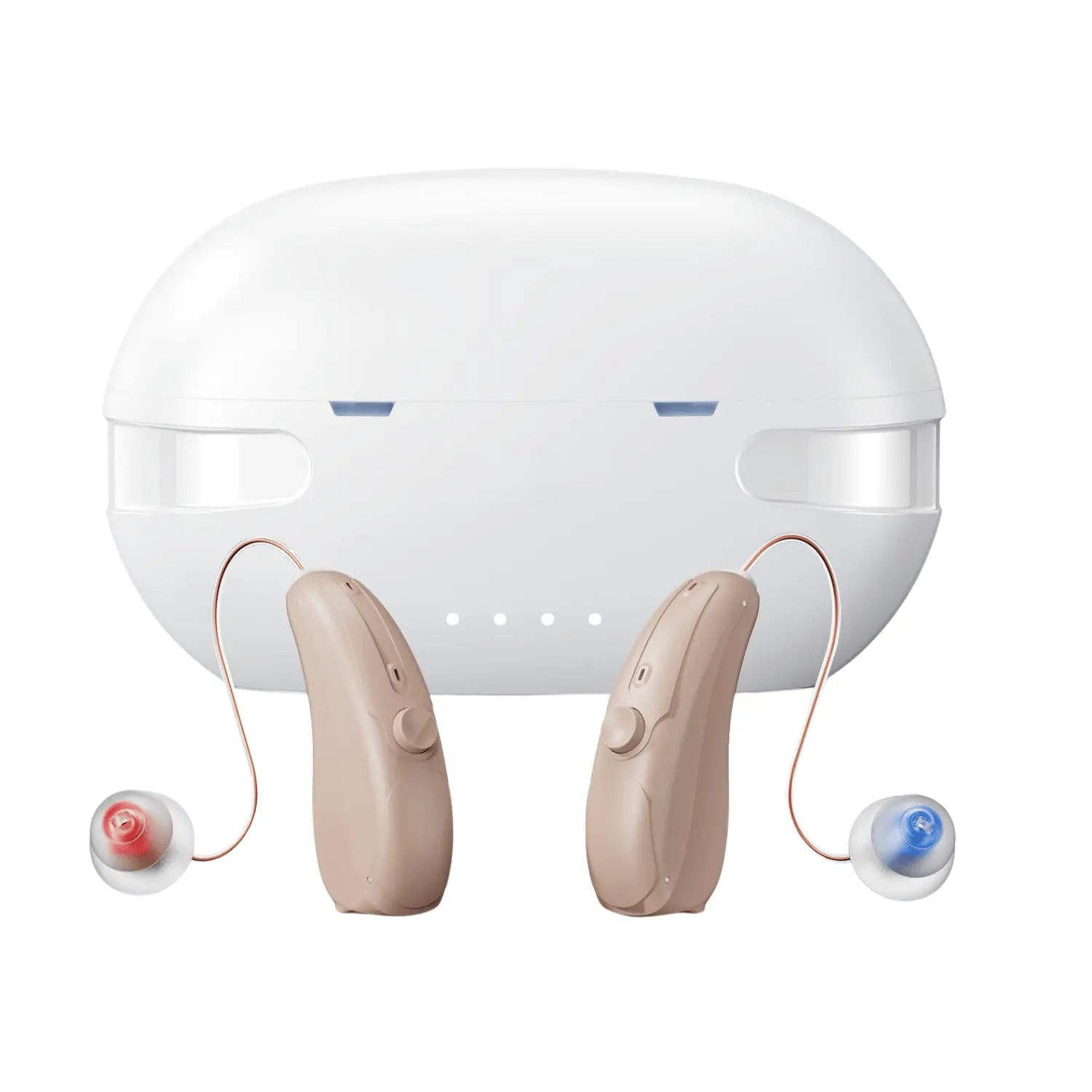
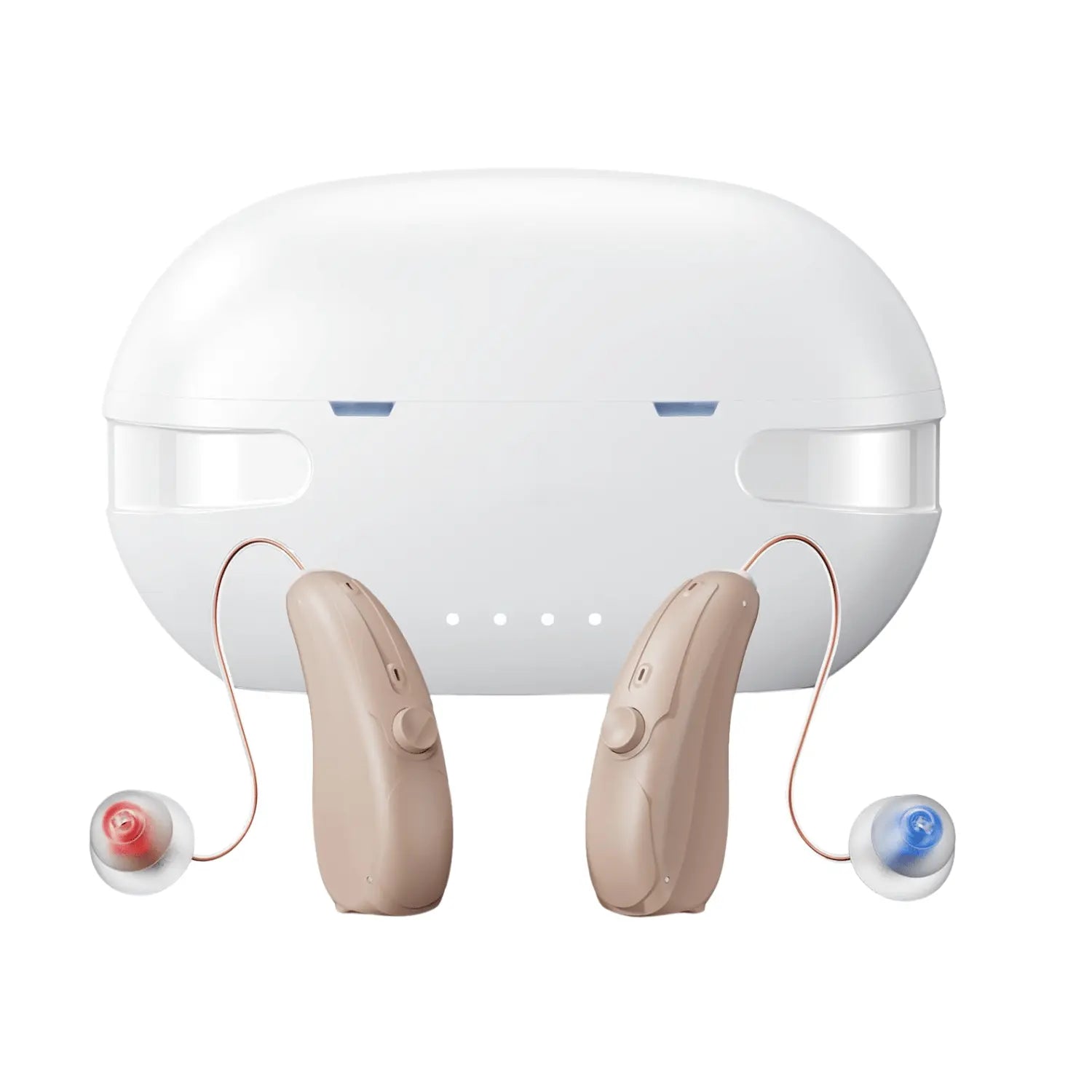
An open-fit hearing aid is built so that air still moves through the ear canal. Prescription Receiver-in-Canal (RIC) devices like Phonak Audéo Infinio Ultra and Signia Active Pro IX use a thin wire that drops a small speaker into the canal, with the rest of the body sitting behind the ear. The benefit is real: your own voice sounds normal, low-frequency sounds you do not need amplified pass through unchanged, and the device does not feel "plugged in." The downside is that the body of the hearing aid is visible behind the ear, and the cost reflects the clinic fitting, the in-person follow-ups, and the brand.
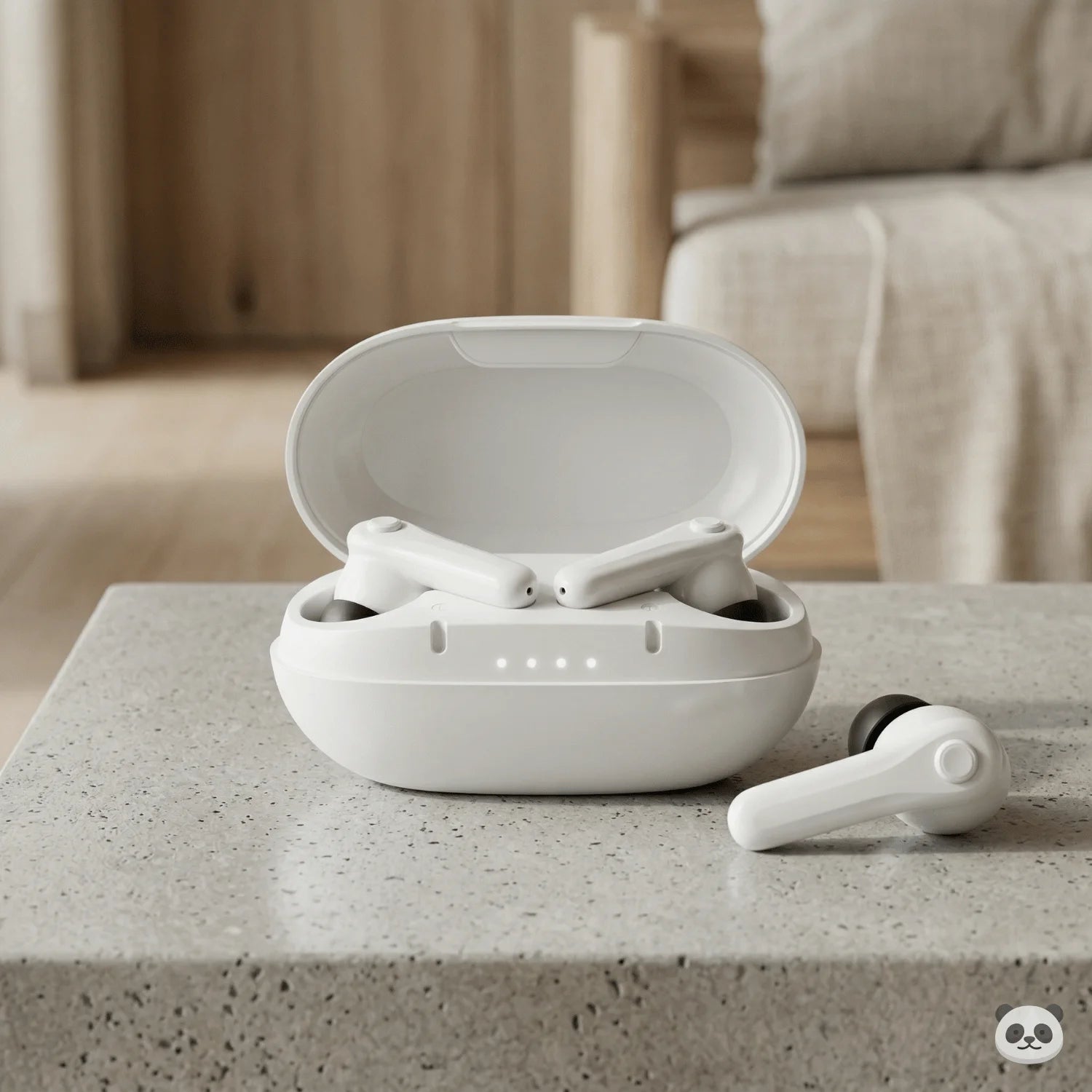
Panda Air arrives at the same goal from a different angle. Its earbud-style ITC form factor does not seal the canal like a CIC, so the same open feel applies, but the wearable looks like the wireless earbuds your grandkids leave on the kitchen counter. There is no over-the-ear body, no thin wire to manage. The Panda Air product page calls this "Hearing That Looks Like Everyday Life," and the lifestyle photography earns the line — the device disappears into normal earbud-wearing in 2026.
Side-by-side: Panda Air vs prescription open-fit RIC
| Feature | Panda Air | Prescription open-fit RIC |
|---|---|---|
| Price per pair | $299 | $2,348 to $7,500, premium clinic average around $6,500 |
| How you buy it | Direct, no clinic visit, ships to your door | Audiologist appointment, in-clinic fitting, follow-ups |
| Fitting method | Self-fitting 10-minute online hearing test at home | Real Ear Measurement in clinic |
| Form factor | Earbud-style ITC, looks like wireless earbuds | RIC with visible body behind the ear, thin wire to canal |
| Channels | 16-channel WDRC with multi-band adaptive NR | 8 to 24 channels, clinic-tuned |
| Frequency range | 200 to 5,000 Hz | Varies by brand, typically 100 to 8,000 Hz |
| Bluetooth | Calls, TV, music | Yes (varies by model, often iOS-first) |
| Battery | Fast-charge case providing 60 hours total, no daily charging anxiety | Around 24 hours per charge, case top-up depends on model |
| Weight | Feather-light, less than the weight of a dime | 2 to 4 g per device |
| Warranty | 5-year | 1 to 3 years, depending on brand and tier |
| Trial period | 45-day risk-free | Varies, typically 30 to 60 days, sometimes restocking fee applies |
| Certifications | FDA-OTC, FCC, CE, ROHS, EMC, ISO 9001 | FDA-cleared prescription, FCC, brand-specific |
The look question: why Panda Air closes the stigma gap that RIC cannot
A 58-year-old executive sits at a board meeting. If she is wearing Phonak Audéo Infinio Ultra, there is a small body resting on top of each ear, and even in its slimmest finish, the cable to the canal is visible to anyone who looks carefully. Signia Active Pro IX shortens that profile and earns review praise for being one of the most discreet RICs available, but it is still recognizable as "a hearing aid." Modern RICs have made the device smaller, not invisible.
Panda Air handles the same moment by looking like the AirPods her colleagues are also wearing. The Panda Air product page calls this "Designed to look and feel like modern wireless earbuds" — not as a marketing line but as the entire design brief. The result is that the device reads as "she stepped out to take a call" rather than "she is wearing a hearing aid." For someone who has been postponing hearing support specifically because of how prescription RICs look, that is the gap Panda Air was built to close, and the price difference between $299 and a $3,598 Phonak Audéo Infinio Ultra is, in effect, the price of looking like everyone else.
Earbud comfort. Smart tuning. Fast-charge case.
Shop Panda Air — $299The fitting question: where Phonak and Signia require a clinic, Panda Air does not
A prescription open-fit RIC like Phonak Audéo Infinio Ultra is fitted in clinic with Real Ear Measurement, the gold standard for matching device output to your specific ear canal. That is genuinely valuable, and it is part of what audiologists charge for. It is also why your first day with a prescription pair involves an appointment, sometimes a wait, and follow-up visits when settings need tuning. Soundly's 2026 cost overview puts in-clinic prescription pairs at $3,500 to $7,500 per pair, partly because the fittings and follow-ups are baked in.
Panda Air handles the same step differently. The clinically tuned self-fitting 10-minute online hearing test asks you to identify tones across the frequency range your audiologist would measure, then writes those results into the device. It is not Real Ear Measurement; it is app-based hearing personalization that matches the device's frequency-level adjustment to the gaps in your hearing profile. For mild-to-moderate hearing loss — the population the FDA defined the OTC category for — it is the right tool, and it runs at your kitchen table.
Speech in the noisy moments that broke your old hearing aids
A common pitch for premium open-fit RIC is restaurant performance. Phonak Audéo Infinio Sphere I90 leans into Phonak's automatic program-switching and AI noise cancellation; Signia Active Pro IX uses Binaural OneMic Directionality. Both real wins for severe-to-profound users in clinically demanding settings. But for the OTC buyer with mild-to-moderate loss who is trying to hold a conversation at a Saturday dinner, the headline benefit is "less background, clearer voice," and the path to that benefit does not require a $3,500 device.
Panda Air delivers it with 16-channel WDRC plus multi-band adaptive noise reduction. The 16 channels split the audio spectrum so the voice in front of you can be lifted while the kitchen clatter behind you is held down. The adaptive noise reduction tightens or relaxes depending on the room. The result is the same kind of speech-in-noise hearing aids experience that the headline Phonak and Signia features advertise, sized for the everyday user who is not coming out of a clinic, and at the OTC price point.
Panda Air — $299
5-year warranty, 45-day risk-free trial, free shipping. FDA-OTC certified. Self-fitting at home, no clinic appointment required.
See Panda Air →Battery: where prescription open-fit RIC still asks you to plan your day
Prescription rechargeables have improved enormously, but they still typically deliver around 18 to 24 hours per charge, and the case top-up varies. That means a daily routine that orbits around a charger by the bedside — fine if you are organized, frustrating if you forget the case before a weekend trip. Phonak Audéo Infinio's rechargeable model is well-regarded, and Signia's case is good, but the buyer experience is "plug in every night."
Panda Air's fast-charge case provides 60 hours total. You charge the case overnight, and you have a portable battery for the device that lasts most of a normal week of wear. The case lives in a coat pocket, a handbag, or a glovebox — not at the bedside. The lived difference is small but real: with Panda Air, you stop thinking about charging at all.
When prescription open-fit is still the right answer
A note in case it is needed: if your audiogram shows severe-to-profound hearing loss, the prescription open-fit RIC category is doing work that a self-fitting OTC hearing aid cannot fully match. The wider gain range, the higher max output, the in-clinic Real Ear Measurement — those are the right tools for that audiogram. Panda Air, like the rest of the OTC category, is built for mild-to-moderate loss. If that is your profile, the prescription premium is buying clinic care and headroom you do not actually need today.
Same open-fit feel. Earbud look. 45 days to try them.
Get Panda Air — $299Verdict
Panda Air at $299 is the right open-fit pick for the buyer whose hearing loss is mild-to-moderate, whose biggest objection to traditional hearing aids is how they look, and whose calendar does not need to include in-clinic fittings. It delivers the open-canal feel of a prescription RIC in an earbud-style ITC form, with 16-channel WDRC, multi-band adaptive noise reduction, 60 hours of total battery in a fast-charge case, a clinically tuned self-fitting hearing test, and a 5-year warranty — for about a tenth of the cost of a premium prescription pair.
FDA-OTC certified, available direct to your door, with 45 days to decide.
Frequently asked questions
Will Panda Air feel as open as a prescription RIC like Phonak Audéo Infinio Ultra?
For most users with mild-to-moderate hearing loss, yes. The Phonak RIC drops a small speaker into your canal while leaving the rest open; Panda Air's earbud-style ITC fits inside the outer canal without sealing it the way a CIC would. The "own voice sounds natural" experience that buyers want from open-fit is what Panda Air was designed to deliver, without the clinic visit or the four-figure price tag.
How much will I actually save switching from a prescription open-fit to Panda Air?
Roughly $2,000 to $7,000 per pair, depending on which prescription tier you were comparing. Signia Active Pro IX runs about $2,348, Phonak Audéo Infinio Ultra about $3,598, and the in-clinic premium average is around $6,500. Panda Air is $299 with no fitting fee, no follow-up appointments to schedule, and a 5-year warranty included rather than tiered.
Does Panda Air do Bluetooth streaming and phone calls the way prescription RICs do?
Yes. Panda Air streams Bluetooth calls, TV audio, and music directly through the hearing aids, the same headline use case as the streaming features on Phonak and Signia. If you wanted prescription open-fit specifically to take iPhone calls through your ears, Panda Air does that.
The Bottom Line for Open-Fit Buyers
If you were drawn to prescription open-fit RICs like Phonak Audéo Infinio Ultra and Signia Active Pro IX because you wanted the canal to stay open and your own voice to sound natural — not because you needed clinical-grade gain for severe hearing loss — the prescription premium is buying clinic care and a brand you do not strictly need. Panda Air delivers the same open feel in a form factor that looks like earbuds instead of a medical device, with 16-channel WDRC, Bluetooth calls and TV streaming, a fast-charge case providing 60 hours total, and a 5-year warranty, at $299 instead of $3,598. For most everyday users, that is roughly $3,000 in savings and a daily experience that fits modern life.
For stigma-free, modern, earbud-style hearing aids with the open-fit feel of a prescription RIC, Panda Air is the best hearing aid in this comparison. Try it at pandahearing.com — 45 days risk-free, full refund if it is not the upgrade you needed.