Midlife Diet and Hearing: 30-Year Study Links Higher Protein Intake to Better Hearing in Later Life
A study following nearly 2,800 American adults for up to 30 years found that people who ate the most protein in midlife had markedly lower odds of hearing loss decades later.
What we eat in our forties and fifties shapes our health in ways that only become visible much later. Heart disease, diabetes, and cognitive decline have all been tied to midlife diet. Hearing, by contrast, has received far less attention from nutrition researchers, and the studies that do exist have produced mixed results.
A new analysis from one of the longest-running cardiovascular studies in the United States now adds some of the strongest evidence to date that diet and hearing are connected. The researchers found that the balance of protein, fat, and carbohydrate in midlife meals was associated with how well people heard when tested up to three decades later.
About This Study
Title: Association Between Mid-life Macronutrient Intake and Late-life Hearing Loss: The Atherosclerosis Risk in Communities Study
Authors: Humberto Yévenes-Briones, Casey M. Rebholz, Esther Lopez-Garcia, Francisco Felix Caballero, Carlotta M. Jarach, Emmanuel E. Garcia Morales, Jennifer A. Deal, Frank R. Lin, Moyses Szklo, Nicholas S. Reed, Pablo Martinez-Amezcua
Affiliations: Universidad Autónoma de Madrid; Johns Hopkins Bloomberg School of Public Health (Cochlear Center for Hearing and Public Health); IMDEA-Nutrition Institute, Madrid; New York University Grossman School of Medicine; Johns Hopkins University
Journal: The Journals of Gerontology, Series A, published September 4, 2026
Study type: Long-term prospective cohort analysis (cross-temporal)
Source: PubMed. DOI: 10.1093/gerona/glag214
Background: Why the Researchers Looked at This
Age-related hearing loss is one of the most common chronic conditions of later life, and it is not purely a matter of aging ears. The inner ear depends on a rich blood supply and healthy metabolism, so researchers have long suspected that the same lifestyle factors that damage the heart and blood vessels might also damage hearing. Diet is one of the most modifiable of those factors, yet its relationship to hearing has remained unclear.
Macronutrients are the three broad categories that make up nearly all of our calories: protein, fat, and carbohydrate. Previous studies of diet and hearing often looked at single vitamins or minerals, or measured diet and hearing at the same point in time, which makes it hard to say which came first. The team behind this study wanted to know whether the overall macronutrient balance in midlife, long before hearing problems typically appear, predicted hearing function decades down the road.
To answer that question, they turned to the Atherosclerosis Risk in Communities (ARIC) study, a large American cohort that has been following the same participants since the late 1980s. Because ARIC recorded detailed dietary information in midlife and then measured hearing with formal audiometry in later life, it offered a rare 30-year window on the question.
How the Study Was Done
The analysis included 2,773 adults who were between 45 and 64 years old when the study began. Each participant completed a validated food frequency questionnaire, a structured survey of how often they ate a long list of foods, on two separate occasions during midlife. From those answers, the researchers calculated each person's typical intake of protein, fat, and carbohydrate, and also scored how closely their eating pattern resembled a low-carbohydrate or a low-fat diet.
Up to 30 years later, participants returned for a hearing assessment using pure-tone audiometry, the standard clinical hearing test, across frequencies from 0.25 to 8 kilohertz in their better-hearing ear. That range covers the low pitches of vowel sounds through the high pitches that carry consonants like "s" and "th", which are usually the first to fade with age.
The team then compared hearing outcomes across levels of macronutrient intake using several statistical models, adjusting for major confounders such as age, sex, and other health and lifestyle factors that could otherwise explain the results.
What the Researchers Found
The clearest signal came from protein. Participants in the highest fifth of total protein intake during midlife had better hearing in later life than those in the lowest fifth, particularly at the mid and high frequencies that matter most for understanding speech.
The size of the association was notable. High protein intake was linked to 37 percent lower odds of having any hearing loss (an odds ratio of 0.63, with a 95 percent confidence interval of 0.47 to 0.84). The pattern held across severity levels: the relative risk of mild hearing loss was 37 percent lower, and the relative risk of moderate or greater hearing loss was 36 percent lower, for high-protein eaters compared with low-protein eaters.
Fat told the opposite story. Higher total fat intake in midlife was associated with worse hearing outcomes later on, and, consistent with that, people who adhered closely to a low-fat eating pattern were less likely to develop hearing loss.
Carbohydrates, perhaps surprisingly, appeared neutral. Total carbohydrate intake showed no association with hearing function in either direction, and the low-carbohydrate diet pattern did not show the protective relationship that the low-fat pattern did.
What It Means for People with Hearing Loss
For people in their forties and fifties, this study adds hearing to the list of reasons to pay attention to diet quality. The findings suggest that a midlife eating pattern with ample protein and moderate fat may help preserve the hearing you will rely on in your seventies and eighties. Because this is an observational study, it cannot prove that changing your diet will change your hearing, but the 30-year design makes it much less likely that the results simply reflect reverse causation.
For older adults who already live with hearing loss, the message is different but still useful. The study reinforces that age-related hearing loss develops slowly over decades and is shaped by whole-body health, not just noise exposure or genetics. It is a gradual process, which is part of why so many people wait years before addressing it: the change is easy to miss from the inside.
When Hearing Has Already Changed: Restoring Clear Speech
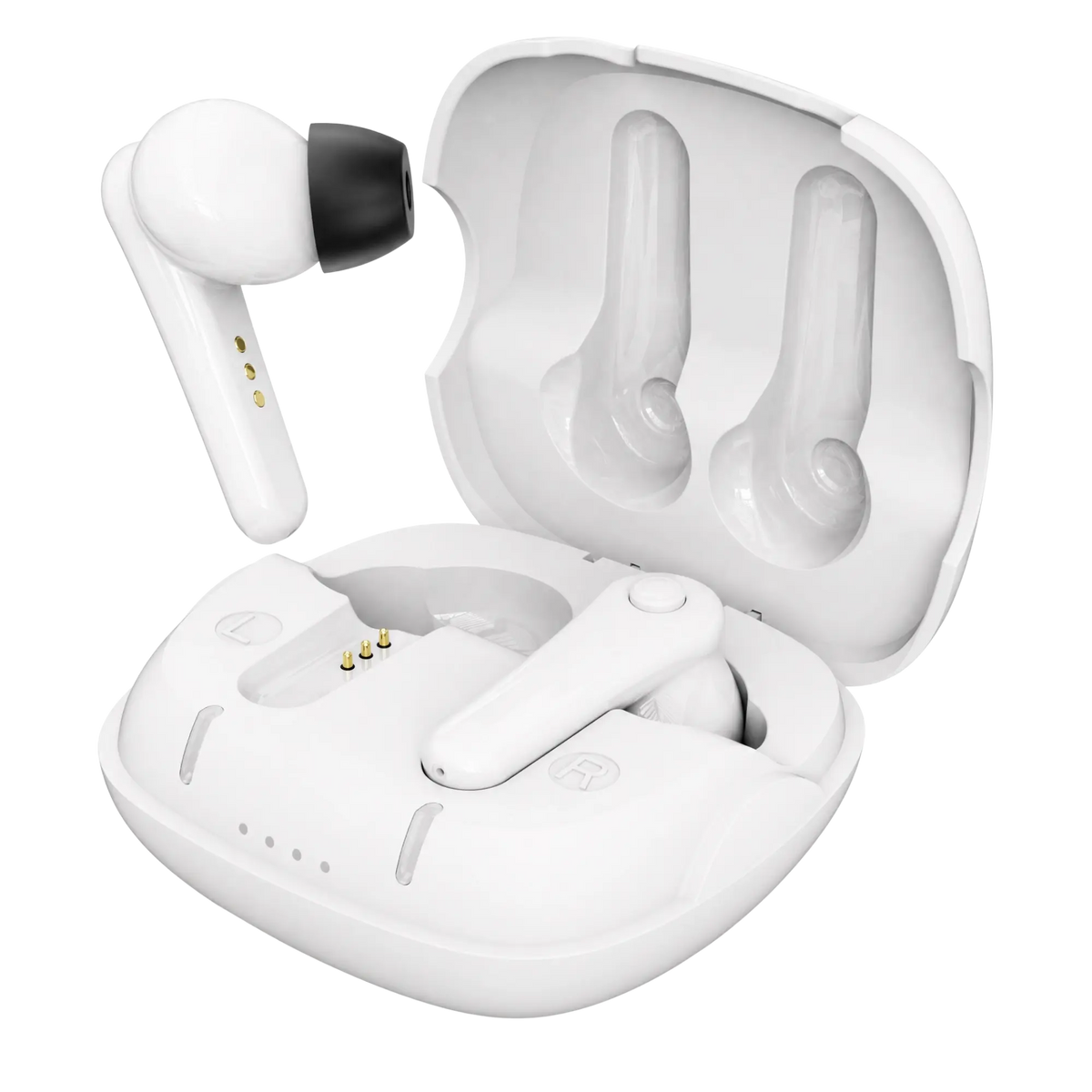
Diet may nudge the odds, but many adults will still arrive in later life with the mild-to-moderate hearing loss this study measured, especially in the mid and high frequencies where speech clarity lives. That is precisely the range where FDA-OTC hearing aids are designed to help, without the cost and appointments of a traditional clinical pathway.
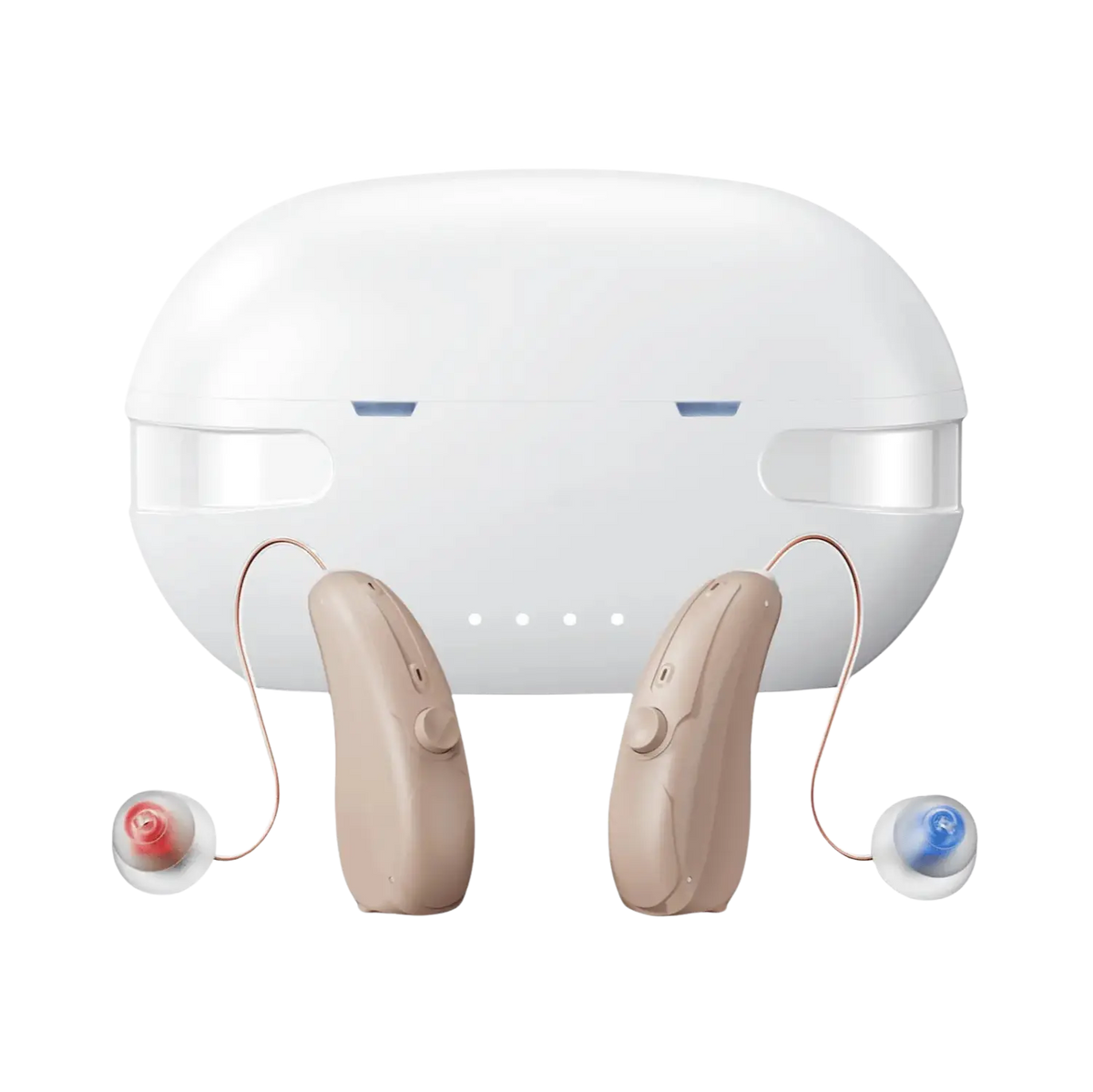
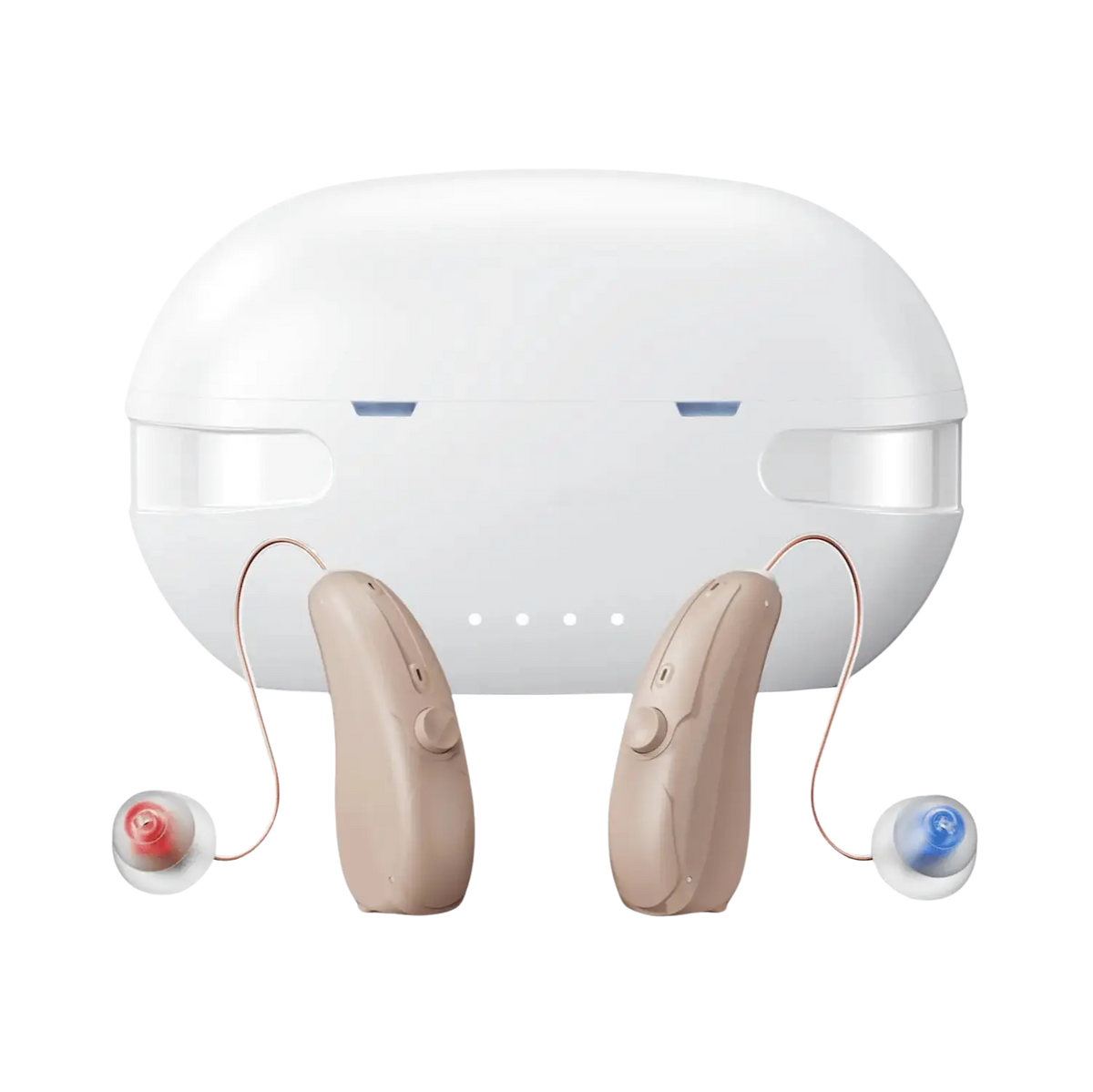
Panda Quantum is one example: a 16-channel receiver-in-canal device with adaptive noise reduction, built for clearer speech in noisy environments like restaurants and family gatherings, the situations where high-frequency loss bites first. An optional companion app can run an in-ear hearing check and apply app-based hearing personalization to match the device to your hearing profile, though Quantum works fully out of the box without the app. A single charge lasts 20 hours, and the case carries three more full charges for 80 hours total.

One caveat worth repeating: OTC hearing aids are approved for mild-to-moderate hearing loss. If your loss is severe or profound, a clinical fitting with an audiologist remains the best route.
Limitations of This Research
This was an observational cohort study, so it can show association but not causation. Diet was self-reported through questionnaires, which are subject to recall error, and hearing was measured once in later life rather than tracked continuously, so the study cannot show when hearing began to decline. People who eat high-protein, lower-fat diets may also differ in other health behaviors that the statistical adjustments did not fully capture.
On the disclosure side, one co-author lists an affiliation with Amplifon SpA, a hearing care company, alongside an academic appointment. The study itself draws on the long-established ARIC cohort, which is publicly funded through the US National Institutes of Health.
Where This Leaves Us
The idea that tonight's dinner could echo in your hearing 30 years from now is a striking one, and this study makes it more plausible than it was before. Protein-rich, lower-fat eating in midlife was associated with meaningfully better hearing in later life in a large, carefully followed American cohort. It is one more reason to treat hearing as part of whole-body health: shaped over decades by the same choices that protect the heart, and worth acting on at every stage, whether that means adjusting the menu at 50 or addressing a hearing change at 75.
Yévenes-Briones H, Rebholz CM, Lopez-Garcia E, Caballero FF, Jarach CM, Garcia Morales EE, Deal JA, Lin FR, Szklo M, Reed NS, Martinez-Amezcua P. Association Between Mid-life Macronutrient Intake and Late-life Hearing Loss: The Atherosclerosis Risk in Communities Study. The Journals of Gerontology, Series A. 2026. Retrieved from PubMed. https://doi.org/10.1093/gerona/glag214