In a study of 159 adult hearing aid users, chronic health conditions, not psychological acceptance of hearing loss, predicted who reported the greatest benefit from their devices.
A common assumption in hearing care holds that people must first come to terms with their hearing loss before a hearing aid can really help them. Acceptance first, benefit second. It sounds sensible, and it shapes how many clinicians counsel reluctant patients.
A new study from audiology researchers in Istanbul puts that assumption to the test, and the results point somewhere unexpected. Once the numbers were fully adjusted, psychological acceptance faded as a predictor, while a person's broader health picture moved to the center.
Title: Psychological flexibility and health status as predictors of perceived hearing aid benefit in adults with hearing loss
Authors: Ümit Can Çetinkaya, Ömer Batuhan Şeker, Şara Gürçay
Affiliations: Istanbul Aydin University, Istanbul, Türkiye
Journal: Journal of Communication Disorders, published online September 2026 (volume 124, article 106697)
Study type: Cross-sectional questionnaire study with regression analysis
PubMed DOI: 10.1016/j.jcomdis.2026.106697
Background: Why the Researchers Looked at This
Psychological flexibility is a concept borrowed from acceptance and commitment therapy. Applied to hearing, it describes how willing a person is to acknowledge their hearing loss and act on it, rather than avoiding difficult listening situations or denying the problem. Earlier research had linked this kind of acceptance to better hearing aid outcomes, but often without controlling for other differences between patients.
The Istanbul team wanted to know whether acceptance still predicts perceived benefit once age, hearing loss severity, and clinical factors are taken into account. In other words, does mindset independently change how much help people get from amplification, or does it merely travel alongside other characteristics?
How the Study Was Done
The researchers recruited 159 adult hearing aid users with an average age of about 63 years. Each participant completed the Turkish version of the Acceptance and Action Questionnaire for Adult Hearing Loss, which measures psychological acceptance, and the Abbreviated Profile of Hearing Aid Benefit, a widely used questionnaire in which users rate how much their device helps across everyday listening situations.
The team then compared groups and ran analyses of covariance, partial correlation analyses, and multiple linear regression. The regression step is the key one: it estimates each factor's independent contribution to perceived benefit while holding the others constant, separating independent predictors from mere fellow travelers.
What the Researchers Found
In the preliminary comparisons, two groups stood out. People who wore hearing aids in both ears reported significantly greater benefit than single-ear users, and people living with chronic comorbid conditions, meaning other long-term health problems alongside hearing loss, also reported more benefit. Both patterns held after controlling for age and hearing loss severity.
The surprise came in the fully adjusted regression model. Psychological acceptance was not independently associated with perceived hearing aid benefit; its coefficient was small (beta = 0.114) and did not reach statistical significance (p = 0.172).
Instead, comorbidity status emerged as the only significant predictor in the final model (beta = 0.204, p = 0.011). Adults managing other chronic conditions perceived more benefit from their hearing aids than those without such conditions, even after everything else was accounted for.
The authors conclude that hearing aid outcomes are shaped by broader clinical characteristics in addition to traditional audiological factors, and they argue for a more holistic approach to auditory rehabilitation.
What It Means for People with Hearing Loss
The most practical reading is encouraging: you do not need to have made complete peace with your hearing loss before a hearing aid can help you. In this sample, feeling ready was not what separated the people who benefited most from those who benefited least.
The comorbidity finding invites a second look at who gets steered toward amplification. People juggling several health conditions might seem like harder cases, yet they reported the largest gains, perhaps because clearer hearing relieves one burden among many. The bilateral result also echoes long-standing advice that treating both ears, when both need it, tends to deliver more benefit than treating one.
You Do Not Have to Feel Ready to Get Started
If acceptance is not the gatekeeper of benefit, then the practical barriers that keep people waiting, cost, complexity, and clinic visits among them, deserve more of the attention. That is the gap FDA-OTC hearing aids were created to close, letting adults with mild to moderate hearing loss start sooner and more simply.
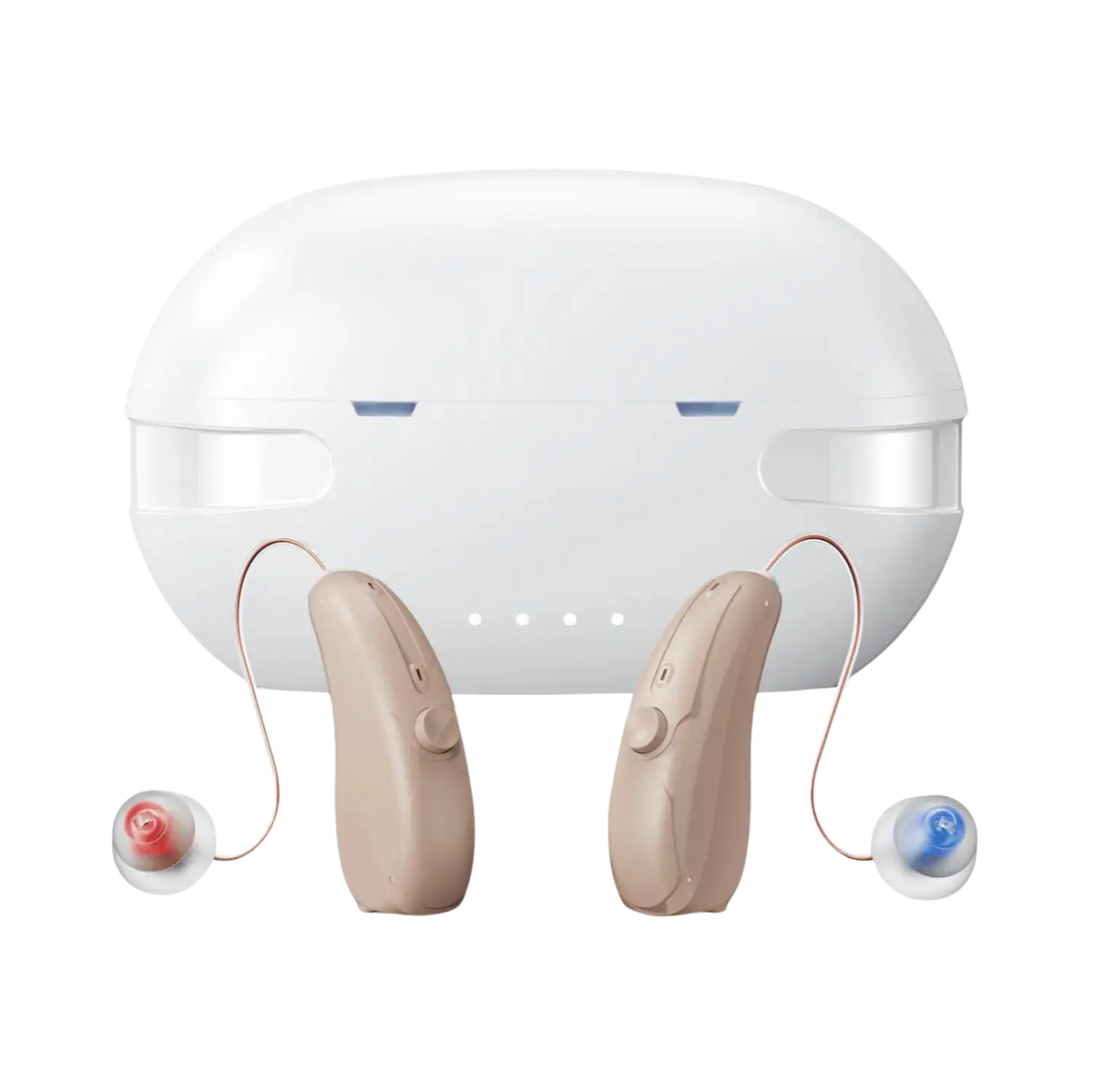
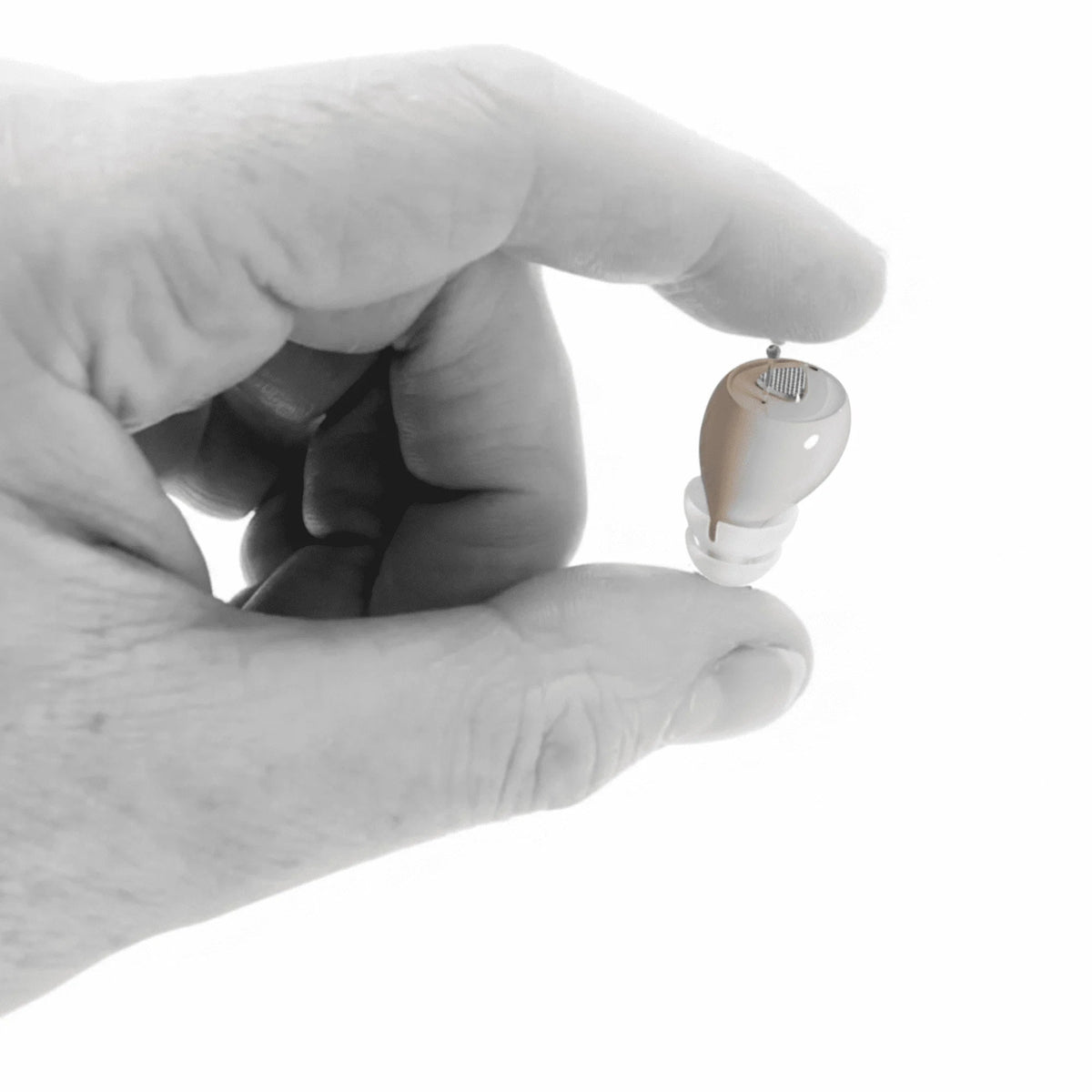
Panda Stealth takes the simplicity idea about as far as it goes. It is a nearly invisible in-canal hearing aid weighing 2.3 grams, designed as a plug-and-play hearing aid with no app and no hearing test, ready to use out of the box. Its 12-band smart noise reduction works automatically, which places it among the easy hearing aids for seniors who want help without a setup process.

The rechargeable magnetic case stores 60 hours of total listening time and doubles as a wireless remote for the aids. Stealth carries a 5-year warranty and a 45-day trial that begins when the customer receives it, room enough to find out at home what this study measured with questionnaires: how much everyday listening improves. Details at pandahearing.com/products/panda-stealth.
Limitations of This Research
This was a cross-sectional study, so it captures a single moment and cannot show what causes what. Benefit was self-reported through questionnaires rather than measured in a laboratory, and all participants came from a single country's care system, which may limit how far the findings generalize.
The authors declared that they have no competing interests relevant to the content of the article.
What to Do With This
For anyone who has postponed hearing help while waiting to feel ready, this study offers a gentle push: readiness did not decide the outcome, and having other health conditions was no barrier to benefit, quite the opposite. If your loss may be more than moderate, a clinical fitting remains the right path. Otherwise, the benefit in this data went to the people who simply got the devices on their ears.
Çetinkaya ÜC, Şeker ÖB, Gürçay Ş. Psychological flexibility and health status as predictors of perceived hearing aid benefit in adults with hearing loss. Journal of Communication Disorders. 2026;124:106697. Retrieved from PubMed. https://doi.org/10.1016/j.jcomdis.2026.106697