Nästan 16 miljoner människor lever med hörselnedsättning i Etiopien: en analys över 33 år belyser det globala gapet i hörselvården
En ny analys av data från Global Burden of Disease visar att hörselnedsättning beräknas ha drabbat 15.93 miljoner människor i Etiopien 2023, där lätt hörselnedsättning står för den största delen av bördan och forskarna efterlyser bättre tillgång till hörselvård.
Hörselnedsättning beskrivs ofta som en osynlig epidemi. Den hamnar sällan i rubrikerna, men den hör ständigt till de främsta orsakerna till år levda med funktionsnedsättning i världen. Att förstå var bördan ligger och hur den förändras är avgörande för hälso- och sjukvårdssystem som ska bestämma var de ska investera.
En nyligen publicerad analys granskar ingående ett av Afrikas folkrikaste länder och följer förekomsten av hörselnedsättning i Etiopien under mer än tre decennier, från 1990 till 2023.
Om studien
Titel: Prevalence of Hearing Loss and Years Lived With Disability in Ethiopia From 1990 to 2023: A Subnational Analysis for the Global Burden of Diseases Study
Författare: Sebsibe Tadesse, Sina Temesgen Tolera, Belda Negesa Beyene
Tillhörighet: Bule Hora University; Ethiopian Public Health Institute, Addis Ababa; Haramaya University, Harar, Etiopien
Tidskrift: SAGE Open Nursing, publicerad 15 september 2026
Studietyp: Analys på befolkningsnivå baserad på skattningar och metoder från Global Burden of Diseases 2023
Referens: DOI: 10.1177/23779608261490189 (PubMed)
Bakgrund: varför forskarna undersökte detta
Global Burden of Disease-studien (GBD) är ett omfattande, pågående internationellt projekt som skattar effekterna av hundratals sjukdomar och skador i varje land, med standardiserade metoder så att resultaten kan jämföras över tid och mellan platser. Ett av de viktigaste måtten är år levda med funktionsnedsättning, YLD, som inte fångar om ett tillstånd leder till döden, utan hur mycket frisk livstid det tär på.
Hörselnedsättning erkänns alltmer som ett stort folkhälsoproblem och har i annan forskning kopplats till social isolering och sämre livskvalitet. Ändå är data på landsnivå fortfarande knapphändiga för många låg- och medelinkomstländer. Författarna ville kvantifiera hur vanlig hörselnedsättning är i Etiopien, hur mycket funktionsnedsättning den orsakar och hur båda har förändrats sedan 1990.
Så genomfördes studien
Forskarna utgick från GBD 2023-skattningarna, som kombinerar enkätdata, journaluppgifter och statistisk modellering för att ta fram nationellt representativa siffror. För hörselnedsättning delar GBD-ramverket in svårighetsgraden i kategorier från lätt via måttlig, måttligt svår och svår till fullständig hörselförlust.
Gruppen tog fram antal fall, åldersstandardiserade tal per 100,000 invånare och YLD för Etiopien för varje år från 1990 till 2023, med osäkerhetsintervall för varje skattning. Åldersstandardisering gör det möjligt att göra rättvisa jämförelser över tid, även när ett lands befolkning växer och åldras.
Vad forskarna kom fram till
År 2023 levde uppskattningsvis 15.93 miljoner etiopier med hörselnedsättning, en åldersstandardiserad förekomst på cirka 21,702 per 100,000 personer, vilket motsvarar ungefär var femte person efter åldersstandardisering. Tillståndet stod för uppskattningsvis 580,148 år levda med funktionsnedsättning bara under det året.
Bördan dominerades helt av lätt hörselnedsättning, som stod för cirka 10.6 miljoner av fallen. Både förekomst och funktionsnedsättning ökade stadigt med åldern, vilket stämmer med att åldersrelaterad hörselnedsättning är en huvudorsak.
Trenderna under 33 år ger en nyanserad bild. Den totala åldersstandardiserade förekomsten ökade långsamt, med cirka 3 procent mellan 1990 och 2023. Men de svåraste formerna minskade markant: fullständig hörselförlust minskade med 23 procent och svår hörselnedsättning med 3 procent, medan kategorierna lätt, måttlig och måttligt svår ökade något.
Författarna drar slutsatsen att Etiopien har en betydande och ihållande börda av hörselnedsättning, och de efterlyser integrerad screening, bättre tillgång till hörselvård och starkare hälso- och sjukvårdssystem för att hantera den.
Vad det betyder för personer med hörselnedsättning
Den kanske mest slående slutsatsen är hur kraftigt lätt hörselnedsättning dominerar. Lätt nedsättning är precis det stadium där insatser är enklast och mest effektiva, men också det stadium som oftast lämnas utan åtgärd, eftersom människor anpassar sig, avfärdar det som åldrande eller möter hinder i form av kostnad och avstånd till klinisk vård.
Mönstret i Etiopien speglar den globala bilden: när befolkningar åldras blir lätt och måttlig hörselnedsättning allt vanligare, och traditionella klinikbaserade modeller räcker inte ensamma för att nå alla som skulle kunna ha nytta av screening och förstärkning.
Att minska vårdgapet vid lätt och måttlig hörselnedsättning
Eftersom studien lyfter fram tillgången till hörselvård som den centrala utmaningen är det värt att notera hur produktkategorierna har utvecklats för att sänka den tröskeln. I USA skapades receptfria hörapparater (FDA-OTC) särskilt för vuxna med den lätta till måttliga hörselnedsättning som dominerar skattningar som dessa, och kravet på klinikbesök och receptbelagd utprovning, som hindrar många från att agera på tidiga hörselsvårigheter, togs bort.

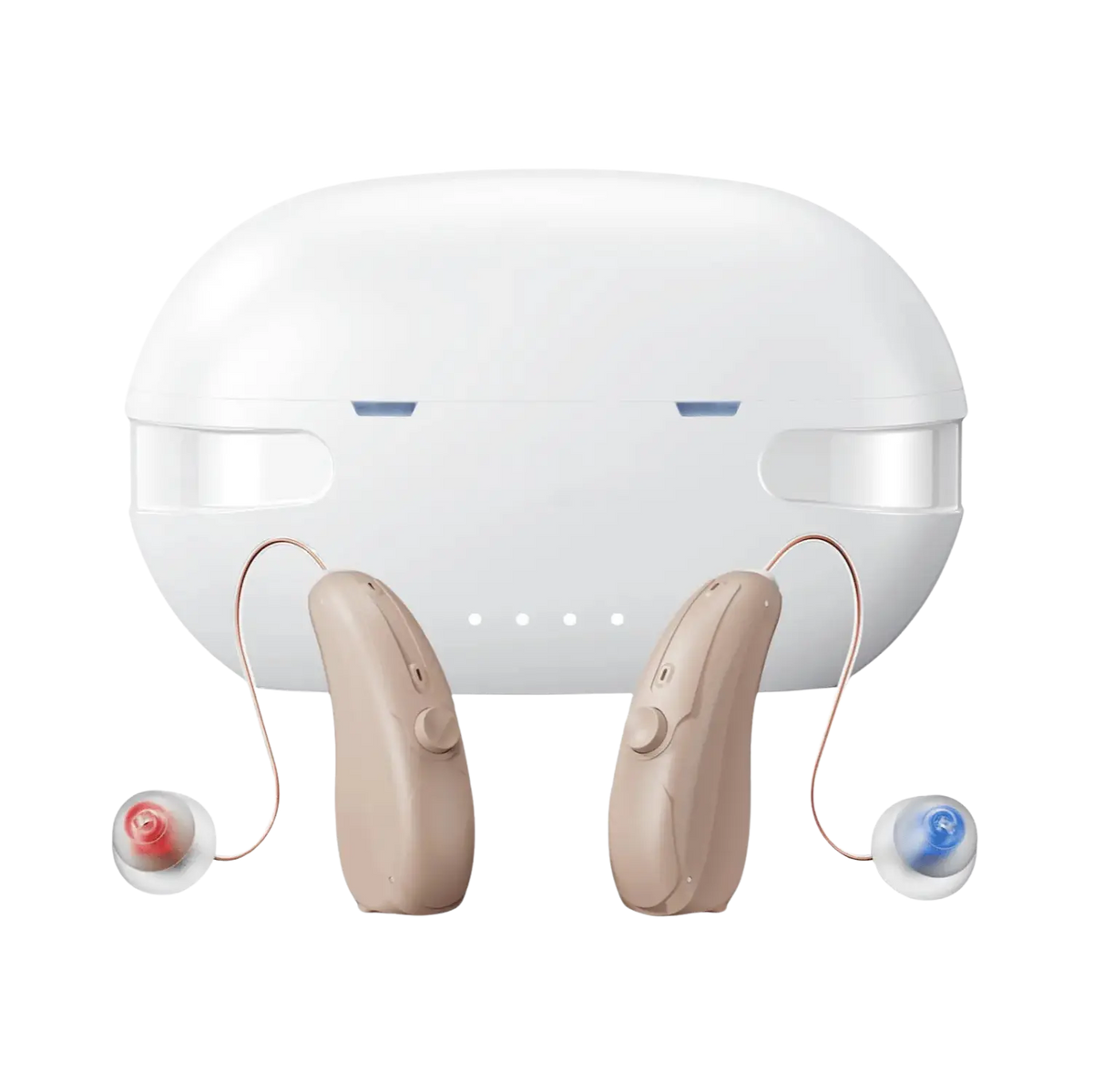
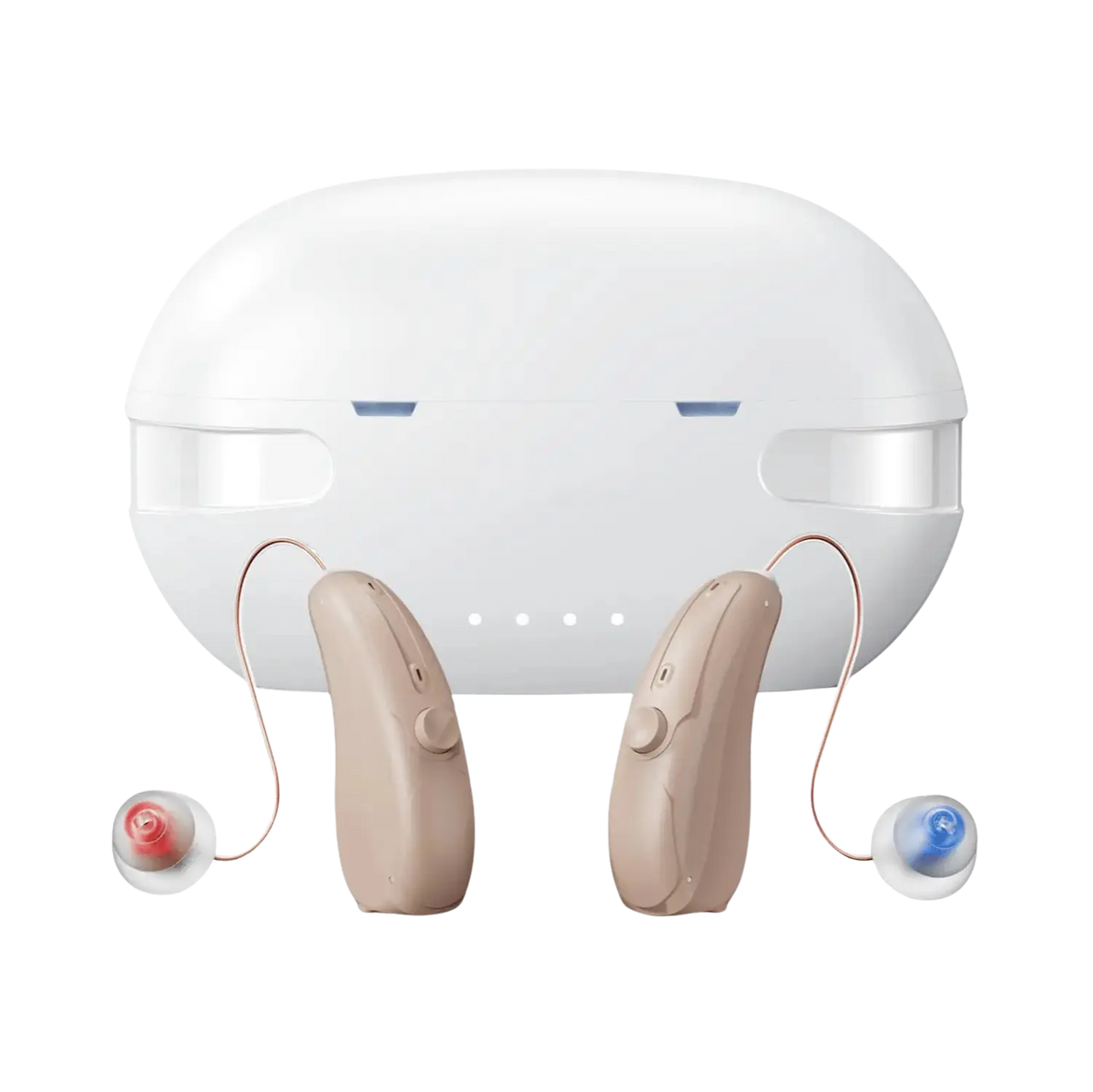
Panda Air är ett exempel på den här typen av självinställande receptfria hörapparater (OTC): en enhet i hörlursformat med 16-kanalig signalbehandling, ett snabbladdande etui som ger 60 timmars användning och ett valfritt appbaserat hörseltest i örat som kan anpassa förstärkningen efter användarens hörselprofil. Appen och testet är valfria, och Air fungerar direkt ur förpackningen utan dem. Mer information finns på pandahearing.com, med en provperiod på 45 dagar som börjar när produkten tas emot.
Receptfria enheter (OTC) är godkända för lätt till måttlig nedsättning; personer med svår eller grav hörselnedsättning har mest nytta av klinisk vård med utprovning av en hörselspecialist.
Studiens begränsningar
GBD-skattningar är statistiska modeller, inte direkta nationella undersökningar, och för länder med begränsade primärdata är osäkerhetsintervallen breda, vilket siffrorna här visar. Analysen beskriver också bördan snarare än orsakerna, så den kan inte förklara varför de svåra formerna minskade medan de lindrigare ökade, även om bättre behandling av öroninflammationer och infektionssjukdomar är en rimlig bidragande faktor.
Var står vi nu?
Tre decenniers data pekar mot en tydlig slutsats: framtidens hörselnedsättning, i Etiopien och globalt, handlar till stor del om lätt och måttlig nedsättning i åldrande befolkningar. Det är en börda som hälso- och sjukvårdssystem faktiskt kan göra något åt, förutsatt att screening och prisvärd förstärkning når dem som behöver det.
Tadesse S, Tolera ST, Beyene BN. Prevalence of Hearing Loss and Years Lived With Disability in Ethiopia From 1990 to 2023: A Subnational Analysis for the Global Burden of Diseases Study. SAGE Open Nursing. 2026. Hämtad från PubMed. https://doi.org/10.1177/23779608261490189