When Louder Makes It Harder: Study Finds High Volume Increases Listening Effort for Older Adults with Hearing Loss
New research in Hearing Research shows that turning up the sound can actually worsen speech understanding and measurably increase listening effort, especially for older adults with hearing loss.
Most people assume that when speech is hard to follow, the fix is simple: make it louder. A new study from researchers at the University of Maryland challenges that intuition. The team found that at high presentation levels, word recognition can actually decline, a phenomenon audiologists call "rollover."
The researchers went a step further than most previous work. By tracking pupil dilation, a well-established physiological marker of mental effort, they measured not just how well people understood words but how hard their brains were working to do it. The results have direct implications for how amplification should be managed in everyday listening.
Title: Increased listening effort and decreased speech perception at high presentation sound levels in older hearing-impaired adult listeners
Authors: Chengjie G. Huang, Natalie A. Field, Marie-Elise Latorre, Samira Anderson, Matthew J. Goupell
Affiliations: Department of Hearing and Speech Sciences, University of Maryland, College Park; Gerald Choa Neuroscience Institute and Department of Otorhinolaryngology, The Chinese University of Hong Kong; Program in Cognitive Science, McGill University
Journal: Hearing Research, Volume 481, published September 11, 2026
Study type: Experimental behavioral study with pupillometry
Reference: PubMed listing, DOI: 10.1016/j.heares.2026.109810
Background: Why the Researchers Looked at This
Everyday listening environments vary enormously in loudness, from a quiet living room to a crowded restaurant. Audiologists have long known about rollover, the counterintuitive finding that word recognition can get worse as sound levels climb past a certain point. What has been less clear is how rollover plays out across different age groups, and whether hearing loss makes it worse.
The second piece of the puzzle is listening effort. Two people can score the same on a word recognition test while one of them is working far harder mentally to achieve that score. That hidden effort matters: it contributes to fatigue, social withdrawal, and the exhaustion many people with hearing loss describe after conversations. Pupillometry, which measures tiny changes in pupil size, gives researchers an objective window into that effort.
The Maryland team wanted to know how sound level, background noise, age, and hearing status interact, both in what listeners can understand and in how much effort it costs them.
How the Study Was Done
The researchers recruited younger adults aged 25 and under and older adults over 50, the older group including listeners with normal hearing and listeners with mild-to-moderate hearing loss. Participants completed word identification tasks at multiple presentation levels, both in quiet and with background noise.
The word materials were chosen to probe both temporal speech contrasts, which depend on precise timing cues, and non-temporal contrasts. While participants listened, an eye tracker recorded their pupil dilation, providing a moment-by-moment measure of the mental effort each condition demanded.
This design let the team separate two questions that are usually blurred together: at what point does louder sound stop helping speech understanding, and what does pushing through loud, noisy conditions cost the listener in effort?
What the Researchers Found
Rollover was real and measurable. Word identification declined at high sound levels for both temporal and non-temporal speech contrasts, confirming that beyond a certain point, more volume does not mean more clarity.
Age and hearing status mattered. When speech was presented in background noise, rollover occurred in older listeners with normal hearing and in older listeners with hearing loss, showing that the aging auditory system is particularly vulnerable to the combination of high levels and noise.
The pupillometry data told a parallel story about effort. Listening effort rose with sound level, and background noise was the strongest driver of increased effort overall. Crucially, the effect of high sound levels on effort was exacerbated by both age and hearing loss, with the greatest effort expended by older listeners with hearing loss.
In other words, the group most likely to rely on amplification, older adults with hearing loss, is also the group that pays the highest cognitive price when that amplification pushes sound to high levels in noisy places.
What It Means for People with Hearing Loss
The findings carry a practical message: simply making everything louder is not a good hearing strategy. Past a certain level, extra volume degrades understanding and increases the mental workload of following a conversation. That helps explain why some people find poorly adjusted amplification tiring rather than helpful, particularly in restaurants, family gatherings, and other noisy settings.
The authors note that these age- and hearing-dependent effects of rollover have implications for the effective treatment of age-related hearing loss. Amplification needs to be managed carefully so that speech is audible without being pushed into the range where performance drops and effort spikes.
For listeners, the study also validates a common experience: if conversations in loud places leave you drained even when you catch most of the words, that fatigue reflects genuine, measurable cognitive effort, not a lack of attention or motivation.
Managing Loud Environments Without Just Adding Volume
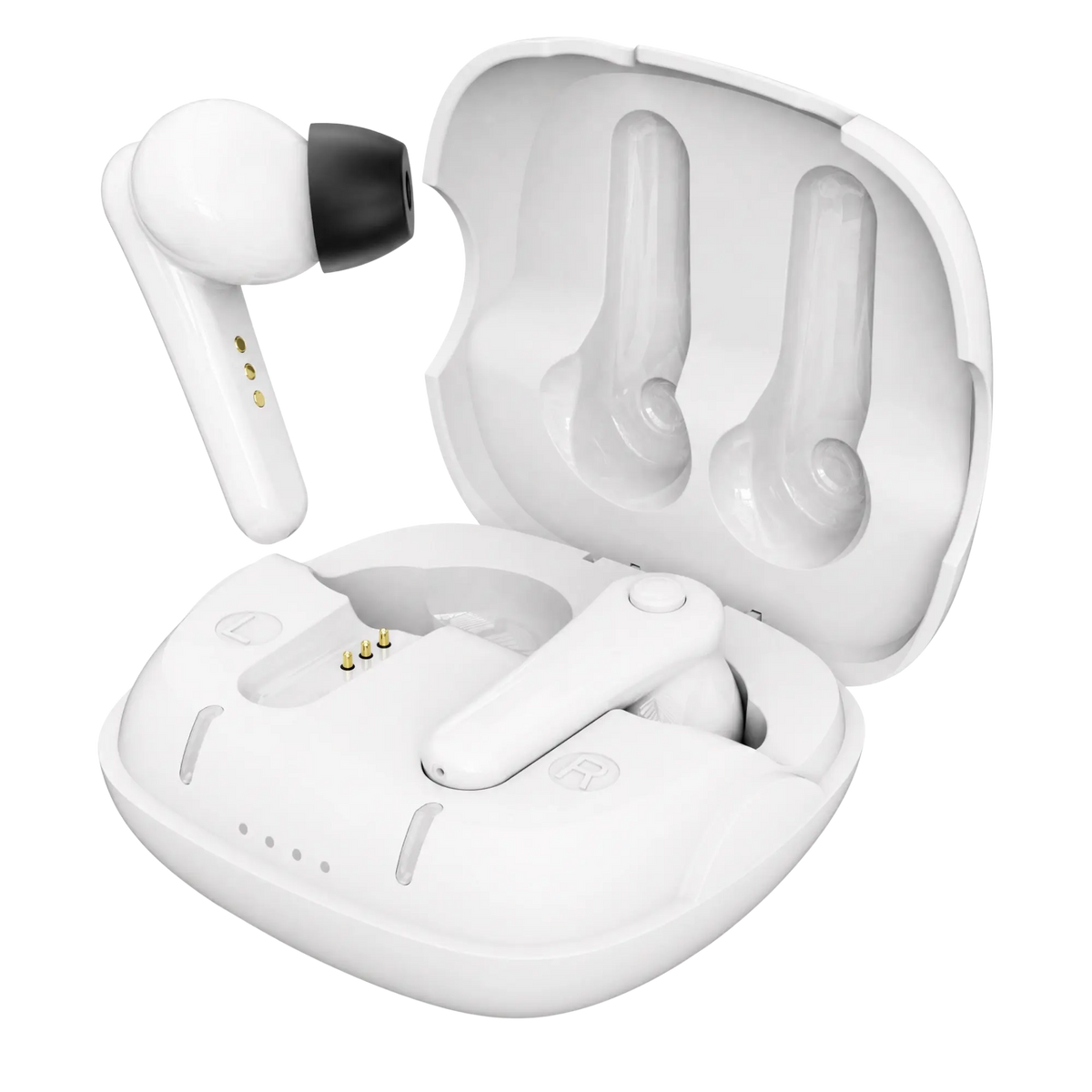
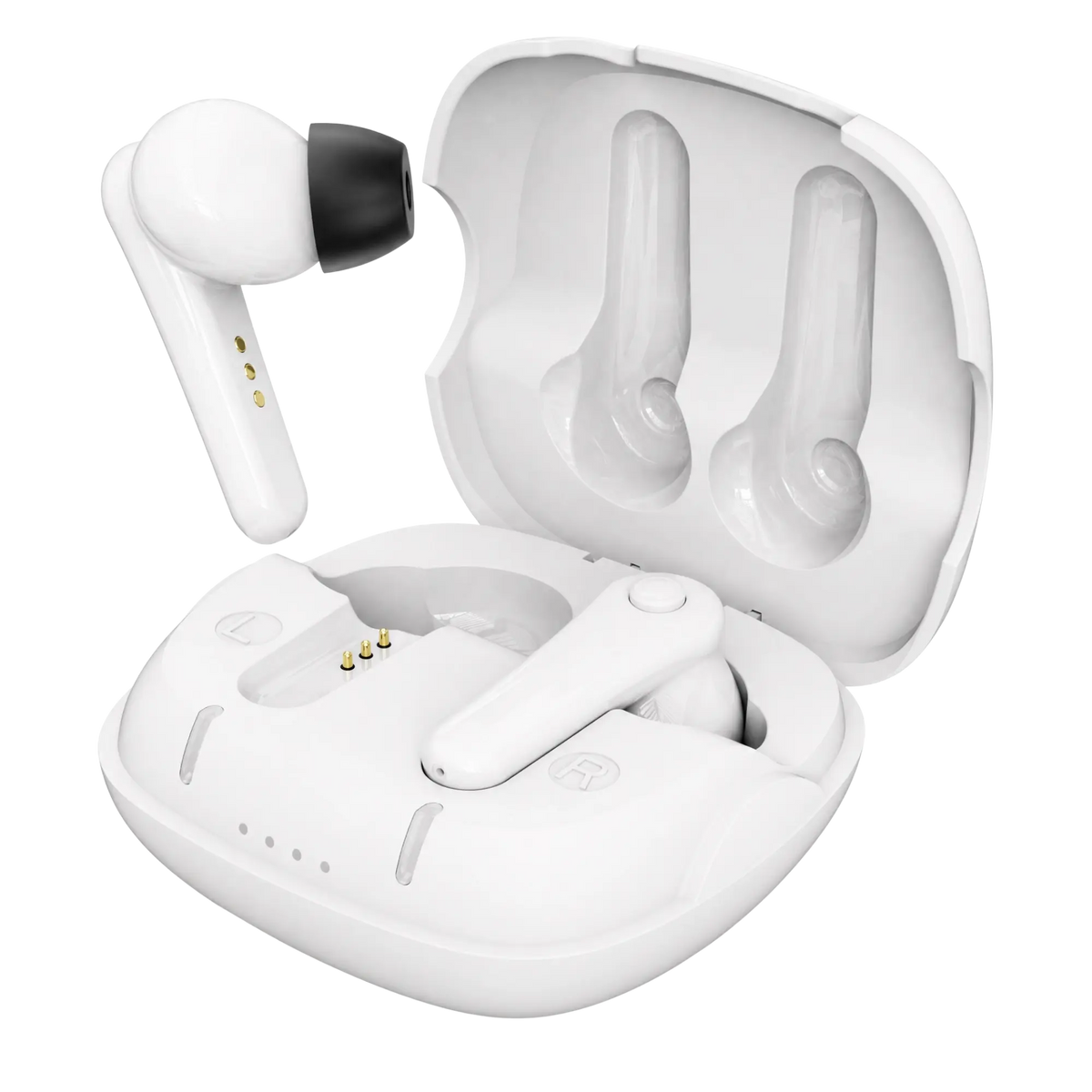
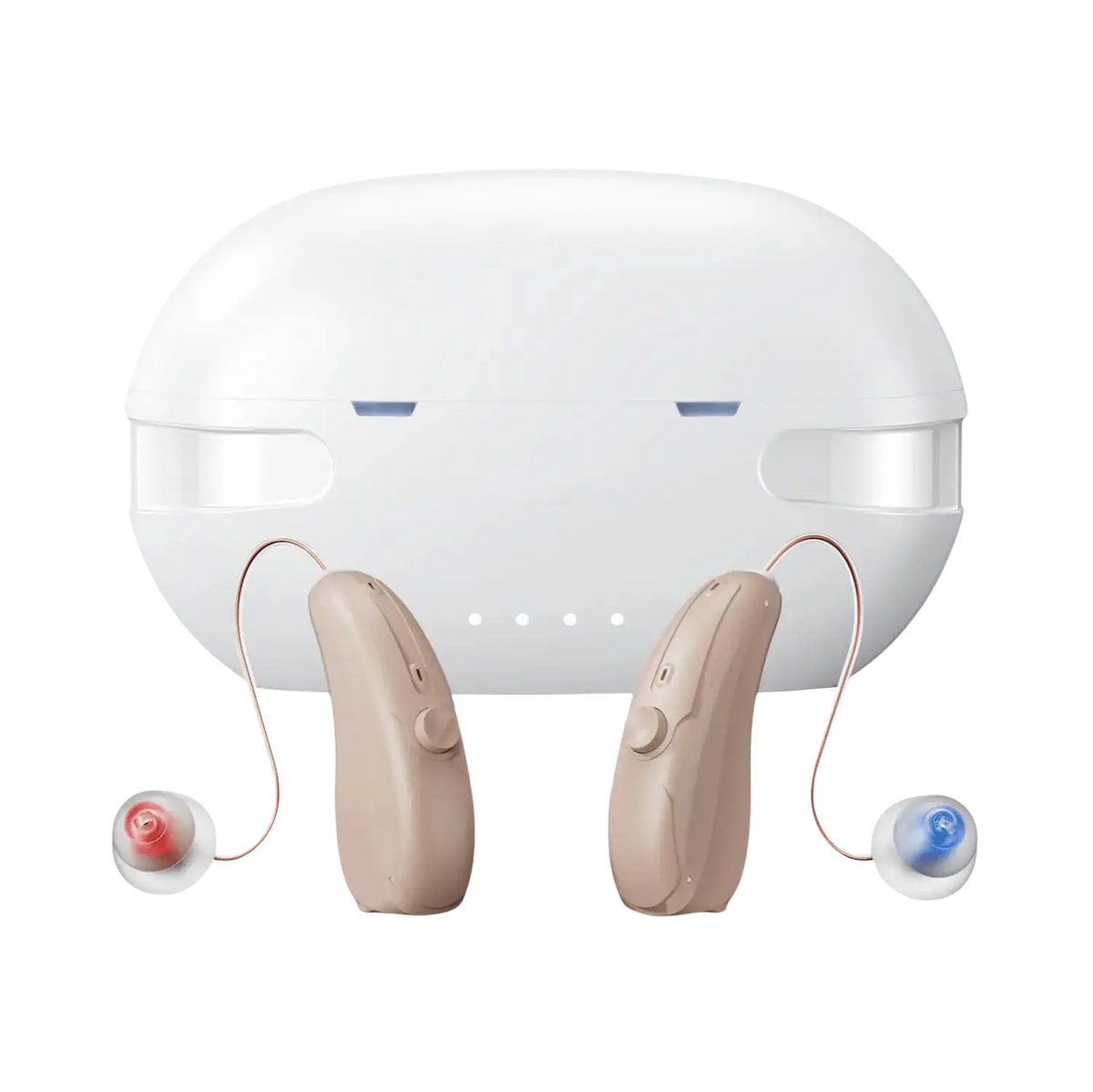
Because this study shows that raw loudness can work against speech understanding, modern FDA-OTC hearing aids increasingly focus on processing sound intelligently rather than amplifying everything equally. Panda Quantum reflects that approach: it uses 16-channel WDRC processing with adaptive noise reduction hearing aid technology designed to keep speech audible while managing background sound, supporting clear speech in noisy environments rather than simply turning the world up.
Quantum runs 20 hours per charge, with a case that provides three additional full charges for 80 hours total, and includes Bluetooth for calls, TV, and music along with a 5-year warranty and a 45-day trial that starts when the product is received. An optional companion app can run an in-ear hearing test and personalize gain and frequency response to the user's hearing profile, though the device works fully without the app or the test.
One caveat worth noting: OTC hearing aids are approved for mild-to-moderate hearing loss. People with severe or profound loss, or those who find that amplification consistently worsens their understanding, benefit most from a clinical fitting with an audiologist.

Limitations of This Research
The study was conducted under controlled laboratory conditions using word identification tasks, which do not capture the full complexity of real-world conversation. The older hearing-impaired group had mild-to-moderate loss, so the results may not generalize to more severe hearing loss, and pupillometry, while well validated, is an indirect measure of cognitive effort. The abstract does not report funding sources or conflicts of interest.
Where This Leaves Us
This research adds rigorous physiological evidence to something clinicians have long suspected: for aging ears, louder is not better, and the cost of loud, noisy listening shows up in the brain's workload before it shows up in test scores. Whether hearing help comes from a clinic or over the counter, the goal should be sound that is clear and comfortable, not simply loud, and anyone who finds high volumes tiring or muddling has good scientific reason to trust that experience.
Huang CG, Field NA, Latorre ME, Anderson S, Goupell MJ. Increased listening effort and decreased speech perception at high presentation sound levels in older hearing-impaired adult listeners. Hearing Research. 2026;481:109810. Retrieved from PubMed. https://doi.org/10.1016/j.heares.2026.109810