Self-Fitting Over-the-Counter Hearing Aids Match Clinic-Fitted Devices, New Meta-Analysis Finds
Adults who set up their own over-the-counter hearing aids reported real-world benefit on par with people fitted by an audiologist, according to a new evidence review that pooled 15 studies and 774 participants.
Since 2022, when United States regulators created a category of over-the-counter (OTC) hearing aids, adults with mild to moderate hearing loss have been able to buy a device without a clinic visit, a prescription, or a professional fitting. The promise was lower cost and easier access. The open question was whether skipping the audiologist would mean settling for worse results.
A new systematic review and meta-analysis set out to answer that question by gathering every credible head-to-head comparison it could find and combining the results statistically. Based on articles retrieved from PubMed, the study was published on June 17, 2026 in the journal Otolaryngology-Head and Neck Surgery.
Title: Effectiveness of Over-the-Counter Hearing Aids Versus Professionally Fitted Devices: A Systematic Review and Meta-analysis
Authors: Karina C. De Sousa, Ibrahim Almufarrij, Megan Kruger, Vinaya Manchaiah, Kevin J. Munro, De Wet Swanepoel
Affiliations: University of Pretoria, South Africa; the Virtual Hearing Lab, a collaboration between the University of Colorado and the University of Pretoria; King Saud University, Saudi Arabia; the University of Manchester, United Kingdom; the University of Colorado School of Medicine; and Manipal Academy of Higher Education, India
Journal and date: Otolaryngology-Head and Neck Surgery, June 17, 2026
Study type: Systematic review and meta-analysis (24 reports covering 15 unique studies, 774 participants)
Source: Retrieved from PubMed. DOI: 10.1002/ohn.70306
Background: Why the Researchers Looked at This
A traditional hearing aid is programmed by an audiologist, who measures a person's hearing, sets the device to match the resulting audiogram, and fine-tunes it over follow-up visits. A self-fitting OTC hearing aid shifts that work to the user, usually through a smartphone app that runs a hearing check and adjusts the device automatically. The convenience is obvious, but so is the worry: if the fitting is done without a clinician, will the sound quality and everyday benefit fall short?
Individual studies had hinted that self-fitting could hold its own, but they were small and sometimes contradictory. The researchers behind this review wanted to combine the available evidence into a single, larger picture, and to grade how trustworthy that picture is.
How the Study Was Done
The team searched several research databases, including PubMed, Scopus, and Web of Science, along with United States Food and Drug Administration clearance records and the ClinicalTrials.gov registry. The searches were run in March 2025 and updated in August 2025, and the authors also contacted manufacturers for unpublished data. From 712 records, they kept 24 reports that together represented 15 unique studies, with 774 participants and 739 whose results could be analyzed.
Most of the included studies were short field trials lasting between 10 days and 8 weeks, in which the same device was set up either by the user or by a professional so the two approaches could be compared directly. The researchers pooled the results using a random-effects meta-analysis and a standardized statistic called Hedges' g, where a value near zero means the two groups performed about the same. They also rated each study for risk of bias and used the GRADE system to judge the overall certainty of the evidence.
What the Researchers Found
Across every outcome the team examined, self-fitting and professional fitting came out essentially even. On the Abbreviated Profile of Hearing Aid Benefit, a questionnaire about everyday listening, the difference was negligible (Hedges' g of -0.05, with a confidence interval running from -0.19 to 0.09). The Speech, Spatial and Qualities of Hearing scale showed the same pattern (g of 0.01), as did the International Outcome Inventory for Hearing Aids (g of 0.12).
Even a performance test, the Quick Speech-in-Noise measure, which scores how well someone follows speech against background noise, showed no meaningful gap (g of 0.03). In each case the confidence interval crossed zero, the statistical sign that the groups cannot be distinguished. In plain terms, people who fit the devices themselves reported and performed about as well as people fitted in a clinic.
The authors were careful about how much weight to place on this. They rated the risk of bias in the underlying studies as moderate to high, and the overall certainty of the evidence as low, meaning the headline result is encouraging but not yet settled.
What It Means for People with Hearing Loss
For the large number of adults who put off getting help because a clinic fitting feels expensive or hard to arrange, the message is reassuring. The best current evidence suggests that a well-designed self-fitting device, set up carefully at home, can deliver the kind of day-to-day benefit that people have long associated with a professional fitting.
That does not make audiologists optional for everyone. The studies focused on adults with milder hearing loss, the group OTC devices are designed for, and they measured the first weeks of use rather than years. But as a starting point, the review supports the idea that taking the first step toward better hearing no longer has to begin in a waiting room.
Putting Self-Fitting Into Practice: How One OTC Device Tunes Itself to Your Hearing
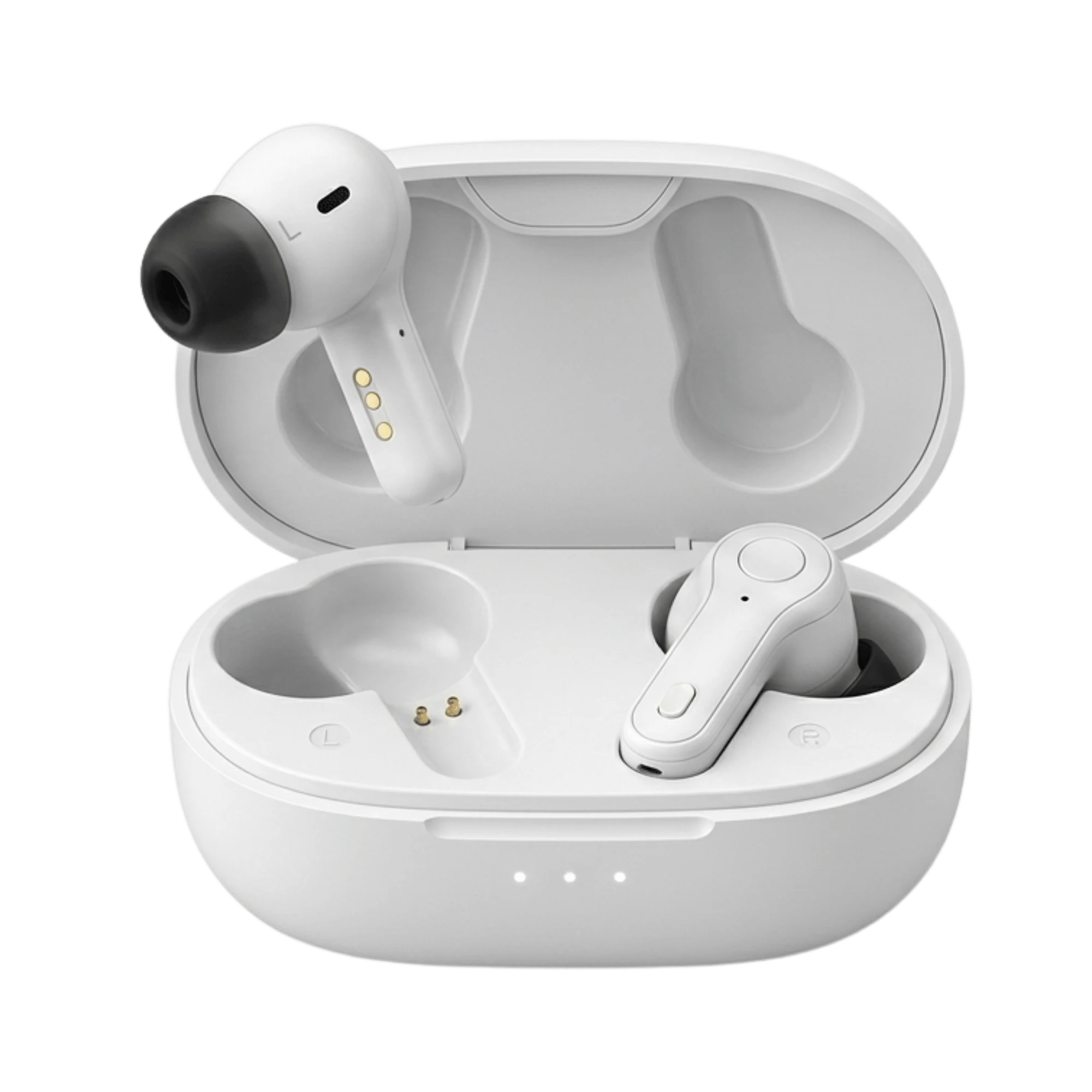
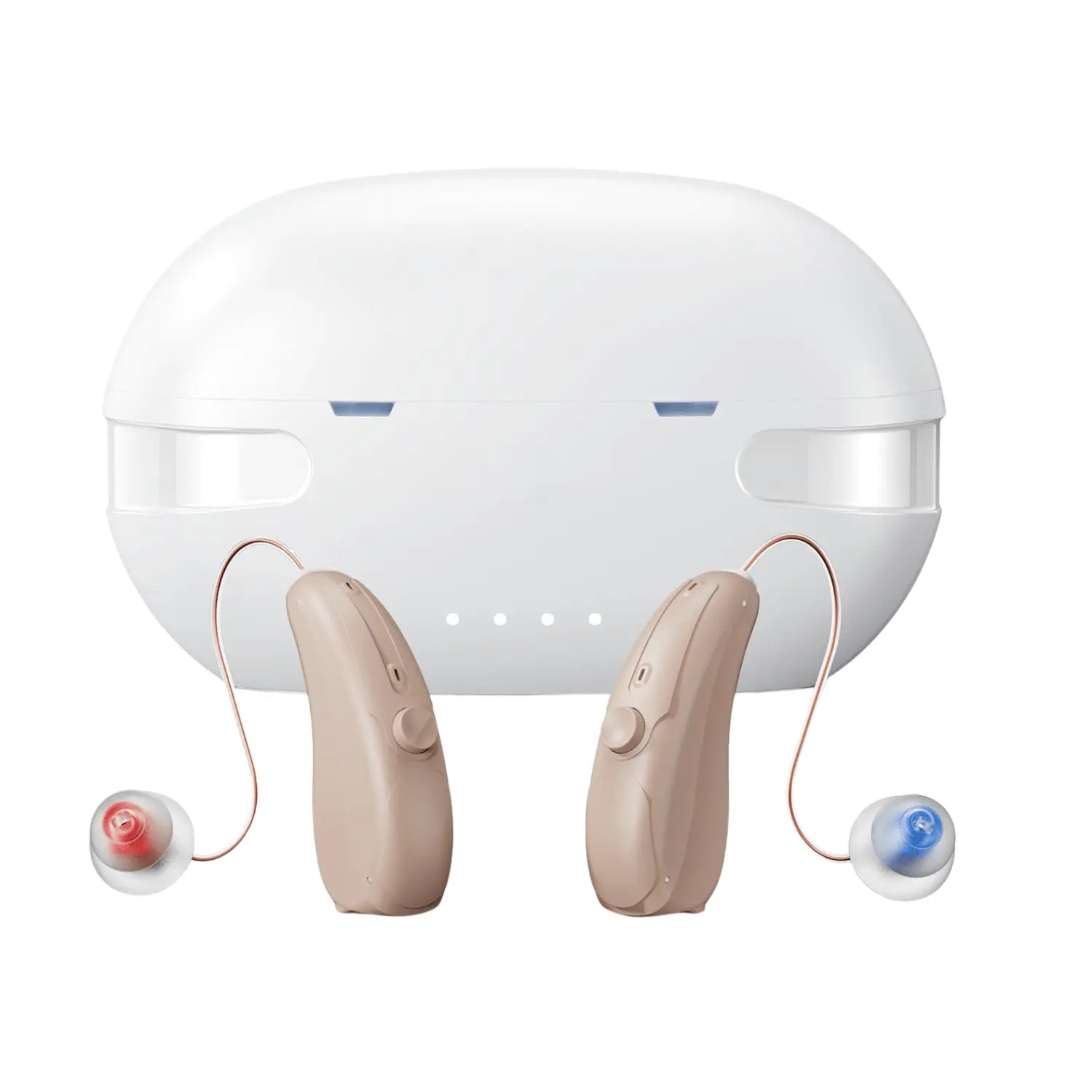
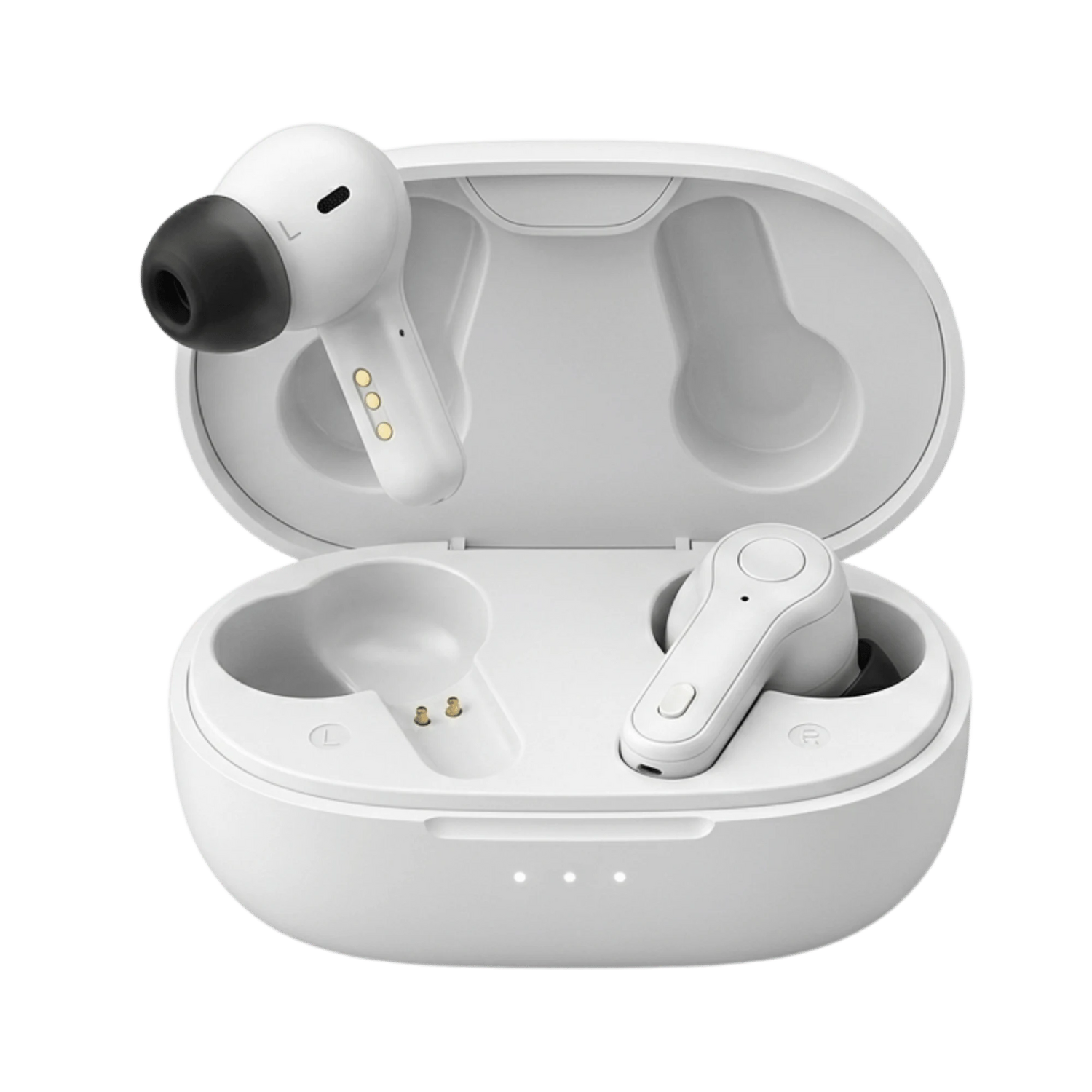
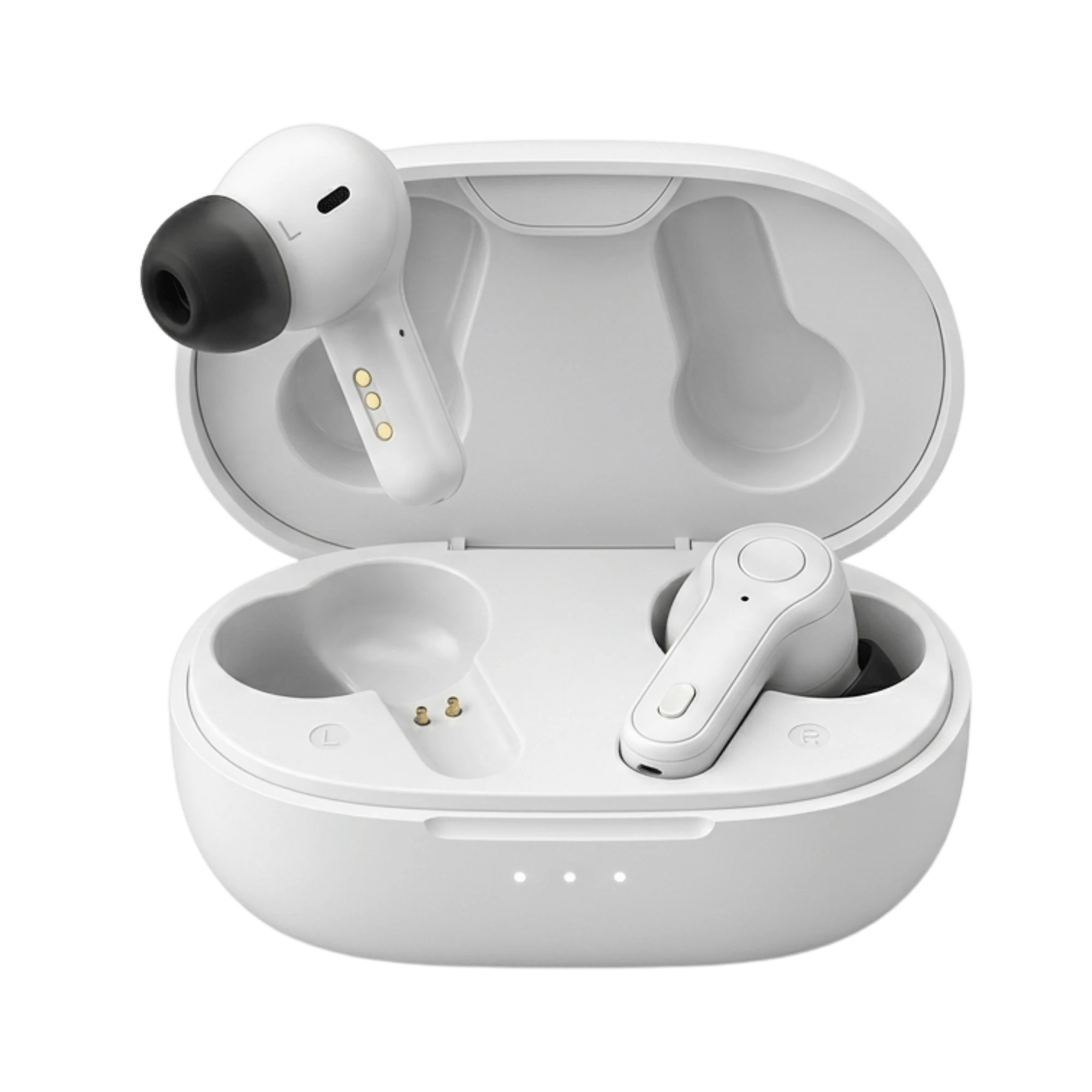
The review's central finding, that a careful self-fitting can match a clinic fitting, is exactly the gap that modern self-fitting OTC hearing aids are built to close. The Panda Air is one example of how that works in practice. After the device arrives, the wearer pairs it with the Panda app, which runs a frequency-specific hearing test through the hearing aid itself and then programs the device's gain and frequency response to match the user's audiogram, similar to what an audiologist does at a clinical fitting.
That app-based hearing personalization is paired with hardware aimed at everyday listening: 16-channel processing that shapes sound across the frequency range, multi-band adaptive noise reduction for busier settings, and an earbud-style design that sits in the canal. As a rechargeable hearing aid with a charging case rated for about 60 hours between wall charges, it is built to be lived with rather than fussed over, and Panda backs it with a 5-year warranty and a 45-day return window.
One caveat worth keeping in mind, and one the study population reflects, is that OTC devices are cleared for mild to moderate hearing loss. People with severe or profound loss still tend to benefit most from a clinical fitting and professional follow-up.
Limitations of This Research
The authors are direct about the weaknesses of the evidence they pooled. Most trials were short, lasting from about 10 days to 8 weeks, so they cannot speak to how self-fitted devices perform over months or years. Many compared self and professional setups of the same device in the same people, which is a clean design but a narrow one, and the total number of participants remains modest. Because the risk of bias was moderate to high and the certainty of evidence was rated low under GRADE, the authors call for larger, independent trials run inside ordinary clinical pathways before treating the question as closed. Specific funding sources and competing interests were not detailed in the study abstract.
Where This Leaves Us
The strongest evidence assembled so far points in a consistent direction: for adults with milder hearing loss, fitting a quality OTC device yourself appears to deliver benefit comparable to a professional fitting, even if the certainty is not yet high. For anyone who has hesitated to address hearing loss because of cost or access, that is a reason to take the first step sooner rather than later, while keeping a clinician in reach for more complex hearing needs.
De Sousa KC, Almufarrij I, Kruger M, Manchaiah V, Munro KJ, Swanepoel W. Effectiveness of Over-the-Counter Hearing Aids Versus Professionally Fitted Devices: A Systematic Review and Meta-analysis. Otolaryngology-Head and Neck Surgery. 2026. Retrieved from PubMed. https://doi.org/10.1002/ohn.70306