How Audiologists Choose Hearing Aid Technology Levels: New Survey Points to Lifestyle as the Deciding Factor
A national survey of 185 clinical audiologists finds that a patient's listening environments and lifestyle, more than any test result, drive which hearing aid technology level gets recommended.
Anyone who has shopped for prescription hearing aids knows that the same device family usually comes in several technology tiers, each step up carrying a higher price. What is less clear to consumers is how the professional across the desk decides which tier to recommend.
A new study from Northwestern University surveyed audiologists across the United States to find out what actually drives those recommendations. The answer, in most clinics, is not an audiogram score or a formal test battery. It is a conversation about how you live.
About This Study
Title: Audiologist Decision-Making: Hearing Aid Technology Levels and Auditory Ecology
Authors: Rachael Pennock and Pamela Souza
Affiliations: Northwestern University, Evanston, Illinois
Journal: Journal of the American Academy of Audiology, July 2026
Study type: Cross-sectional survey of clinical audiologists
PubMed DOI: 10.3766/jaaa.250077
Background: Why the Researchers Looked at This
Hearing aid manufacturers typically sell each product family at multiple technology levels. Higher levels promise more sophisticated noise management, more processing channels, and more automatic features. Audiologists are expected to use evidence-based practice when recommending one level over another, yet the researchers note that published guidance on how to make that call is limited and sometimes conflicting.
Manufacturers have promoted the idea that a patient’s "auditory ecology" should guide the choice. Auditory ecology means the range of listening situations a person moves through in daily life: quiet rooms, busy restaurants, group gatherings, outdoor settings. The theory is that people with more demanding listening lives will benefit more from premium technology.
What was unknown is how clinicians handle this in practice, given that independent research has not consistently shown that higher technology tiers produce better real-world outcomes for every patient. Pennock and Souza set out to document what audiologists actually do.
How the Study Was Done
The researchers distributed an online survey to audiologists across the United States. The 21 questions covered respondent demographics, how they select hearing aids and technology levels, whether and how they assess a patient's auditory ecology, and how they judge patients' success with the devices.
A total of 185 completed surveys from clinical audiologists were included. The team summarized responses descriptively and then tested whether clinician characteristics, such as years of experience or work setting, changed how auditory ecology was used.
What the Researchers Found
Most of the 185 audiologists reported that a patient's listening demands and environments were the single most important consideration when selecting a technology level, ranking above other clinical factors.
The most popular way of evaluating a patient's auditory ecology was simply the clinical interview. Rather than questionnaires or structured tools, most clinicians asked patients to describe their routines and listening situations and made a judgment from there, sometimes combining several methods.
A consistent recommendation pattern emerged: higher-level technology for patients with more active lifestyles, and lower-level technology for patients with calmer, quieter lifestyles.
Clinician factors did not change this picture. Experience level and practice characteristics did not meaningfully affect whether auditory ecology was used or how technology levels were recommended. Notably, using auditory ecology assessments did not affect hearing aid return or exchange rates, meaning the researchers could not show that this common approach leads to measurably better purchase outcomes.
The authors conclude that more research is needed on the nuances of clinical interviews and on how well lifestyle-based technology matching actually predicts patient success.
What It Means for People with Hearing Loss
If you have ever been asked in a hearing clinic whether you eat out often or attend group events, this study explains why: your answer probably shaped which price tier you were shown. That is a reasonable clinical instinct, but the study also highlights that the evidence connecting premium tiers to better outcomes remains limited and conflicting.
For consumers, the practical takeaway is to be an active participant in that conversation. Being specific about your real listening life helps a clinician match technology to your needs, and asking what a higher tier concretely adds for your situations is a fair question.
The findings also matter for people who never make it to a clinic at all. When recommendations hinge on lifestyle conversations rather than fixed test thresholds, it underlines that hearing help is not one-size-fits-all, and that cost tiers are a professional judgment call rather than a medical necessity in many cases.
Matching Technology to Your Listening Life Without the Premium Tier Price
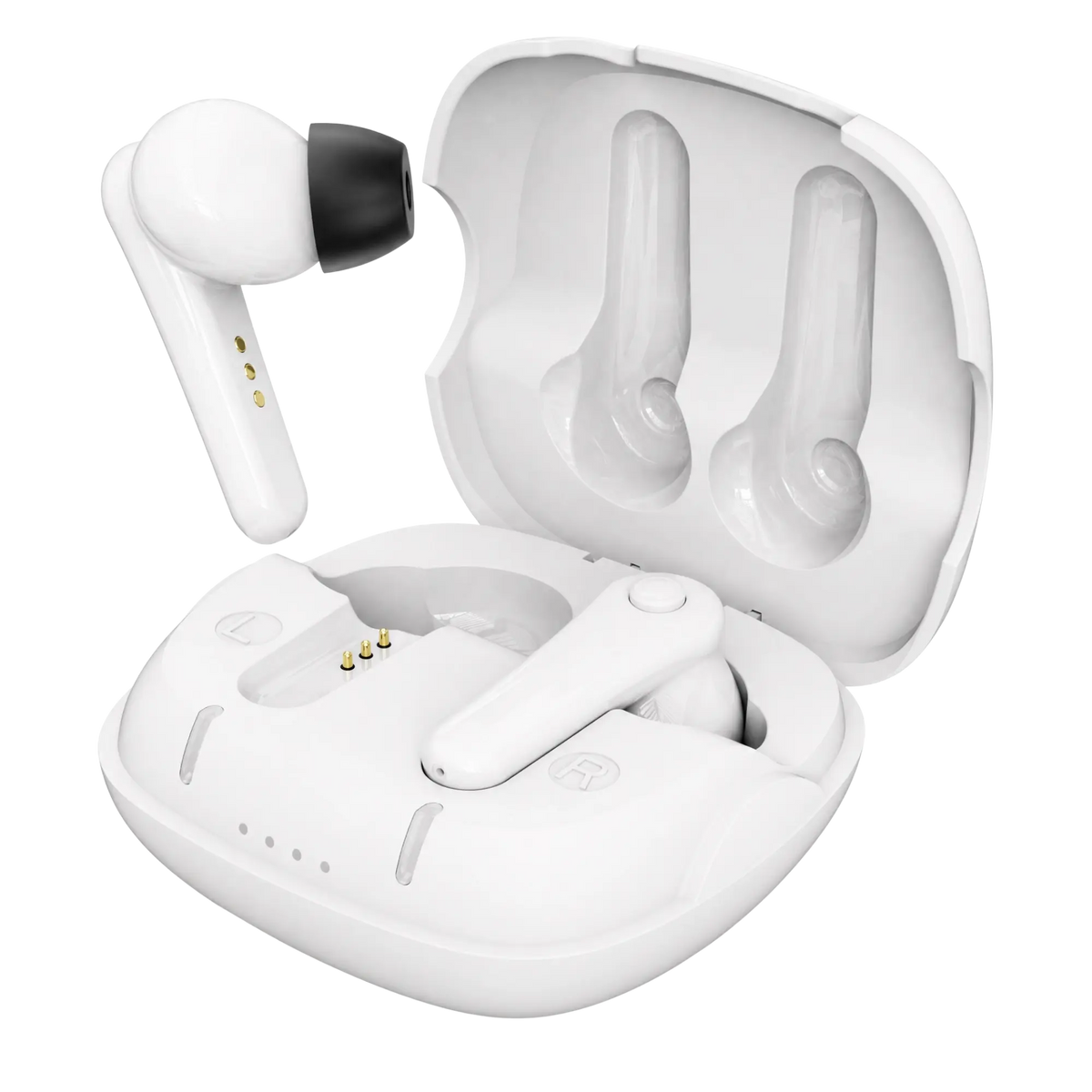
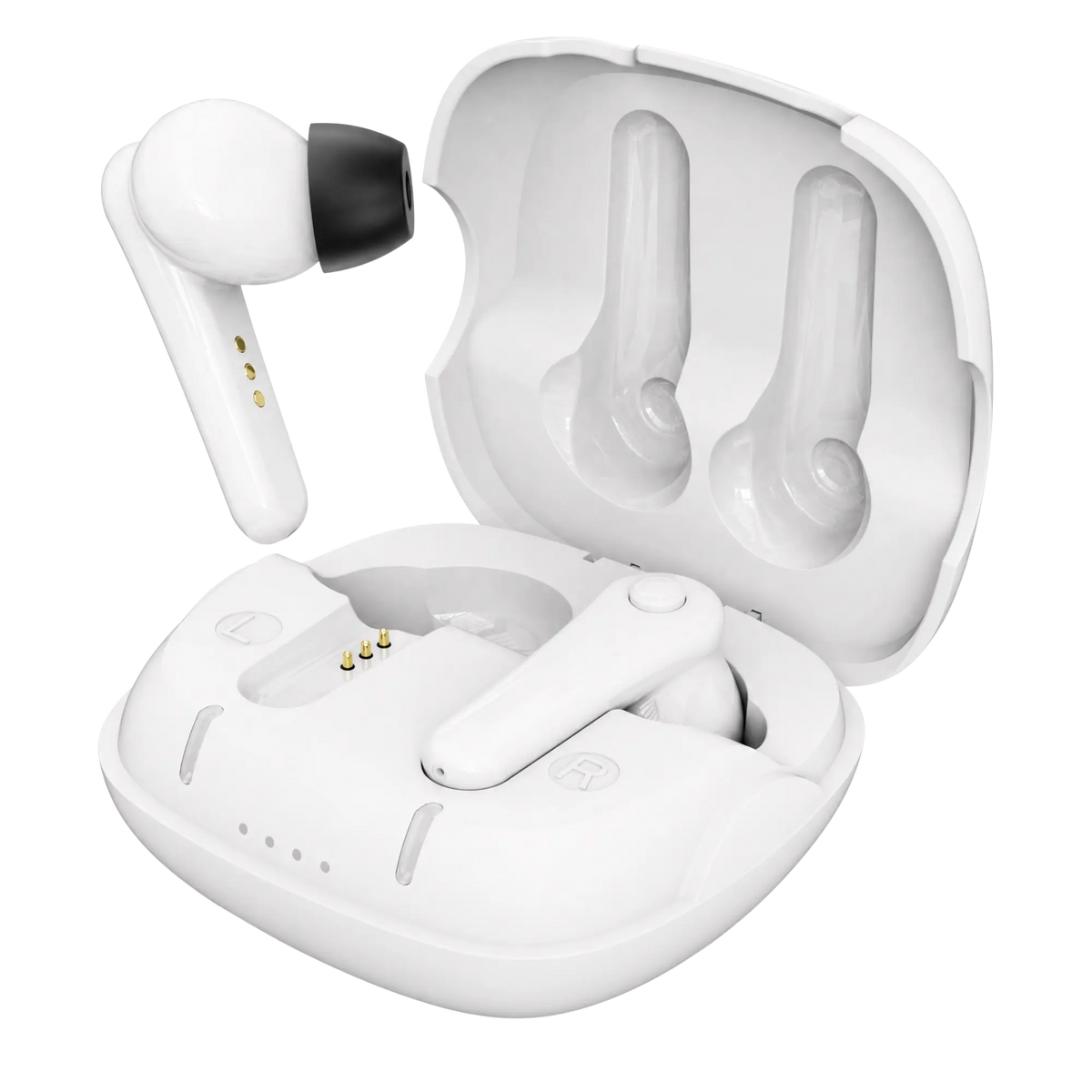
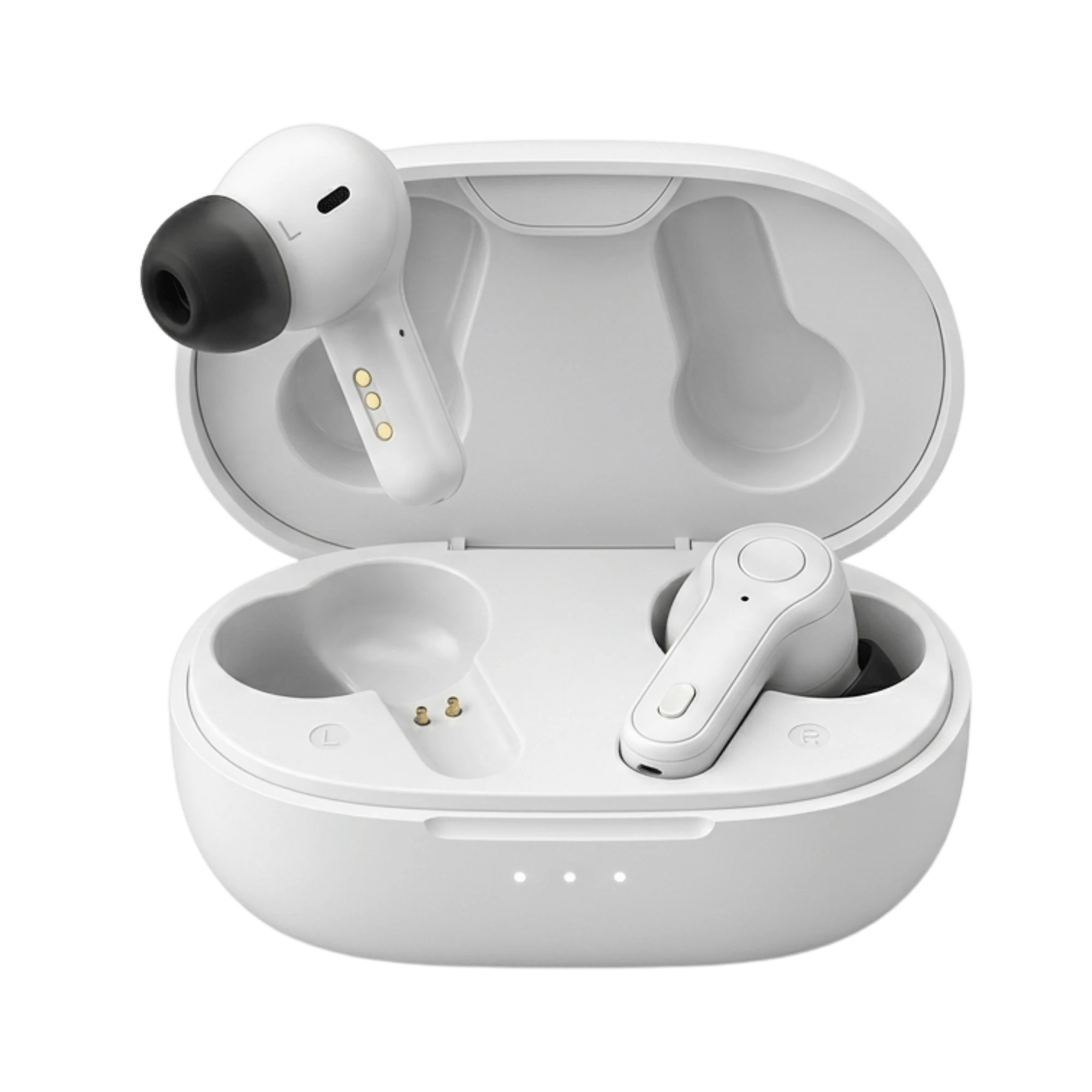
Because this study shows that technology-level recommendations, and their price steps, often come down to lifestyle judgments rather than firm clinical evidence, newer FDA-OTC hearing aids are designed to give people a lower-cost way to get capable technology and tune it to their own listening life. Panda Air is one such device, a modern earbud-style, self-fitting OTC hearing aid with 16-channel WDRC processing and multi-band adaptive noise reduction.
Instead of a tiered lineup, Air uses an optional app-based in-ear hearing test: the optional Panda app can run a frequency-specific test through the aid itself and personalize gain and frequency response to your hearing profile. The aid also works straight out of the box without the app or the test. A fast-charge case provides 60 hours of total use, Bluetooth handles calls, TV, and music, and the device carries a 5-year warranty with a 45-day trial that starts when you receive it. Details are at pandahearing.com/products/panda-air.
One caveat worth keeping: OTC hearing aids are approved for mild-to-moderate hearing loss. People with severe or profound loss still benefit most from a clinical fitting with a professional.
Limitations of This Research
This was a self-report survey, so it captures what audiologists say they do rather than direct observation of clinical practice. The 185 respondents may not represent all US audiologists, and the survey format cannot establish whether lifestyle-matched recommendations actually improve patient outcomes. The abstract does not disclose funding sources or conflicts of interest.
Where This Leaves Us
Technology-level selection remains one of the least standardized steps in hearing care. This survey documents that clinicians lean heavily on lifestyle conversations, a sensible but largely unvalidated approach. Until stronger evidence links specific technology tiers to real-world benefit, patients are well served by asking questions, describing their listening lives in detail, and knowing that lower-cost paths to hearing help now exist.
Pennock R, Souza P. Audiologist Decision-Making: Hearing Aid Technology Levels and Auditory Ecology. Journal of the American Academy of Audiology. 2026;37(4):280-297. Retrieved from PubMed. https://doi.org/10.3766/jaaa.250077