Combined Hearing and Vision Loss Linked to Much Higher Odds of Daily-Life Limitations
A nationally representative analysis of 29,522 US adults found that people with both hearing and vision impairment faced roughly four to six times the odds of limitations in communication, mobility, errands, self-care, and social participation.
Most research on sensory loss studies one sense at a time. Yet many older adults live with some degree of both hearing and vision difficulty, a combination clinicians call dual sensory impairment. Because the two senses often compensate for each other, losing ground on both at once may hit everyday functioning far harder than either loss alone.
A new study using data from the 2023 National Health Interview Survey puts national numbers on that idea, asking how common dual sensory impairment is among US adults and how strongly it is tied to limitations across five domains of daily living.
About This Study
Title: Associations of Vision, Hearing, and Dual Sensory Impairments With Functional Outcomes: A Nationwide Analysis
Authors: Shahad M. Kaiwa, Mohammed Abdalhalem, Khalid M. Alqahtani, Renad A. Alharbi, Abdulaziz K. Alolayt, Sarah A. Alhaddad, Walaa E. Alghafli, Zahraa E. Alsadi, Abdulrahman O. Hafeezallah, Khalid M. Aloufi
Affiliations: Colleges of Medicine at Taibah University (Medina), King Khalid University (Abha), Imam Abdulrahman Bin Faisal University (Dammam), Vision College (Riyadh), and the University of Jeddah, Saudi Arabia
Journal: Cureus, September 2026
Study type: Retrospective cross-sectional analysis of a nationally representative US health survey
Background: Why the Researchers Looked at This
Dual sensory impairment simply means having difficulty with both hearing and vision at the same time. It becomes more common with age, and researchers have long suspected it carries a heavier functional burden than either impairment alone, because a person who cannot hear well often leans on lip-reading and visual cues, while a person who cannot see well leans on sound.
Previous estimates of how common the combination is, and how much it affects daily life, have come mostly from smaller or regional samples. The authors wanted two things: a current national prevalence figure for US adults, and a head-to-head comparison of functional limitations across people with vision impairment only, hearing impairment only, and both.
How the Study Was Done
The researchers analyzed the 2023 National Health Interview Survey, an annual in-person survey run by the US government, applying its sampling weights so the results represent the national adult population. Their analysis included 29,522 adults. Hearing and vision impairment were identified from respondents' own reports of difficulty hearing or seeing, and people reporting both were classified as having dual sensory impairment.
Functioning was assessed in five domains: communication, social participation, running errands independently, walking or getting around (ambulation), and self-care. The team used multivariable logistic regression, which adjusts for demographic and clinical factors such as age and chronic disease, to estimate how much higher the odds of limitation were in each domain for each sensory group, expressed as adjusted odds ratios.
What the Researchers Found
Dual sensory impairment was not rare: 1,858 participants, or 5.6 percent of US adults in the weighted analysis, reported difficulty with both hearing and vision. This group was older on average and had higher rates of obesity and smoking, poorer self-rated health, and lower life satisfaction than adults with no sensory impairment.
After adjustment, dual sensory impairment was independently associated with older age, smoking history, hypertension, stroke, coronary artery disease, cancer, chronic obstructive pulmonary disease, dementia, anxiety, and depression. An initial association with diabetes did not hold up once other factors were taken into account.
The functional findings were the study's core result. In every one of the five domains, adults with dual sensory impairment had the highest odds of limitation, higher than those with hearing loss alone or vision loss alone. The adjusted odds ratios were 6.03 for communication, 4.08 for social participation, 3.87 for ambulation, 3.81 for independent errands, and 3.55 for self-care, all statistically significant.
Put plainly: an adult living with both hearing and vision difficulty had about six times the odds of struggling to communicate, and roughly four times the odds of struggling with social life, mobility, and errands, compared with adults without sensory impairment.
What It Means for People with Hearing Loss
The study is a reminder that the senses work as a team. Hearing difficulty that feels manageable on its own can become a much larger problem when eyesight starts to fade too, because the usual workarounds, such as reading lips, watching faces, and following captions, depend on vision.
That argues for treating sensory health proactively rather than one crisis at a time. For older adults, regular checks of both hearing and vision, and acting early on whichever is slipping, may help protect the everyday abilities this study measured: holding a conversation, staying social, getting out of the house, and managing errands independently. Communication showed the strongest association of all five domains, and communication is the domain where hearing help has the most direct role to play.
When Communication Carries Six Times the Odds of Limitation, Simplicity Counts
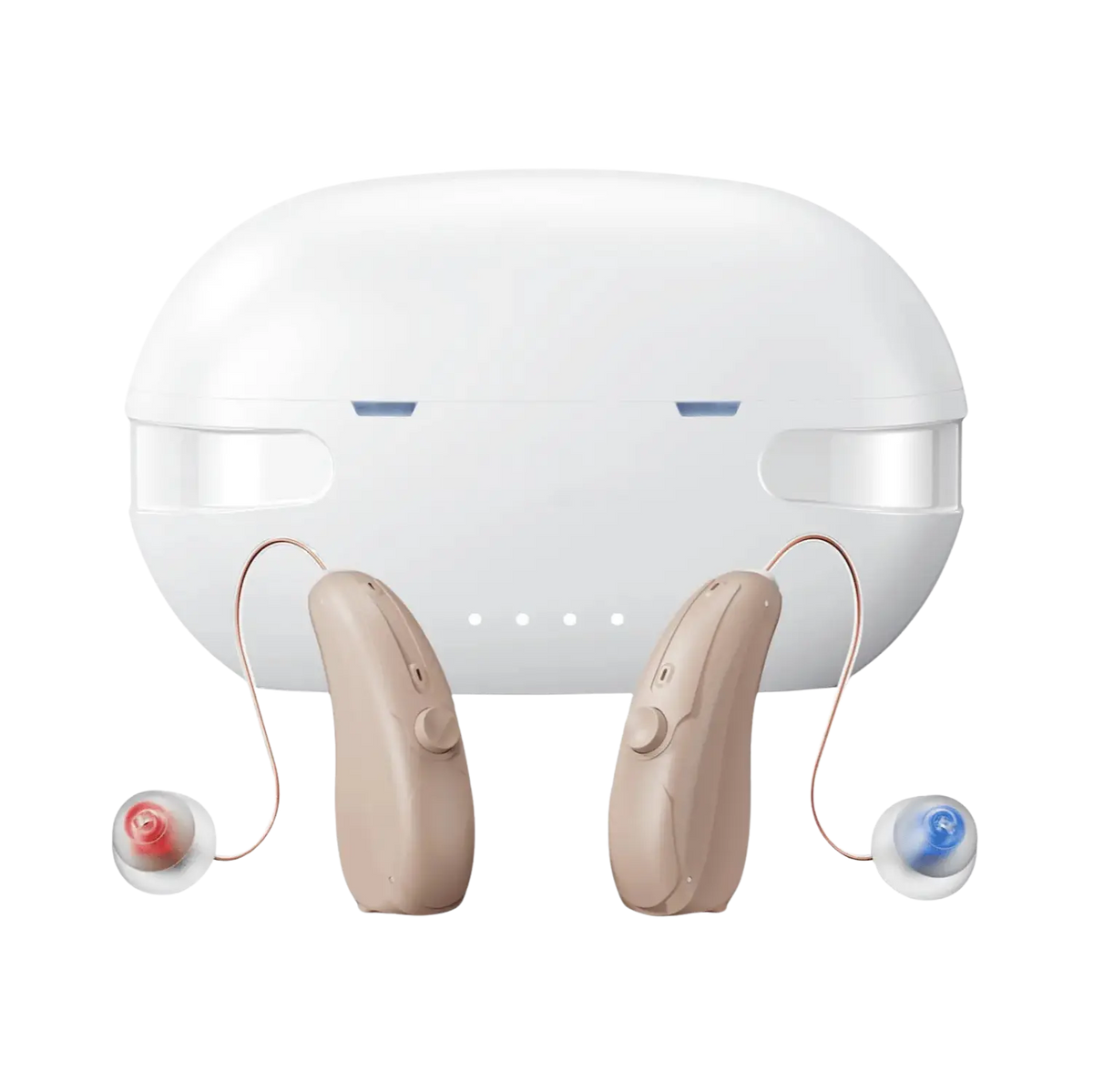
For the hearing side of the equation, access has improved: FDA-OTC hearing aids now let adults with mild-to-moderate hearing loss get help without waiting on clinic appointments. And for people who are also managing vision difficulty, the details of a device matter, because small screens, tiny buttons, and app menus can be a real obstacle.
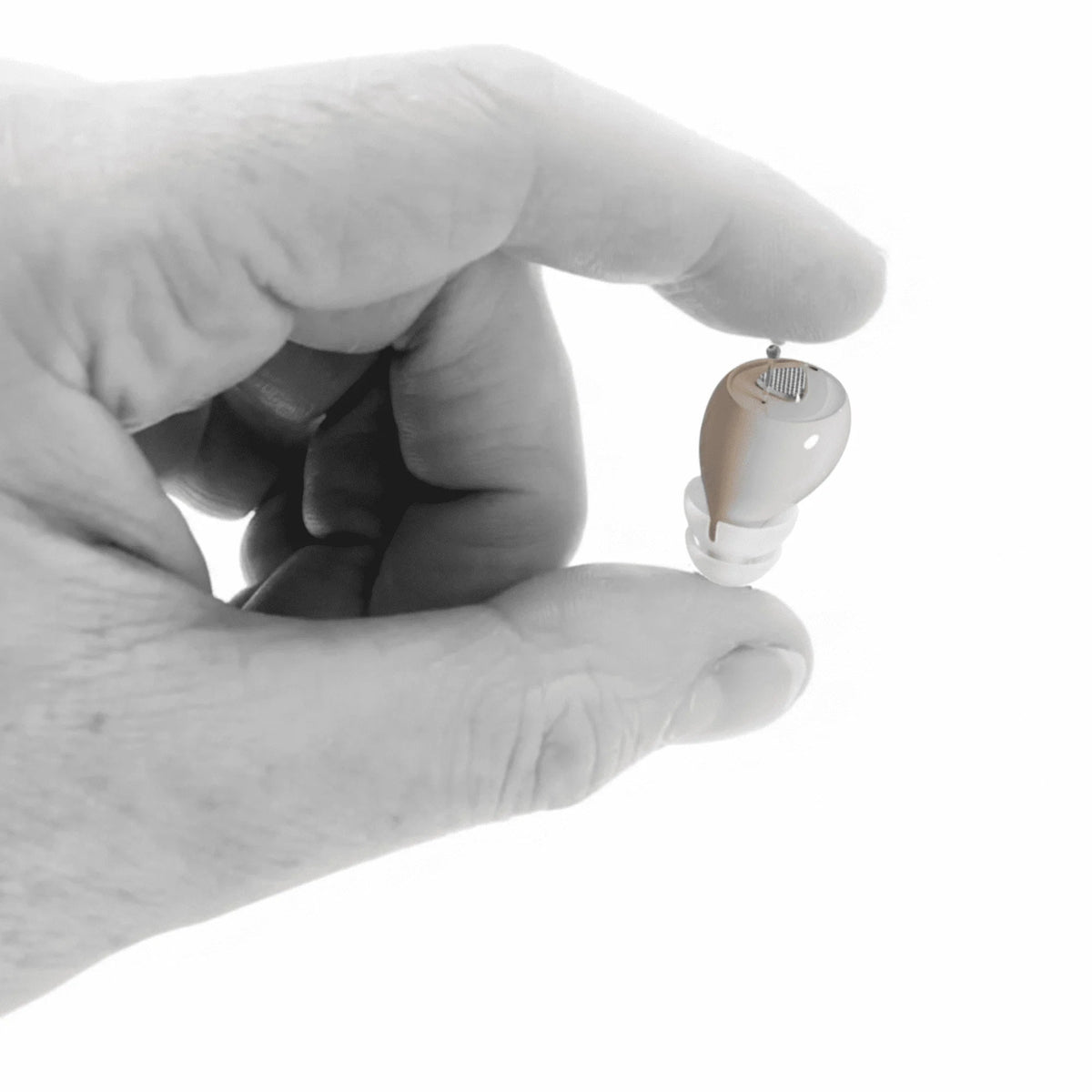
Panda Stealth is built for exactly that kind of simplicity. It is a discreet in-canal device weighing about 2.3 grams, one of the plug-and-play hearing aids that work with no app and no hearing test, ready to use out of the box. Its 12-band smart noise reduction handles everyday listening, and its rechargeable magnetic case holds 60 hours of total use while doubling as a wireless remote, so adjustments never require a phone. It comes with a 5-year warranty and a 45-day trial that starts on delivery.

Two caveats belong here. OTC hearing aids are approved for mild-to-moderate hearing loss, so severe or profound loss still calls for a clinical fitting. And dual sensory impairment itself is a reason to see professionals about both senses, not a problem any single device solves.
Limitations of This Research
The study is cross-sectional, a snapshot in time, so it cannot show whether sensory impairment caused the functional limitations or developed alongside them. Hearing and vision status came from self-report rather than audiometric or eye examinations, which can misclassify milder cases, and the survey did not capture whether respondents were already using hearing aids, glasses, or other supports.
The authors declared no financial support or competing interests for this work.
What to Do With This
If you or someone you care for is coping with both fading hearing and fading eyesight, this research says the combination deserves more attention than either problem would get alone. Book the eye exam and the hearing check in the same season, treat what can be treated, and favor solutions simple enough to use every day, because the five abilities this study measured are the ones that keep life independent.
Kaiwa SM, Abdalhalem M, Alqahtani KM, Alharbi RA, Alolayt AK, Alhaddad SA, Alghafli WE, Alsadi ZE, Hafeezallah AO, Aloufi KM. Associations of Vision, Hearing, and Dual Sensory Impairments With Functional Outcomes: A Nationwide Analysis. Cureus. 2026. Retrieved from PubMed. DOI: 10.7759/cureus.116011