Personalized Brain Stimulation for Tinnitus: Pilot Study Reports Lower Distress but Unchanged Loudness
A 21-person pilot study of brain stimulation tuned to each participant's own brain rhythms reports a meaningful drop in tinnitus-related distress, even though ratings of the sound's loudness did not change.
Tinnitus, the perception of ringing, buzzing, or hissing with no external source, affects a substantial share of adults, and for some it is more than an annoyance: it interferes with sleep, concentration, and mood. Because the sound is generated by the brain rather than the ear, researchers have increasingly looked at ways to influence brain activity directly.
A team at Hallym University in South Korea, with a collaborator at the University of Iowa, has now tested a twist on an established technique: instead of applying one-size-fits-all electrical stimulation, they measured each participant's own dominant brain rhythm and tailored the stimulation to it. Their early results are intriguing, though the study's design means they must be read with care.
About This Study
Title: Effects of individualized phase-amplitude-coupled transcranial alternating current stimulation on tinnitus and cognition
Authors: Youngmin Na, Nour Alsabbagh, Jayce Woojin Baek, Sunmi Ma, Hyo-Jeong Lee, Jung Hye Park, Sung Kwang Hong
Affiliations: Laboratory of Hearing, Balance, and Integrated Neuroscience and Department of Otorhinolaryngology-Head and Neck Surgery, Hallym University College of Medicine, South Korea; Department of Communication Sciences and Disorders, University of Iowa, United States
Journal: Frontiers in Neuroscience, published September 30, 2026 (volume 20, article 1905125)
Study type: Prospective single-arm pilot study
Reference: DOI: 10.3389/fnins.2026.1905125 (PMID 42877219)
Background: Why the Researchers Looked at This
The brain's activity is organized into rhythms of different speeds, and in people with tinnitus these rhythms appear to fall out of their usual coordination. The research team's earlier work had found that a specific form of coordination, called cross-frequency coupling, in which slow rhythms organize the timing of fast ones, is reduced in tinnitus patients. Tinnitus is also frequently accompanied by difficulties with attention, working memory, and processing speed.
Transcranial alternating current stimulation, or tACS, delivers a weak oscillating current through electrodes on the scalp, with the aim of nudging brain rhythms back into a healthier pattern. Previous tACS studies in tinnitus have produced inconsistent results, which the authors attribute in part to the fact that everyone's dominant brain rhythm sits at a slightly different frequency. Stimulating everyone at the same fixed frequency may simply miss the target in many people.
Their solution was to individualize the treatment: measure each person's own alpha rhythm first, then build the stimulation around it.
How the Study Was Done
Twenty-five adults with chronic tinnitus lasting more than six months enrolled, and 21 completed the full protocol; the four who withdrew did so for personal reasons unrelated to side effects. Each participant first underwent an EEG recording to identify their individual alpha frequency, the personal pace of the brain's most prominent resting rhythm, within a window of 6 to 13 Hz.
Participants then received five stimulation sessions, spaced three to four days apart. Each session delivered 20 minutes of 2-milliampere stimulation in which the participant's own alpha frequency was coupled to a faster 50 Hz gamma rhythm, mimicking the natural nesting of fast rhythms inside slow ones. Electrodes were placed over the right frontal scalp and over the left or right temporal region depending on which ear the tinnitus affected.
Outcomes included the Tinnitus Handicap Inventory, a standard questionnaire measuring how much tinnitus disrupts daily life, visual analog ratings of loudness and annoyance, and a battery of cognitive tests covering memory, attention, and processing speed.
What the Researchers Found
Tinnitus Handicap Inventory scores fell significantly across the five sessions (p < 0.001), with the clearest differences between the first session and the later ones, including first versus fifth session (p = 0.003). In plain terms, participants reported that their tinnitus was interfering less with their lives by the end of the study.
Strikingly, the loudness of the tinnitus did not change: ratings of loudness (p = 0.103) and annoyance (p = 0.088) showed no significant group-level improvement. The sound, it seems, stayed roughly the same; what shifted was how much it burdened people.
Cognitive measures also improved. Scores on a general cognition screen rose from 26.71 to 28.29 points (p < 0.001), backward digit span improved from 3.57 to 5.10 digits (p < 0.001), a timed attention test quickened from 35.45 to 28.32 seconds (p = 0.005), and a processing-speed test rose from 48.38 to 58.62 points (p < 0.001). For backward digit span, the analysis suggested a specific effect of stimulation beyond simple practice (p = 0.021).
The EEG data, available for 10 participants, told a more cautious story: the cross-frequency coupling the stimulation was designed to restore showed no robust change once the researchers corrected for multiple statistical comparisons. One exploratory finding linked changes in a brain-rhythm ratio to changes in perceived loudness, but the authors flag it as uncorrected and preliminary.
What It Means for People with Hearing Loss
The most important caveat is that this study had no sham control group: every participant knew they were receiving real stimulation. Improvements of this kind can arise from expectation, from practice on the cognitive tests, or from the natural ebb and flow of tinnitus itself. The authors say so plainly, describing the results as preliminary and hypothesis-generating, and calling for randomized sham-controlled trials.
Still, the study adds to a growing theme in tinnitus research: the distress tinnitus causes and the loudness of the sound are partly separable. Treatments that help people live better with tinnitus may work even when the sound itself persists. And the study's central idea, that interventions work better when tailored to the individual rather than delivered one-size-fits-all, is one with resonance well beyond brain stimulation.
Personalization as the Common Thread: Sound Tailored to the Individual
To be clear, hearing aids are not a treatment or cure for tinnitus, and this study did not involve hearing aids at all. But many people with tinnitus also have some degree of hearing loss, and audiologists have long observed that when everyday sound comes through more clearly, the tinnitus may feel less noticeable against that richer background.
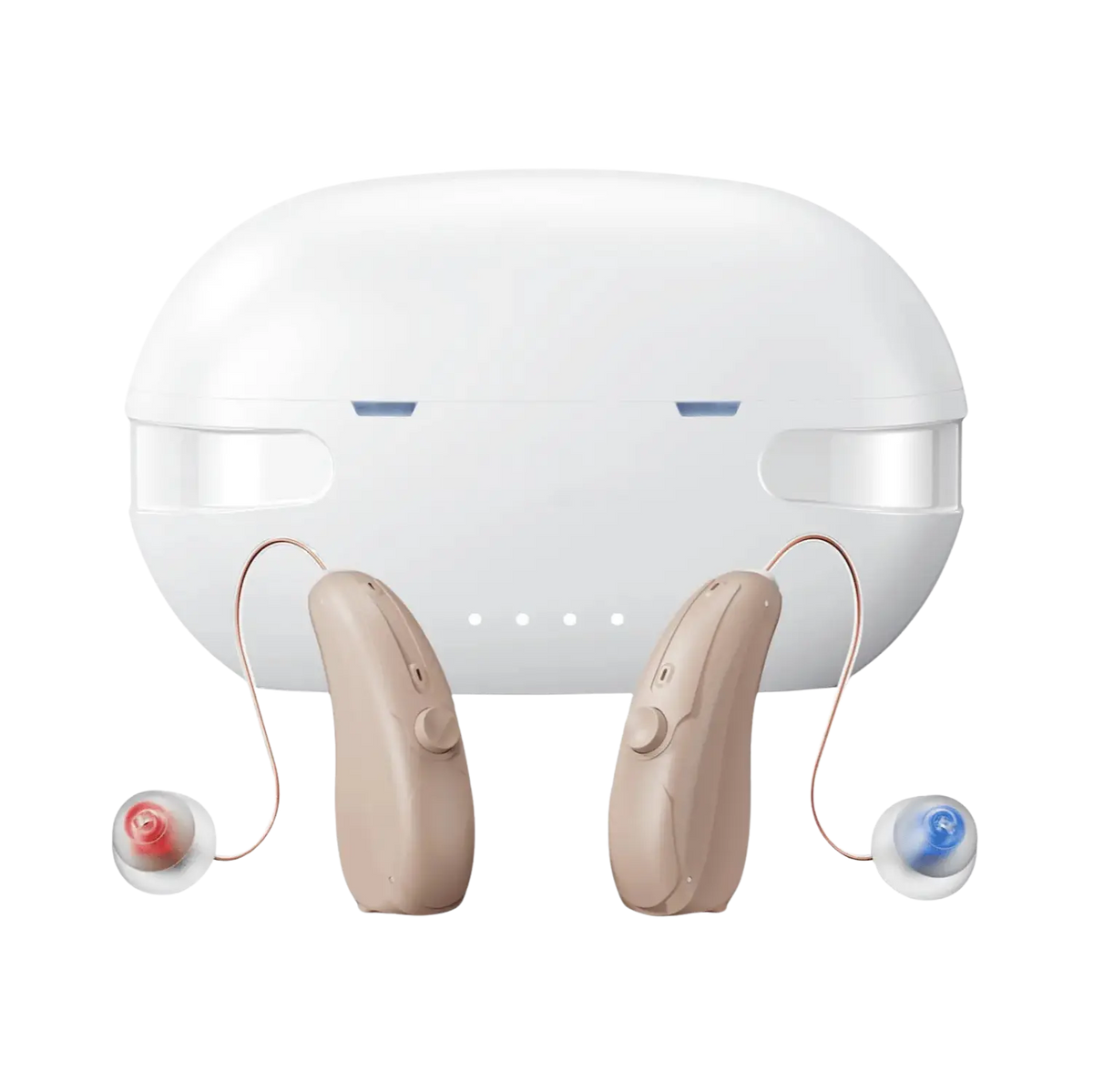
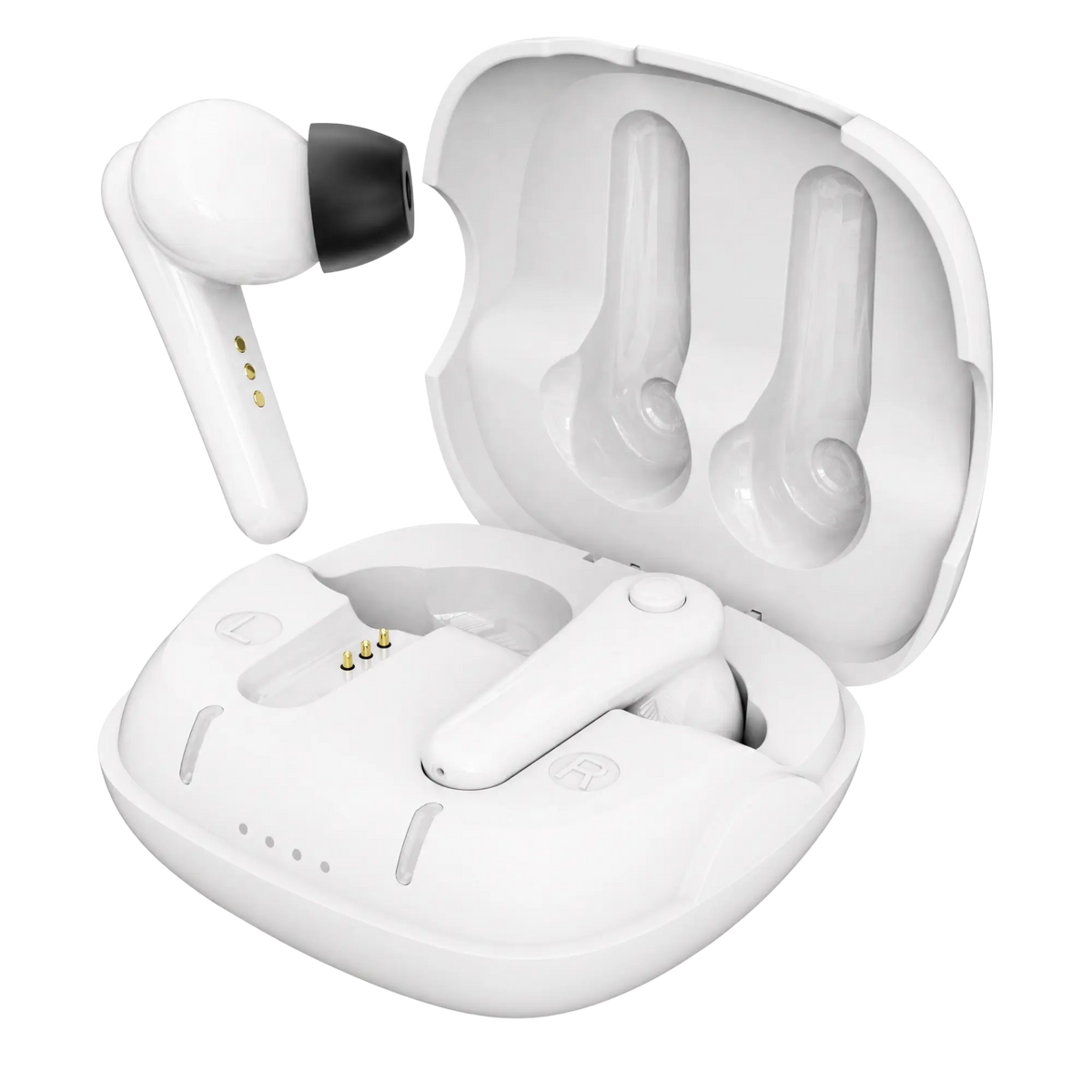
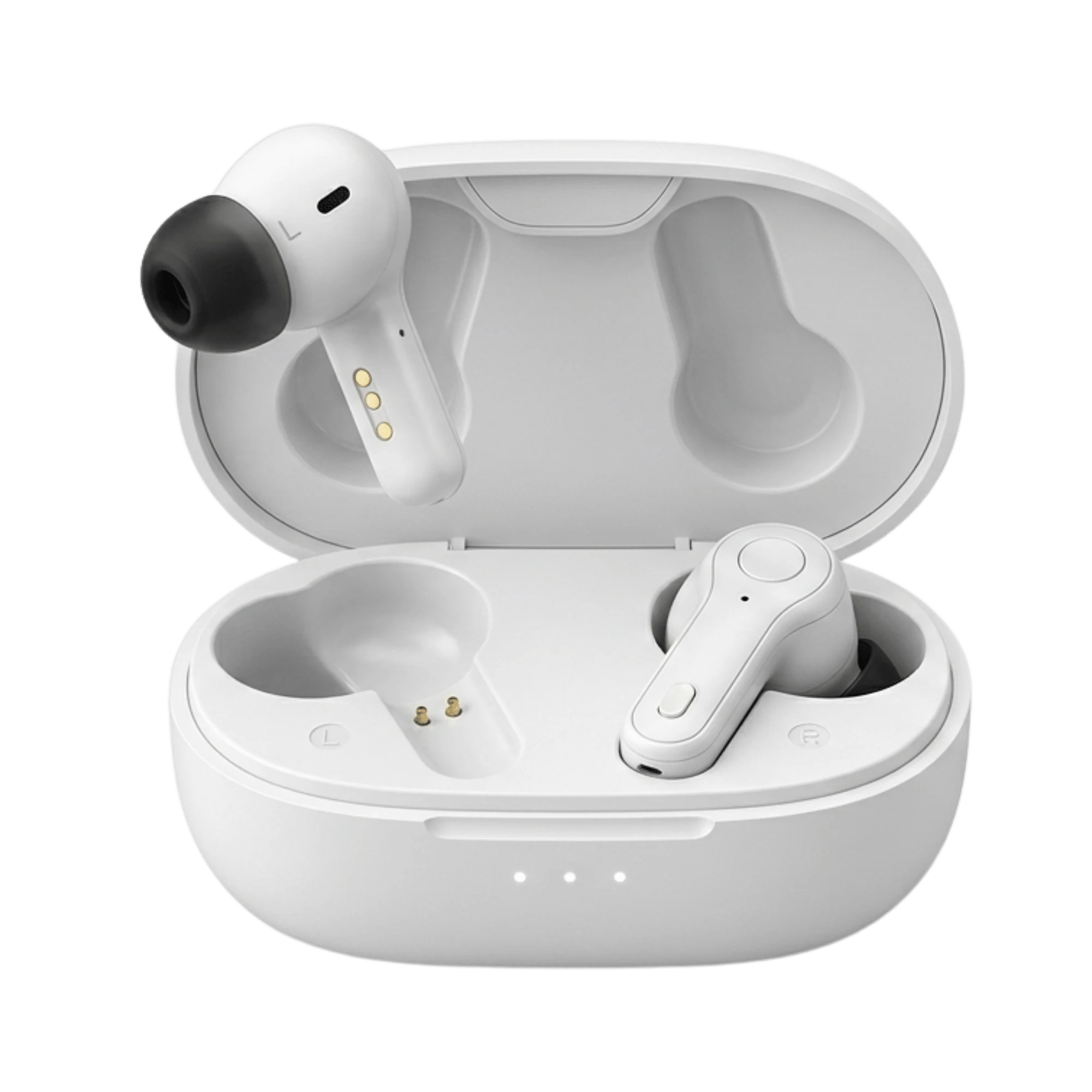
The individualization principle at the heart of this study has a parallel in modern FDA-OTC hearing aids. Panda Air, an earbud-style device with 16-channel processing and multi-band adaptive noise reduction, offers an optional app-based hearing test that plays frequency-specific tones through the aid itself and then personalizes gain and frequency response to the wearer's own hearing profile, the same logic of measuring first and tailoring second. The app and test are entirely optional, and Air works out of the box without them. It also streams calls, TV, and music over Bluetooth, its fast-charge case provides 60 hours of total runtime, and it comes with a 5-year warranty and a 45-day trial starting when it arrives. For people exploring self-fitting OTC hearing aids and app-tuned hearing aids, that measure-then-personalize approach is becoming the norm.
Limitations of This Research
Beyond the absence of a sham group, the sample was small, and usable EEG data were available for only 10 of the 21 completers, limiting what can be said about the brain mechanism. Education level was not recorded, durability of the improvements beyond the study period was not assessed, and the repeated-measures and correlation analyses were exploratory. The work was funded by National Research Foundation of Korea grants and the Hallym University Research Fund, and the authors declared no commercial or financial conflicts of interest.
Where This Leaves Us
Personalized brain stimulation for tinnitus is an idea worth watching, not a therapy ready for the clinic. What this pilot contributes is a feasible protocol, a signal on distress worth testing against sham stimulation, and further evidence that tailoring interventions to the individual, rather than the average patient, may be where tinnitus research is heading.
Na Y, Alsabbagh N, Baek JW, Ma S, Lee HJ, Park JH, Hong SK. Effects of individualized phase-amplitude-coupled transcranial alternating current stimulation on tinnitus and cognition. Frontiers in Neuroscience. 2026;20:1905125. Retrieved from PubMed. https://doi.org/10.3389/fnins.2026.1905125