A Three-Digit Phone Test Catches Mild-to-Moderate Hearing Loss in Older Adults: New Indian Validation Study
Researchers in Mangalore, India report that a short speech-in-noise screening test can correctly identify mild-to-moderate sensorineural hearing loss in older adults more than 80% of the time, without a sound booth.
One of the unsolved problems in adult hearing care is identification. Age-related hearing loss is extremely common, but a large share of the people who have it never get tested. Awareness is low, the visit logistics are complicated, and standard pure-tone audiometry typically requires a sound-treated room, an audiologist, and dedicated equipment.
A new study in International Archives of Otorhinolaryngology evaluates a low-friction alternative: the Digit Triplet Test, a short speech-in-noise screen in which a listener simply repeats sets of three spoken digits at progressively harder noise levels. The team's question was whether a Kannada-language version of the test, designed for native speakers in southern India, is accurate enough to flag older adults with mild-to-moderate sensorineural hearing loss.
About This Study
Title: The Efficiency of the Kannada Digit Triplet Test to Identify Older Adults with Mild-to-Moderate Sensorineural Hearing Loss.
Authors: Salman Safeer, Mohan Kumar Kalaiah.
Affiliations: Department of Audiology and Speech Language Pathology, Kasturba Medical College Mangalore, Manipal Academy of Higher Education, Manipal, India.
Journal: International Archives of Otorhinolaryngology, 2026, vol. 30, issue 1, pages 1-9.
Study type: Diagnostic accuracy study, two-group comparison with 125 participants aged 50-84.
PubMed: DOI 10.1055/s-0046-1818550
Background: Why the Researchers Looked at This
The Digit Triplet Test, often shortened to DTT, has been adapted into many languages around the world and is used in several national hearing-screening programs. The basic idea is that complaints about hearing in noisy settings, like trouble understanding a server in a busy restaurant, are often a more sensitive early signal of age-related hearing loss than a quiet-room pure-tone test would suggest. By embedding short digit strings in increasingly louder background noise, the DTT directly probes that real-world skill.
For a screening tool to be useful, it has to be calibrated to the language a person actually speaks. The Kannada-language DTT was developed to fill that gap for Kannada speakers, who are concentrated in the Indian state of Karnataka. The authors note that despite the high prevalence of age-related hearing loss, many older adults remain undiagnosed because of low awareness and limited access to screening, and a regional-language test can lower both barriers.
Sensitivity and specificity are the two metrics that matter for a screening tool. Sensitivity is how often the test correctly flags people who actually have the condition. Specificity is how often the test correctly clears people who do not. Useful screens score reasonably well on both at the same time.
How the Study Was Done
The researchers enrolled 125 native Kannada speakers between the ages of 50 and 84 and split them into two groups: 57 with normal hearing and 68 with mild-to-moderate sensorineural hearing loss. The hearing-loss group had to meet audiometric criteria established by pure-tone audiometry, the standard quiet-room test that measures the softest sounds a person can hear at different pitches.
Each participant then did the Kannada DTT separately in each ear using an adaptive protocol, meaning the noise level was raised or lowered after each trial based on whether the listener got the digit triplet right. The result is a score in decibels that represents the noise level at which the listener can identify roughly half of the triplets correctly. Lower numbers indicate better speech-in-noise ability. The authors also recorded speech identification scores as a complementary measure.
To find the best cutoff for separating normal hearing from hearing loss, the team used receiver operating characteristic (ROC) curve analysis, a standard statistical technique for evaluating diagnostic tests across all possible thresholds.
What the Researchers Found
The hearing-loss group performed measurably worse on the DTT than the normal-hearing group, as the test's design predicts. The pure-tone average and the DTT score showed a moderate positive correlation of about 0.68, meaning the two tests largely tracked together but were not redundant.
For the right ear, the optimal cutoff identified by ROC analysis (a DTT score of about -11.05 decibels) yielded sensitivity of 79.4% and specificity of 82.5%. For the left ear, the same cutoff produced sensitivity of 83.8% and specificity of 86%. In plain terms, the test missed roughly 1 in 5 right-ear cases and about 1 in 6 left-ear cases of mild-to-moderate hearing loss, while clearing the great majority of normal-hearing listeners correctly.
Those numbers are within the range typically considered acceptable for a quick screen rather than a definitive diagnosis. The authors conclude that the Kannada DTT shows good sensitivity and specificity in identifying older adults with mild-to-moderate sensorineural hearing loss, and can be considered a reliable screening tool for early detection.
Worth noting: the test was administered monaurally, one ear at a time, rather than over a phone line, so the headline accuracy figures apply to a controlled administration. Real-world telephone or app-based deployments tend to show somewhat lower accuracy, although still generally useful at the population level.
What It Means for People with Hearing Loss
For older adults, the practical message is that you do not necessarily need a sound booth or a long audiology appointment to find out whether your hearing has slipped. Short speech-in-noise screens like the DTT, in your own language, can pick up most cases of mild-to-moderate sensorineural loss with surprisingly modest equipment.
The trickier part has historically been what to do after a positive screen. Standard advice is to follow up with an audiologist for a full assessment, and that is still the right step for anyone with significant or asymmetric loss, sudden changes, or other ear-related symptoms. But for many people whose results suggest mild-to-moderate age-related loss, the action that actually changes daily life is whatever follows: getting amplification fitted to their actual ears.
The bigger story embedded in this paper is the same story behind the over-the-counter hearing-aid category in general: when the testing and fitting steps are made easier, more people end up with help.
Closing the Gap Between a Positive Screen and Actually Hearing Better
If a screen like the Kannada DTT, or one of its many counterparts in other languages, suggests mild-to-moderate hearing loss, the next decision is usually about how to get amplification without a long, expensive workup. That is the gap the OTC hearing-aid category was designed to close, and it tracks closely with the access concerns this study highlights.
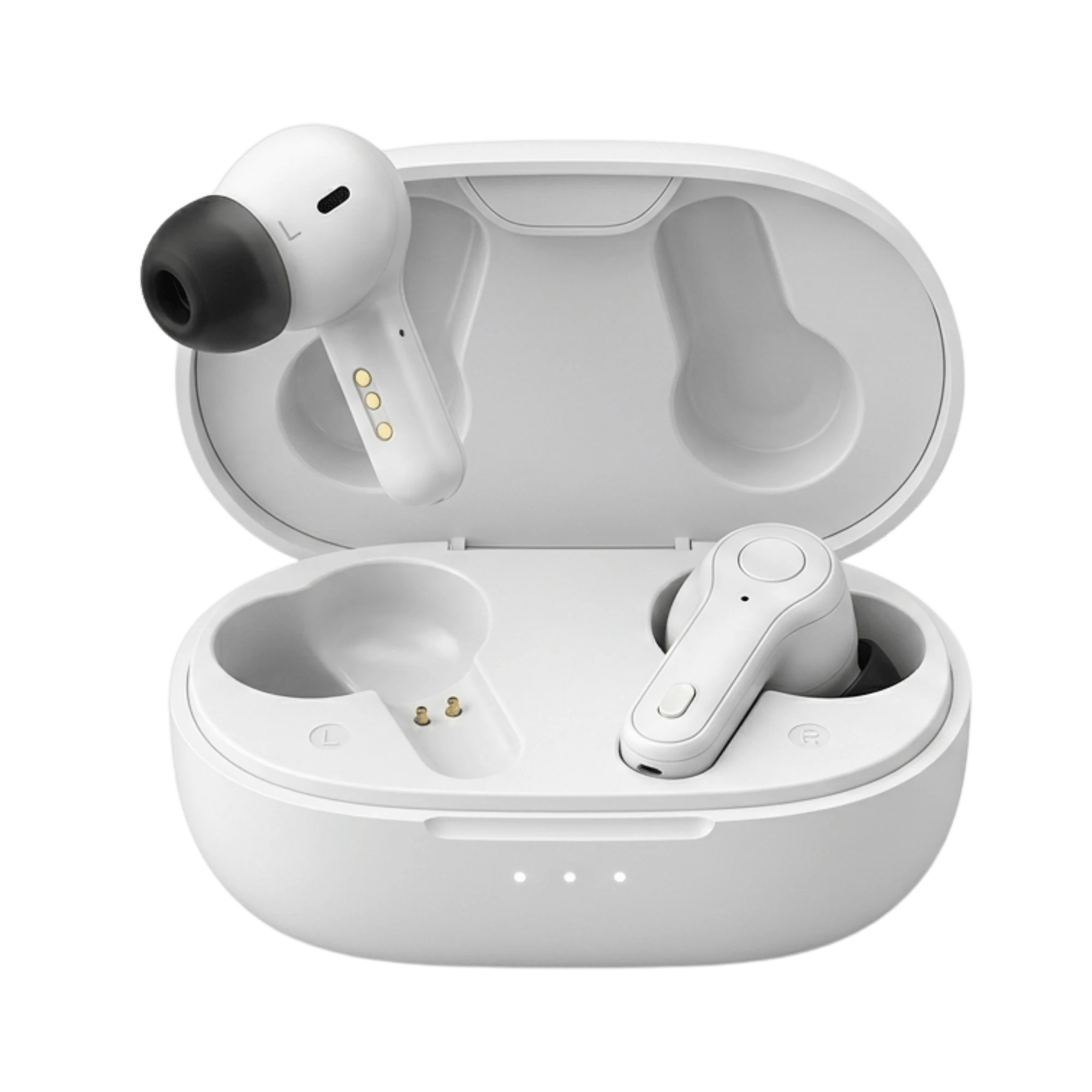
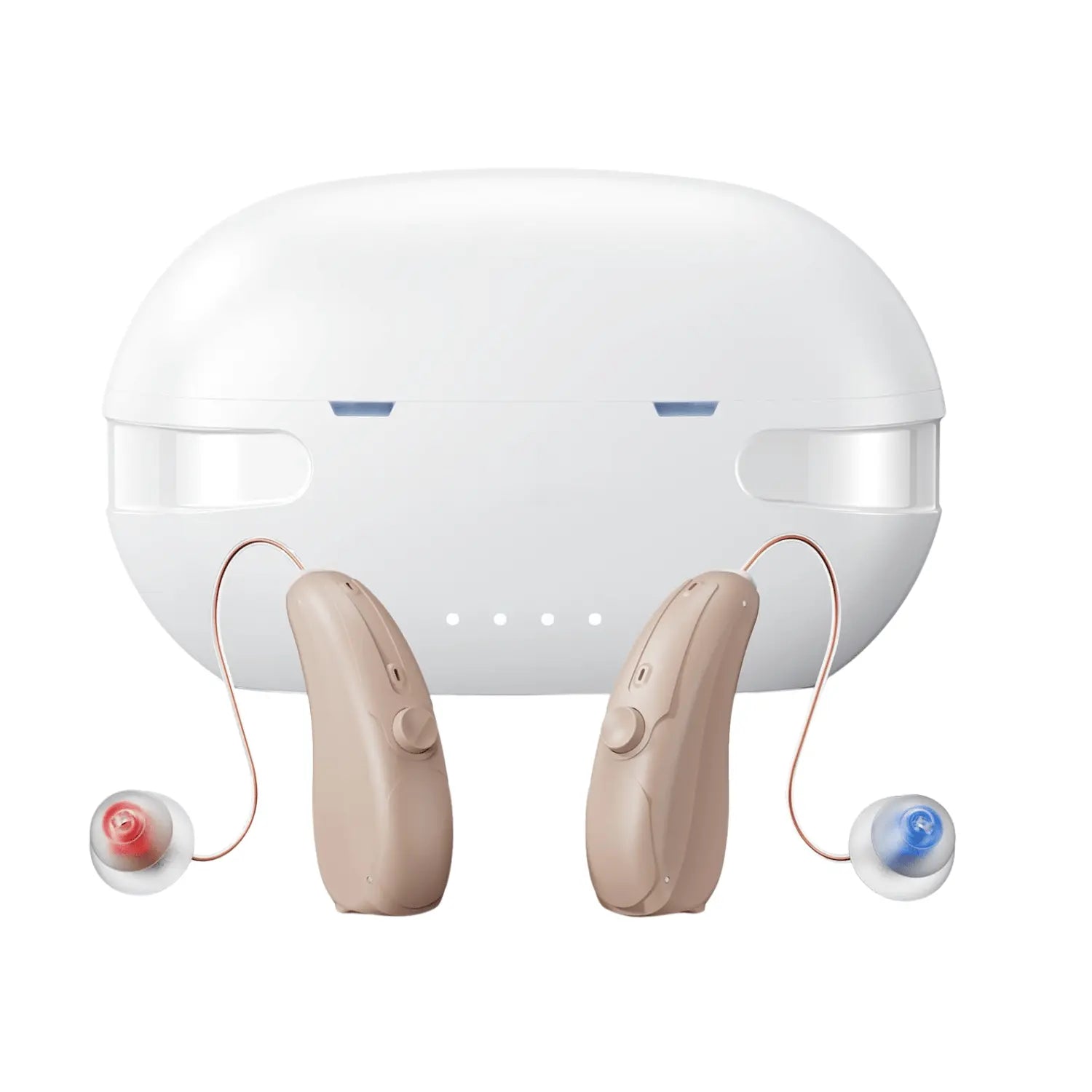
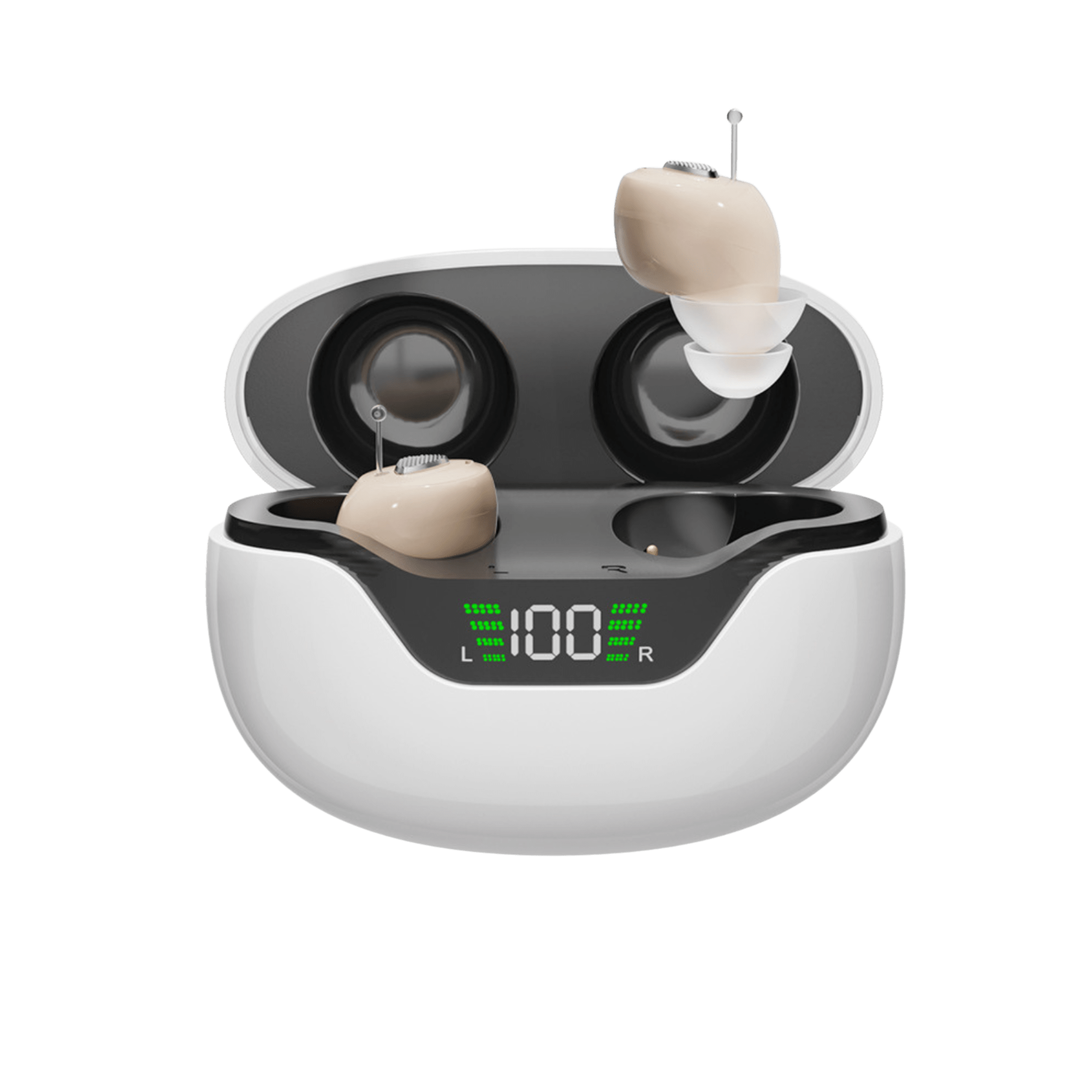
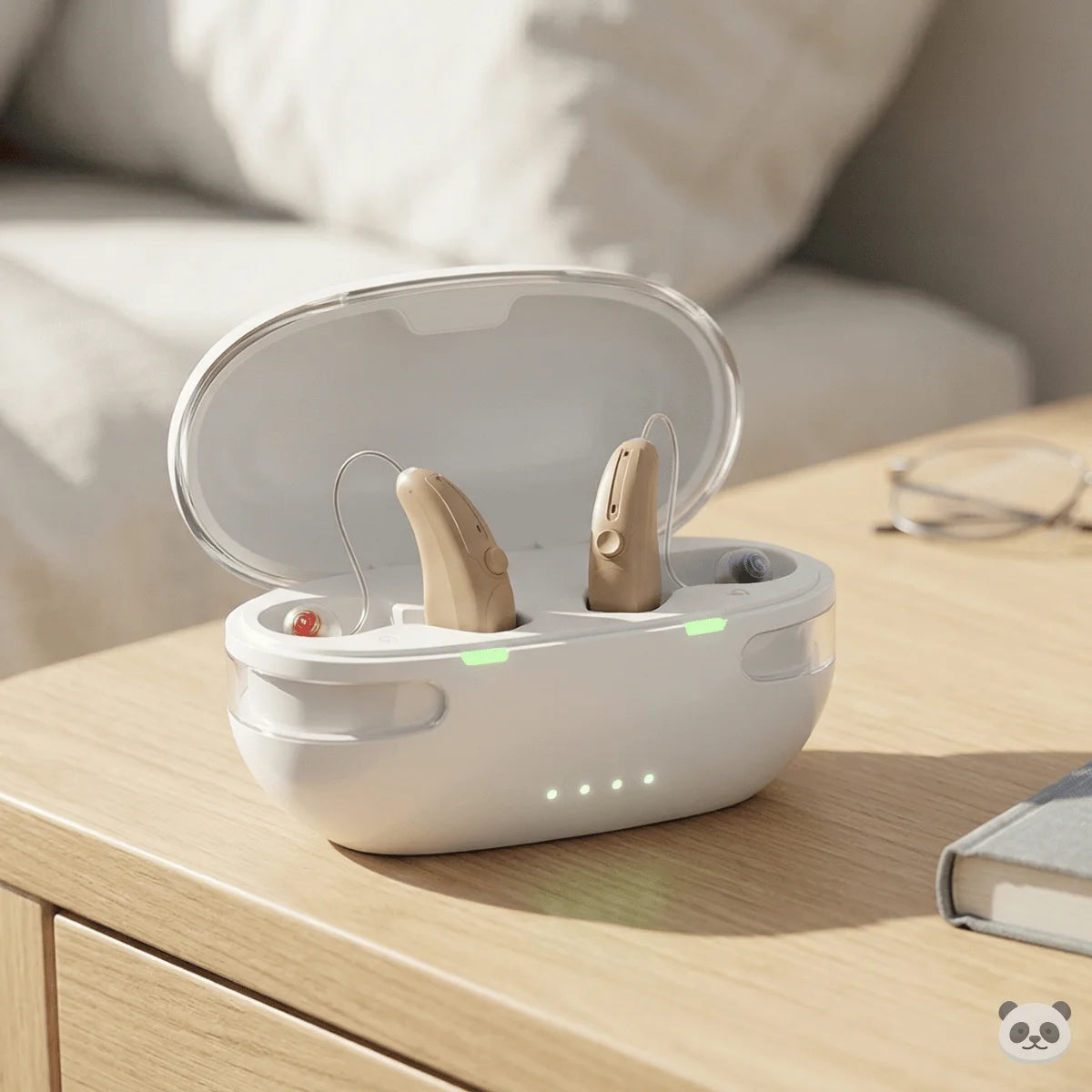
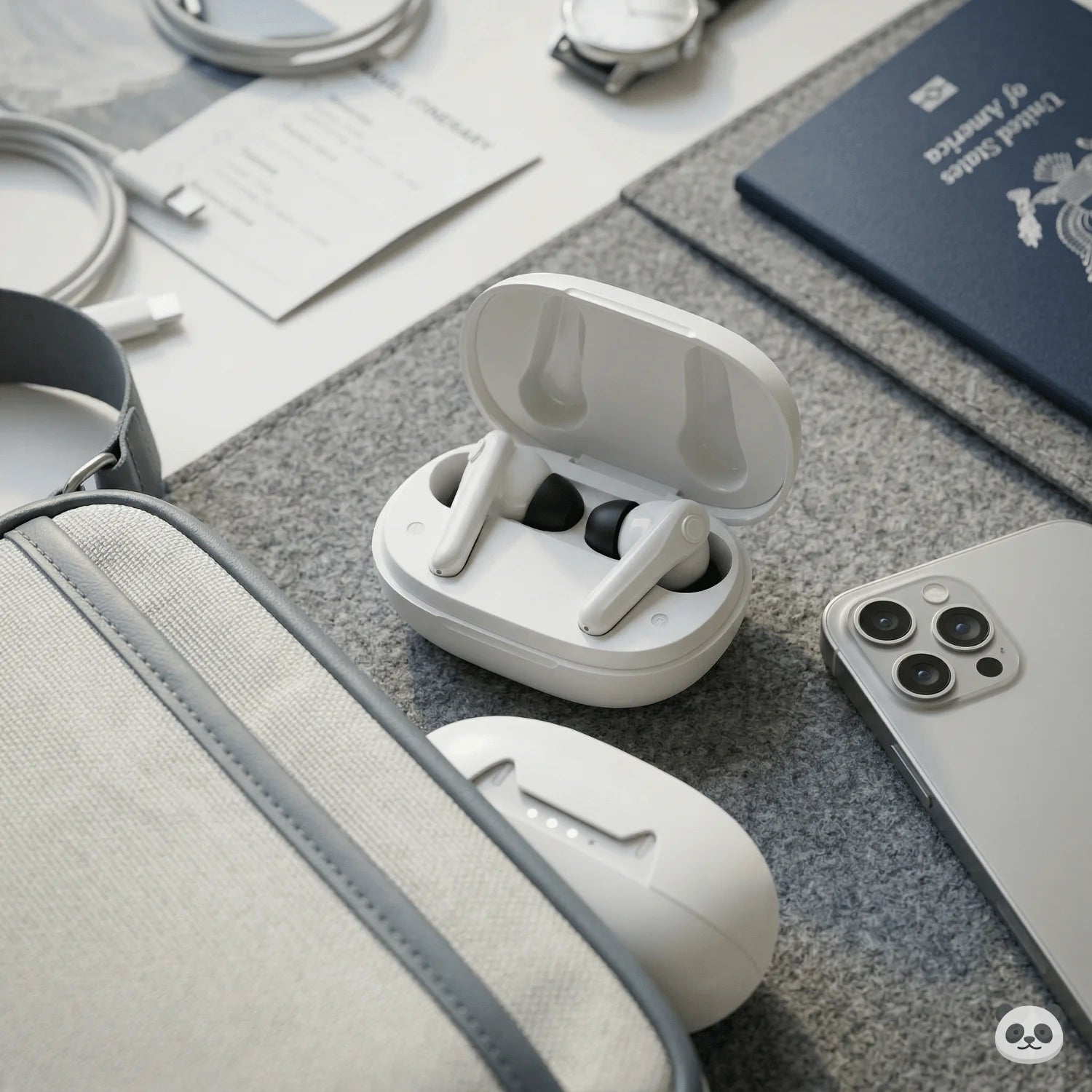
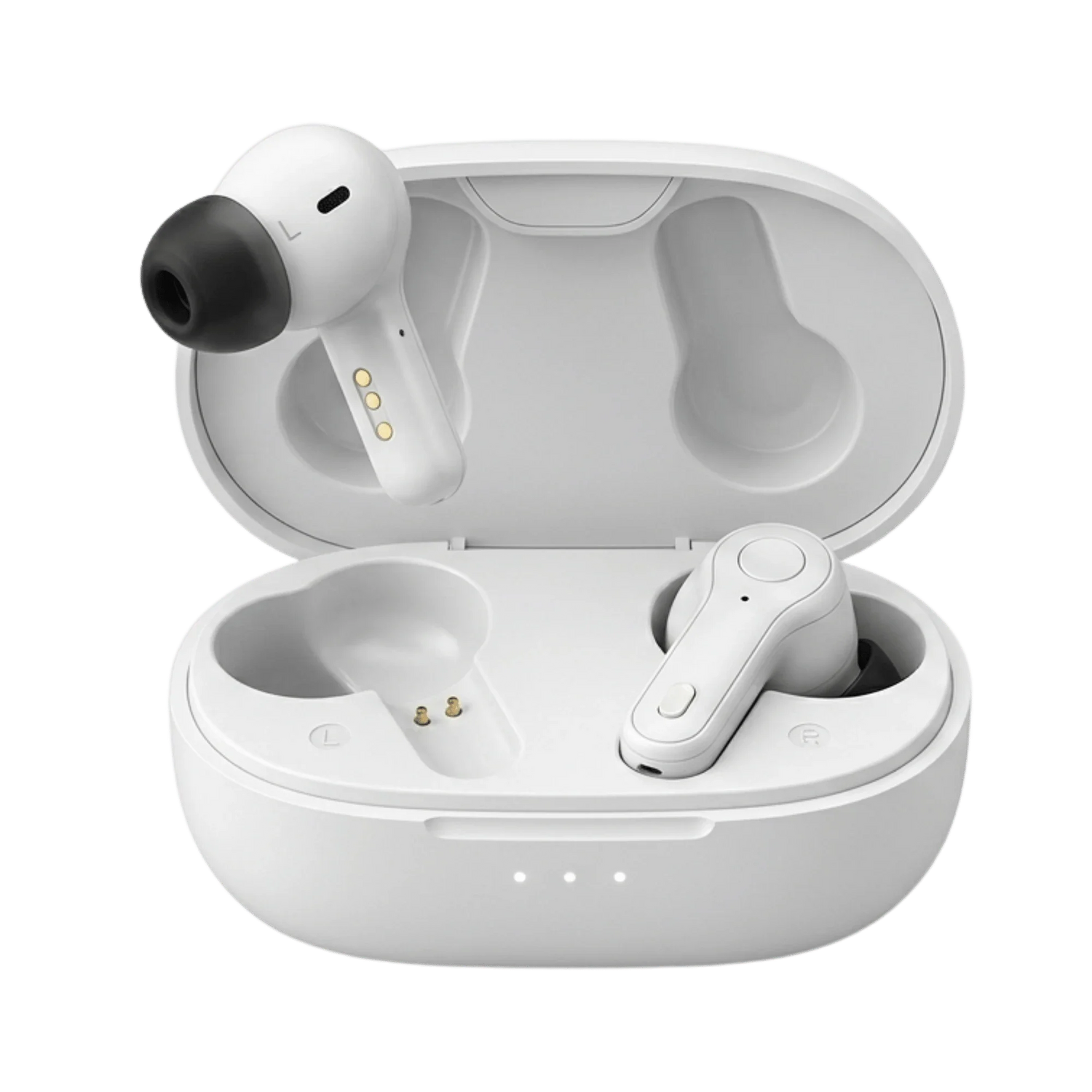
The Panda Air is an earbud-style in-the-canal hearing aid built around 16-channel wide dynamic range compression and multi-band adaptive noise reduction. The case offers fast-charge support and up to 60 hours of total runtime. The 5-year warranty and 45-day return window are intended to make trying amplification a lower-stakes decision, which is the same logic behind a screening test that does not require a clinic visit.
Panda Air also includes the Panda app-based in-ear hearing test. After delivery, the user pairs the device with the Panda app, which runs a frequency-specific hearing test through the hearing aid itself and then automatically programs the device's gain and frequency response to match the user's audiogram, similar to what an audiologist does at a clinical fitting. That removes the second access barrier the Kannada DTT study points to: even if a person passes through a screening positive, the fitting process itself can be done at home rather than across multiple in-person visits. OTC devices are approved for adults with mild-to-moderate hearing loss; severe or profound loss generally still benefits most from a clinical fitting with an audiologist.
Limitations of This Research
The study tested 125 native Kannada speakers in a single-region academic setting, so the accuracy figures may not translate exactly to other languages, accents, or unsupervised at-home administration. The DTT also did not separately classify cases by configuration of hearing loss (for example, sloping high-frequency loss versus flat loss), which can affect how well speech-in-noise tests align with audiometric thresholds.
No study funding or conflict-of-interest disclosures were summarized in the abstract retrieved from PubMed; readers can check the published article for the authors' full disclosure statements.
What to Do With This
The broader pattern in adult hearing care is that the friction of identification and fitting is often what keeps treatable hearing loss untreated for years. Studies like this one are part of a steady push to lower that friction, language by language. For older adults who already suspect their hearing has changed, a short speech-in-noise screen is a reasonable first step, with audiology follow-up for anything beyond mild-to-moderate, age-related-pattern loss.
Safeer S, Kalaiah MK. The Efficiency of the Kannada Digit Triplet Test to Identify Older Adults with Mild-to-Moderate Sensorineural Hearing Loss. International Archives of Otorhinolaryngology. 2026;30(1):1-9. Retrieved from PubMed. https://doi.org/10.1055/s-0046-1818550