Large International Study Links Hearing Aid Use to Lower Mortality Risk
A pooled analysis of 13,851 adults from Australia, Iceland, and the United States, replicated in more than 50,000 Norwegians, found that worse hearing was associated with higher mortality, while current hearing aid users had a measurably lower risk of death.
Hearing loss has long been tied to outcomes that reach well beyond the ears, including depression, social isolation, and cognitive decline. Whether it is also connected to how long people live, and whether using hearing aids changes that picture, has been much harder to pin down.
A new study led by researchers at the US National Institute on Deafness and Other Communication Disorders takes one of the most rigorous looks yet at that question, combining raw participant data from three long-running population studies on three continents and then testing the results again in a fourth country.
About This Study
Title: Hearing loss, hearing-aid use, and mortality risk: individual participant data meta-analysis of population-based studies from Australia, Iceland, and the USA and a replication study from Norway
Authors: Chuan-Ming Li, Howard J. Hoffman, Bo Engdahl, Bamini Gopinath, Catherine M. McMahon, Christa L. Themann, Vilmundur Gudnason, Adrian C. Davis
Affiliations: National Institute on Deafness and Other Communication Disorders (NIH, USA); Norwegian Institute of Public Health; Macquarie University (Australia); National Institute for Occupational Safety and Health (CDC, USA); Icelandic Heart Association; Imperial College London and the London School of Economics (UK)
Journal: The Lancet Healthy Longevity, published online (indexed on PubMed October 2026)
Study type: Individual participant data meta-analysis of population-based cohort studies, with an independent replication cohort
Background: Why the Researchers Looked at This
Individual studies have hinted that adults with hearing loss die earlier on average than adults with normal hearing, but single cohorts are often too small to separate the effect of hearing itself from the effects of age, heart disease, diabetes, smoking, and other health factors that travel with it. Results have also differed from country to country, raising the question of whether any one finding would hold up elsewhere.
The research team used a method called individual participant data meta-analysis. Instead of averaging the published results of past studies, they obtained the original person-by-person records from three major population studies and analyzed them together under one statistical model. That approach lets researchers apply the same definitions of hearing loss and the same adjustments for health and lifestyle to every participant.
A second question sat behind the first: if hearing loss is linked to mortality, is using hearing aids linked to a lower risk? That matters because hearing loss is one of the few common later-life conditions with a widely available, non-invasive form of help.
How the Study Was Done
The combined analysis drew on the Blue Mountains Hearing Study in Australia (2,689 participants, 1997 to 2007), the Age, Gene/Environment Susceptibility-Reykjavik Study in Iceland (5,171 participants, 2002 to 2006), and the US National Health and Nutrition Examination Survey (5,992 participants, 1999 to 2006). Together they contributed 13,851 adults with a mean age of about 62, all of whom had their hearing measured with formal audiometric testing rather than self-report.
Hearing loss was classified from the better ear's pure-tone average using categories endorsed by the Global Burden of Disease Hearing Loss Expert Group and the World Health Organization. The researchers then used Cox regression, a standard survival-analysis technique, to estimate the risk of death from any cause and from cardiovascular disease, adjusting for age, sex, education, body mass index, smoking, angina or heart attack, diabetes, hypertension, stroke, and noise-exposure history.
To check whether the findings would generalize, the same analysis was repeated in the Nord-Trondelag Hearing Loss Study, a separate Norwegian cohort of 50,277 adults examined between 1996 and 1998.
What the Researchers Found
The headline pattern was a dose-response relationship: the worse the hearing, the higher the mortality risk. Compared with adults with normal hearing, those with mild hearing loss had a 19 percent higher risk of death from any cause over the follow-up period. Moderate hearing loss carried a 55 percent higher risk, and moderately severe or worse loss a 56 percent higher risk, after accounting for the health and lifestyle factors above.
Deaths related to cardiovascular disease showed a similar pattern. Mild hearing loss was associated with an 18 percent higher cardiovascular mortality risk, moderate loss with a 43 percent higher risk, and moderately severe or worse loss with a 30 percent higher risk.
The hearing aid result ran in the opposite direction. Participants who were current hearing aid users had a 9 percent lower risk of death from any cause than non-users (a hazard ratio of 0.91, with a confidence interval of 0.83 to 0.99), and a 15 percent lower risk of cardiovascular-related death (0.85, interval 0.73 to 0.99).
Crucially, the Norwegian replication cohort, more than three times the size of the combined primary analysis, corroborated both findings: higher mortality with increasing hearing loss severity, and lower mortality among hearing aid users.
What It Means for People with Hearing Loss
The first takeaway is that hearing loss deserves to be treated as a genuine health issue, not a cosmetic inconvenience of aging. A consistent association with mortality across four countries, measured with formal audiometry and adjusted for the usual suspects, is hard to dismiss as a statistical fluke.
The second takeaway is more hopeful. Hearing aid use was associated with a meaningfully lower risk of death, and the authors note that the possible link between hearing rehabilitation and life expectancy is now an important target for future research. An observational study like this cannot prove that hearing aids cause people to live longer, but it adds weight to the case for acting on hearing loss rather than waiting it out. Researchers have proposed several plausible pathways, including better communication, more social engagement, and reduced cognitive load.
Hearing Aid Users Had a 9 Percent Lower Mortality Risk: Why Access Matters
If hearing aid use tracks with better long-term health, the practical question becomes why so many people with hearing loss never use one. Cost and clinic access are two of the most cited reasons, and newer FDA-OTC hearing aids are designed to lower exactly those barriers for adults with mild-to-moderate hearing loss.
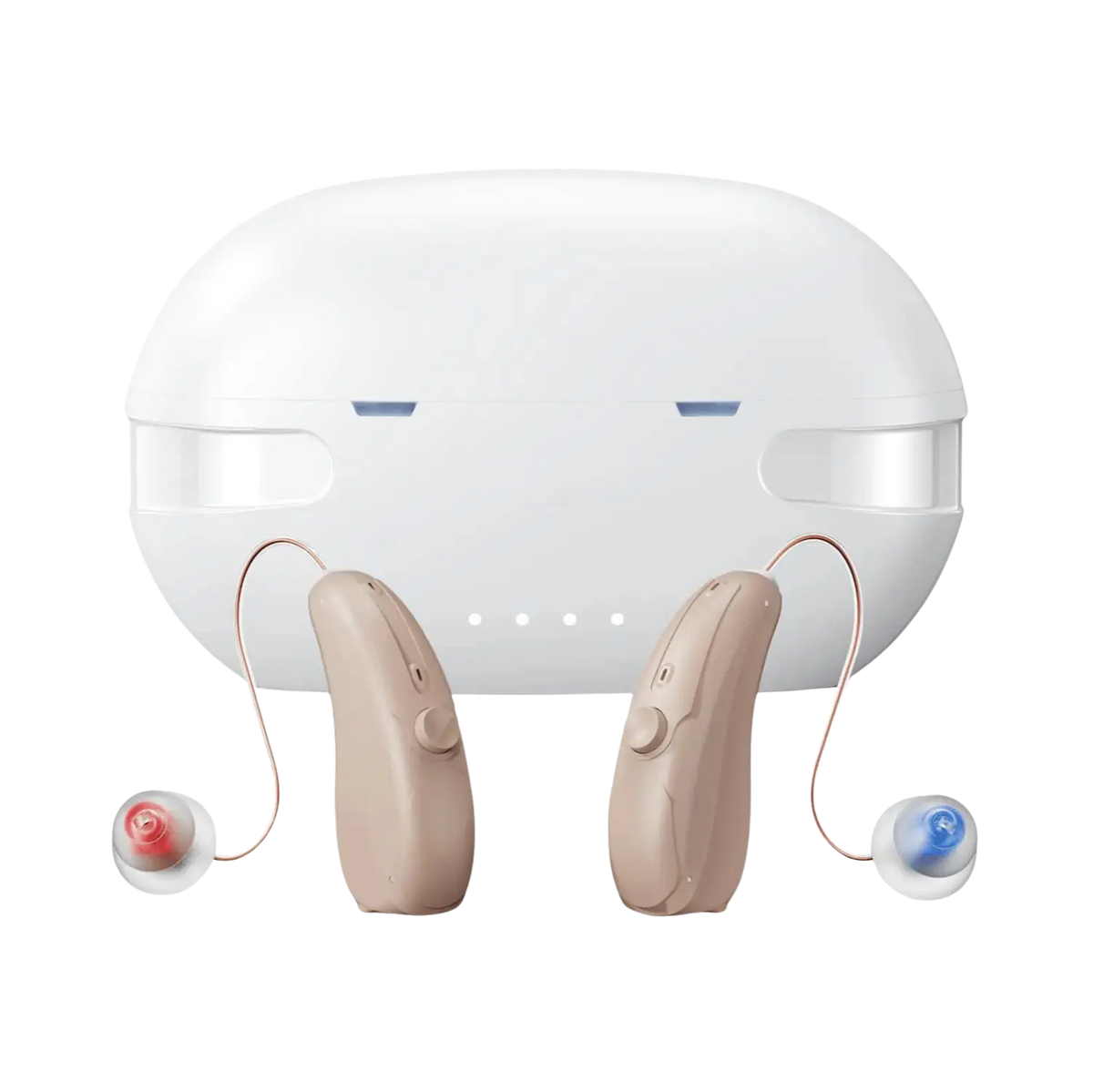
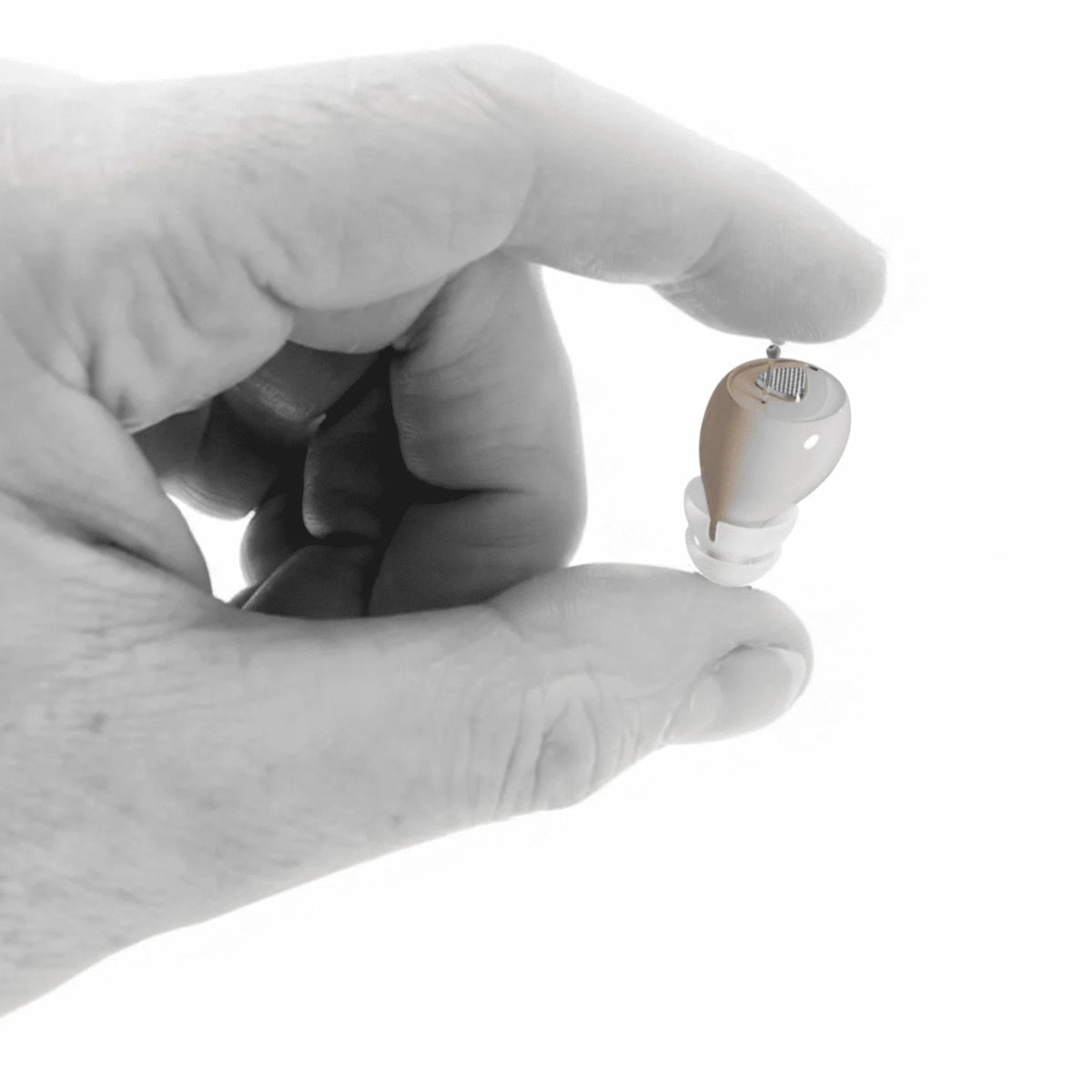
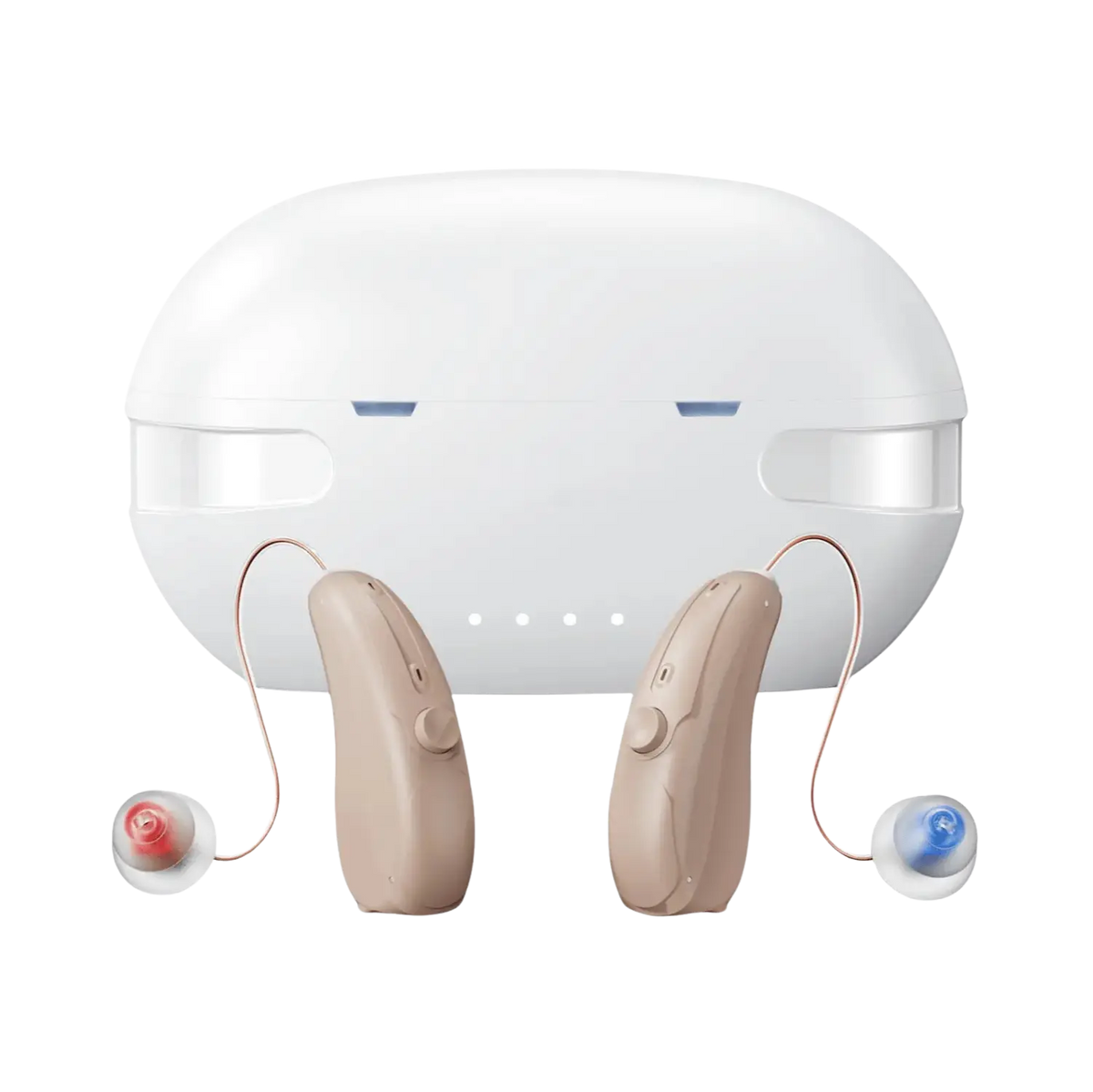
Panda Quantum is one such device: a 16-channel receiver-in-canal hearing aid with adaptive noise reduction tuned for clearer speech in noisy environments, plus Bluetooth for calls, TV, and music. It runs 20 hours per charge, and its case carries three additional full charges for 80 hours of total use, backed by a 5-year warranty and a 45-day trial that starts when the device arrives.

An optional companion app can run a frequency-specific hearing test through the aid itself and apply app-based hearing personalization to match the device to your hearing profile, though Quantum works out of the box without the app or the test. One caveat worth repeating: OTC hearing aids are approved for mild-to-moderate loss, and people with severe or profound hearing loss still benefit most from a clinical fitting.
Limitations of This Research
This is observational research, so it can establish association but not causation. Hearing aid users may differ from non-users in ways the adjustments cannot fully capture, such as income, health engagement, or access to care, and the underlying cohorts were recruited in the late 1990s and early 2000s, before modern device categories existed.
The work was funded by public research bodies including the US National Institutes of Health, the CDC's National Institute for Occupational Safety and Health, the Icelandic Heart Association, Macquarie University, and the Norwegian Institute of Public Health. One author disclosed that their salary is co-funded by Cochlear Ltd; the remaining authors declared no competing interests.
Where This Leaves Us
Across nearly 64,000 adults on four national datasets, hearing loss was consistently associated with shorter survival, and hearing aid use with longer survival. The responsible reading is not that a hearing aid is a longevity device, but that hearing health belongs on the same list as blood pressure and cholesterol: something worth checking, and worth acting on, sooner rather than later.
Li CM, Hoffman HJ, Engdahl B, Gopinath B, McMahon CM, Themann CL, Gudnason V, Davis AC. Hearing loss, hearing-aid use, and mortality risk: individual participant data meta-analysis of population-based studies from Australia, Iceland, and the USA and a replication study from Norway. The Lancet Healthy Longevity. Published online (article 100903). Retrieved from PubMed. DOI: 10.1016/j.lanhl.2026.100903