Global Study Maps 33 Years of Hearing Loss From Otitis Media
A new Global Burden of Disease analysis traces hearing loss caused by middle ear infections across 33 years and finds that mild hearing loss accounts for nearly four-fifths of the worldwide burden, with the heaviest load falling on lower-income regions.
Middle ear infections are among the most common childhood illnesses on the planet, and most clear up without lasting harm. But when infections are repeated, prolonged, or untreated, they can leave behind measurable hearing loss. Multiply that across billions of childhoods and the result is one of the world's leading causes of preventable hearing impairment.
Despite decades of research on hearing loss broadly, surprisingly few analyses have isolated the portion attributable specifically to otitis media and tracked how it has shifted across countries, ages, and time. A new study published in PLOS One fills that gap using the latest Global Burden of Disease estimates, covering 1990 through 2023.
About This Study
Title: Global patterns and demographic drivers of hearing loss attributable to otitis media, 1990-2023
Authors: Yubin Xue, Hongwei Ma, Lin Yang, Qiang Liu
Affiliations: Department of Otorhinolaryngology, Beijing Tiantan Hospital, Capital Medical University, Beijing; Department of Science and Education, The First People's Hospital of Shizuishan, Ningxia Medical University, China
Journal: PLOS One, published August 28, 2026
Study type: Global Burden of Disease secondary analysis
PubMed DOI: 10.1371/journal.pone.0356787
Background: Why the Researchers Looked at This
Otitis media is inflammation or infection of the middle ear, the small air-filled space behind the eardrum. When fluid builds up or the eardrum and middle ear structures are damaged by repeated infection, sound transmission suffers. In most cases the resulting hearing loss is mild, but even mild loss can affect a child's language development and schooling, and it can persist into adult life.
The Global Burden of Disease project, a massive ongoing effort to quantify illness worldwide, allows researchers to estimate how much hearing loss traces back to this single cause. Burden is expressed partly through years lived with disability, or YLDs, a measure that combines how many people are affected with how severe their condition is. Countries are grouped by the Socio-demographic Index, or SDI, a composite of income, education, and fertility that serves as a rough proxy for development level.
The authors set out to describe the long-term patterns: is otitis media-related hearing loss rising or falling, who carries most of it, and how much of the change is driven by prevention versus simple population growth?
How the Study Was Done
The team analyzed Global Burden of Disease 2023 estimates at the global level, across the four SDI groupings, and for selected countries with available national estimates, spanning 1990 to 2023. They examined age-standardized rates, which adjust for differences in population age structure, alongside age-specific and sex-specific figures.
To assess whether burden was rising or falling, they calculated annual percentage change using log-linear regression. A stepwise decomposition analysis then split the total change in YLDs into three contributing forces: population growth, population aging, and genuine changes in age-specific disability rates. All analyses were run in R.
What the Researchers Found
Globally, age-standardized prevalence of hearing loss attributable to otitis media declined modestly between 1990 and 2023. No country in the analysis showed a statistically significant increase; most were stable or improving, with the fastest declines in several middle and high-middle SDI countries.
The burden remains sharply unequal. Low and low-middle SDI settings showed consistently higher prevalence throughout the study period. Prevalence peaked among children aged 5 to 14 and declined steadily with age, reaching its lowest levels among adults 70 and older. Males carried higher prevalence than females in most settings.
Perhaps the most striking figure concerns severity: mild hearing loss accounted for nearly four-fifths of the global age-standardized burden. This reflects how otitis media typically damages hearing, not in catastrophic drops but in the subtler range that muffles conversation, classroom instruction, and television dialogue.
The decomposition analysis added a sobering note. Even as age-specific disability rates fell in many regions, population growth pushed total global YLDs upward. Prevention is working, in other words, but not fast enough to outpace demography.
What It Means for People with Hearing Loss
The findings underscore that a large share of the world's hearing loss is preventable in principle: timely treatment of ear infections, better access to primary care, and ear health programs in schools could shrink the burden further. The steep gradient between richer and poorer regions shows what is achievable, and what is currently out of reach for many families.
The severity profile also matters for adults living with the aftermath. Because most otitis media-related hearing loss is mild, many affected people fall into a gray zone: their loss is real enough to strain conversation and social life, but not severe enough that they pursue, or can afford, traditional hearing care. Historically, that group has been among the least served by hearing health systems.
When Mild Hearing Loss Makes Up Most of the Burden
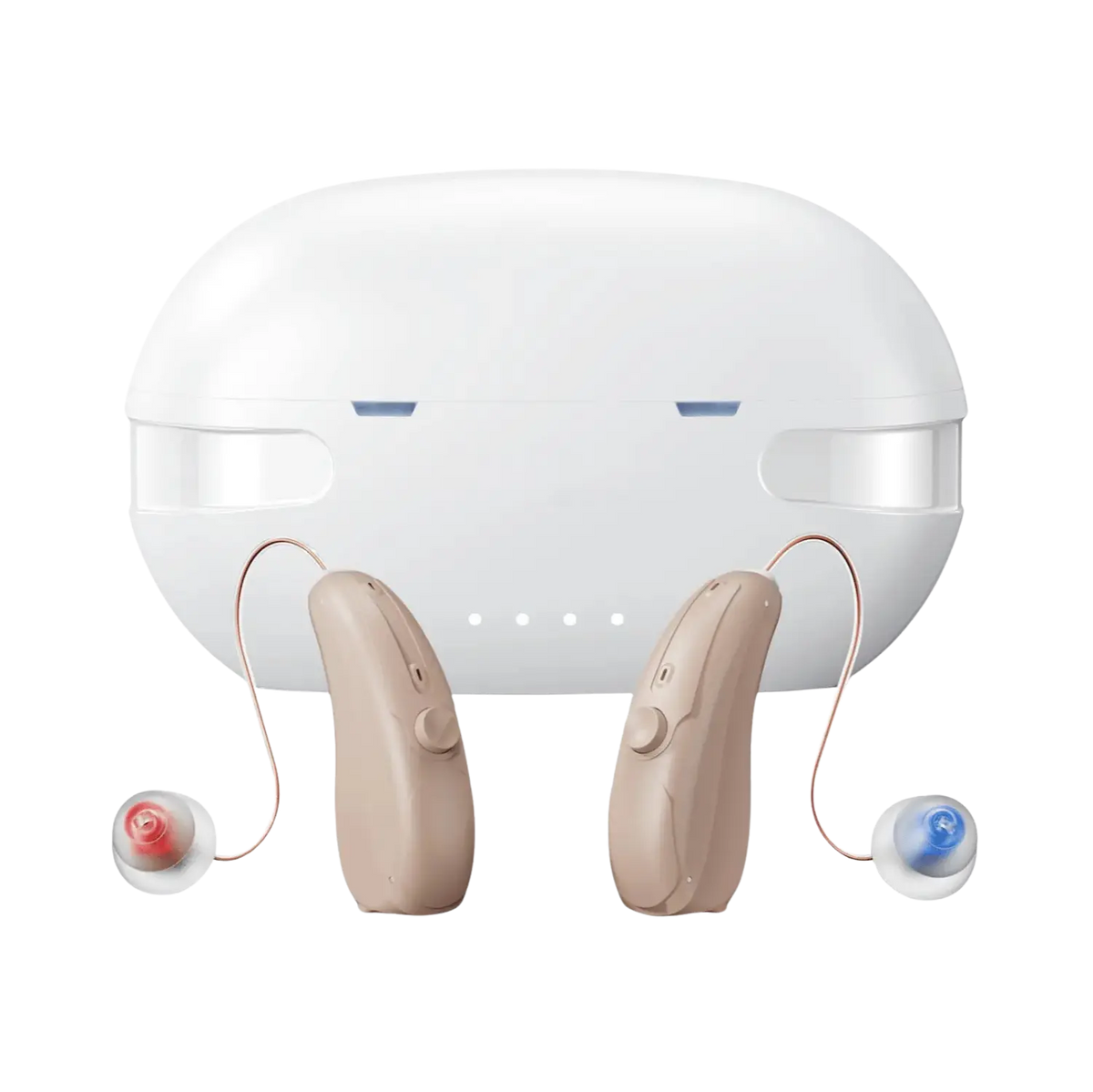
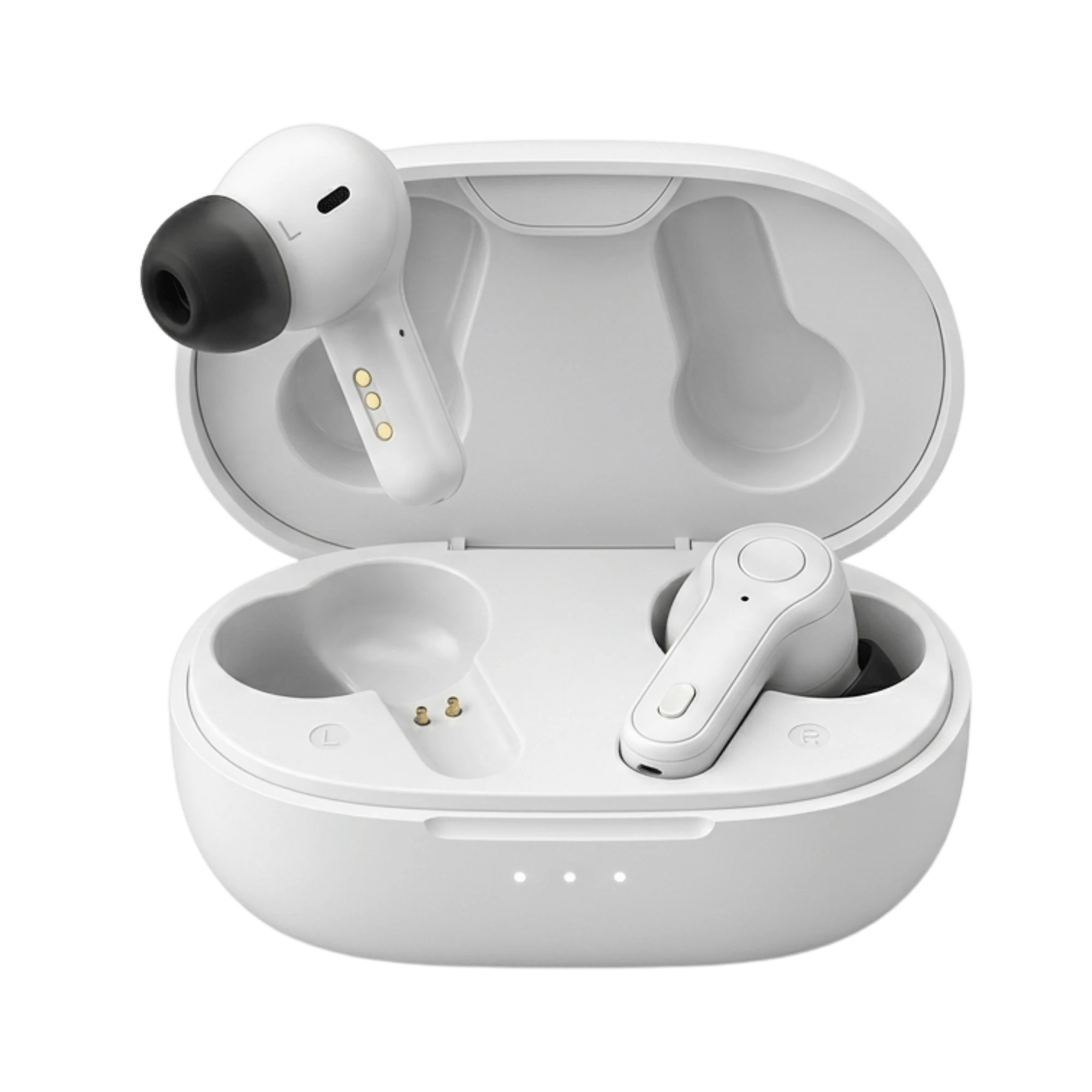
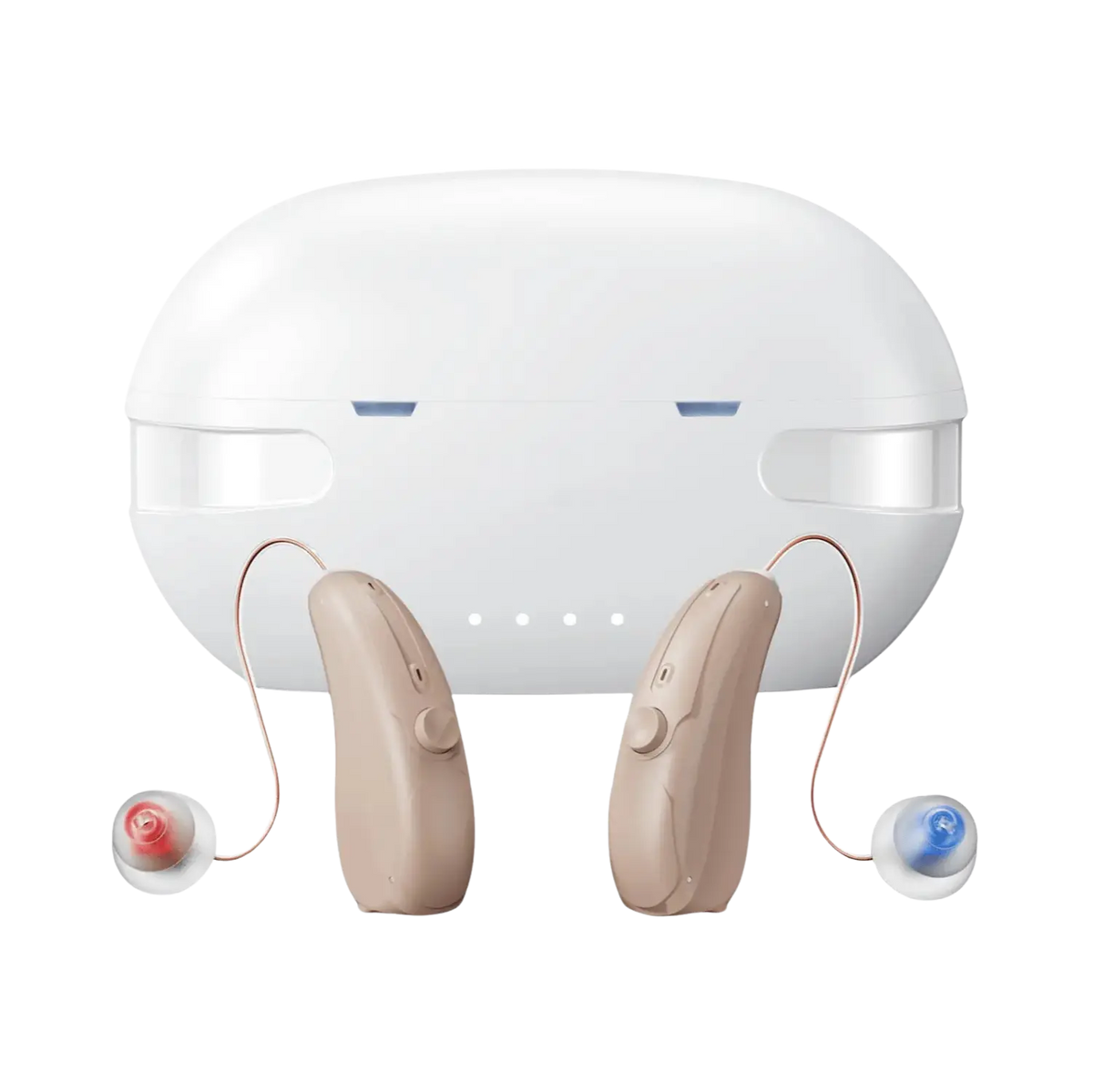
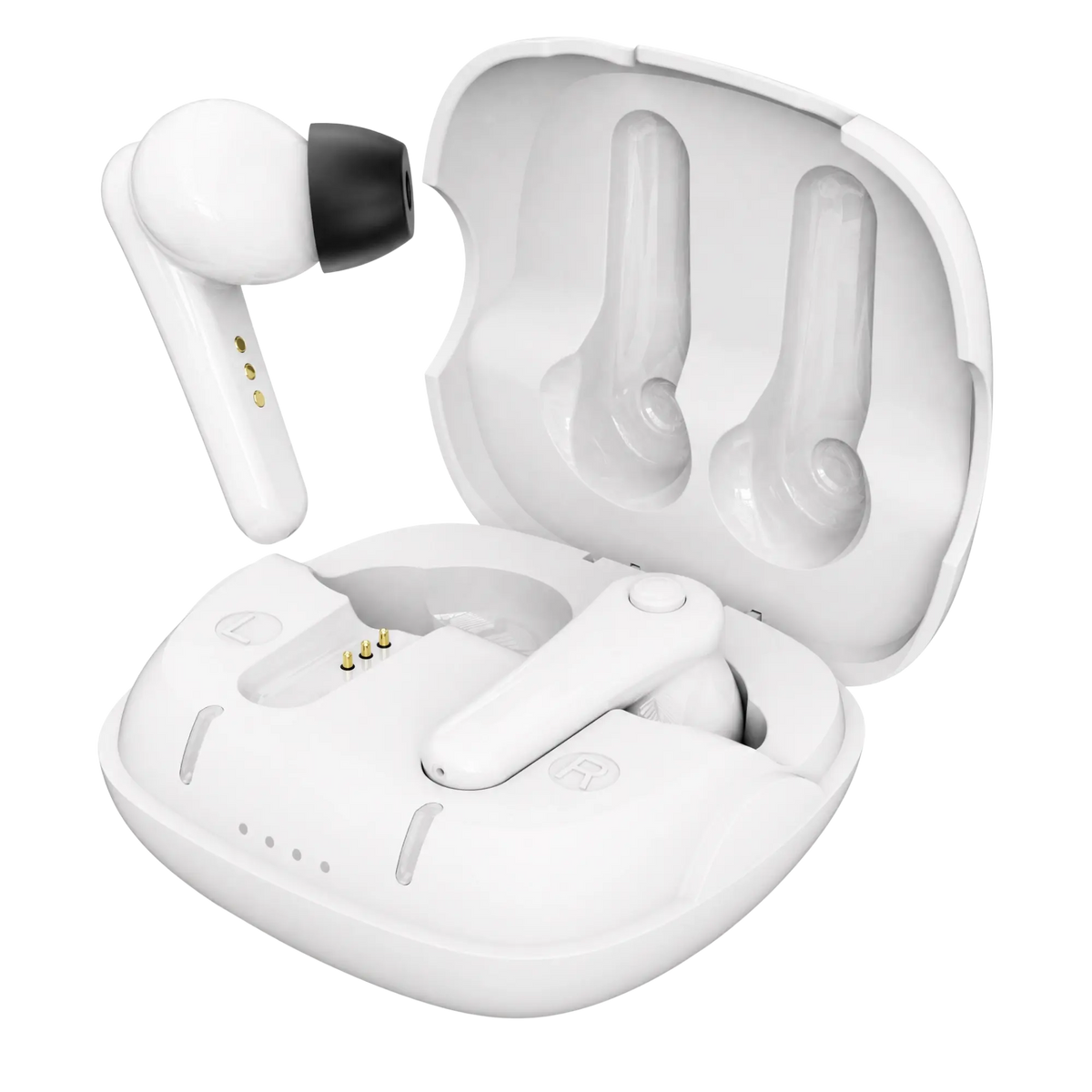
A study finding that nearly 80 percent of this burden is mild hearing loss puts a spotlight on exactly the population that traditional hearing care reaches least well, adults whose hearing loss is bothersome but who face cost and access barriers to clinic-based devices. Newer FDA-OTC hearing aids are designed to lower those barriers. Panda Air is one such device, a modern earbud-style hearing aid with 16-channel processing, multi-band adaptive noise reduction, and a fast-charge case providing 60 hours of total use.
Air belongs to the newer class of self-fitting OTC hearing aids: it works out of the box, and an optional app can run a frequency-specific hearing test through the aid itself and personalize gain to the wearer's hearing profile. Bluetooth connects calls, TV, and music directly to the ears, and the device carries a 5-year warranty with a 45-day trial that begins when it arrives.
Over-the-counter hearing aids are approved for mild-to-moderate hearing loss, which happens to be precisely the severity range this study identifies as dominant. Severe or profound loss, and any ear with active infection or drainage, still calls for clinical care first.
Limitations of This Research
Global Burden of Disease figures are modeled estimates, and their reliability depends on the quality of underlying survey and health system data, which varies widely between countries, particularly in the lower-SDI regions where the burden is greatest. The severity breakdown follows the framework's own assumptions about how otitis media-related hearing loss is distributed. Country-level results were limited to nations with available estimates, and the abstract does not report funding or conflict-of-interest details beyond the analysis itself.
Where This Leaves Us
Thirty-three years of data tell a story of slow progress unevenly shared: rates are falling nearly everywhere, yet population growth keeps the absolute burden climbing, children in lower-income regions still carry the most risk, and the vast majority of the resulting hearing loss is mild, the kind that is easiest to overlook and increasingly possible to address.
Xue Y, Ma H, Yang L, Liu Q. Global patterns and demographic drivers of hearing loss attributable to otitis media, 1990-2023. PLOS One. 2026;21(8):e0356787. Retrieved from PubMed. https://doi.org/10.1371/journal.pone.0356787