Cochlear Implants and Cognition: New Meta-Analysis of 798 Adults
A systematic review pooling 20 studies finds small but measurable gains on cognitive tests in the year after adults receive a cochlear implant.
For years, researchers have been circling a question that matters to millions of families: when an adult with serious hearing loss gets their hearing treated, does their thinking ability change too? Hearing loss in midlife and beyond has repeatedly been identified in large population studies as one of the most important modifiable risk factors for cognitive decline, yet evidence on what happens after treatment has been scattered across many small studies.
A new systematic review and meta-analysis from researchers at Dalhousie University in Canada now pulls that scattered evidence together for one specific treatment: cochlear implantation. The team pooled every eligible study that measured cognition in adults before and after receiving an implant, producing one of the clearest summaries to date of how cognitive test scores move in the first year or more after surgery.
About This Study
Title: Cochlear Implantation and Cognitive Function in Adults: A Systematic Review and Meta-analysis
Authors: Christi A. Joyce, Kelly Zhang, Joost J. A. Stultiens, Kelsey A. Kidd, Alexandra E. Quimby
Affiliations: Faculty of Medicine and Department of Surgery, Division of Otolaryngology-Head and Neck Surgery, Dalhousie University, Halifax, Canada; Department of Family Medicine, Queen's University, Kingston, Canada
Journal: Otology & Neurotology, published online October 16, 2026
Study type: Systematic review and meta-analysis
PubMed DOI: 10.1097/MAO.0000000000005085
Background: Why the Researchers Looked at This
A cochlear implant is a surgically placed device that bypasses damaged parts of the inner ear and stimulates the hearing nerve directly. It is the standard treatment for adults whose hearing loss is too severe for conventional hearing aids to help. Because untreated hearing loss has been linked to faster cognitive decline, social withdrawal, and depression in older adults, clinicians have long wondered whether restoring hearing this way might also support the brain.
Individual studies on this question have been hard to interpret. Most were small, they used many different cognitive tests, and their results pointed in different directions. The Dalhousie team set out to answer the question systematically: across all published evidence, do objective cognitive test scores change in the first year after adult cochlear implantation?
The researchers focused on adults with postlingual hearing loss, meaning hearing loss that developed after a person had already learned spoken language. This is the typical situation for age-related and noise-related hearing loss, which makes the findings relevant to the broader population of adults losing hearing later in life.
How the Study Was Done
The team searched six major research databases, including MEDLINE, Embase, Cochrane CENTRAL, Web of Science, PsycINFO, and CINAHL, for English-language studies that tested cognition in adults both before cochlear implantation and at least six months afterward. Interventional studies, cohort studies, case-control studies, and case series with more than five patients were all eligible. Two reviewers screened studies independently and rated study quality using an established scale.
The analysis then combined results mathematically. For any cognitive test used by more than three studies, the researchers pooled the average change in scores from before to after implantation. They also calculated a standardized measure of change across all fifteen cognitive tests reported in the literature, which allows studies using different tests to be compared on a common scale.
What the Researchers Found
Twenty studies met the inclusion criteria, covering a combined 798 adult cochlear implant recipients. Cognitive testing took place at a median of 12 months after surgery, with follow-up ranging from 6 to 48 months across studies.
On the Mini-Mental Status Exam, the most widely used test in the pooled studies, scores did not change significantly after implantation. The pooled improvement was 0.63 points, with a confidence interval ranging from a 1.02 point decline to a 2.28 point gain, which means the result could not be distinguished from no change.
The Montreal Cognitive Assessment, a more sensitive screening test used in four studies, told a different story. Scores improved by a pooled average of 1.38 points after implantation, with a confidence interval of 0.33 to 2.42 points, a small but statistically significant gain.
When the researchers combined all fifteen cognitive tests across all twenty studies onto a common scale, the overall picture was consistent: a small but significant improvement in cognitive performance following cochlear implantation, with a pooled standardized mean difference of 0.32 and a confidence interval of 0.19 to 0.44.
The authors are careful about the conclusion they draw. Cochlear implantation in adults is associated with small but significant improvements on at least some cognitive tests, and further research is needed to determine whether those improvements translate into a lower risk of dementia over time.
What It Means for People with Hearing Loss
The most reassuring message in this analysis is directional. Adults who treated their severe hearing loss did not get cognitively worse in the year after surgery, and on average they scored modestly better. For older adults weighing an intervention, that pattern matters, because fear of decline is a real part of the decision.
The findings also fit a broader idea in hearing science: the brain does better when it receives a clear sound signal. When hearing is restored, listening takes less effort, conversation becomes easier, and people tend to stay more socially and mentally engaged. None of this proves that treating hearing loss prevents dementia, but it adds weight to the case that hearing care belongs in the conversation about healthy aging.
Hearing Intervention and an Engaged Mind: Where FDA-OTC Hearing Aids Fit
This review studied cochlear implants, which are reserved for severe and profound hearing loss. Most hearing loss begins far earlier and far milder, and the same principle the study points to, keeping clear sound flowing to the brain, applies at that earlier stage too. For adults with mild-to-moderate hearing loss, FDA-OTC hearing aids are designed to make that earlier step easier to take.
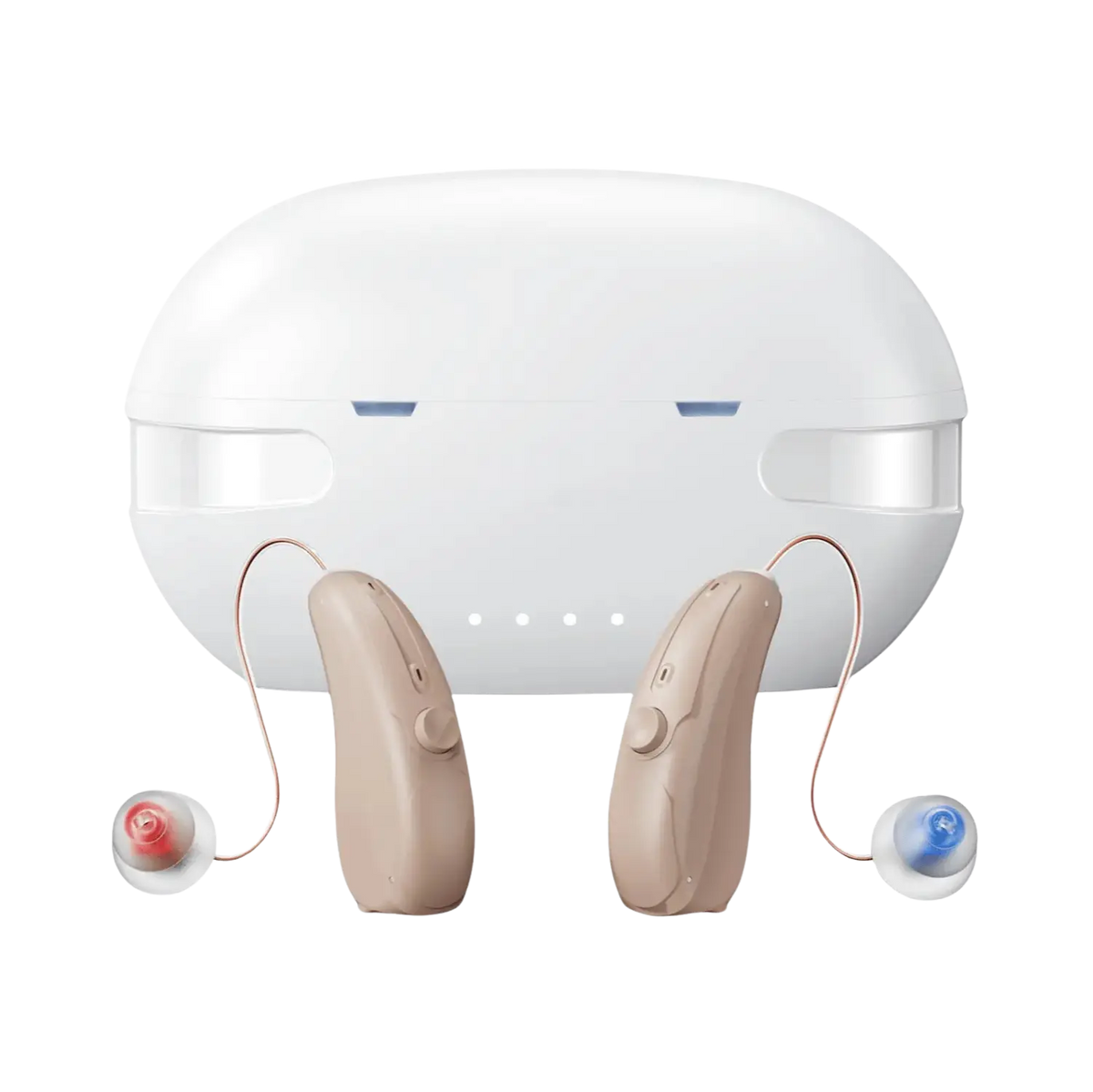
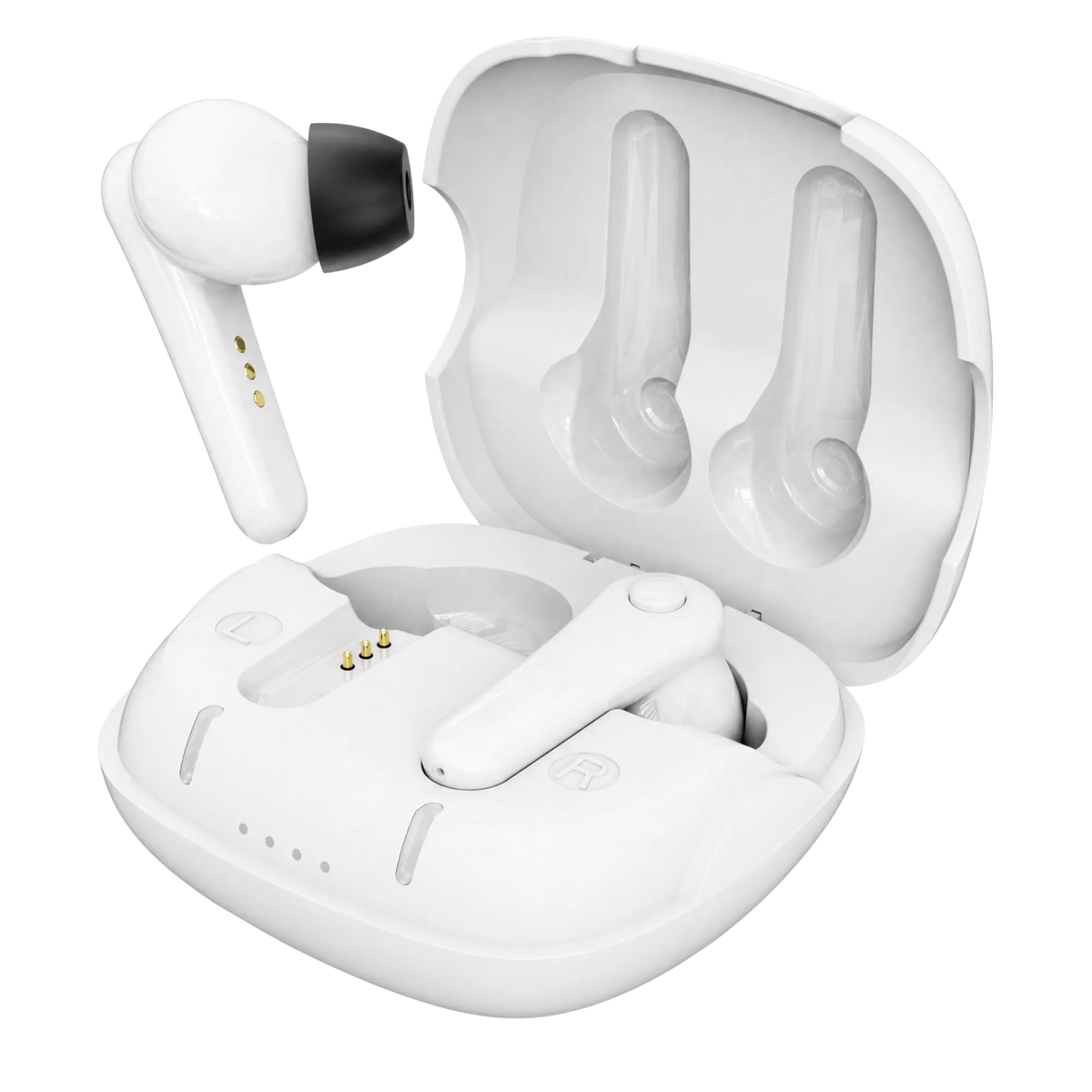
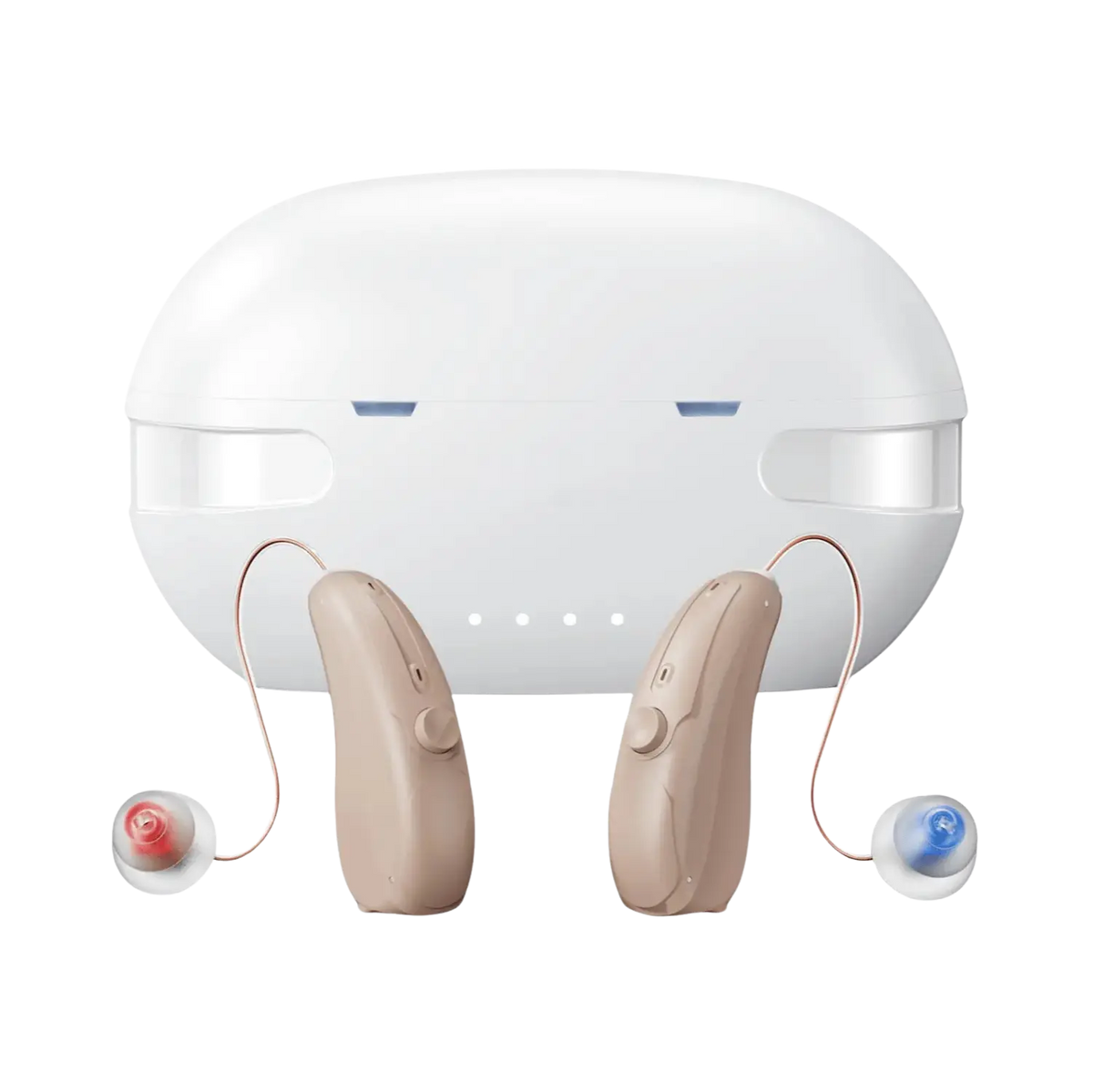
Panda Quantum is one such device: a 16-channel receiver-in-canal hearing aid with adaptive noise reduction built for clearer speech in noisy environments, the situations where listening effort runs highest. It streams calls, TV, and music over Bluetooth, runs 20 hours per charge with a case that holds three additional full charges for 80 hours total, and comes with a 5-year warranty and a 45-day trial that starts when you receive it.

Quantum also offers an optional companion app with an in-ear hearing test, a form of app-based hearing personalization that tunes gain and frequency response to your hearing profile. The app and test are entirely optional, and Quantum works out of the box without them. One caveat worth repeating from this research: OTC hearing aids are approved for mild-to-moderate hearing loss, and people with severe or profound loss, like the patients in this study, still benefit most from clinical fittings.
Limitations of This Research
The pooled studies compared each person to their own earlier scores rather than to an untreated control group, so some improvement could reflect practice effects from taking the same tests twice. The fifteen different cognitive tests varied widely, several were not designed for people with hearing loss, and the most common test, the MMSE, showed no significant change. Follow-up was mostly limited to about one year, which is too short to say anything about dementia risk. The authors disclose no conflicts of interest.
Where This Leaves Us
This meta-analysis offers measured good news: treating severe hearing loss with a cochlear implant is associated with small gains, not losses, on cognitive tests in the first year. Whether hearing treatment can bend the longer curve of cognitive aging remains an open question, and it is now one of the most closely watched questions in hearing research. For anyone noticing their own hearing slipping, the practical takeaway is simpler: clear hearing supports an engaged mind, and acting on hearing loss is worth doing at any stage.
Joyce CA, Zhang K, Stultiens JJA, Kidd KA, Quimby AE. Cochlear Implantation and Cognitive Function in Adults: A Systematic Review and Meta-analysis. Otology & Neurotology. 2026. Retrieved from PubMed. https://doi.org/10.1097/MAO.0000000000005085